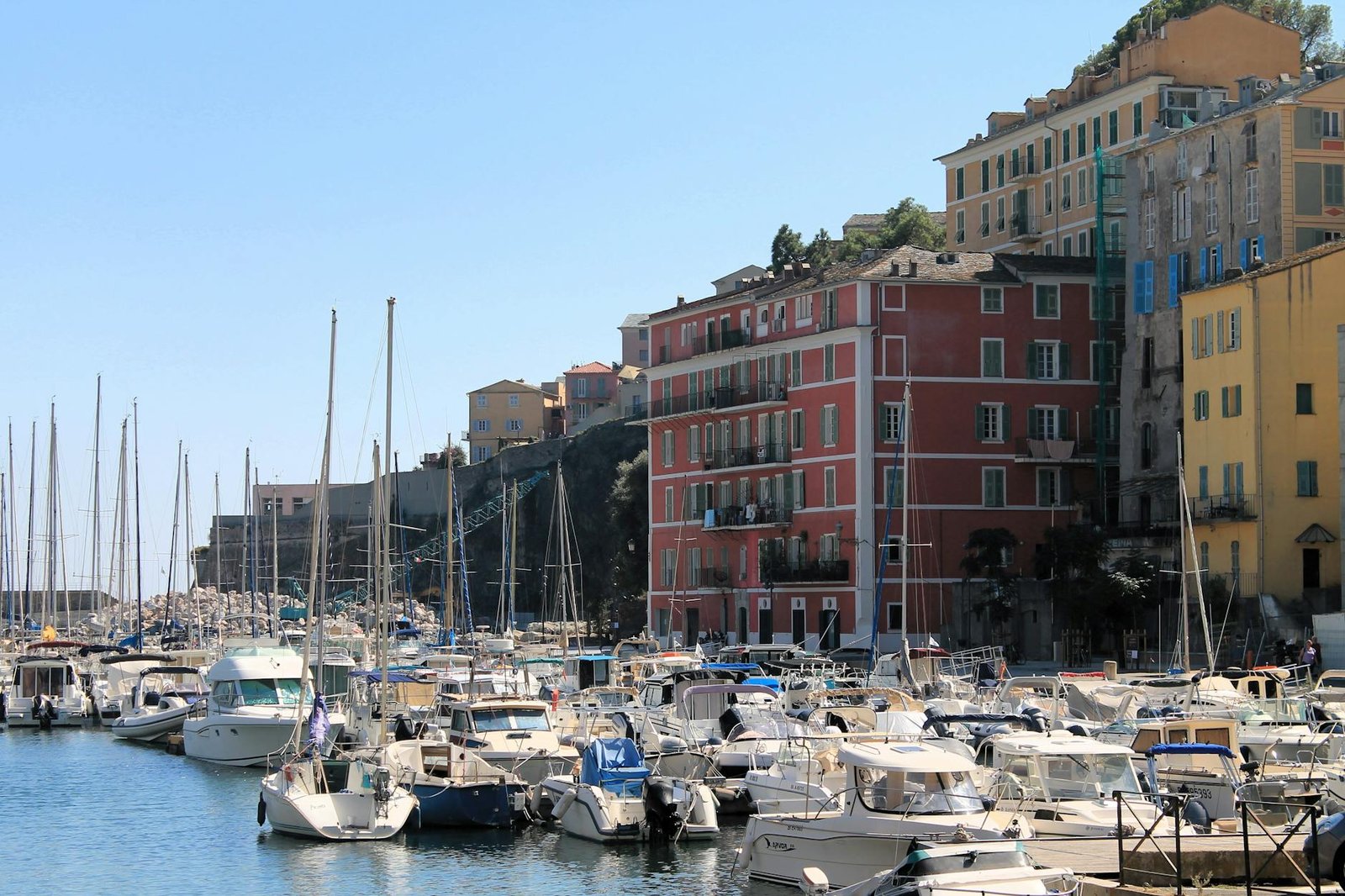
Bastia is one of those rare cruise ports that genuinely rewards the curious traveller — a working Corsican town that hasn’t been polished into a postcard version of itself. Compact enough to explore on foot yet rich in layers of Genoese history, French culture, and fierce island identity, it offers far more depth than a single port day might suggest. Here’s exactly what you need to know to spend your time wisely.
Arriving by Ship
Cruise ships dock at the Port de Bastia, which sits conveniently close to the town centre — you’ll be walking through the streets within minutes of disembarkation. The ferry terminal and commercial port occupy the northern end of the waterfront, while the atmospheric Vieux Port (Old Port) lies just to the south, a short ten-minute stroll from the main quay.
There’s no shuttle bus to worry about and no long transfer to the city. Simply follow the waterfront promenade south and you’ll find yourself in the heart of the action almost immediately. Taxis are available near the port entrance for those who prefer a faster start, and the tourist information office is easy to find near the old port if you need maps or advice on the day.
Things to Do

Bastia’s historic core is built around two distinct quarters, and exploring both on foot is genuinely one of the best ways to spend your time here. The Terra Vecchia district, clustered around the Vieux Port, is a tangle of narrow streets, baroque churches, and sun-bleached apartment buildings draped with laundry. The Citadelle (Terra Nova) sits above on a rocky promontory and contains the Palais des Gouverneurs, a Genoese fortress that now houses the Musée de Bastia — well worth the small entrance fee for its views alone.
The Church of Saint-Jean-Baptiste dominates the old port square and is among the most impressive baroque churches on the island, its twin bell towers appearing on virtually every photograph of the city. For orientation and some genuinely illuminating historical context, the self-guided audio walking tour is an efficient and affordable option. 🎟 Book: Bastia Audio Guided Walking Tour 1h30 and 21 Audio Comments If you’d prefer a local to bring the stories to life, a private walking tour with a knowledgeable guide covers all the essential highlights in a more personal way. 🎟 Book: Bastia Private Walking Tour with a Local
Beyond the town itself, Corsica’s interior and coastline are within reach for those with a spirit of adventure. The famous A Cupulatta turtle conservation park — home to over 3,000 tortoises and turtles from around the world — makes for an unusual and memorable excursion, particularly popular with families. 🎟 Book: Corsica A Cupulatta Turtle Park Skip the Line Admission Ticket
Local Food
Bastia is the ideal introduction to Corsican cuisine, which is emphatically not French cuisine with a Mediterranean accent — it’s a distinct culinary tradition shaped by mountains, wild herbs, chestnuts, and preserved meats. The food markets and café terraces around the Vieux Port are your best starting point.
Look out for charcuterie corse: lonzu (cured pork loin), coppa, and figatellu (a smoked liver sausage) are island staples. Chestnut flour appears in everything from pasta to cake, and brocciu — a fresh ewe’s or goat’s milk cheese protected by its own appellation — turns up in omelettes, pastries, and stuffed vegetables. For lunch, settle into one of the restaurants lining the old port and order whatever the kitchen recommends that day; fresh seafood and slow-cooked stews are rarely a wrong choice. Wash everything down with a glass of Patrimonio wine, produced in the hills just north of the city and one of Corsica’s most celebrated appellations.
Shopping

Bastia’s shopping scene is grounded firmly in local produce rather than tourist trinkets, which makes it genuinely enjoyable. The Place du Marché in Terra Vecchia hosts a regular morning market where you can pick up vacuum-packed charcuterie, local cheeses, chestnut products, and artisan honey — all excellent choices to carry back on board.
Specialist épiceries around the Vieux Port stock premium Corsican oils, jams, myrtle liqueur, and chestnut beer. For crafts and ceramics, a wander through the Citadelle quarter will turn up a handful of artisan boutiques selling handmade pottery and locally inspired jewellery. Prices are reasonable by French standards, and the quality of food products in particular is consistently high.
Practical Tips
- Currency: Euros are used everywhere; card payments are widely accepted but carry a small amount of cash for the market.
- Language: French is the primary language, with Corsican spoken by many locals. A few words of French go a long way.
- Walking shoes: The cobblestones in the Citadelle and Terra Vecchia are steep and uneven in places — comfortable footwear is essential.
- Heat: In summer months the sun is intense. Carry water and sunscreen, especially if you’re spending time climbing up to the Citadelle.
- Time management: The old port, Citadelle, and market can realistically be covered in three to four hours. If you want a tailored itinerary that maximises your specific interests, a private custom tour with a local is worth considering. 🎟 Book: Private custom tour with a local guide in Bastia
Bastia won’t overwhelm you with the sheer volume of things to tick off a list, and that’s precisely its strength. It’s a place that rewards slowing down, eating well, and simply absorbing the texture of authentic Corsican life — which is exactly what a great port day should feel like.
🎟️ Things to Book in Advance
These highly-rated experiences fill up fast — book before you arrive to avoid missing out.


This page contains affiliate links. If you book through them, we may earn a small commission at no extra cost to you.
📍 Getting to Bastia France
Use the interactive map below to explore the port area and plan your route from the terminal.
Leave a Reply