
Northern Europe
Northern Europe
Kalvåg Cruise Port Guide: What to Expect, Logistics & Tips
Norway
Small village with tender boats required to reach shore from anchored vessels.
Choose the Right Port Day
Best Overall
Land by tender, walk the village perimeter and harbour, speak with locals if they are willing, and return. Expect to spend 60–90 minutes ashore total. This is about Arctic immersion, not activities.
Best Beach
Not relevant. Kalvåg is Arctic fjord terrain, not a beach destination. Rocky, cold shoreline only.
With Kids
Walk the harbour, spot fishing boats, and visit the small local shop. Children should be dressed warmly and comfortable on uneven terrain. This is not a kids' playground; it is a working fishing community.
Only 3-4 Hours
Plan 90 minutes ashore (accounting for tender boarding delays). Walk from the landing through the village core, visit the local shop/café if open, photograph the fishing boats and old houses, return to tender. Do not venture far beyond the village.
Cheapest Option
Free. Walk the village, photograph, observe local life. Café/shop purchases are optional. No entrance fees or organised tours required.
What To Avoid
Do not expect restaurants, museums, or infrastructure. Do not wander inland without local knowledge. Do not ignore weather warnings; a sudden squall or swell can cancel tenders instantly.
Quick Take
- Port Type
- Expedition tender port
- Best For
- Expedition cruisers seeking remote Arctic authenticity, nature photographers, travelers comfortable with minimal infrastructure and unpredictable weather.
- Avoid If
- You need shops, restaurants, road access, or guaranteed ashore time. Expect tenders to be cancelled or delayed due to weather.
- Walkability
- Village is walkable on foot (30 min to cover main area), but terrain is rocky/uneven and roads are narrow. No sidewalks. Weather will limit comfortable exploration.
- Budget Fit
- Low-cost ashore. No paid attractions, minimal dining, no transport needed beyond walking.
- Good For Short Calls?
- Fair. Most activity is a 1.5–2 hour walk through the village and harbour. Tender logistics eat 30–45 min of port time.
Top Things To Do
1
Walk the harbour and village core
Stroll from the landing through the village, observing traditional wooden houses, fishing boats, and the daily rhythm of a small Arctic community. Chat with locals if they are present and willing. Photograph the landscape and heritage buildings.
2
Visit the local shop/café
A small shop or café may be open during cruise visits. Hours are unpredictable. Stock local snacks, drinks, and a few crafts. Opportunity to meet villagers and support the local economy.
Book with the ship, or on your own?
Booking independently
- Often noticeably cheaper than the ship’s version of the same tour.
- Smaller groups and local operators, with traveler reviews you can read before you pay.
- Free cancellation on most tours, usually up to 24 hours before.
When the ship’s excursion makes sense
- Short port calls or long transfers where the timing is tight.
- Tender-only stops where getting ashore can run late.
- The ship waits for its own delayed excursions — it won’t wait for independent ones, so leave a buffer before all-aboard.
We may earn a commission when you book through our links, at no extra cost to you — it’s how we keep these guides free.
Check The Port Traffic
Cruise Ships in Port
Once you have your shore plan, use the schedule to see how busy the harbour will be on your date, plus the ships, lines, and published call windows.
Sun
Mon
Tue
Wed
Thu
Fri
Sat
1
2
3
4
5
6
7
8
9
10
11
12
13
14
15
16
17
18
19
20
21
22
23
24
25
26
27
28
29
30
Quiet (1–2)
Busy (3–4)
Packed (5+)
0 scheduled calls
September 21, 2026
No scheduled cruise ship calls were found for this date selection. Pick a highlighted day on the calendar above, widen the range, or search for a different ship or line.
Port Overview
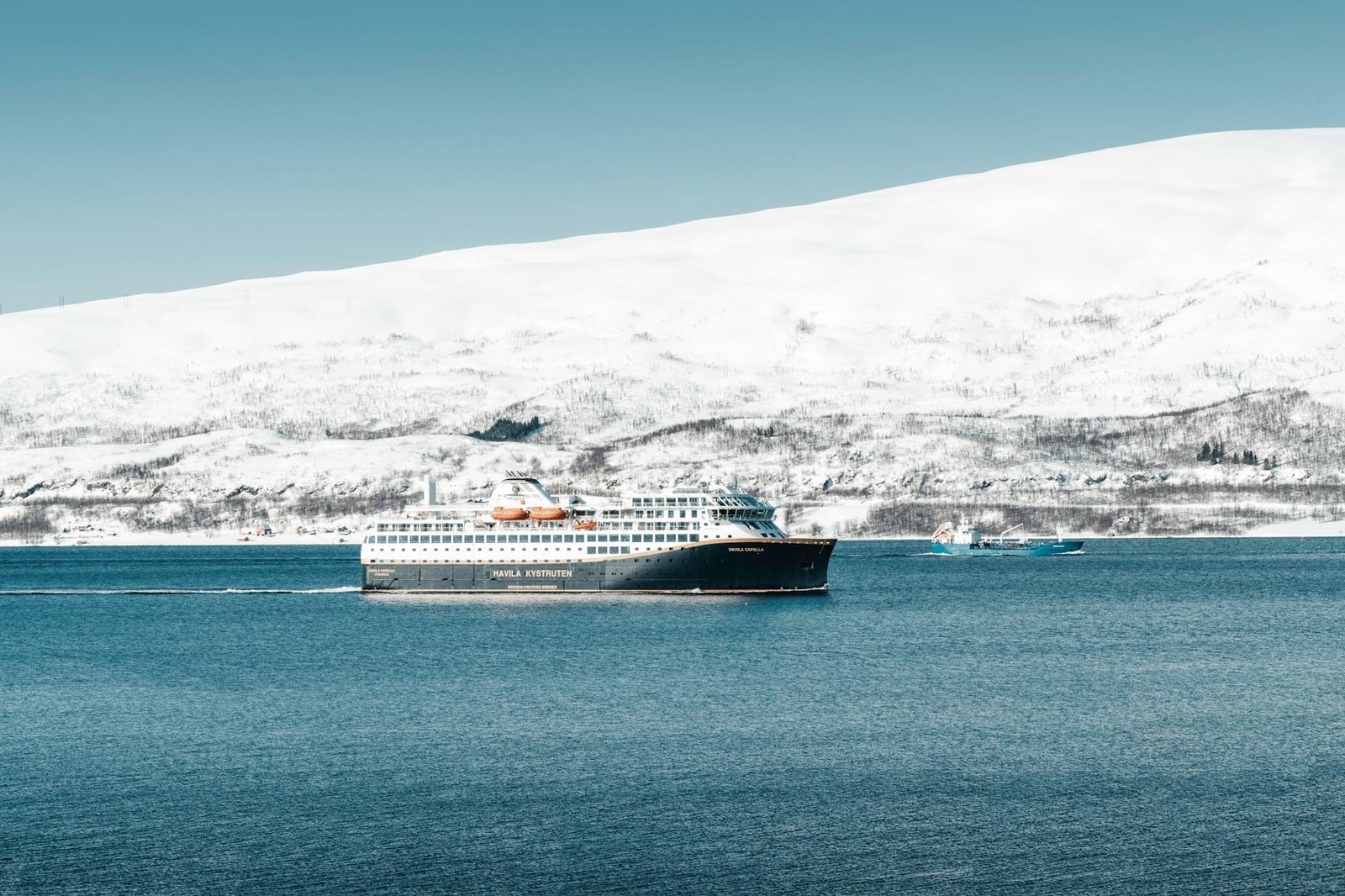
Kalvåg is a tiny working fishing village of roughly 50–70 people on the west coast of the Sognefjord in Sogn og Fjordane county. Ships anchor offshore and passengers tender to a small dock or beach landing. There is no cruise terminal, no infrastructure, and no road access to the mainland; the village is reached entirely by sea.
The appeal is raw Arctic authenticity and pristine fjord scenery. Hurtigruten, Windstar, Ponant, Lindblad, and other expedition operators include Kalvåg as a cultural and wildlife stopover, not a destination in its own right. Most time ashore is unstructured walking and observation.
Why go? If you are on an expedition cruise, Kalvåg offers a genuine encounter with a remote Norwegian fishing community, traditional architecture, and Arctic light. If you need amenities, shops, or organised activities, skip it mentally and relax on deck. If weather is poor, tenders may not operate at all.
Is It Safe?
Kalvåg is exceptionally safe in terms of crime. The village is remote, quiet, and locals are used to visitors. Hazards are environmental: unpredictable weather, rough seas preventing tender operations, rocky terrain, and cold water. Hypothermia is a real risk if you fall into the sea or stay out in wet conditions. Always wear a lifejacket when boarding or exiting the tender, and dress in layers—Arctic conditions change fast. Mobile phone coverage is weak or absent; do not rely on it. Stay in sight of other passengers and the tender crew. If you have mobility issues, ask the crew about landing conditions before committing to the tender.
Accessibility & Walkability
Kalvåg is not wheelchair-accessible. The landing is a small dock or beach with no ramp, and the terrain is rocky and uneven with no paved paths. Tender boarding itself can be difficult in rough seas. If you have limited mobility, discuss options with the ship's staff before the port; they may advise against ashore time or offer assistance with tender transfer.
Outside the Terminal
There is no terminal. You land on a small dock or beach and step directly into the village. The first impression is silence, clean air, and the smell of the sea. A handful of coloured wooden houses are visible immediately. A few fishing boats sit in the shallows or anchored nearby. There are no people waiting, no vendors, no signage. The village is simply there—quiet, unchanged, and utterly remote. The scale is tiny; you are walking through the daily life of a real working community, not a tourist site.
Local Food & Drink
There are no restaurants in Kalvåg. A small local shop or café may sell coffee, tea, snacks, and light items, but hours are unpredictable and supply is limited. Eat aboard your ship before and after the port visit. If the shop is open and you are interested in a genuine local moment, buying a coffee or snack supports the community. Bring your own water and any food you may need if you plan to stay ashore for the full duration.
Shopping
There is one small shop in the village selling basic provisions, local crafts, and a few souvenirs. Stock is limited and prices are higher than mainland Norway due to remote delivery costs. Do not expect variety or bargains. This is functional shopping for residents, not a tourist destination. Cash is preferred, but ask about card acceptance when you arrive.
Money & Currency
- Currency
- Norwegian krone (NOK).
- USD Accepted?
- No
- Card Payments
- Check locally for current rates. Small shops may accept cards but often prefer cash.
- ATMs
- No ATM in Kalvåg. Withdraw cash on the ship or in a larger port before arrival.
- Tipping
- Tipping is not expected in Norway and is uncommon in small villages. Round up or add 5–10% if service is exceptional.
- Notes
- Bring small notes in NOK. The village is cash-based and has no banking infrastructure.
Weather & Best Time
- Best months
- June–August (midnight sun, mildest conditions, lowest chance of fog or ice).
- Avoid
- November–February (darkness, severe cold, high seas, frequent tender cancellations).
- Temperature
- June–August: 10–15°C (50–59°F). September–October: 5–10°C (41–50°F).
- Notes
- Weather is highly unpredictable. Dress in waterproof, layered clothing. Wind, fog, and swell are common even in summer. Tender operations depend entirely on sea state; bad conditions mean no ashore time.
Airport Information
- Airport
- Bergen Airport (BGI) or Sognefjord region airports (limited commercial service).
- Distance
- 80–120 km (50–75 miles) by sea; no road access to Kalvåg.
- Getting there
- Not applicable. Kalvåg has no airport or road connection. Crew transfers are by sea only.
- Notes
- Kalvåg is embarkation/disembarkation only for expedition cruise passengers. Pre-cruise stays should be arranged in Bergen or a larger town, then transferred by ship.
Getting Around from the Port
Tender
Ships anchor 200–400 metres offshore. Zodiacs or ship tenders ferry passengers to a small dock or beach landing. Expect 15–20 min transit each way, plus 10–15 min wait for tender assembly.
Walking
The entire village is walkable on foot. Main paths connect the harbour to scattered houses. Terrain is rocky and uneven; no formal trails or sidewalks.
Details last checked April 2026
Planning a cruise here?
Hurtigruten, Windstar Cruises, Ponant & more sail to Kalvåg.
Practical Tips for Cruise Passengers
- Tender operations are weather-dependent and can be cancelled with little notice. Have a backup plan (book time, read, relax on deck) if ashore time is lost.
- Dress in waterproof, insulated layers, sturdy waterproof boots, and a hat. Arctic conditions change rapidly, and there is no shelter or heating ashore.
- Bring cash in Norwegian krone. The village shop may not accept cards, and there is no ATM.
- Respect the privacy and routine of local residents. This is a working village, not a museum. Do not photograph people without permission, and stay on visible paths near the harbour.
Frequently Asked Questions
Not recommended without local guidance. Terrain is steep, boggy, and unmapped. Stick to the village core and harbour area within sight of the landing.
You remain aboard. Bad weather in Arctic waters makes tender operations unsafe. Expect this as a possibility and do not be disappointed; it is normal for expedition cruises.
No public facilities. Use the ship's facilities before the tender departs. Bring water with you if you plan to stay ashore for more than 30 minutes.
Find cruises to Kalvåg, Norway
Compare sailings and book with no fees — best price guaranteed.
We may earn a commission when you book through our links, at no extra cost to you — it’s how we keep these guides free.
✉ Sailing to Kalvåg? Get your port-day plan
Tell us your sail date and we’ll email you a short Kalvåg plan about 60 days out — when the good excursions start selling out — plus a final checklist 2 weeks before. Two emails, then done. We’ll send one note to confirm it’s really you — unsubscribe anytime.
Northern Europe
View All
More Northern Europe Ports
Northern Europe

Northern Europe

Northern Europe
