

Costa Deliziosa
Arrive 08:00 AM | Depart 04:00 PM
Itinerary: 6 Nights Eastern Mediterranean Cruise (6 nights)
Tours that fit this port day →Croatia
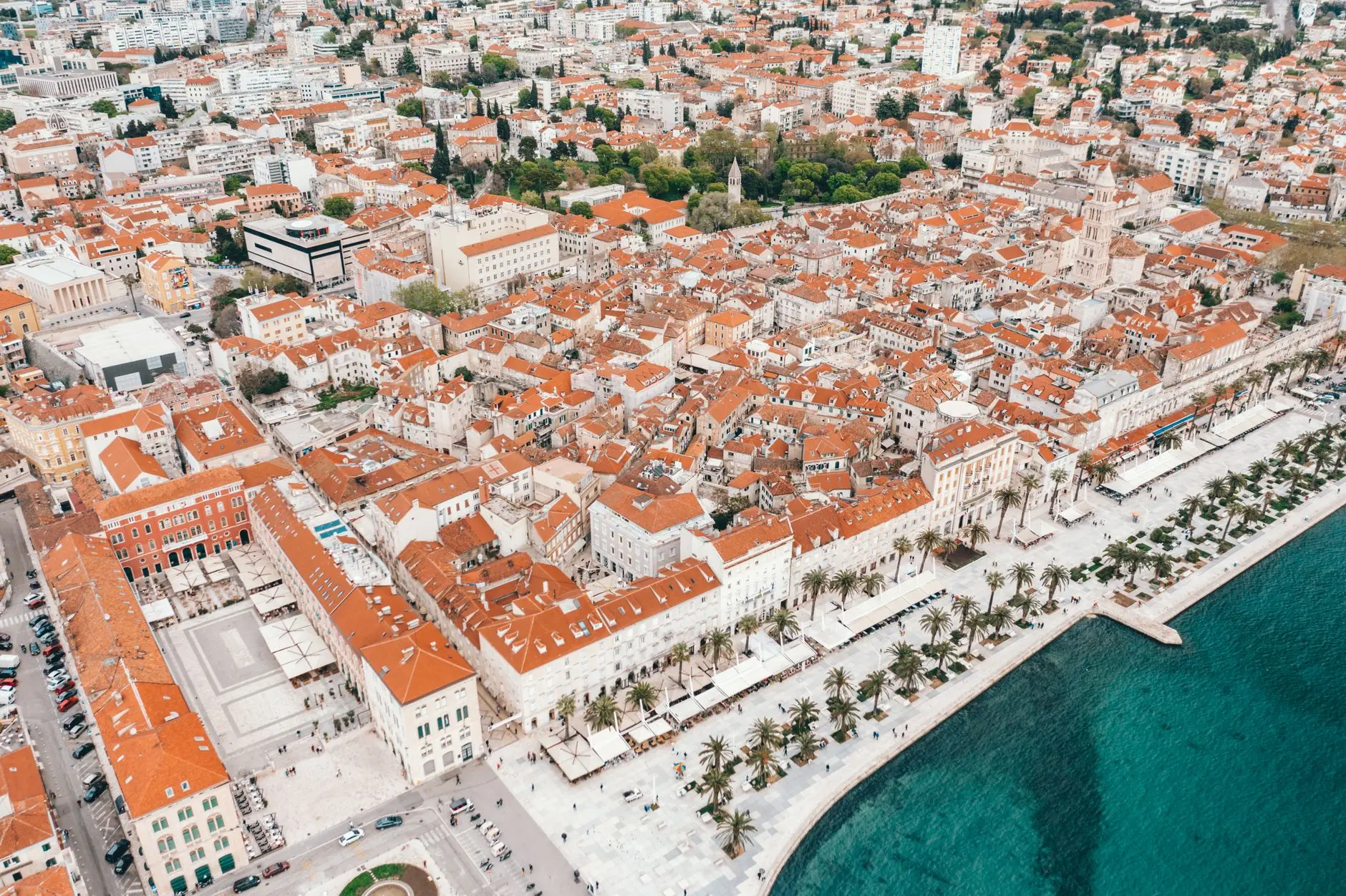
Ships dock at the Split Cruise Port terminal (Luka Split), located directly adjacent to the Old Town waterfront promenade, making it one of the most conveniently situated cruise terminals in the Mediterranean.
The wooden boardwalks at Skradinski buk put you eye-level with a cascade of travertine pools and waterfalls that most people only ever see in photographs — then a boat carries you downstream to a small stone town for wine and local food. What separates this from driving yourself is the guide who connects the dots: the ethno-village, the old watermills, and the power plant that quietly helped light Europe for the first time all become a coherent story rather than a series of signs you half-read.
The Blue Cave on Biševo glows electric cobalt from inside — a trick of light through an underwater opening that you genuinely cannot picture until you are floating in it. A speedboat in a small group gets you there and then keeps moving: the sheltered arc of Stiniva cove, the fishing village of Komiža, and the Vis beach where Mamma Mia was filmed — islands that the big ferry crowds never reach in a single day.
Our picks in Split
This is the main reason to get off the ship. The palace is the living core of Split, not just a monument, so the value is in wandering the lanes, courtyards, gates, and Roman remains rather than racing from one ticketed spot to another.
Split's seafront is the easiest low-effort stop: palm-lined, busy, and full of places to sit with coffee or a cold drink. Good for people-watching and getting your bearings before heading inland.
This is the most atmospheric part of the palace complex and one of the easiest places to appreciate the Roman core of the city. Even if you skip paid interiors, the square itself is worth seeing.
If you want a break from old-town crowds, Marjan gives you greenery and broad views back over Split and the harbor. It is worth it if you like walking, less so if your group hates stairs or heat.
Right beside the old town, this market is a quick look at daily city life beyond souvenir alleys. It is best for fruit, snacks, olive oil-type browsing, and a short local detour rather than major shopping.
These stone substructures are one of the more distinctive Roman remnants in Split and are easy to add to a self-guided route through the old town. Good if you want a more tangible sense of the ancient layout.
Worth it if you want the Roman, medieval, Venetian, and modern layers explained properly instead of just wandering pretty streets. Split is compact enough that a short walking tour can cover a lot.
Not every port day needs to be a checklist. Split is a good place to slow down, sit in a stone square or side street, and enjoy the city atmosphere without overplanning.
Museums are not the main draw here, but they can make sense if it is too hot, raining, or you have already seen the core sights. Keep it selective rather than trying to force a full museum day from a cruise stop.
Book with the ship, or on your own?
Booking independently
When the ship’s excursion makes sense
Going independent? Compare tours in Split → — the best-reviewed ones sell out first.
We may earn a commission when you book through our links, at no extra cost to you — it’s how we keep these guides free.
Check The Port Traffic
Once you have your shore plan, use the schedule to see how busy the harbour will be on your date, plus the ships, lines, and published call windows.
Arrive 08:00 AM | Depart 04:00 PM
Itinerary: 6 Nights Eastern Mediterranean Cruise (6 nights)
Tours that fit this port day →Split is one of the easier Mediterranean cruise ports to handle on your own. Ships dock at the main passenger port beside the ferry harbor, and the historic center starts almost immediately. You do not need a complicated transport plan unless you are leaving the city.
The reason most cruisers go ashore is simple: Diocletian's Palace is not a single building you pop into for 30 minutes. It is the core of the old city, full of lanes, squares, Roman remains, cafes, and churches that you can explore at your own pace. That makes Split unusually good for both first-time visitors and people with limited port time.
It is also a busy working port and ferry hub, so the first impression is more practical than pretty. Once you cross toward the Riva promenade and old town, it improves fast. If you only have one plan here, keep it local and walkable rather than trying to cram in too much.
Split is generally straightforward for cruise visitors, especially in the main old town and waterfront areas during the day. The biggest issues are petty theft in crowded spots, slippery polished stone underfoot, and summer heat rather than serious crime.
Keep your bag zipped in the palace lanes, market, and ferry area. Watch for scooters, bikes, and cars on streets just outside the historic core. If you are walking up Marjan or staying out into the evening, stick to well-used routes and carry water.
Split is easy in terms of distance from port to center, but not especially smooth in terms of surfaces. The old town has uneven stone, narrow passages, occasional steps, and busy pedestrian flows, so wheelchair users and anyone with limited mobility may find independent exploration patchy rather than seamless.
The Riva promenade is the easiest section for accessible strolling. Some parts of the palace area are manageable, but expect bumps, thresholds, and detours. If accessibility matters, plan a limited route instead of trying to cover the entire old town.
You step into a busy transport zone rather than a pretty arrival plaza. The port area blends cruise traffic, ferries, buses, taxis, and foot traffic, so it can feel a bit chaotic for the first few minutes.
The good news is that you are very close to the part of Split you actually want. Head toward the waterfront promenade and the mood changes quickly from transport hub to historic city stroll.
Closest practical beach if you really want one, but this is not why most cruisers should prioritize Split. It is convenient rather than spectacular.
Prettier and more relaxed than Bacvice, but farther out and less efficient for a short cruise stop.
Split is easy for a casual lunch, coffee stop, bakery run, or gelato break. Around the Riva and inside the old town you will find plenty of restaurants, but the most obvious waterfront places often charge more for the location than the food. Not always bad, just not always great value.
A sensible cruise-day strategy is to eat a little away from the busiest promenade if you want better odds of decent value. Seafood, grilled meats, pasta, risotto, and bakery snacks are easy to find. If you just want something fast and cheap, a bakery and coffee stop works well here.
Shopping in Split is mostly about souvenirs, local food products, small boutiques, and market browsing rather than major luxury retail. The old town has plenty of souvenir shops, and some are pretty generic, so do not expect every lane to hide a gem.
If you want something practical, look for olive oil, lavender products, local sweets, or simple food gifts. The market area is more useful than the tourist strips if you prefer a less polished feel.
Best option for most cruisers. The Riva promenade, old town, palace area, market, and many cafes are an easy walk from the pier.
Useful for hill viewpoints, outer neighborhoods, or if you are heading farther out of Split.
Book a transfer 5% off with code TPO5 at checkoutCan be convenient for direct trips beyond the old town where walking is less practical.
Useful if you know exactly where you are going, but unnecessary for the standard cruise-day old town visit.
Book bus ticketsDetails last checked May 2026
Planning a cruise here?
Viking Ocean Cruises, Princess Cruises, Cunard Line & more sail to Split.
Yes. That is one of Split's big advantages. The waterfront and old town are an easy walk from the pier.
Yes, absolutely. It is the heart of the city and easy to explore without losing time on transport.
Usually no. Split is one of the easier DIY ports in the Mediterranean unless you want a specific guided history tour or a trip farther afield.
Yes. A few hours is enough for the palace, waterfront, and a meal if you stay central.
Yes, Bacvice is the nearest practical option. Still, most cruisers get more out of Split by focusing on the old town instead.
It can be moderate to pricey in the most tourist-heavy areas, especially in summer. But it is still easy to have a reasonable DIY day if you walk and eat simply.
Generally yes. Use normal city awareness for pickpockets in crowds and watch your footing on uneven stone streets.
Yes, if your itinerary allows it. Split is a strong pre- or post-cruise city because it is interesting, compact, and easy to enjoy without much planning.
Find cruises to Split, Croatia
Compare sailings and book with no fees — best price guaranteed.
We may earn a commission when you book through our links, at no extra cost to you — it’s how we keep these guides free.
Tell us your sail date and we’ll email you a short Split plan about 60 days out — when the good excursions start selling out — plus a final checklist 2 weeks before. Two emails, then done. We’ll send one note to confirm it’s really you — unsubscribe anytime.