

Carnival Legend
Arrive 06:00 AM | Depart 05:00 PM
Itinerary: 9 Nights Mediterranean Cruise (9 nights)
Tours that fit this port day →Greece
Two ways to use this port
This guide is split between a normal port call and an embarkation day. Use the cards below as a quick glossary: port-day sections are for visiting by ship; embarkation sections are for starting or ending your cruise here.
Ships dock at the Piraeus Cruise Terminal (also known as the Piraeus Port), operated by Piraeus Port Authority (OLP), with large vessels typically berthing at the main cruise piers in the central port area, approximately 12 km from central Athens.
Lunch on deck with a glass of local wine, a wooden sailing boat moving through the Saronic Gulf toward an island that was once the first capital of Greece — that is a different kind of day from anything Athens can offer on foot. If you want water, swimming, and the pace of the islands rather than cobblestones and museums, this is the natural choice, and the open bar and buffet mean you are not spending the day hunting for a taverna.
During this amazing half day tour you will see all the most popular sights and experience the best parts of the city. But I will also…
Our picks in Piraeus
The best one-shot Athens plan for most cruisers. Focus on the Acropolis surroundings, then walk Plaka and Anafiotika for the classic Athens feel without trying to cover the whole city.
Book Acropolis area and Plaka on ViatorA smart choice if you want one major cultural stop without museum-hopping. Pair it with a short walk in Plaka and you have a solid half-day.
Book Acropolis Museum on ViatorGood budget-friendly DIY option. Use the metro or taxi in, then walk between Monastiraki, Ermou, Syntagma, and back through Plaka if time allows.
Book with the ship, or on your own?
Booking independently
When the ship’s excursion makes sense
Going independent? Compare tours in Piraeus → — the best-reviewed ones sell out first.
We may earn a commission when you book through our links, at no extra cost to you — it’s how we keep these guides free.
Piraeus is the main cruise and ferry port for Athens, and that is the key thing to understand before you arrive. This is a big working port with multiple terminals, traffic, ferries, buses, taxis, and a lot of movement. It is useful, not especially charming right outside the gate.
Most cruisers go ashore here for Athens rather than Piraeus itself. The Acropolis, Plaka, Monastiraki, Syntagma, and major museums are the real targets, but they are not next-door to the ship. If you are staying overnight before or after a cruise, Piraeus can be practical, while central Athens is better if you want sightseeing and a nicer city stay.
As an embarkation port, Piraeus works well if you arrive early and keep logistics simple. It is a major homeport used by lines including MSC, Celebrity, Princess, Norwegian, Holland America, Cunard, Oceania, Viking, Regent, Azamara, Seabourn, Silversea, Costa, and others. Same-day flights are a gamble here, especially in summer when roads, airport lines, and port traffic all get slower.
Piraeus and Athens are generally manageable for cruise visitors, but this is a big-city port, so use normal urban caution. Watch bags in metro stations, crowded trains, tourist zones, and around major landmarks. Pickpocketing is the main nuisance, not violent crime.
Embarkation and disembarkation days can feel chaotic because of traffic, terminal confusion, and crowds rather than anything dangerous. If you are returning to the ship independently, leave a healthy buffer. Missing the ship because you underestimated Athens traffic is a much more realistic risk than crime.
Piraeus is not a neat, flat, easy cruise village. Terminals can involve long distances, pavement quality varies, and the transfer from ship to gate may be tiring even before you start sightseeing. If mobility is limited, assume you will want taxi-based transport rather than a fully DIY transit day.
Central Athens is mixed for accessibility. Major museums are more manageable, but older neighborhoods like Plaka have uneven surfaces, slopes, and crowding. The Acropolis area itself can be hard work in heat, so choose one accessible-friendly museum and a shorter city route if needed.
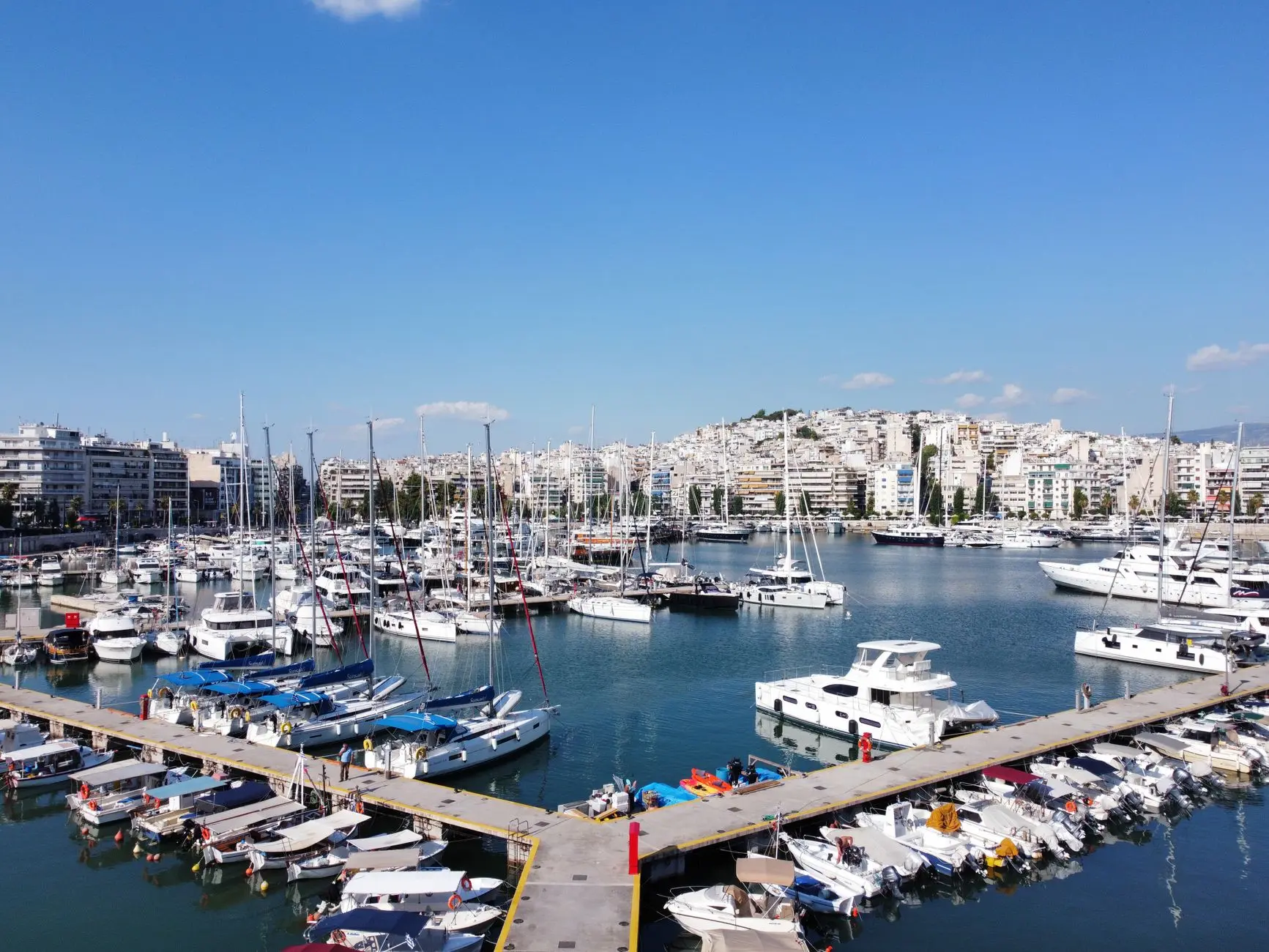
The first impression outside most Piraeus cruise areas is practical, not pretty: busy roads, port fencing, taxis, buses, and ferry traffic. Do not expect a compact historic district right at the pier.
If you have not preplanned transport, this is where time gets wasted. Know whether you are aiming for a taxi, metro connection, cruise shuttle, or an organized tour before you step off the ship.
Piraeus has plenty of everyday Greek dining, seafood restaurants, bakeries, and coffee stops, especially around the waterfront neighborhoods. It is a practical place to eat before boarding or after disembarking, but if you want the more atmospheric Athens meal, central neighborhoods like Plaka or Monastiraki usually win.
On embarkation day, keep it simple. A bakery, coffee, and one relaxed lunch are smarter than a long sit-down meal far from the port. If you are heading into Athens, eat near where you are sightseeing rather than wasting time bouncing back toward the ship for lunch.
Piraeus itself has standard city shopping rather than must-see browsing. If shopping matters, central Athens gives you a better mix of souvenir shops, market streets, and mainstream retail around Monastiraki and Ermou.
Do not treat the immediate port area as a destination for shopping. It is functional, and that is about it.
Piraeus (mid-range) — Most practical for embarkation morning, with the shortest transfer to the cruise terminals.
Syntagma / Plaka (mid-range | luxury) — Best for first-time visitors who want to see Athens properly before or after the cruise, with easy access to key sights.
Monastiraki (budget | mid-range) — Convenient for food, nightlife, and a walkable sightseeing base, though it can be busier and noisier.
| Budget | Mid-Range | Luxury |
|---|---|---|
| check current rates | check current rates | check current rates |
💡 Pro Tip: If your cruise leaves early or you have a lot of luggage, stay in Piraeus. If you have a full sightseeing day, stay in central Athens and transfer to the port the next morning.
ATH is the main and most convenient airport. Taxi or prebooked transfer is easiest with cruise luggage; rail is cheaper but less comfortable if you are hauling bags.
🅿️ Port Parking: Cruise parking availability and process can vary by terminal area and operator. Check current rates and port guidance before departure day.
🚢 Terminal Tips: Have your terminal or gate information ready before you leave the hotel or airport. Piraeus is big enough that going to the wrong entrance can cost you serious time.
Planning a cruise here?
Viking Ocean Cruises, Princess Cruises, Silversea Cruises & more sail to Piraeus.
Best for direct trips from terminal to central Athens sights or hotels, especially with luggage or limited time.
Good low-cost option from Piraeus into Athens for DIY sightseeing.
Some lines or terminal setups use shuttle buses inside the port or to gate areas.
An easy but slower way to reach major Athens sights without figuring out public transit.
Details last checked May 2026
Athens International Airport (ATH) is the main airport for Piraeus cruises. It is roughly 45-50 km from the port, and transfer time is usually about 45-75 minutes depending on traffic.
Yes. This is one of those ports where flying in the same day is a bad bet because airport delays, road traffic, and terminal confusion can all stack up.
Stay in Piraeus if your priority is an easy embarkation morning. Stay in central Athens, usually Syntagma, Plaka, or Monastiraki, if you want proper sightseeing before or after the cruise.
Taxi or prebooked transfer is the easiest option with luggage. Public transit is cheaper, but it is less convenient and may still require extra walking or a final taxi.
Piraeus is used by many major lines, including MSC, Celebrity, Princess, Norwegian, Holland America, Cunard, Costa, Oceania, Viking, Regent, Azamara, Seabourn, and Silversea. Schedules vary by season, so always confirm your exact terminal details with the line.
For most travelers, central Athens is the obvious answer: Acropolis area, Plaka, Monastiraki, and one museum. If you only have a short evening, keep it simple with a neighborhood walk and dinner rather than trying to cram in full sightseeing.
No, not realistically for normal sightseeing. You can walk around parts of Piraeus, but central Athens attractions require taxi, metro, shuttle, or a tour.
It is generally safe with normal big-city precautions, especially against pickpockets in crowded transport areas. Parking and any luggage-handling options can vary by terminal and operator, so check current rates and your cruise line's latest instructions.
Find cruises to Piraeus, Greece
Compare sailings and book with no fees — best price guaranteed.
Also from this port
Embarking a cruise in Piraeus?
Terminal info, hotels, transfers, and which lines sail from here.
| Best arrival plan | Fly in at least one day before sailing and aim to reach the terminal early, because Athens traffic and summer port congestion can turn a short transfer into a stressful one. |
| Main airport | Athens International Airport (ATH) |
| Best hotel area | Piraeus is the most practical area if your priority is a short transfer to the ship and a simple embarkation morning. Central Athens, especially around Syntagma or Plaka, is better if you want one proper sightseeing day before or after the cruise and do not mind a longer ride to the port. |
| Terminal type | Pier |
| Port to city centre | About 10-12 km to central Athens by taxi or metro connection; local Piraeus areas are partly reachable on foot depending on berth |
| Best time to cruise | April - June, September - October |
| Cruise lines | Viking Ocean Cruises, Princess Cruises, Silversea Cruises, Holland America Line, Seabourn, Windstar, Celebrity Cruises, Explora Journeys, Oceania Cruises, PONANT, Regent Seven Seas Cruises, Costa Cruises, P&O Cruises, MSC Cruises, Norwegian Cruise Line |
Same-day flights are one of the most common ways cruise trips go wrong. Arriving the night before removes that risk entirely. The Piraeus is the most practical area if your priority is a short transfer to the ship and a simple embarkation morning. Central Athens, especially around Syntagma or Plaka, is better if you want one proper sightseeing day before or after the cruise and do not mind a longer ride to the port. area gives you easy access to the terminal without the pier-adjacent price premium.
Pre-cruise hotel finder
Priced for one night, checking out the morning your ship sails. Open the map to see how close each hotel is to the terminal.
We may earn a commission when you book through our links, at no extra cost to you — it’s how we keep these guides free.
Piraeus is served by Athens International Airport (ATH). Here are your transfer options with typical costs and travel times:
Taxi
~45-75 minTaxis are the simplest airport-to-port option, especially with luggage, but traffic can be heavy.
Book a transfer 5% off with code TPO5 at checkoutRideshare
~45-75 minApp-based rides can work, but pickup rules at the airport and local availability can vary.
Check Uber fareTrain
~60-90 minMetro/suburban rail is the cheaper DIY option, but it is not ideal with lots of cruise luggage and may still require a taxi at the end.
Book train ticketsDetails last checked May 2026
Piraeus is a large multi-gate port rather than one compact terminal building, and cruise ships may use different piers depending on line and sailing day. Check-in is usually straightforward once you reach the correct gate, with luggage drop near the terminal area, but the confusing part can be finding the right entrance in traffic. Outside the gates, expect busy roads, taxis, buses, and a working-port atmosphere rather than a polished waterfront plaza.
Ships dock at the Piraeus Cruise Terminal (also known as the Piraeus Port), operated by Piraeus Port Authority (OLP), with large vessels typically berthing at the main cruise piers in the central port area, approximately 12 km from central Athens.
Details last checked May 2026
Windstar
10-Night Mediterranean from Athens
Next: Sep 2026
Windstar
7 Nights Europe Cruise
Next: Sep 2026
Celebrity Cruises
9 Nights Eastern Mediterranean Cruise
Next: Sep 2026
Windstar
14 Nights Europe Cruise
Next: Sep 2026
MSC Cruises
9 Nights Eastern Mediterranean Cruise
Next: Sep 2026
Celebrity Cruises
10 Nights Eastern Mediterranean Cruise
Next: Sep 2026
Windstar
7 Nights Europe Cruise
Next: Sep 2026
Seabourn
7 Nights Southern Europe Cruise
Next: Sep 2026
Find cruises departing Piraeus
Compare sailings and book with no fees — best price guaranteed.
We may earn a commission when you book through our links, at no extra cost to you — it’s how we keep these guides free.
Check The Date
Once you know whether you are visiting or embarking here, use the schedule to see the mix of port calls, embarkations, and disembarkations on your date.
Arrive 06:00 AM | Depart 05:00 PM
Itinerary: 9 Nights Mediterranean Cruise (9 nights)
Tours that fit this port day →Arrive 07:00 AM | Depart 07:00 PM
Itinerary: 10 Nights Western Mediterranean Cruise (10 nights)
Tours that fit this port day →Arrive 07:00 AM | Depart 07:00 PM
Itinerary: 7 Nights Eastern Mediterranean Cruise (7 nights)
Tours that fit this port day →Times not published
Itinerary: 14 nights - Island Pearls of the Mediterranean with Athens and Istanbul - from/to Heraklion (14 nights)
Find shore excursions for this day →Depart Depart
Itinerary: 10-Night Mediterranean from Athens (10 nights)
Tours that fit this port day →These are the lower-stress choices for arrival night, embarkation morning, a post-cruise afternoon, or a long layover when luggage, timing, and airport access matter.
Best for serious museum fans or repeat visitors who have already done the Acropolis focus. It is excellent, but not the most efficient first-time shore-day pick if time is short.
Book National Archaeological Museum on ViatorA decent easy option if you do not want to fight city traffic or only have a short window. More relaxed than central Athens, though nowhere near as memorable.
Book Piraeus waterfront walk at Marina Zeas or Mikrolimano on ViatorA worthwhile local museum if you are overnighting nearby or want something quieter than central Athens. Better as a pre- or post-cruise filler than a top-tier shore day choice.
Book Archaeological Museum of Piraeus on ViatorIf you arrive the day before, spend your energy on an easy evening in Plaka, Monastiraki, or around Syntagma rather than forcing in major sights after a flight.
Book Central Athens food-and-neighborhood evening on ViatorBest for a full extra day before or after the cruise, not a normal short port call. Scenic and worthwhile, but too far to squeeze in casually on an embarkation morning.
Book Cape Sounion and Temple of Poseidon on ViatorGood if you have luggage after disembarkation or want efficient sightseeing before a late flight. Lets you cover 2-3 key stops without dragging bags through stations.
Book Athens highlights private transfer day on ViatorKnow your exact gate
Piraeus is a multi-terminal port, not one simple drop-off loop. Confirm the correct gate with your cruise line before you set out.
Do less, not more
Piraeus looks close to Athens on a map, but port exits, traffic, and crowds eat time fast. Pick one main Athens zone and do it properly.
Keep cruise paperwork and ID easy to reach
Do not bury passports, tags, or boarding documents at the bottom of a suitcase. Embarkation is smoother if the basics are in one small bag.
Do not overcommit with bags
Public transit can work, but it is much less fun with multiple suitcases. If you are carrying real cruise luggage, taxi or transfer is usually worth it.
Watch for pickpockets in transit hubs
The main annoyance here is petty theft in crowded areas, not serious crime. Keep phones and wallets out of easy-reach pockets on the metro and around big sights.
Use euros and cards, but carry a little cash
Cards are widely accepted, though small shops or quick stops may still prefer cash. USD is not useful here.
Do not assume a simple walk-off port day
Terminal distances can be long and Athens sightseeing often means slopes, heat, and uneven paving. If mobility matters, use taxi-based planning and limit stop count.
Build in a generous return buffer
Athens traffic can go from manageable to awful without much warning. Aim to be back at the port earlier than you think necessary.
Best months: April - June, September - October
Spring and autumn are the sweet spot: warm, bright, and easier to enjoy on foot. Summer is reliable but can be brutally hot, especially for Acropolis-area walking and embarkation with luggage. Winter is milder than much of Europe, though wind and rain can make port days less pleasant.
Athens International Airport (ATH) is the main airport for Piraeus cruises. It is roughly 45-50 km from the port, and transfer time is usually about 45-75 minutes depending on traffic.
Yes. This is one of those ports where flying in the same day is a bad bet because airport delays, road traffic, and terminal confusion can all stack up.
Stay in Piraeus if your priority is an easy embarkation morning. Stay in central Athens, usually Syntagma, Plaka, or Monastiraki, if you want proper sightseeing before or after the cruise.
Taxi or prebooked transfer is the easiest option with luggage. Public transit is cheaper, but it is less convenient and may still require extra walking or a final taxi.
Piraeus is used by many major lines, including MSC, Celebrity, Princess, Norwegian, Holland America, Cunard, Costa, Oceania, Viking, Regent, Azamara, Seabourn, and Silversea. Schedules vary by season, so always confirm your exact terminal details with the line.
For most travelers, central Athens is the obvious answer: Acropolis area, Plaka, Monastiraki, and one museum. If you only have a short evening, keep it simple with a neighborhood walk and dinner rather than trying to cram in full sightseeing.
No, not realistically for normal sightseeing. You can walk around parts of Piraeus, but central Athens attractions require taxi, metro, shuttle, or a tour.
It is generally safe with normal big-city precautions, especially against pickpockets in crowded transport areas. Parking and any luggage-handling options can vary by terminal and operator, so check current rates and your cruise line's latest instructions.
Tell us your sail date and we’ll email you a short Piraeus plan about 60 days out — when the good excursions start selling out — plus a final checklist 2 weeks before. Two emails, then done. We’ll send one note to confirm it’s really you — unsubscribe anytime.