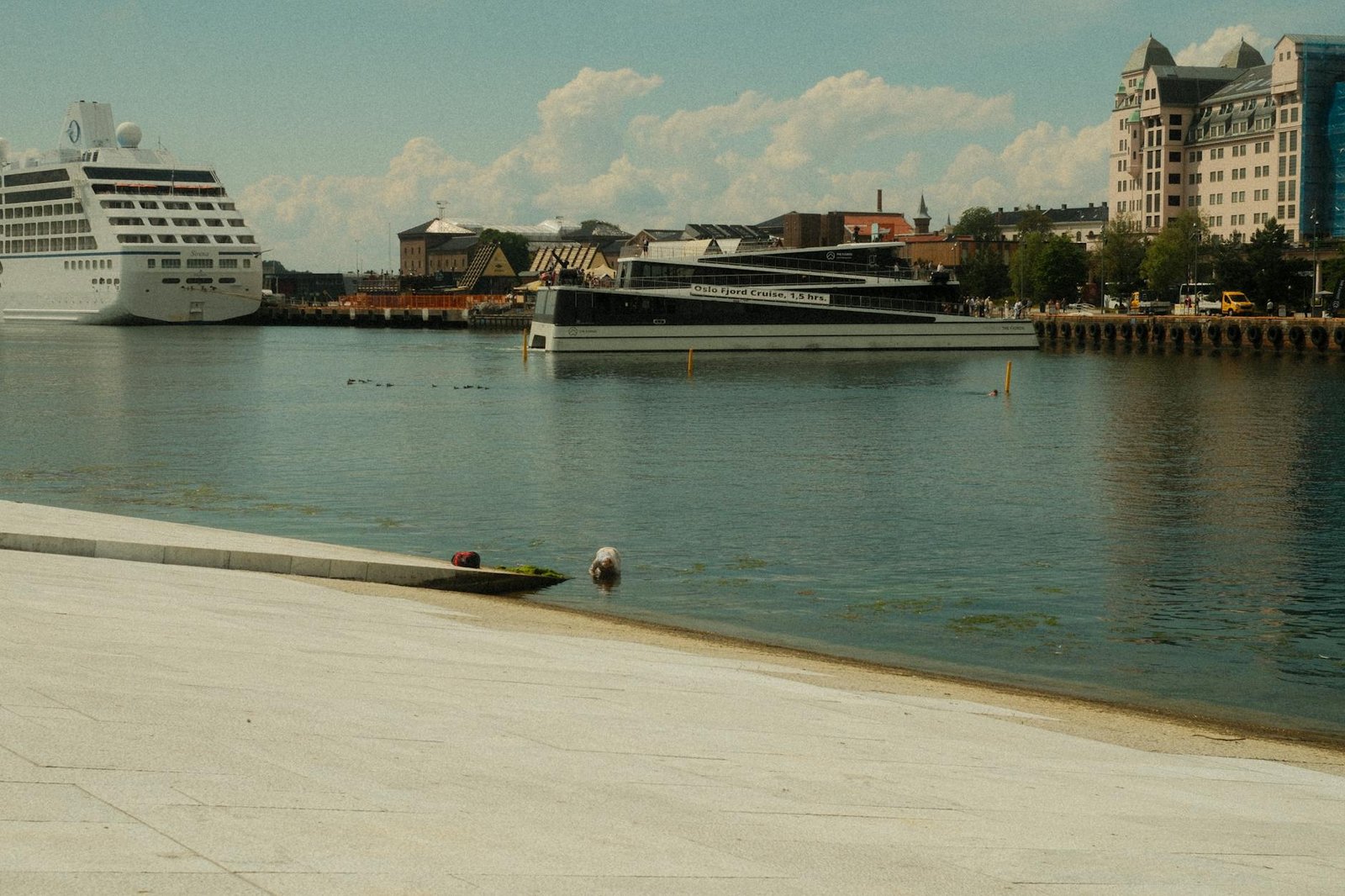
Norway’s capital greets you like a quiet revelation — the city easing into view between forested hills and glittering water, church spires and glass towers sharing the skyline without apology. Oslo is one of Scandinavia’s most walkable, liveable cities, and arriving by sea only deepens that first impression. Whether you have a single afternoon or a full day ashore, this is a port that rewards curiosity at every turn.
Arriving by Ship
Cruise ships dock at the Filipstad or Vippetangen terminals, both of which sit within the inner Oslofjord — meaning you glide past suburban waterfront neighbourhoods and small wooden sailing boats before you even step off the gangway. The approach itself is worth getting up early for: forested ridgelines frame the city on three sides, and on a clear morning the light off the fjord is extraordinary.
From the terminals, the city centre is genuinely close. Filipstad is roughly a 15-minute walk or a short taxi ride from Aker Brygge, Oslo’s buzzing waterfront district. Vippetangen is even more central, sitting just below the Akershus Fortress. Neither terminal requires a long transfer — you can be sipping coffee in the city within minutes of disembarking. If you’re heading further afield or coordinating a private arrival, a reliable private transfer takes the guesswork out of logistics. 🎟 Book: Private Transfer from Oslo Airport to Oslo City Centre
Things to Do

Oslo punches well above its weight for a city of its size. Start at the Akershus Fortress, a medieval castle that juts dramatically over the fjord — entry is free and the views back over the water are some of the best in the city. From there, the Royal Palace and its surrounding gardens are a leisurely stroll through the city’s elegant Kvadraturen district.
For first-timers wanting to make sense of it all quickly, a structured overview pays dividends. The Oslo Discovery Tour covers the city’s highlights in a single immersive sweep, giving you context before you start wandering independently. 🎟 Book: Oslo Discovery Tour Alternatively, if you prefer exploring on foot and absorbing neighbourhood life at street level, a guided city walk through Oslo’s heart introduces you to the architecture, history, and hidden corners that most visitors miss. 🎟 Book: Oslo City Walks – In the Heart of Oslo
Don’t overlook Grünerløkka, Oslo’s creative east-side neighbourhood. What was once a working-class district is now a constellation of independent coffee shops, vintage boutiques, and murals. It has a genuinely lived-in energy that feels distinct from the polished waterfront. A dedicated walking tour of Grünerløkka is one of the most enjoyable ways to spend two hours ashore. 🎟 Book: Oslo Norway Grünerløkka Walking Tour (in English)
History enthusiasts should make time for the Vigeland Sculpture Park — 212 bronze and granite figures arranged across a vast open park, free to enter, and utterly unlike anything else in Europe. If you’re curious about darker chapters, Oslo’s role during the Second World War is a story that many visitors leave without fully understanding. A specialist guided experience exploring Oslo and Norway during 1940–45 provides a sobering and deeply moving account of occupation, resistance, and survival. 🎟 Book: Unknown war. Oslo and Norway during 1940-45
Local Food
Norwegian food has undergone a quiet revolution, and Oslo is where you’ll feel it most sharply. Smørrebrød — the open-faced rye bread sandwich stacked with cured salmon, pickled herring, or roast beef — is the definitive lunch; seek it out at a traditional konditori or a smarter café around Aker Brygge. Rakfisk (fermented trout) is an acquired taste but worth trying if you consider yourself adventurous.
The Mathallen food hall in Grünerløkka is an excellent stop — a covered market packed with Norwegian charcuterie, artisan cheeses, freshly baked bread, and small restaurant stalls. For seafood, the Fiskeriet kiosk on the waterfront serves some of the freshest shrimp you’ll eat anywhere, simply boiled and served with bread and mayonnaise on paper plates. It’s wonderfully unpretentious. In the evening, the neighbourhood around Youngstorget square has a good cluster of restaurants serving modern Nordic cuisine without the tourist markup.
Shopping

Oslo isn’t a budget shopping destination, but it offers some genuinely distinctive things you won’t find elsewhere. Husfliden, near the city centre, is the place for traditional Norwegian handicrafts — hand-knitted wool sweaters, Sami-inspired jewellery, carved wooden items, and quality linens. These make far better souvenirs than anything you’ll find at a souvenir stall.
Aker Brygge and the adjacent Tjuvholmen district have a mix of Scandinavian design shops and international brands if you’re after homeware or fashion. For something quirkier, Grünerløkka’s independent boutiques carry vintage clothing, locally designed ceramics, and small-batch cosmetics. The main shopping street, Karl Johans gate, runs from the central station up to the Royal Palace and is where you’ll find department stores if practical shopping is on the agenda.
Practical Tips
Oslo is expensive — budget accordingly and take cash as a backup, though cards are accepted almost universally. The city is extremely walkable and safe. Public transport (buses, trams, metro) is efficient if you need it. English is spoken everywhere without exception. Weather in summer is mild and generally bright, but pack a light layer for mornings on the fjord. Most museums are closed on Mondays, so check ahead if there’s a specific collection on your list.
Oslo rewards slow, attentive travel. Give it the time it deserves and it will give you far more in return.
🎟️ Things to Book in Advance
These highly-rated experiences fill up fast — book before you arrive to avoid missing out.


This page contains affiliate links. If you book through them, we may earn a small commission at no extra cost to you.
Leave a Reply