


AmaKristina
Depart Depart
Itinerary: 13 Nights Europe Cruise (13 nights)
Tours that fit this port day →Spain
Barcelona is a major homeport for lines including Royal Caribbean, MSC Cruises, Norwegian Cruise Line, Celebrity Cruises, Princess Cruises, Costa, Cunard, Holland America, Disney Cruise Line, and others. It is a very good embarkation city with strong flight connections and plenty to do, but same-day flight arrivals are a bad gamble because traffic, airport delays, and terminal size can all slow you down.
Two ways to use this port
This guide is split between a normal port call and an embarkation day. Use the cards below as a quick glossary: port-day sections are for visiting by ship; embarkation sections are for starting or ending your cruise here.
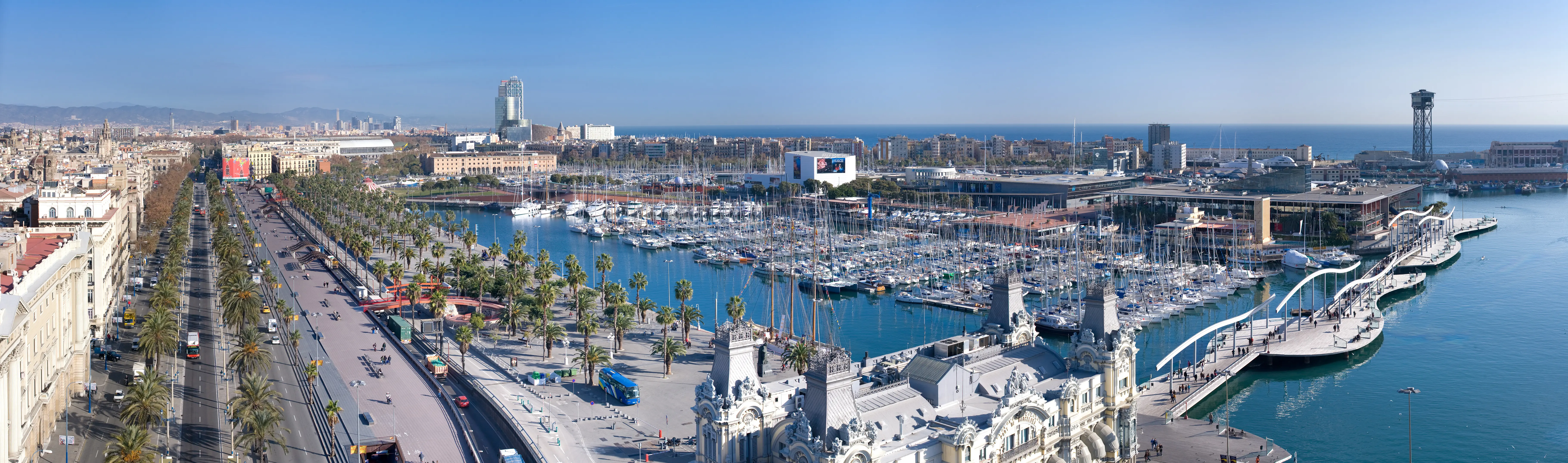
Ships dock at the Port of Barcelona cruise terminals (Moll Adossat/World Trade Center area), located approximately 3-4 km from Las Ramblas and the Gothic Quarter.
Enjoy a relaxing, scenic getaway from bustling Barcelona on this small-group tour to Montserrat, a beautiful nearby mountain. Here, visit the Montserrat Monastery and, if option…
Experience Barcelona’s emblematic surroundings on a full day trip through 3 iconic sites. Be amazed by one of the Catalan wonders with a visit to mystic…
Our picks in Barcelona
The best low-friction Barcelona plan for most cruisers. Narrow historic lanes, cathedral area, small squares, and plenty of places to stop for coffee or tapas without turning the day into a museum march.
Book Gothic Quarter self-guided walk from $102Barcelona's headline sight and worth it if you have never been. It is not a casual pop-in though: you need timed entry planning and should pair it with only one or two other stops, not six.
Book Sagrada Família from $114Still useful for a first visit, mainly as a connector rather than a destination. Good for people-watching and grabbing a snack, but crowded and touristy, so keep expectations realistic.
A smarter choice than overstuffing your day with tickets. Broad avenues, standout architecture, better shopping, and a more comfortable urban walk than the packed old city.
Book Passeig de Gràcia and Eixample on ViatorAn easy family-friendly option close to the waterfront with straightforward logistics. Not the deepest Barcelona experience, but solid if you want a simple half-day without overcomplicating transport.
Book with the ship, or on your own?
Booking independently
When the ship’s excursion makes sense
Going independent? Compare tours in Barcelona → — the best-reviewed ones sell out first.
We may earn a commission when you book through our links, at no extra cost to you — it’s how we keep these guides free.
Barcelona is one of the Mediterranean's biggest cruise ports and one of Europe's easiest cities to turn into a strong DIY day, if you plan it properly. Ships dock at the Port de Barcelona cruise piers south of the old city, and most passengers need a shuttle, taxi, or port transfer before the sightseeing part gets pleasant.
As a port of call, Barcelona works best for landmark-focused walking in the Gothic Quarter, waterfront, Eixample, and a small number of big-ticket sights. As an embarkation port, it is excellent: huge hotel supply, strong airport links, and enough to justify arriving at least a day early.
The main catch is time and crowding. Barcelona is popular, busy, and not cheap by cruise standards. If you try to cram in everything, you'll mostly remember lines and traffic.
Barcelona is generally manageable for cruise visitors, but pickpocketing is the big issue, especially around Las Ramblas, the Gothic Quarter, metro stations, airport links, and crowded sightseeing lines. Keep phones zipped away, carry bags closed in front of you, and do not leave luggage unattended even for a minute.
Violent crime is not what most visitors deal with here. The real problem is distraction theft: someone bumps you, asks for directions, or crowds you at a ticket machine while a wallet disappears. If you stay alert and avoid flashing valuables, most visits go fine.
Barcelona is more accessible than many old European cities, but it is not uniformly easy. Cruise terminals themselves are vehicle-oriented, and central sightseeing often involves uneven paving, curbs, slopes, and packed pedestrian areas.
For wheelchair users or anyone with limited stamina, taxis are often the smartest way to connect the terminal with a focused plan like Sagrada Família plus a flat stretch of Eixample or the waterfront. The Gothic Quarter is atmospheric but can be awkward on rough stone lanes.
Outside the terminal, expect a functional cruise port environment: roads, coaches, taxis, shuttle activity, and not much charm. This is not one of those ports where you stroll straight into the old town and start enjoying yourself.
Your first decision is transport. If you settle that quickly, Barcelona opens up well. If you hesitate and wander, you just waste port time in a traffic zone.
The city's most accessible beach – wide, sandy, and genuinely usable. Backed by a lively promenade with restaurants and bars. Crowded from June to September. Water quality is reasonable. Not a tropical paradise, but a real urban beach that works well on a warm port day.
A quieter stretch north of Barceloneta, popular with locals and slightly less chaotic than the main tourist beach. Same quality sand and sea, fewer hawkers. Reachable by metro (Bogatell stop on Line 4).
Barcelona is one of the better cruise homeports for eating well without much effort. You can keep it simple with pastries, sandwiches, tapas, and market snacks, or do a longer sit-down meal in Eixample, El Born, or the Gothic Quarter.
Near major tourist strips, quality varies wildly. Menus with giant photo boards and aggressive street-side sales pitches are usually a clue to keep walking. If you only have one meal ashore, make it count somewhere a block or two off the busiest lanes.
Barcelona is strong for fashion, food products, design, and familiar European retail, especially around Passeig de Gràcia and Eixample. The Gothic Quarter and Ramblas-adjacent lanes have souvenir shops, but plenty are generic and overpriced.
If you want something useful rather than tourist clutter, shop in central city neighborhoods, not right by the heaviest cruise foot traffic.
Gothic Quarter / Port Vell (mid-range) — Historic core near the waterfront with strong atmosphere and relatively easy taxi access to the terminal.
Eixample (mid-range) — Broader streets, many hotel choices, easier airport access, and good food; a bit farther from the port but very practical.
Passeig de Gràcia area (luxury) — Polished central base with upscale hotels, shopping, and easy sightseeing before or after the cruise.
| Budget | Mid-Range | Luxury |
|---|---|---|
| often limited in central areas; check current rates | check current rates | check current rates |
💡 Pro Tip: If you have an early boarding slot, stay central rather than airport-adjacent; you will get a better evening and an easier, shorter embarkation transfer.
BCN is the obvious and most convenient airport for this port. Public transit is fine into central Barcelona, but not ideal as a one-step terminal transfer with luggage.
🅿️ Port Parking: Parking is available for cruise passengers, but availability, booking rules, and rates vary. Check current rates before sailing.
🚢 Terminal Tips: Have your ship name and terminal ready before departure from hotel or airport. Luggage porters are usually available at drop-off, and using them can make large-terminal check-in much smoother.
Planning a cruise here?
Viking Ocean Cruises, Costa Cruises, MSC Cruises & more sail to Barcelona.
Many cruise passengers use the port shuttle between the cruise terminals and the Columbus Monument area near the bottom of Las Ramblas.
Fast and practical for Sagrada Família, Passeig de Gràcia, the Gothic Quarter edge, or airport transfers.
Excellent once you reach the city proper. Not directly outside every cruise terminal, so usually this is a second-step option after shuttle or taxi.
Great in the Gothic Quarter, Born, waterfront, and Eixample once you are dropped in the right place.
Details last checked May 2026
Barcelona-El Prat Airport (BCN) is the main airport and sits roughly 15 km from the cruise port. In normal traffic, a taxi ride is often around 20-30 minutes.
Yes. Barcelona is a major embarkation port, and flying in the day before is the sensible move because airport delays and city traffic are common enough to ruin same-day plans.
For most cruisers, stay in the Gothic Quarter/Port Vell side of the center or in Eixample. The first is handier for sightseeing and port access, while Eixample usually gives you more hotel choice and easier airport connections.
Taxi is usually the easiest direct option, while cruise transfers and private shuttles also work well. Train and metro are useful into the city, but they are not the simplest final step to the terminal with luggage.
Barcelona is a major homeport for Royal Caribbean, MSC Cruises, Norwegian Cruise Line, Celebrity Cruises, Princess Cruises, Costa, Cunard, Holland America, Disney Cruise Line, and several premium lines. It is one of the Mediterranean's busiest embarkation hubs.
The easiest wins are the Gothic Quarter, El Born, Passeig de Gràcia, and one major sight such as Sagrada Família. If you only have a few hours, keep the plan central and resist trying to do the whole city.
From some closer terminals and for confident walkers, parts of the route are possible, but it is usually not the smartest use of time. Most passengers should take the port shuttle or a taxi and start walking once they reach the city center.
The main safety issue is pickpocketing rather than violent crime, especially in crowded tourist zones and on transit. Parking is available at or near the port, but for current terms and prices, check current rates.
Find cruises to Barcelona, Spain
Compare sailings and book with no fees — best price guaranteed.
Also from this port
Embarking a cruise in Barcelona?
Terminal info, hotels, transfers, and which lines sail from here.
| Best arrival plan | Fly in at least one day before sailing and stay in central Barcelona or near the waterfront so embarkation morning is simple. |
| Main airport | Barcelona-El Prat Airport (BCN) |
| Best hotel area | The best areas are the Gothic Quarter/Port Vell side of Ciutat Vella and Eixample. The old city/waterfront area is handiest for a short pre-cruise stay and quick port transfers, while Eixample gives you more hotel choice, wider streets, and easier airport access. |
| Terminal type | Pier |
| Port to city centre | About 3-5 km to central Barcelona from the main cruise piers by taxi or shuttle |
| Best time to cruise | April - June, September - October |
| Cruise lines | Viking Ocean Cruises, Costa Cruises, MSC Cruises, AIDA Cruises, Windstar, Princess Cruises, Explora Journeys, Oceania Cruises, Celebrity Cruises, Norwegian Cruise Line, Regent Seven Seas Cruises, Cunard Line, Holland America Line, Seabourn, Silversea Cruises |
Same-day flights are one of the most common ways cruise trips go wrong. Arriving the night before removes that risk entirely. The The best areas are the Gothic Quarter/Port Vell side of Ciutat Vella and Eixample. The old city/waterfront area is handiest for a short pre-cruise stay and quick port transfers, while Eixample gives you more hotel choice, wider streets, and easier airport access. area gives you easy access to the terminal without the pier-adjacent price premium.
Pre-cruise hotel finder
Priced for one night, checking out the morning your ship sails. Open the map to see how close each hotel is to the terminal.
We may earn a commission when you book through our links, at no extra cost to you — it’s how we keep these guides free.
Barcelona is served by Barcelona-El Prat Airport (BCN). Here are your transfer options with typical costs and travel times:
Rideshare
~20-30 min from airportAvailable in Barcelona, but pickup rules can vary by terminal and event traffic can slow the approach.
Check Uber fareTaxi
~20-30 min from airportUsually the simplest airport-to-terminal option with direct drop-off at the correct cruise terminal.
Book a transfer 5% off with code TPO5 at checkoutShuttle
~30-60 minCruise line and private shared transfers are common and useful if you want less navigation hassle.
Book a transfer 5% off with code TPO5 at checkoutTrain
~25-35 min to cityGood from the airport into central Barcelona, but not a direct cruise-terminal solution because you still need a taxi or port transfer.
Book train ticketsDetails last checked May 2026
Barcelona has several large cruise terminals spread across the Adossat Wharf plus the World Trade Center terminal closer in. Check-in is generally efficient but distances are real, luggage drop is outside before security, and signage is decent once you are in the port area. Immediately outside the terminal, expect roadways, shuttle areas, taxis, and not much worth lingering for.
Ships dock at the Port of Barcelona cruise terminals (Moll Adossat/World Trade Center area), located approximately 3-4 km from Las Ramblas and the Gothic Quarter.
Details last checked May 2026
Costa Cruises
7 Nights Southern Europe Cruise
Next: Oct 2026
Costa Cruises
6 Nights Europe Cruise
Next: Oct 2026
AmaWaterways
13 Nights Europe Cruise
Next: Oct 2026
Regent Seven Seas Cruises
14 Nights Transatlantic Cruise
Next: Oct 2026
Viking Ocean Cruises
15 Nights Central Mediterranean Cruise
Next: Oct 2026
MSC Cruises
4 Nights Mediterranean Cruise
Next: Oct 2026
Costa Cruises
3 Nights Southern Europe Cruise
Next: Oct 2026
Viking Ocean Cruises
7 Nights Central Mediterranean Cruise
Next: Oct 2026
Find cruises departing Barcelona
Compare sailings and book with no fees — best price guaranteed.
We may earn a commission when you book through our links, at no extra cost to you — it’s how we keep these guides free.
Check The Date
Once you know whether you are visiting or embarking here, use the schedule to see the mix of port calls, embarkations, and disembarkations on your date.
Depart Depart
Itinerary: 13 Nights Europe Cruise (13 nights)
Tours that fit this port day →Depart 06:00 PM
Itinerary: 6 Nights Europe Cruise (6 nights)
Tours that fit this port day →Depart 09:00 PM
Itinerary: 14 Nights Transatlantic Cruise (14 nights)
Tours that fit this port day →Arrive 08:00 AM
Itinerary: 12 Nights Central Mediterranean Cruise (12 nights)
Tours that fit this port day →These are the lower-stress choices for arrival night, embarkation morning, a post-cruise afternoon, or a long layover when luggage, timing, and airport access matter.
Good if you want city views and a break from old-town crowds. Better for pre- or post-cruise stays than tight port calls unless you use taxis efficiently.
A good pre- or post-cruise neighborhood if you want historic streets with better food-and-walk balance than Las Ramblas. Add the museum only if you prebook and actually care about it.
Worth considering only if you have extra time before or after the cruise. It is uphill, timed, and awkward to combine with too many other sights on a same-day port schedule.
Book Park Güell from $31One of the best uses of an arrival evening: stay local, eat well, and do not overplan. Gothic Quarter, Born, and Eixample all work for a relaxed tapas-and-walk night.
If your flight is later and luggage is handled, Barcelona is one of the better ports for a short final city stop. Stick to one compact zone like the Gothic Quarter or Passeig de Gràcia and keep transfer time honest.
Know your exact terminal before you leave the hotel
Barcelona has multiple cruise terminals, and they are not all interchangeable on a rushed morning. Double-check your ship, terminal name, and boarding window before getting in the taxi.
Eat away from the busiest tourist corridor
The worst-value meals are usually in the most obvious places. Walk a few streets off Las Ramblas or choose Eixample or El Born for better odds of a decent meal.
Arrive the day before
Barcelona is a strong embarkation city, but same-day flight arrivals are still a bad idea. Airport delays, baggage issues, and port traffic can turn a reasonable plan into a missed ship.
Do not plan to drag bags around the old city
Barcelona's historic areas are uneven and crowded, and luggage becomes a nuisance fast. If you have time before check-in or after disembarkation, use hotel storage or a formal luggage solution.
Treat pickpocketing as normal risk, not paranoia
You do not need to be scared, just switched on. Zip bags, keep phones put away in dense crowds, and be extra careful on Las Ramblas, metro platforms, and around major sights.
Do fewer sights well
Barcelona rewards focused days. Pick one headline attraction plus one neighborhood, not a checklist of five major stops separated by lines and traffic.
Cards are easy, but keep a little euro cash
You can pay by card in most places, including many taxis. Still, a small amount of cash is useful for cafés, tips, or minor purchases.
Use taxis if mobility is limited
The city center is not impossible, but old paving, slopes, and long transfer distances can wear people down quickly. A taxi-first plan saves energy and usually improves the day.
Best months: April - June, September - October
Spring and fall are the sweet spot: warm enough for walking, usually less punishing than midsummer. July and August can be hot, crowded, and sticky. Winter is mild by northern Europe standards, but you can still get wind, rain, and a grey port day.
Barcelona-El Prat Airport (BCN) is the main airport and sits roughly 15 km from the cruise port. In normal traffic, a taxi ride is often around 20-30 minutes.
Yes. Barcelona is a major embarkation port, and flying in the day before is the sensible move because airport delays and city traffic are common enough to ruin same-day plans.
For most cruisers, stay in the Gothic Quarter/Port Vell side of the center or in Eixample. The first is handier for sightseeing and port access, while Eixample usually gives you more hotel choice and easier airport connections.
Taxi is usually the easiest direct option, while cruise transfers and private shuttles also work well. Train and metro are useful into the city, but they are not the simplest final step to the terminal with luggage.
Barcelona is a major homeport for Royal Caribbean, MSC Cruises, Norwegian Cruise Line, Celebrity Cruises, Princess Cruises, Costa, Cunard, Holland America, Disney Cruise Line, and several premium lines. It is one of the Mediterranean's busiest embarkation hubs.
The easiest wins are the Gothic Quarter, El Born, Passeig de Gràcia, and one major sight such as Sagrada Família. If you only have a few hours, keep the plan central and resist trying to do the whole city.
From some closer terminals and for confident walkers, parts of the route are possible, but it is usually not the smartest use of time. Most passengers should take the port shuttle or a taxi and start walking once they reach the city center.
The main safety issue is pickpocketing rather than violent crime, especially in crowded tourist zones and on transit. Parking is available at or near the port, but for current terms and prices, check current rates.
Tell us your sail date and we’ll email you a short Barcelona plan about 60 days out — when the good excursions start selling out — plus a final checklist 2 weeks before. Two emails, then done. We’ll send one note to confirm it’s really you — unsubscribe anytime.


