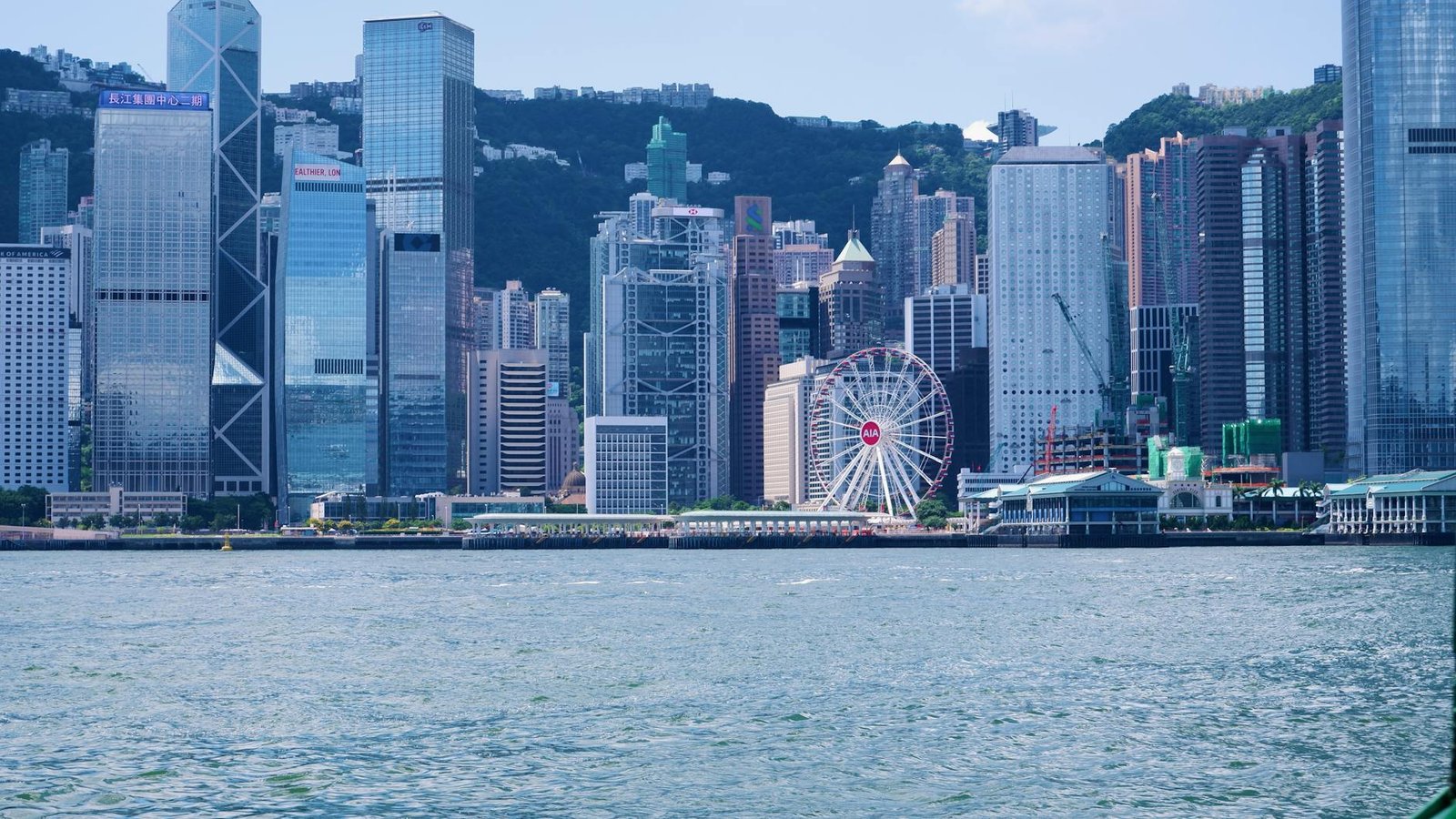
Hong Kong hits you like a shot of espresso — loud, electric, and impossible to forget. From the neon-lit harbour to dim sum carts rattling through century-old tea houses, this city rewards the curious. You don’t need a week here; you just need a plan.
Arriving by Ship
Most cruise ships dock at the Ocean Terminal in Tsim Sha Tsui, Kowloon — one of the most convenient cruise berths in Asia. You step off the gangway and you’re already in the thick of it, with the harbour, the MTR subway, and a fleet of taxis all within a five-minute walk.
A second terminal, the Kai Tak Cruise Terminal, sits on the old airport runway and offers jaw-dropping runway-to-skyline views. From here, a short taxi or bus ride gets you into the city centre in roughly 20 minutes.
Things to Do

Hong Kong is relentlessly layered — ancient temples squeezed between glass towers, night markets spilling into designer malls. One day is enough to scratch the surface if you move with purpose.
Icons & Views
- Victoria Peak via the Peak Tram is non-negotiable: the 130-year-old funicular cranks you up to 552 metres for a panorama that redefines skyline. The Sky Terrace 428 observation deck is open daily; tickets start at around USD 19.99. 🎟 Book: Hong Kong Peak Tram & Sky Terrace 428 Ticket | Hong Kong
- Hong Kong Observation Wheel sits right on the Central harbourfront and offers 360° views from 60 metres up for just USD 5.45 — a low-cost, high-reward 15 minutes. 🎟 Book: Hong Kong Observation Wheel Ticket
- Star Ferry between Tsim Sha Tsui and Central costs roughly HKD 2.70 (under USD 0.40) and gives you one of the world’s great harbour crossings in about eight minutes.
Culture & History
- Hong Kong Palace Museum in the West Kowloon Cultural District displays imperial treasures from Beijing’s Palace Museum; entry from USD 15.95, open Wednesday–Monday. 🎟 Book: Hong Kong Palace Museum Ticket
- Chi Lin Nunnery is a serene Tang Dynasty-style Buddhist complex built entirely without nails — free to enter and dramatically photogenic.
- Temple Street Night Market opens from around 4pm and runs until midnight, selling everything from jade carvings to phone cases alongside open-air fortune tellers.
Neighbourhoods
- Sheung Wan is Hong Kong Island’s most atmospheric neighbourhood, packed with dried seafood merchants, antique shops, and cool coffee bars in converted tenements.
- Mong Kok on the Kowloon side is one of the world’s most densely populated districts — chaotic, colourful, and perfect for street photography.
- Nan Lian Garden next to Chi Lin is a manicured Tang-dynasty landscape garden with golden pavilions and bonsai pine trees; free entry, open daily 7am–9pm.
What to Eat
Hong Kong is arguably the greatest food city in Asia, and eating here is as much a cultural experience as visiting any temple. Dim sum alone is reason enough to come ashore hungry.
- Har gow (steamed prawn dumplings) — the benchmark dish of any dim sum restaurant; try them at Tim Ho Wan (multiple branches), where a basket costs around HKD 30 (USD 4).
- Wonton noodle soup — silky egg noodles in a clear shrimp-pork broth; grab a bowl at Mak’s Noodle in Central for around HKD 55 (USD 7).
- Roast goose — crispy skin, juicy meat, served on rice; Yat Lok in Central holds a Michelin star and charges HKD 85–120 (USD 11–15) for a plate.
- Egg waffles (gai daan jai) — a Hong Kong street classic, honeycomb-shaped and sold from street carts in Mong Kok for HKD 20–30 (about USD 3).
- Hong Kong milk tea — strong Ceylon tea blended with evaporated milk, served hot or iced; order one at any cha chaan teng (local café) for under USD 2.
- Pineapple bun (bolo bao) — no pineapple involved; this fluffy bun with a sugary crust is best eaten with a slab of cold butter from any local bakery, around HKD 8 (USD 1).
Shopping

Tsim Sha Tsui is ground zero for shopping, with everything from the luxury malls of Canton Road to the bargain electronics of Nathan Road. For something more interesting, head to Jade Market on Kansu Street for carved jade pendants and accessories — get there before noon for the best selection.
Avoid buying luxury goods expecting a discount — Hong Kong’s prices for branded items are rarely cheaper than elsewhere. Instead, focus on what’s genuinely local: custom-tailored shirts (delivered same-day on Nathan Road), dried tea from a Sheung Wan specialist, or hand-painted mahjong sets.
Practical Tips
- Currency is the Hong Kong Dollar (HKD); USD is widely accepted but you’ll lose on the exchange rate, so grab HKD from any ATM.
- Tipping is not mandatory but rounding up or leaving 10% at sit-down restaurants is appreciated.
- The MTR subway is fast, cheap, and air-conditioned — buy an Octopus card at any station for seamless tap-and-go travel.
- Weather: Hong Kong is hot and humid from May to September; go ashore early before midday heat peaks.
- Best time ashore: leave the ship by 8:30am to beat tour groups to the Peak Tram.
- Safety: Hong Kong is extremely safe; standard precautions against pickpocketing in crowded markets are sufficient.
- A full day (8–10 hours) is enough to cover the Peak, a dim sum lunch, one cultural site, and an evening at Temple Street.
Pack light, wear comfortable shoes, and let Hong Kong do the rest — this city doesn’t disappoint.
🎟️ Things to Book in Advance
These highly-rated experiences fill up fast — book before you arrive to avoid missing out.


This page contains affiliate links. If you book through them, we may earn a small commission at no extra cost to you.
📍 Getting to Hong Kong
Use the interactive map below to explore the port area and plan your route from the terminal.
Leave a Reply