

Antarctica
South America
Puerto Williams Cruise Port Guide: Things to Do & Practical Tips
Chile
Small pier with limited capacity; some ships may need to tender to shore.
Choose the Right Port Day
Best Overall
Embrace this as an arrival/departure hub, not a destination. Walk the main street, sit by the water, take in the raw southern landscape, and understand this is the southernmost city in Chile—the atmosphere is the attraction.
Best Beach
Not relevant. Puerto Williams faces the Beagle Channel; the shoreline is rocky and cold. No beach culture here.
With Kids
Walk to the waterfront viewpoint, watch for sea birds and possibly dolphins in the channel. The Museo has Indigenous artifacts that engage older children. Keep it simple; town is small.
Only 3-4 Hours
Walk the main street (Calle Magallanes), visit the Museo Antropológico Martín Gusinde if open (30 min), grab lunch at a local café, return to ship with time to spare. Skip organized excursions unless your ship pre-booked them.
Cheapest Option
Walking tour of town (free) + café lunch ($8–15 USD) + museum entry if open (~$5–8 USD). Skip paid excursions unless your expedition organizer strongly recommends them.
What To Avoid
Overpriced shore excursions marketed as 'Tierra del Fuego tours' (you're already here). Don't expect reliable dining beyond basic cafés; many restaurants have limited hours or close in shoulder season.
Quick Take
- Port Type
- Remote expedition port
- Best For
- Expedition cruisers, nature photographers, travelers interested in southernmost inhabited landscapes; primarily a starting/ending point rather than a destination for shore exploration.
- Avoid If
- You want shopping, dining variety, nightlife, or typical tourist infrastructure. Most cruisers arrive/depart rather than explore ashore.
- Walkability
- Town center is a 10-15 minute walk from the pier, but options shrink quickly beyond the main street.
- Budget Fit
- Very low-cost for essentials; few commercial operators mean limited shore excursion choices and higher per-person costs for organized activities.
- Good For Short Calls?
- Yes, but realistic: a walk through town, a museum visit, and waterfront time consume most of a 4-hour window.

Top Things To Do
1
Sea crossing from Puerto Williams to Ushuaia
It offers a unique shipping experience, where in addition to taking you to your destination, you can appreciate on board the wonders of the Beagle Canal…
2h
Our picks in Puerto Williams
2
Walk Calle Magallanes and waterfront
The main street runs parallel to the Beagle Channel. Walk the length, drop into small shops and cafés, sit at the waterfront viewpoint, and watch for dolphins, sea lions, and seabirds. This is the heart of the town experience.
3
Museo Antropológico Martín Gusinde
Small museum focused on Yámana (Yaghan) Indigenous culture and natural history of the region. Modest but worthwhile if open during your port day. Hours are irregular; confirm with your ship upon arrival.
4
Beagle Channel birdwatching (independent or guided)
The channel supports Magellanic woodpeckers, cormorants, steamer ducks, and other sub-Antarctic species. Sit by the water or ask your cruise director about short guided bird-spotting walks. Binoculars essential.
Book with the ship, or on your own?
Booking independently
- Often noticeably cheaper than the ship’s version of the same tour.
- Smaller groups and local operators, with traveler reviews you can read before you pay.
- Free cancellation on most tours, usually up to 24 hours before.
When the ship’s excursion makes sense
- Short port calls or long transfers where the timing is tight.
- Tender-only stops where getting ashore can run late.
- The ship waits for its own delayed excursions — it won’t wait for independent ones, so leave a buffer before all-aboard.
Going independent? Compare tours in Puerto Williams → — the best-reviewed ones sell out first.
We may earn a commission when you book through our links, at no extra cost to you — it’s how we keep these guides free.
Check The Port Traffic
Cruise Ships in Port
Once you have your shore plan, use the schedule to see how busy the harbour will be on your date, plus the ships, lines, and published call windows.
Sun
Mon
Tue
Wed
Thu
Fri
Sat
1
2
3
4
5
6
7
8
9
10
11
12
13
14
15
16
17
18
19
20
21
22
23
24
25
26
27
28
29
30
Quiet (1–2)
Busy (3–4)
Packed (5+)
0 scheduled calls
September 15, 2026
No scheduled cruise ship calls were found for this date selection. Pick a highlighted day on the calendar above, widen the range, or search for a different ship or line.
Port Overview
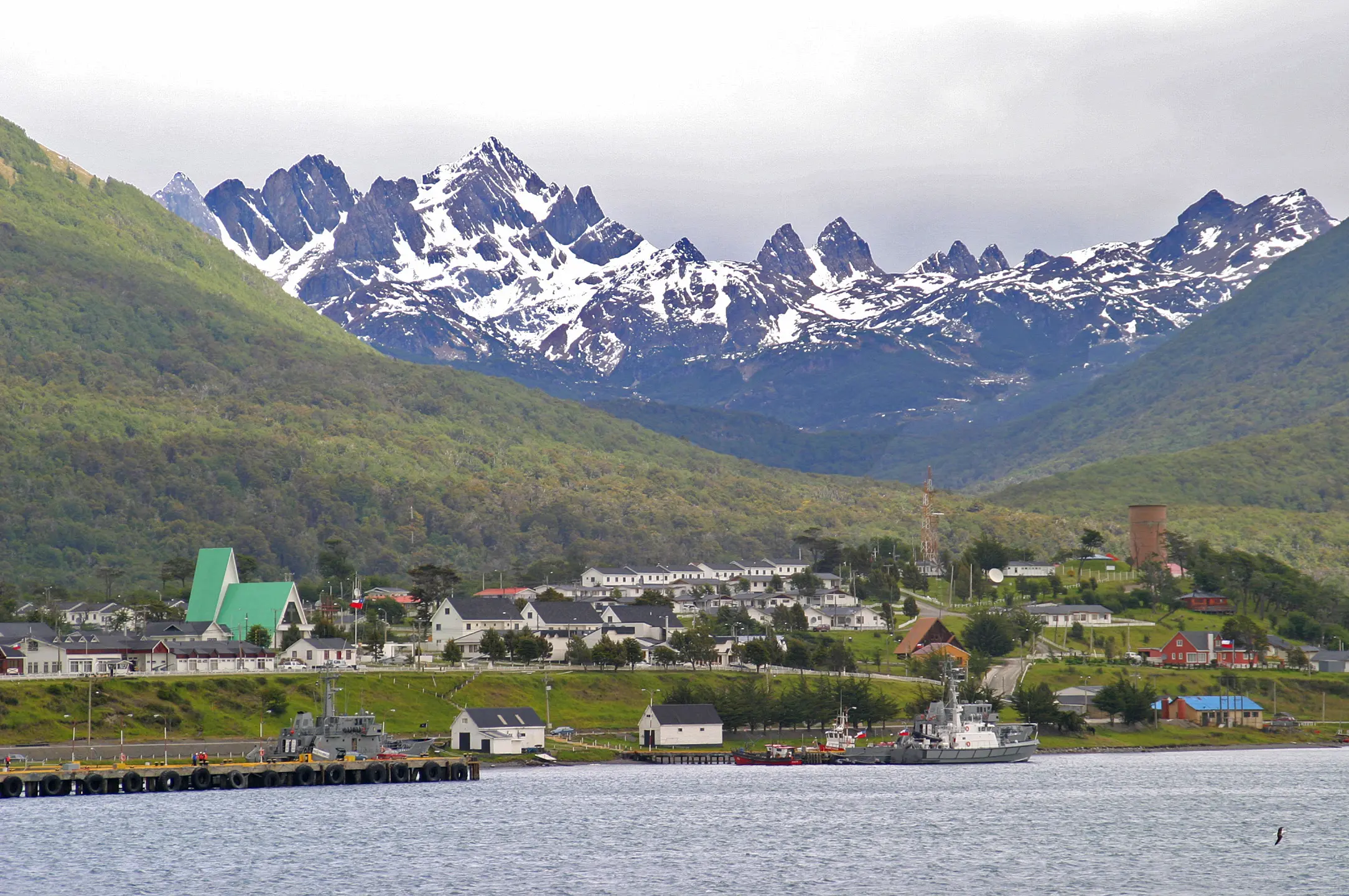
Puerto Williams sits on the north shore of Navarino Island in the Beagle Channel, roughly 250 km south of Ushuaia (Argentina). Ships dock at a modest pier; the town itself—home to about 2,000 people—is a working fishing and military settlement, not a cruise-focused resort. This is the southernmost city in Chile and one of the final outposts before Antarctica, accessible almost exclusively by expedition cruise lines (Lindblad, Quark, Hurtigruten, Ponant, Seabourn, Scenic, Aurora Expeditions, Regent Seven Seas). Most cruisers arrive or depart here; few treat it as a full day ashore destination.
The appeal is minimalist: raw Patagonian landscape, birdwatching, a small museum, and the sense of reaching the edge of the inhabited world. Infrastructure is sparse. Restaurants are basic, ATMs and shops are limited, and organized shore activities are fewer than in major ports. Wind and weather are constant; expect cold, changeable conditions year-round.
This port is honest work: you come to witness the landscape and town character, not to shop or dine. It is best treated as part of a multi-week expedition itinerary, not a standalone port day.
Is It Safe?
Puerto Williams is safe and calm. Petty crime is minimal; locals are used to expedition cruise passengers. Police presence is visible. Standard travel precautions (secure valuables, stay aware of surroundings) apply, but this is one of the safer ports in South America.
Weather is the real hazard: wind and sudden squalls are common. Dress warmly in layers, even in summer. The terrain is rugged; stick to marked paths if hiking. Hypothermia is a risk if immersed in the Beagle Channel; do not attempt swimming or water activities without a guide.

Accessibility & Walkability
Terrain in the town center is mostly flat and paved, but the port itself may have uneven surfaces and wind is relentless, making wheeled mobility challenging. The pier is functional but not purpose-built for large cruise ships; disembarkation may involve stairs or ramps depending on tidal conditions. The Museo Antropológico Martín Gusinde is a single-story building, likely accessible, but confirm on arrival. Most cafés and shops are ground-level, but restrooms are limited and may not be accessible. This is not an easy port for wheelchair users; work with your ship's accessibility team in advance.
Outside the Terminal
Exiting the pier, you face a modest parking area and the beginning of a residential street. There is no terminal building or immediate signage pointing to town; orientation is straightforward (uphill/inland toward the main street). The feel is raw and industrial—fishing boats, a small naval presence, and working waterfront. Wind is noticeable. The first impression is that you are at the edge of civilization, not at a tourist facility. This is intentional and honest.

Local Food & Drink
Puerto Williams has no restaurants in the tourist sense. There are a handful of small cafés and one or two simple restaurants offering basic Chilean fare: empanadas, pastas, seafood, coffee. Expect long waits, limited menus, and variable quality. Hours are often irregular, especially outside peak season (December–March). Many close by 18:00. Eat early or pack snacks from the ship. Don't expect craft cocktails, fine dining, or variety.
A typical lunch runs $8–15 USD for a simple plate. Cafés are warming places to shelter from wind while sipping coffee or tea. Fish and seafood are fresh but preparation is plain. There is no food court or dedicated cruise-passenger dining; you are eating where locals eat.
Shopping
Shopping is minimal. A few small stores sell basic groceries, souvenirs (postcards, small crafts), and supplies. There is no mall, duty-free, or chain retail. A cooperative or small market may stock local honey, chocolate, or artisanal items, but inventory is unpredictable. Most serious shopping happens pre-cruise (in Puerto Montt or Puerto Varas) or post-cruise. Don't plan a shopping port day around Puerto Williams.
Money & Currency
- Currency
- Chilean Peso (CLP)
- USD Accepted?
- No
- Card Payments
- Visa/Mastercard in larger shops and restaurants; not universal. Many small vendors are cash-only.
- ATMs
- One or two ATMs in town; they work but are not reliable. Withdraw cash from your ship or in a larger Chilean city before arriving.
- Tipping
- Tipping is not expected but is appreciated at cafés and restaurants (5–10% if service was good).
- Notes
- Bring extra cash in USD or Chilean Pesos. Card infrastructure is patchy. Your cruise line may offer currency exchange onboard; use it if available.
Weather & Best Time
- Best months
- December–February (Southern Hemisphere summer). Slightly warmer (5–10°C), longer daylight, lower chance of extreme wind.
- Avoid
- June–August (winter) brings snow, cold (0–5°C), and heavy weather. Ports may close.
- Temperature
- Cruises typically run November–March. Expect 2–12°C, constant wind, rain or snow possible any day.
- Notes
- Weather is unpredictable and harsh year-round. Pack waterproof layers, windproof jacket, and warm hats. Hypothermia risk is real. Wind gusts exceed 40 knots regularly.
Airport Information
- Airport
- Aeródromo Teniente Rodolfo Marsh (Puerto Williams), or fly via Ushuaia (Aeropuerto Internacional Ushuaia, 250 km north)
- Distance
- ~2 km (Puerto Williams airfield); ~250 km (Ushuaia)
- Getting there
- The small airfield in Puerto Williams has occasional flights (weather-dependent, not reliable for cruise embarkation/disembarkation). Most cruisers fly into Ushuaia and are transported by ship or charter boat. Ask your cruise line about pre-arranged transfers.
- Notes
- Puerto Williams airport is minimal and unreliable. Plan all air travel through Ushuaia. Flights are weather-dependent and may be cancelled. Confirm air arrangements with your cruise line well in advance.
Getting Around from the Port
Walking
Town center (Calle Magallanes, the main street) is 10–15 minutes on foot from the pier. The town is small; walk-able in 1–2 hours at a leisurely pace. Terrain is flat but often windy.
Ship-organized excursions
Your cruise line may offer pre-arranged guided tours, bird-watching trips, or visits to nearby Dientes de Navarino hiking trailheads. Availability varies by cruise.
Private guide or tour operator (if available)
A handful of local guides may meet ships on port day, but availability is unpredictable. Ask your cruise director or ship concierge upon arrival.
Book a transfer 5% off with code TPO5 at checkoutDetails last checked April 2026
Planning a cruise here?
Silversea Cruises, Costa Cruises, HX Expeditions sail to Puerto Williams.
Practical Tips for Cruise Passengers
- Treat this port as an arrival/departure hub or a minor stop on a longer expedition, not as a standalone destination. Shore time is best spent absorbing the landscape and town character rather than chasing activities.
- Bring cash (Chilean Pesos or USD); don't rely on cards. Withdraw what you need in Ushuaia or ask your ship's money exchange before arriving.
- Wear waterproof, windproof layers and warm hats at all times. Weather changes in minutes. Hypothermia is a real risk.
- Don't expect restaurants or shops to have regular hours. Ask your ship's concierge upon arrival for current options and times; many places close early or may not open on certain days.
Frequently Asked Questions
No. 3–4 hours is plenty to walk the town, visit the museum, and enjoy the waterfront. Most cruisers arrive or depart; few stay ashore longer. Treat it as one part of a multi-week expedition.
The Beagle Channel is cold (2–8°C year-round) and dangerous. Swimming is not recommended; only attempt water activities if your cruise line organizes a professionally guided excursion with safety gear.
Puerto Williams has no hotel infrastructure, limited flights, and no easy way out. Do not wander far from the port or take risks with timing. Board the ship as directed; this is not a port where you can casually recover if you're late.
Find cruises to Puerto Williams, Chile
Compare sailings and book with no fees — best price guaranteed.
We may earn a commission when you book through our links, at no extra cost to you — it’s how we keep these guides free.
✉ Sailing to Puerto Williams? Get your port-day plan
Tell us your sail date and we’ll email you a short Puerto Williams plan about 60 days out — when the good excursions start selling out — plus a final checklist 2 weeks before. Two emails, then done. We’ll send one note to confirm it’s really you — unsubscribe anytime.
Same itinerary network
View All
Ports Often Paired With Puerto Williams

Antarctica

Antarctica

South America
