Canada & New England
Canada & New England
Gjoa Haven Cruise Port Guide: Things to Do, Walkability & Arctic Tips
Nunavut, Canada
Small Arctic community with tender boat access; limited infrastructure.
Choose the Right Port Day
Best Overall
Spend 2–3 hours walking and absorbing the settlement's Arctic character, Inuit heritage, and connection to Roald Amundsen's expedition. Sit by the water, talk to locals if they're available, and understand this is about place and isolation, not activities.
Best Beach
Not relevant—Arctic tundra coastline, not swimming beaches. Shoreline photography and wildlife spotting are the appeal.
With Kids
Walk to the harbor, look for beluga whales and seal activity (seasonal), visit the co-op for local snacks, and explore the cemetery for local history interpretation.
Only 3-4 Hours
Walk the town loop from the dock, visit the small Gjoa Haven Museum or Roald Amundsen memorial, chat with locals at the co-op or Northern Store, and return to ship. No rushing.
Cheapest Option
Free: Walk the entire town, read plaques, enjoy the harbor view. Budget option: Buy a hot drink or snack at the Northern Store (check locally for current rates).
What To Avoid
Do not expect organized shore excursions, museums with lengthy hours, restaurants beyond basic co-op food, or souvenir shopping. Overpricing at the Northern Store is common—bring snacks from the ship if possible.
Quick Take
- Port Type
- Remote Arctic expedition port
- Best For
- History buffs, Inuit culture enthusiasts, Arctic explorers, visitors seeking authentic small-town character over amenities
- Avoid If
- You need shops, restaurants, organized tours, or expect cruise-port infrastructure
- Walkability
- Fully walkable town center (20-minute loop), but no sidewalks—gravel and dirt paths dominate
- Budget Fit
- Very budget-friendly if you explore independently; few commercial options means low spending temptation
- Good For Short Calls?
- Yes, 3–4 hours is realistic for the whole town
Top Things To Do
1
Walk the Town Loop & Harbor
Explore the entire settlement on foot, starting from the landing beach. Walk past the co-op, cemetery, and scattered homes. Sit by the harbor to watch for beluga whales, seals, or other Arctic marine life. The town is small enough to see everything in one walk.
2
Gjoa Haven Museum & Roald Amundsen History
A small community museum documents Amundsen's 1906–1907 overwintering at Gjoa Haven during his Northwest Passage expedition. Exhibits include local history, Inuit culture, and Arctic exploration artifacts. Hours and access vary; ask locals or your cruise director.
3
Northern Store & Co-op Visit
The settlement's main commercial hub. Browse local goods, Inuit crafts, and Arctic supplies. Prices are high due to remote supply chains, but selection is genuine. Chat with staff about local life—many enjoy speaking with visitors.
Show 1 more thing to do in Gjoa Haven
4
Cemetery & Local Burial Traditions
The town cemetery reflects Inuit and early settler history. Graves, markers, and monuments tell stories of Arctic life, subsistence, and adaptation. Local history is visible in the grave dates and names—a quiet, respectful way to understand the settlement.
Book with the ship, or on your own?
Booking independently
- Often noticeably cheaper than the ship’s version of the same tour.
- Smaller groups and local operators, with traveler reviews you can read before you pay.
- Free cancellation on most tours, usually up to 24 hours before.
When the ship’s excursion makes sense
- Short port calls or long transfers where the timing is tight.
- Tender-only stops where getting ashore can run late.
- The ship waits for its own delayed excursions — it won’t wait for independent ones, so leave a buffer before all-aboard.
We may earn a commission when you book through our links, at no extra cost to you — it’s how we keep these guides free.
Check The Port Traffic
Cruise Ships in Port
Once you have your shore plan, use the schedule to see how busy the harbour will be on your date, plus the ships, lines, and published call windows.
Sun
Mon
Tue
Wed
Thu
Fri
Sat
1
2
3
4
5
6
7
8
9
10
11
12
13
14
15
16
17
18
19
20
21
22
23
24
25
26
27
28
29
30
31
Quiet (1–2)
Busy (3–4)
Packed (5+)
0 scheduled calls
October 10, 2026
No scheduled cruise ship calls were found for this date selection. Pick a highlighted day on the calendar above, widen the range, or search for a different ship or line.
Port Overview
Gjoa Haven is a tiny Inuit settlement on King William Island in the Canadian Arctic, reachable only by ship or aircraft. Ships anchor offshore; passengers tender ashore to a small gravel beach and simple landing area. The town has roughly 1,000 residents and exists primarily as a working community—not a tourist destination. Its main draw is authentic Arctic character, Roald Amundsen's 1906–1907 expedition base, and the chance to experience extreme remoteness without hype.
Most cruisers visit via expedition lines (Lindblad, Hurtigruten, Quark, Ponant) that emphasize Arctic wildlife, Inuit culture, and exploration history. There are no resorts, no organized shore excursion booking, and minimal commercial infrastructure. What you get is silence, cold, isolation, and genuine local life. This is not a port to "do"—it is a port to *experience*.
Is It Safe?
Gjoa Haven is safe for cruisers. Crime is virtually nonexistent, and locals are accustomed to ship visitors. However, the Arctic environment is the real hazard: sudden weather changes, rough seas preventing tender operations, and extreme cold. Wear heavy insulated waterproof gear even in summer; wind chill is brutal. Stay aware of your tender departure time and do not wander beyond the visible settlement—tundra is featureless and disorienting. If hiking beyond town, ask locals or your ship's expedition team for advice on terrain and wildlife (polar bears are rare near the settlement but possible inland).
Accessibility & Walkability
The town is walkable but challenging for mobility issues. Landing beaches are gravel with no formal docks; tender transfer requires agility. Paths are uneven dirt and gravel with no curbs or marked routes. No wheelchair rental or accessible facilities exist. If you have limited mobility, notify your cruise line in advance; some expedition ships can accommodate tender assistance, but terrain is inherently rough.
Outside the Terminal
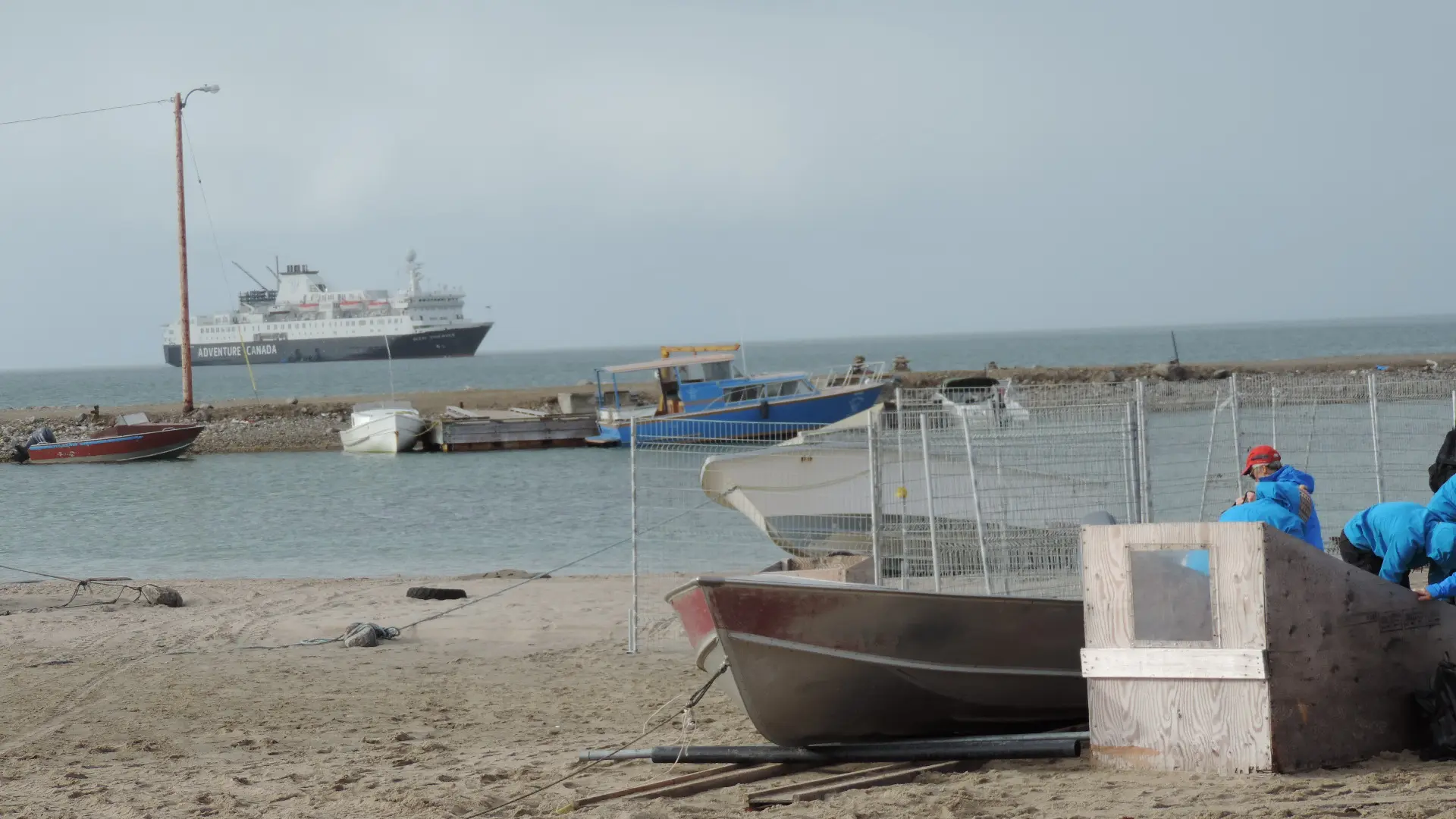
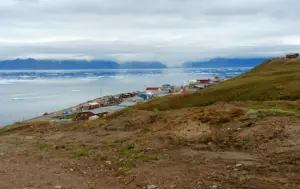
You will land on a gravel beach with a simple tent or shelter structure serving as a makeshift landing post. A handful of locals may be present to help with luggage or greet visitors. The settlement spreads inland from the shore—houses, a few larger buildings (co-op, school), and scattered structures visible across the tundra. Wind is common and temperature shocks even summer visitors. Expect cold, quiet, and the feeling of the end of the world. There is no formal "terminal"—just landing, orientation from expedition staff, and immediate immersion in Arctic solitude.
Beaches Near the Port
Gjoa Haven Gravel Beach (Landing Area)
Not a swimming beach—cold Arctic water, rocky/gravel substrate, and strong currents make bathing impossible. The landing beach serves as the entry point to town and a vantage for harbor wildlife observation.
Local Food & Drink
Gjoa Haven has no restaurants. Your only options are snacks and basic food at the Northern Store or co-op (sandwiches, snacks, hot drinks). Prices are 30–50% higher than Southern Canada due to remote supply logistics. If you have dietary requirements or want a meal, eat on the ship. Some cruise lines provide packed lunches for guests going ashore; confirm with your operator. Locals subsist on hunting (Arctic char, seal, whale) and southern imports—food security is a serious topic here, not a casual dining experience.
Shopping
Shopping is minimal and pragmatic. The Northern Store and co-op sell basic groceries, fuel, hardware, and some Inuit crafts (carvings, beadwork, furs). Prices reflect extreme isolation; a carved soapstone figure or fur item will be expensive relative to Southern Canada but authentic. No souvenir shops, no chain stores, no malls. Cash is preferred, though some card machines exist. If seeking Inuit art, ask staff for recommendations on local artisans—purchases directly support the community far more than imports.
Money & Currency
- Currency
- Canadian Dollar (CAD)
- USD Accepted?
- No
- Card Payments
- Limited—Northern Store accepts cards, but bring cash as backup. ATM not reliably available.
- ATMs
- Minimal or none; assume no ATM. Withdraw CAD from your ship or before arrival.
- Tipping
- Not expected or customary in this informal setting. If a local guides you, a modest cash tip ($5–10 CAD) is appreciated but not obligatory.
- Notes
- Bring sufficient CAD cash for the day. Prices are 30–50% higher than Southern Canada. Credit cards work sporadically. Plan to spend little beyond ship-provided meals and optional snacks.
Weather & Best Time
- Best months
- July–August (peak brief Arctic summer, 50–60°F / 10–15°C, 24-hour daylight)
- Avoid
- October–May (extreme cold, dark, ice risk)
- Temperature
- July–August: 45–60°F (7–15°C). September: 35–50°F (2–10°C). Pack for extreme cold and wind.
- Notes
- Arctic weather is unpredictable and severe. Tender operations can be cancelled due to swell or wind. Dress in heavy insulated waterproof layers—a single light jacket will not suffice. The sun barely sets in July; bring sunscreen. Prepare for wet, cold conditions at all times.
Airport Information
- Airport
- Gjoa Haven Airport (YGH)
- Distance
- 5–10 km from settlement
- Getting there
- Arrange transport through your cruise line or ask locals. No taxi service; informal rides available.
- Notes
- Most cruisers arrive and depart by ship, not air. If flying, notify your cruise operator well in advance. Flights are infrequent and weather-dependent.
Getting Around from the Port
Tender
Ships anchor 1–2 km offshore; Zodiacs or tenders ferry passengers to gravel beach. Expedition cruises manage boarding and landing logistics.
Walking
Town is entirely walkable on foot. Main attractions (museum, harbor, co-op, cemetery) are within a 20-minute radius of the landing beach.
Taxi or Snowmobile (seasonal)
A handful of locals offer informal rides; inquire at the co-op or ask your cruise director. Winter travel by snowmobile; summer by truck.
Book a transfer 5% off with code TPO5 at checkoutDetails last checked April 2026
Planning a cruise here?
HX Expeditions, Silversea Cruises sail to Gjoa Haven.
Practical Tips for Cruise Passengers
- Arrive at the tender area early; rough seas or wind can shorten or cancel landings. Be ready to board quickly and dress warmly even if shore time is brief.
- Bring cash (CAD)—the Northern Store has high prices, and card machines are unreliable. Eat on the ship if possible; no meal options ashore.
- Ask locals about wildlife or history if they're available; many enjoy conversation, and firsthand insight beats any guidebook. Respect privacy and hunting/subsistence practices.
- Bring a waterproof camera or phone case; the beach is wet, wind is fierce, and Arctic light is stunning but harsh. Photo opportunities are abundant if you're quick.
Frequently Asked Questions
No. Arctic water is dangerously cold (near freezing even in summer), and all landings are tender-only due to the anchorage location. Ship expedition staff manage all passenger transfers.
Crime is virtually nonexistent. The real risk is Arctic weather, sudden sea state changes preventing tender operations, and disorientation on tundra terrain. Stay with the group, dress heavily, and do not wander inland without guidance.
A few hours (3–4) is realistic and sufficient. You can see the entire town, visit the museum or co-op, and soak in the Arctic atmosphere. Longer stays require pre-arranged activities or guides; the settlement does not generate a full day of activities on its own.
Find cruises to Gjoa Haven, Nunavut, Canada
Compare sailings and book with no fees — best price guaranteed.
We may earn a commission when you book through our links, at no extra cost to you — it’s how we keep these guides free.
✉ Sailing to Gjoa Haven? Get your port-day plan
Tell us your sail date and we’ll email you a short Gjoa Haven plan about 60 days out — when the good excursions start selling out — plus a final checklist 2 weeks before. Two emails, then done. We’ll send one note to confirm it’s really you — unsubscribe anytime.
Same itinerary network
View All
Ports Often Paired With Gjoa Haven
Northern Europe
Canada & New England
Canada & New England