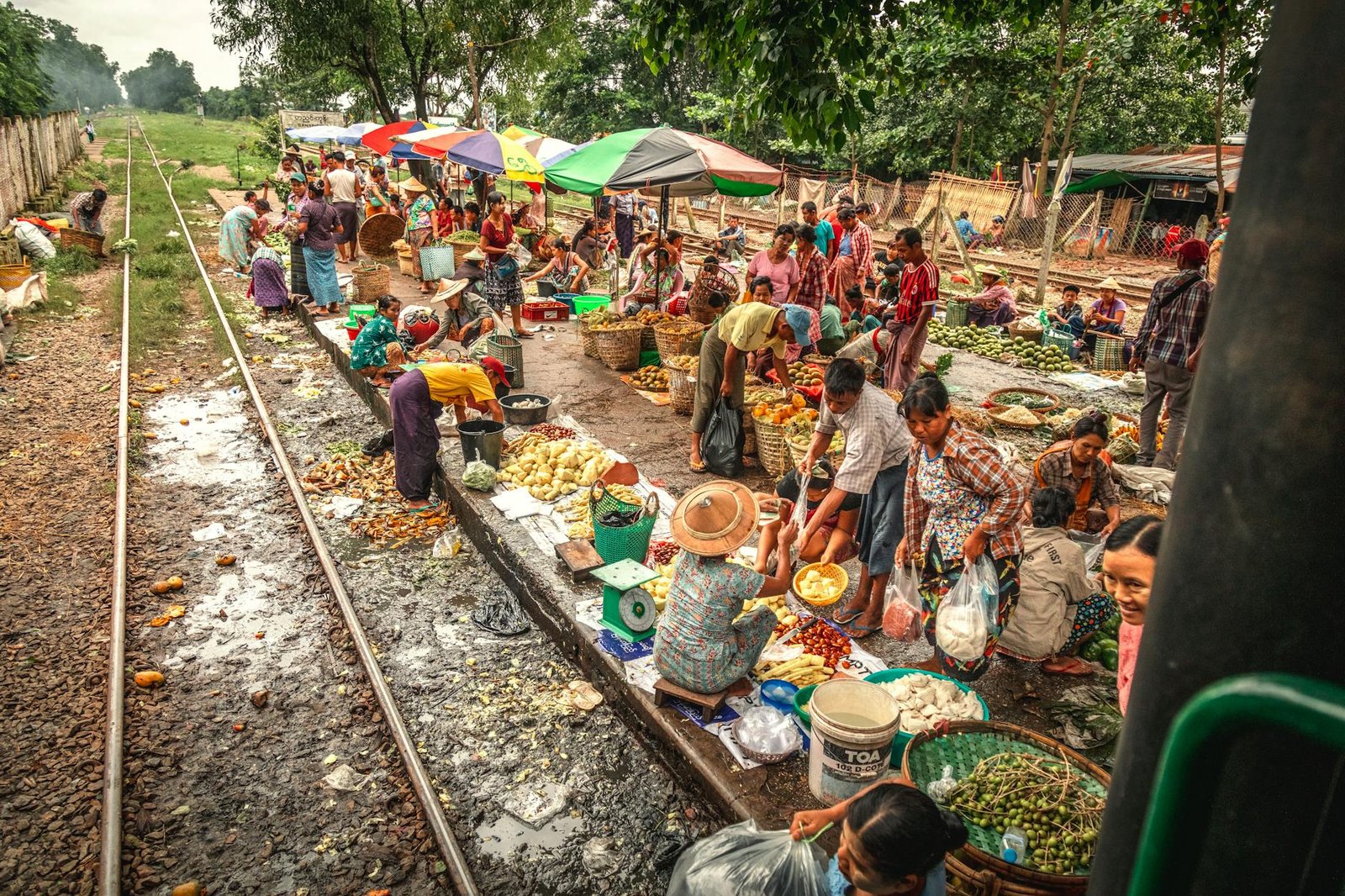
Fewer than a handful of river cruise itineraries reach Bhamo, making it one of Southeast Asia’s most genuinely off-the-beaten-path port calls. This frontier town in northern Shan State sits where the Irrawaddy River becomes too shallow and rocky for larger vessels to continue — the literal end of the navigable line. What you find here is raw, unhurried Myanmar life that feels untouched by mass tourism.
Arriving by Ship
Bhamo’s riverfront is a working wharf, not a polished cruise terminal — wooden longboats jostle alongside cargo ferries and the occasional river cruise vessel. Depending on water levels and your ship’s size, you may dock directly at the town jetty or transfer ashore by tender; your cruise director will confirm the morning of arrival.
The jetty drops you practically into the heart of town, with the main market just a five-minute walk north. This is one of those rare port stops where you don’t need organised transport to get your bearings — Bhamo is compact, walkable, and easy to explore independently.
Things to Do

Bhamo punches well above its weight for a small frontier town, blending ancient temples, living markets, and jungle-fringed day trips that few Western travellers ever experience.
History & Culture
- Shwekynimaw Pagoda is Bhamo’s most sacred site, a gleaming white stupa surrounded by smaller shrines and lively with local worshippers at dawn — entry is free and shoes must be removed at the gate.
- Fort Bhamo ruins are remnants of a British colonial garrison on the town’s northern edge; crumbling walls and overgrown earthworks make for atmospheric wandering with a sense of frontier history.
- Kachin State Cultural Museum (small local collection near the market) offers a surprisingly rich window into the area’s ethnic diversity — admission is typically under $1 USD.
- Morning prayers at the Shan Buddhist Monastery are open to respectful visitors; arrive before 6 a.m. to watch monks receive alms along the main road.
Markets & Local Life
- Bhamo Market (Zay Gyi) is one of the most ethnically diverse trading hubs in Myanmar — Kachin, Shan, Bamar, and Chinese traders gather daily from around 5 a.m., selling jade, dried goods, and livestock.
- The Irrawaddy riverbank at sunrise is worth doing for the sheer spectacle of longboat fishermen casting nets against a mist-covered river — no entry fee, just show up early.
- The Chinese quarter along the main street north of the market reflects centuries of cross-border trade with Yunnan Province; the architecture and temple shrines are distinctly Yunnanese.
Day Trips
- Sampanago village, a short trishaw ride from town, is an ancient walled settlement where residents still farm inside crumbling brick fortifications dating back over 400 years.
- Thabeikkyin forest road (accessible by hired motorbike taxi, around $5–8 USD) passes teak forests and small hillside villages that see almost no tourist traffic.
What to Eat
Bhamo’s food scene is a genuine cross-cultural experience — Burmese, Shan, Kachin, and Yunnanese Chinese flavours all share the same street corners and market stalls.
- Mohinga (fish noodle soup) is Myanmar’s national breakfast dish; find it at market stalls from 5–9 a.m. for around 500–1,000 kyat (under $1 USD).
- Shan noodles — flat rice noodles in a light tomato-pork broth — are widely available at small tea shops near the market for roughly $1 USD a bowl.
- Yunnanese pork buns are sold hot from bamboo steamers in the Chinese quarter from early morning; two or three buns cost around $0.50 USD.
- Grilled river fish (often catfish or carp) is sold at simple riverside stalls in the late afternoon, seasoned with lemongrass and chilli — expect to pay $2–3 USD per portion.
- Laphet thoke (fermented tea leaf salad) is the ultimate Myanmar snack and available at most local tea houses; it’s tangy, crunchy, and deeply addictive for around 500 kyat.
Shopping

The market is where you’ll find the most interesting buys — locally woven Kachin textiles in bold geometric patterns, small jade pieces from nearby mines, and dried herbs that are genuinely unique to this region. Handwoven shoulder bags (htamein bags) make excellent lightweight souvenirs and typically cost $5–15 USD direct from weavers.
Avoid purchasing jade or gemstones unless you know what you’re looking at — unregulated markets attract imitation pieces aimed at uninformed buyers. Stick to textiles and handcrafted goods where provenance is clear and the price is fair.
Practical Tips
- Currency: Carry kyat in small denominations — US dollars are less useful in Bhamo than in larger Myanmar cities, and ATMs are unreliable.
- Dress code: Cover shoulders and knees at all temples and monasteries; a lightweight scarf doubles as a quick cover-up.
- Transport: Trishaws (bicycle rickshaws) are the standard local taxi — agree a price before you set off; most short trips cost 500–1,000 kyat.
- Timing: Go ashore as early as possible — the market and riverside are most alive between 5–9 a.m. before the heat builds.
- Photography: Always ask permission before photographing people, particularly at religious sites and inside the market.
- Safety: Bhamo is generally safe for independent walking, but stay within the town centre and check with your cruise director about any current local advisories.
- Time needed: Four to five hours is enough to cover the market, a pagoda, and a riverside walk without rushing.
Bhamo rewards the curious traveller who steps off the ship without a plan — this is Myanmar in its most unfiltered, genuinely welcoming form, and you’ll be talking about it long after the Irrawaddy disappears behind you.
📍 Getting to Bhamo, Myanmar
Use the interactive map below to explore the port area and plan your route from the terminal.
Leave a Reply