


Mediterranean
Mediterranean
Korčula Island Cruise Port Guide: Things to Do, Beaches & Transport Tips
Croatia
Ships dock at the main pier in Korcula town or anchor offshore with tender service depending on vessel size.
Choose the Right Port Day
Best Overall
Spend the first half of your day in the old town — Cathedral of St. Mark, town walls, a coffee on the square — then walk to a beach for the afternoon. This is exactly what Korčula is built for.
Best Beach
Banje Beach is the closest decent beach to the old town, about a 10-minute walk. Luka Beach on the western side is quieter if you want fewer people.
With Kids
Explore the old town's narrow lanes, watch for the Marco Polo House (the legend that he was born here is disputed but kids enjoy the story), then hit Banje Beach for a swim. Simple and crowd-pleasing.
Only 3-4 Hours
Walk straight into the old town (5 minutes from the dock), climb the town walls or the Cathedral of St. Mark, grab a coffee on the main square, then head to Banje Beach for a swim before returning. Easy, rewarding, free-to-cheap.
Cheapest Option
Walk the old town for free, swim at Banje Beach (free entry to the public section), and grab grilled fish or a burek at a local konoba. Expect to spend $15-25 USD total.
What To Avoid
Avoid the Marco Polo Museum if you're short on time — it's small and underwhelming relative to the entrance fee. Also skip the overpriced restaurants right outside the old town gates; walk two streets in for better value.
Quick Take
- Port Type
- Historic Small Island Port
- Best For
- Medieval old-town walkers, beach lovers, seafood fans, and anyone wanting a relaxed Adriatic island day
- Avoid If
- You need a full-day activity agenda or have serious mobility limitations — the old town is cobbled and hilly
- Walkability
- High within the old town; most key sights are within 10 minutes of the dock on foot
- Budget Fit
- Moderate — you can do the old town cheaply, but restaurants and excursions add up fast
- Good For Short Calls?
- Excellent — Korčula is genuinely completable in 3-4 hours without feeling rushed
Top Things To Do
1
Bits of History - Half day kayak Tour with Wine delight
Spirit of Korkyra is a small, family-run business - not a franchise. Boris and Ivka built it from scratch, and Ivka grew up right here in…
5hFree cancellation
2
1 Hour Private Walking Tour in Korcula
Korčula is a wonderful place to visit! History, art and present day life tell the story of a town sculpted in white stone 1000 years ago.…
1hFree cancellation
Our picks in Korčula Island
3
Old Town Wander and Cathedral of St. Mark
The walled old town is the reason you're here. The Cathedral of St. Mark sits at its heart — a Gothic-Renaissance church with a detailed facade and a relaxed, non-touristy interior. The surrounding lanes are tight, atmospheric, and actually lived-in. Give yourself an hour to properly explore without rushing.
4
Town Walls and Tower Views
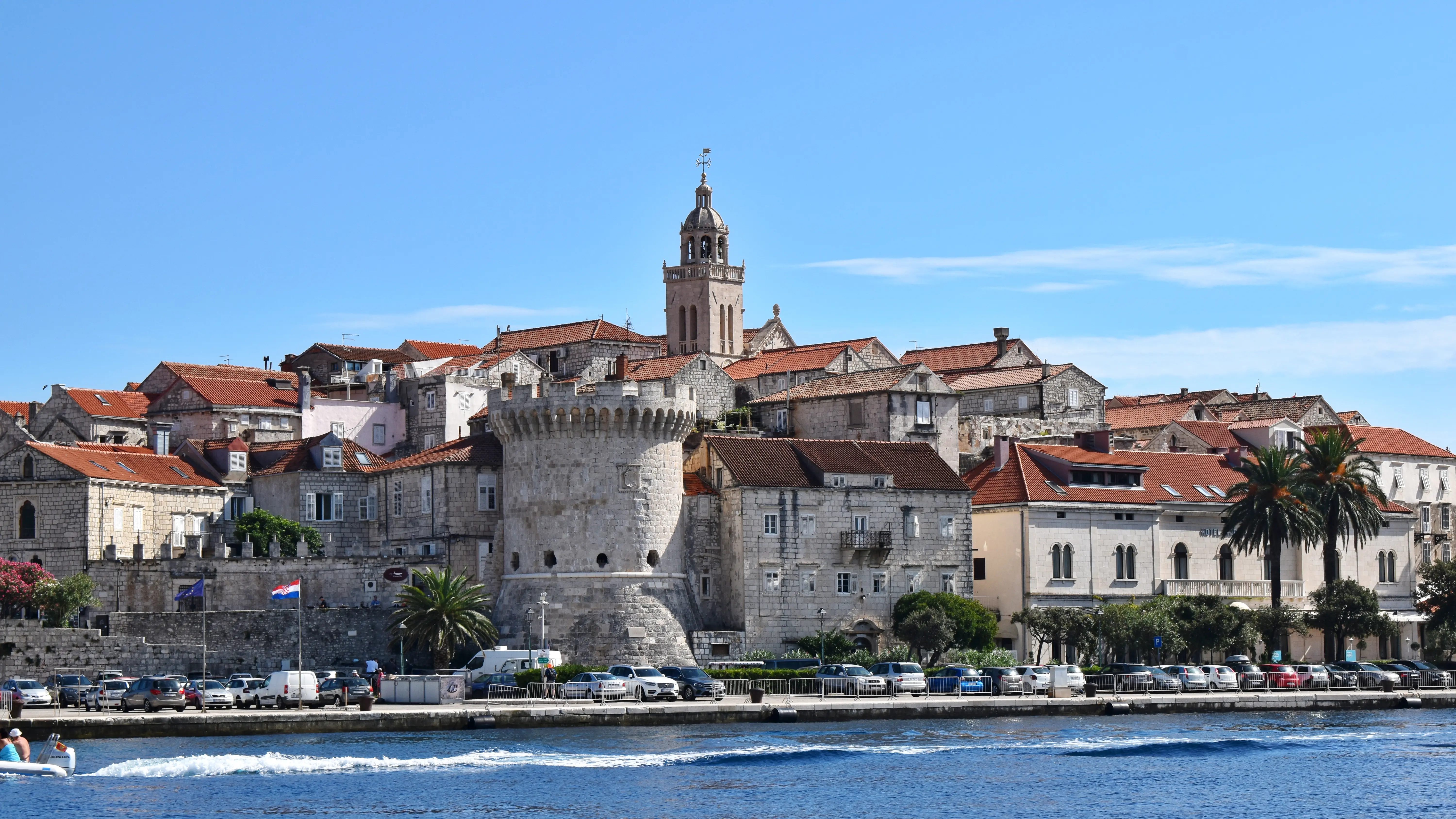
You can access parts of the town's defensive walls and climb the Large Governor's Tower for views over the terracotta rooftops and the Pelješac channel. Not as extensive as Dubrovnik's walls, but the views are genuinely excellent for the effort involved.
5
Swim at Banje or Luka Beach
Banje Beach is the most convenient — a 10-minute walk from the dock with clear water and a pebbly shore. It gets busy in summer but is perfectly swimmable. Luka Beach on the opposite side of the peninsula is slightly quieter and worth the extra few minutes of walking.
Show 3 more things to do in Korčula Island
6
Lumbarda Village and Sandy Beaches
Lumbarda, 6 km from Korčula town, has the island's best sandy beaches — genuinely rare in Croatia. Pržina Beach (also called Bilin Žal) is the standout, a proper sandy bay. Reach it by bike, taxi, or water taxi. Worth the trip if you have 3+ hours and prioritize a good beach.
7
Local Wine Tasting (Pošip and Grk)
Korčula Island produces two notable indigenous white wines — Pošip and Grk — that are well-regarded Croatian varieties rarely found outside the region. Several small wine bars and konobas in the old town serve them by the glass. A quick tasting session is a legitimate and enjoyable 30-45 minute stop.
8
Sea Kayaking Along the Coast
Several operators near the dock offer guided or self-guided kayaking along the town's coastline and to small nearby coves. A 2-hour trip covers sea caves, clear water, and views of the old town from the water — a genuinely different perspective. Book ahead in peak season.
Book with the ship, or on your own?
Booking independently
- Often noticeably cheaper than the ship’s version of the same tour.
- Smaller groups and local operators, with traveler reviews you can read before you pay.
- Free cancellation on most tours, usually up to 24 hours before.
When the ship’s excursion makes sense
- Short port calls or long transfers where the timing is tight.
- Tender-only stops where getting ashore can run late.
- The ship waits for its own delayed excursions — it won’t wait for independent ones, so leave a buffer before all-aboard.
Going independent? Compare tours in Korčula Island → — the best-reviewed ones sell out first.
We may earn a commission when you book through our links, at no extra cost to you — it’s how we keep these guides free.
Check The Port Traffic
Cruise Ships in Port
Once you have your shore plan, use the schedule to see how busy the harbour will be on your date, plus the ships, lines, and published call windows.
Sun
Mon
Tue
Wed
Thu
Fri
Sat
1
2
3
4
5
1 ship
6
7
8
9
10
11
12
13
14
15
16
17
18
19
20
21
22
23
24
25
26
27
28
29
30
31
Quiet (1–2)
Busy (3–4)
Packed (5+)
0 scheduled calls
October 19, 2026
No scheduled cruise ship calls were found for this date selection. Pick a highlighted day on the calendar above, widen the range, or search for a different ship or line.
Port Overview
Korčula is one of the most photogenic small ports in the Adriatic — a medieval walled town sitting on a compact peninsula surrounded by clear turquoise water. Ships either dock at the ferry quay near the old town or tender in depending on the vessel size and season, but either way you're within a short walk of everything worth seeing.
The town is genuinely walkable and genuinely historic. It's not a staged tourist set — people live here, the cathedral is real, and the lanes are narrow enough that you feel like you've actually stepped into something. That said, on heavy cruise days (July and August in particular), the old town can feel crowded and some restaurants switch to tourist-menu pricing.
For most cruisers, Korčula is a half-to-full-day port that rewards slow exploration over organized excursions. If your ship offers a wine tour into the interior of the island or a kayaking trip along the coast, those are genuinely worthwhile add-ons — the island beyond the town is undervisited and scenic. But the town itself can absolutely fill a morning on its own terms.
Is It Safe?
Korčula is a very safe port. Petty theft is rare but possible in crowded old-town areas during peak summer — keep bags zipped and don't leave valuables on the beach unattended. There are no meaningful safety concerns that should factor into your shore-day planning. The main practical risk is misjudging time to return to the ship, especially if you've taken a bike or taxi to Lumbarda.
Accessibility & Walkability
The old town of Korčula is a significant accessibility challenge. The entry steps, cobblestone lanes, and steep interior streets make wheelchair navigation extremely difficult. The waterfront promenade outside the walls is relatively flat and accessible. Visitors with mobility limitations can still enjoy the harbour views, waterfront restaurants, and the first block or two inside the town gate, but a full old-town exploration on foot is not realistic in a wheelchair or for anyone with serious mobility issues.
Outside the Terminal
Stepping off the ship or tender, you'll immediately see the old town walls and the waterfront promenade. It's an attractive arrival — no industrial port feel here. There are a handful of souvenir stalls, a few cafes, and taxi drivers immediately outside. Turn right along the waterfront and you'll hit the main land gate into the old town within about 5 minutes. The town is compact enough that orientation is immediate and intuitive.
Beaches Near the Port
Banje Beach
The closest beach to the old town — pebbly, clear water, convenient. Gets crowded in July and August but is still enjoyable. Basic facilities nearby.
Luka Beach
On the western side of the old town peninsula, slightly quieter than Banje. Also pebbly with clear water. A bit more local in feel.
Pržina Beach, Lumbarda
The island's best sandy beach — genuinely sandy, which is unusual for Croatia. Set in a calm bay with shallow entry. Worth the trip if beach quality matters to you.
Local Food & Drink
Korčula's food scene is solidly Croatian coastal — fresh fish, grilled seafood, pastas, and local wine. The best eating is inside or just inside the old town walls at family-run konobas rather than the obvious tourist-facing spots at the gate. Look for grilled dentex or sea bass, black risotto (crni rižot), and lamb dishes from the island's interior.
Prices spike at waterfront restaurants with English-language menus and photographs. Walk one or two streets deeper into the old town and you'll find better food at lower prices. A solid lunch with wine at a good konoba runs $20-35 USD per person. For cheap and fast, burek from a local bakery or fresh bread with local prosciutto is a perfectly good €3-5 option.
Pošip white wine is the local pride — it's crisp, dry, and well-suited to the seafood. Order it by the glass or ask for a local recommendation. Avoid the generic house wines at tourist-facing spots.
Shopping
Shopping in Korčula is limited but there are a few worthwhile things. Local olive oil, Pošip wine, and lavender products make practical gifts. The old town has a handful of small shops selling handmade lace, which is a genuine local craft tradition on Korčula — look for the real thing rather than mass-produced imports. Souvenir shops near the dock are generic and overpriced. Skip them and look for small artisan shops inside the town walls if you want something worth bringing home.
Money & Currency
- Currency
- Euro (EUR)
- USD Accepted?
- No
- Card Payments
- Widely accepted in restaurants, shops, and most tourist businesses. Smaller konobas and beach vendors may prefer cash.
- ATMs
- A few ATMs in and near the old town. Withdraw what you need before exploring — options are limited compared to larger cities.
- Tipping
- Not mandatory but appreciated. Rounding up or leaving 10% at restaurants is common and well-received.
- Notes
- Croatia adopted the Euro in January 2023. No need to deal with Kuna anymore.
Weather & Best Time
- Best months
- May, June, September, October — warm, clear, and noticeably less crowded than midsummer
- Avoid
- No months to avoid entirely, but July and August bring peak crowds, higher prices, and very hot midday temperatures
- Temperature
- 22-32°C (72-90°F) in summer; 18-24°C (64-75°F) in shoulder season
- Notes
- The Adriatic summer is reliably sunny and dry. Afternoon heat in July-August can be intense — plan swimming or shade time during the hottest hours.
Airport Information
- Airport
- Dubrovnik Airport (DBV) is the most practical option; Split Airport (SPU) is also feasible
- Distance
- Dubrovnik: approximately 3-4 hours by ferry/catamaran combination; Split: approximately 3-4 hours by catamaran
- Getting there
- High-speed catamaran from Korčula to Split or Dubrovnik; ferry connections also available but slower
- Notes
- Korčula has no commercial airport. If combining a pre- or post-cruise stay on the island, factor in ferry travel time carefully. Catamarans are seasonal.
Getting Around from the Port
Walking
The old town is entirely walkable from the dock. Most sights, restaurants, and the nearest beaches are within a 5-15 minute walk.
Local taxi or minibus
Taxis wait near the dock and can take you to beaches on other parts of the island or to villages in the interior.
Book a transfer 5% off with code TPO5 at checkoutBicycle rental
Several shops near the old town rent bikes. Good option for reaching Lumbarda village and its sandy beaches, about 6 km away.
Local bus
Infrequent local buses connect Korčula town to Lumbarda and other island villages.
Book bus ticketsWater taxi or small boat
Small boats from the waterfront can take you to nearby beaches or the Pelješac peninsula across the channel.
Book ferry ticketsDetails last checked April 2026
Planning a cruise here?
AIDA Cruises, Seabourn, Windstar & more sail to Korčula Island.
Practical Tips for Cruise Passengers
- Arrive at the old town gate early — by 10am the lanes are noticeably quieter and better for photography before large tour groups arrive.
- Wear flat, closed shoes. The old town cobblestones are uneven and slippery if wet — flip-flops are a genuine ankle risk.
- If your ship tenders in, factor tender wait time into your planning, especially on turnaround — tenders can back up significantly in summer.
- Book any kayaking or organized wine tours in advance during July and August — small operators fill up fast on cruise days.
- The walk to Lumbarda's sandy beaches is doable by bike but has some uphill — rent an e-bike if you're not confident about a 12 km round trip in the heat.
- Check your ship's all-aboard time carefully — Korčula is small enough that it's easy to relax and misjudge how long it takes to get back to the dock.
Frequently Asked Questions
It depends on your ship size. Smaller vessels from lines like Windstar, Seabourn, and Ponant often dock directly at the quay. Larger ships typically anchor and tender passengers ashore. Check your ship's daily schedule the night before.
It's genuinely worth it. The old town is compact and atmospheric, the beaches are close, and the local wine is a real highlight. It's not Dubrovnik, but that's arguably a point in its favour — it's far less crowded and far more manageable in a half day.
Yes. The old town takes 1-2 hours at a relaxed pace, and you can add a beach swim and a lunch and still be back comfortably within 4 hours. A full day is better if you want to reach Lumbarda or do a kayaking or wine tour.
Claimed, not confirmed. The local legend says Marco Polo was born in Korčula, and there's a house you can visit. Historians are divided and the evidence is thin — but the town leans into the story and it's an enjoyable piece of local mythology regardless.
Banje Beach is the most convenient — about 10 minutes on foot from the dock, clear water, pebbly shore. If you want sandy rather than pebbly, you need to go to Lumbarda (6 km away), which requires a bike, taxi, or boat.
Find cruises to Korčula Island, Croatia
Compare sailings and book with no fees — best price guaranteed.
We may earn a commission when you book through our links, at no extra cost to you — it’s how we keep these guides free.
✉ Sailing to Korčula Island? Get your port-day plan
Tell us your sail date and we’ll email you a short Korčula Island plan about 60 days out — when the good excursions start selling out — plus a final checklist 2 weeks before. Two emails, then done. We’ll send one note to confirm it’s really you — unsubscribe anytime.
Same itinerary network
View All
Ports Often Paired With Korčula Island
Mediterranean

Mediterranean

Mediterranean
