


European River Cruises
European River Cruises
Stuttgart Cruise Port Guide: Getting There from the Neckar, Things to Do & What to Expect
Germany
Stuttgart has no river port; cruise ships tender passengers to Mannheim or Heilbronn, approximately 80-160 km away depending on itinerary.
Choose the Right Port Day
Best Overall
The Mercedes-Benz Museum is the single best use of a Stuttgart shore day — world-class, well-organized, and unmistakably Stuttgart.
Best Beach
Not relevant — Stuttgart is an inland city with no coastal or beach access.
With Kids
The Porsche Museum in Zuffenhausen is genuinely exciting for car-mad kids and teens, with interactive displays and dramatic architecture. Plan 2 hours minimum.
Book Porsche Museum from $12Only 3-4 Hours
Head directly to the Mercedes-Benz Museum by public transport from Stuttgart Hbf — allow 2.5 hours inside, then grab a quick Swabian lunch (Maultaschen or Spätzle) near the station before returning.
Cheapest Option
Walk the Schlossplatz and Königstraße shopping boulevard, visit the free Schlossgarten park, and grab lunch at the Markthalle indoor market. Budget around $15–25 USD total.
What To Avoid
Don't try to squeeze both the Mercedes and Porsche museums into one day — you'll rush both and miss your ship. Also avoid booking independent taxi rides from Heilbronn to Stuttgart; the cost adds up fast and trains are far more efficient.
Quick Take
- Port Type
- Inland Shore Excursion City
- Best For
- Mercedes and Porsche museum fans, wine lovers, city walkers who enjoy a European capital without the tourist overload
- Avoid If
- You want a short stroll off the ship — Stuttgart requires 45–90 minutes of travel each way and is not a casual wander
- Walkability
- City center is walkable once you arrive, but arrival itself involves a bus or train transfer from the Neckar riverbank
- Budget Fit
- Moderate — public transport is affordable but the car museums carry entry fees, and Stuttgart is not a cheap city
- Good For Short Calls?
- Tight but doable if you focus on one area; the car museums each take 2–3 hours alone
Top Things To Do
1
Original Walking Tour Stuttgart
Experience unique tours of the Swabian capital featuring a dry sense of humor, extensive knowledge of the history, unknown facts and unbroken stereotypes. Discover the city…
2h 10m
2
Stuttgart : Guided Walking Tour With A Guide (Private Tour)
Stuttgart’s mix of modern architecture and rich history can sometimes feel overwhelming to visitors. Take the mystery out of your visit by exploring with a local…
3h
Our picks in Stuttgart
3
Mercedes-Benz Museum
Nine floors of automotive history in a spiraling architectural landmark. Even non-car enthusiasts usually find it impressive. The collection spans racing legends, concept cars, and commercial vehicles with excellent English-language audio guides.
4
Porsche Museum
Sleeker and more modern than the Mercedes museum, with around 80 Porsches on display including race cars and prototypes. Shorter visit time needed but equally high-quality presentation.
5
Schlossplatz and New Palace
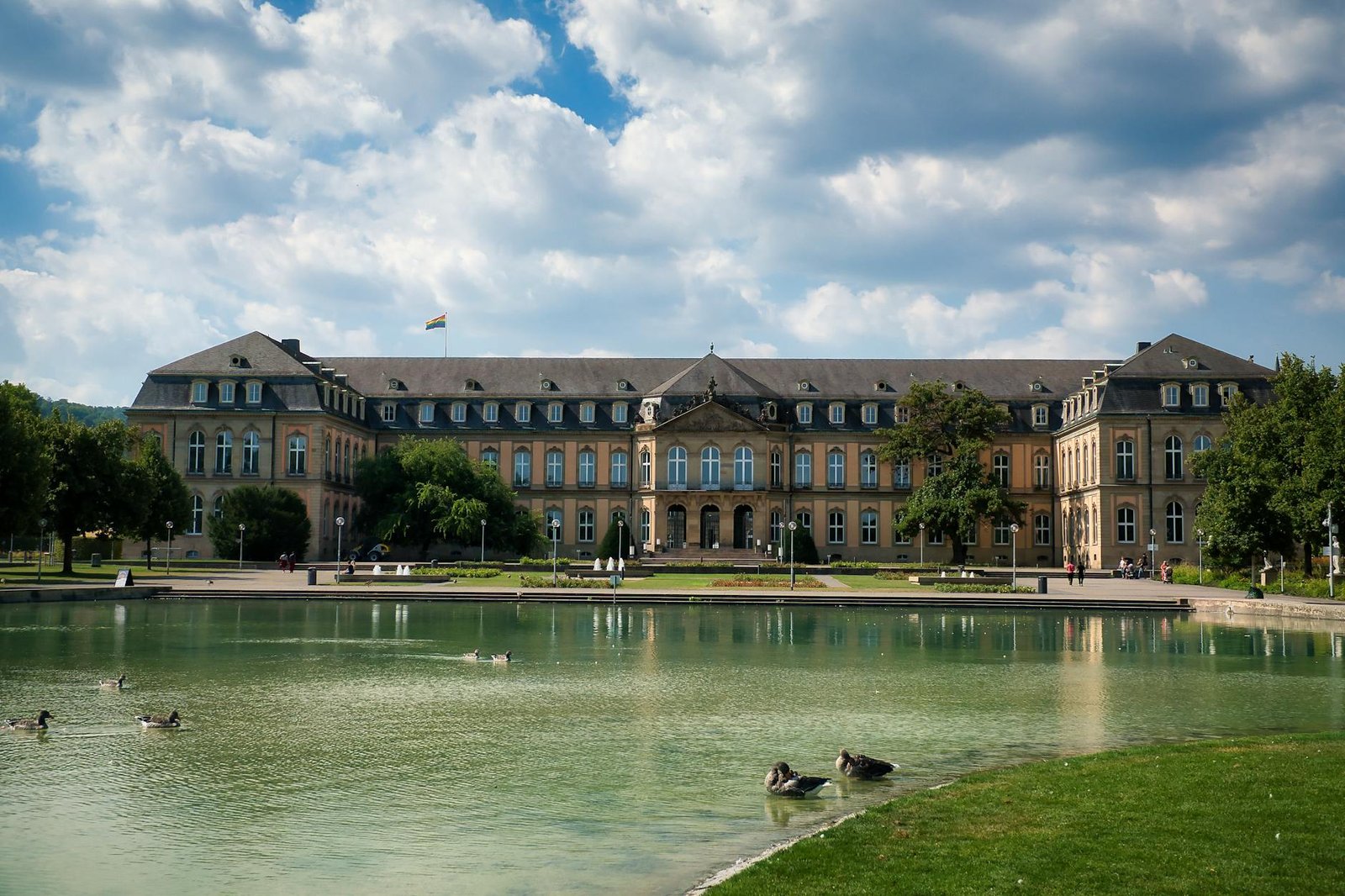
Stuttgart's central square anchored by the Baroque New Palace and a large fountain. Free to walk around, pleasant for orientation, and a good starting point for the surrounding Schlossgarten park.
Show 3 more things to do in Stuttgart
6
Markthalle Stuttgart
An art nouveau indoor market hall built in 1914, selling local cheese, wine, meats, bread, and fresh produce. Ideal for a quick Swabian lunch or picking up local snacks. Not touristy in a bad way — locals shop here.
7
Stuttgart Weinwanderweg (Wine Hiking Trail)
Hillside vineyard trails encircle the city — Stuttgart is one of Germany's most urban wine regions. A short section above the city near Uhlbach or Bad Cannstatt offers vineyard views without a long commitment.
8
Wilhelma Zoo and Botanical Garden
A Moorish-style zoo and garden complex that is genuinely one of Germany's best and very popular with locals. Suits families with children or anyone who enjoys botanical gardens alongside animal exhibits.
Book with the ship, or on your own?
Booking independently
- Often noticeably cheaper than the ship’s version of the same tour.
- Smaller groups and local operators, with traveler reviews you can read before you pay.
- Free cancellation on most tours, usually up to 24 hours before.
When the ship’s excursion makes sense
- Short port calls or long transfers where the timing is tight.
- Tender-only stops where getting ashore can run late.
- The ship waits for its own delayed excursions — it won’t wait for independent ones, so leave a buffer before all-aboard.
Going independent? Compare tours in Stuttgart → — the best-reviewed ones sell out first.
We may earn a commission when you book through our links, at no extra cost to you — it’s how we keep these guides free.
Check The Port Traffic
Cruise Ships in Port
Once you have your shore plan, use the schedule to see how busy the harbour will be on your date, plus the ships, lines, and published call windows.
Sun
Mon
Tue
Wed
Thu
Fri
Sat
1
2
3
4
5
6
7
8
9
10
11
12
13
14
15
16
17
18
19
20
21
22
23
24
25
26
27
28
29
30
Quiet (1–2)
Busy (3–4)
Packed (5+)
0 scheduled calls
September 12, 2026
No scheduled cruise ship calls were found for this date selection. Pick a highlighted day on the calendar above, widen the range, or search for a different ship or line.
Port Overview
Stuttgart does not have a dedicated cruise terminal on the water. River cruise ships on the Neckar typically dock at Heilbronn, Ludwigsburg, or Marbach — all 40–90 minutes from Stuttgart by regional train or organized coach. That travel time must be factored into every plan: a standard port call gives you perhaps 5–7 usable hours in the city once transfers are counted.
The city itself rewards the effort. Stuttgart is the capital of Baden-Württemberg, home to two world-class car museums, a genuinely pleasant pedestrian city center, excellent local wine from the surrounding hillside vineyards, and an indoor market hall that punches well above its tourist profile. It doesn't feel overrun the way many European city ports do.
Most river cruise lines — Viking, AmaWaterways, Emerald, Avalon, and others on the Neckar — offer organized Stuttgart excursions that handle transport, which is the practical default here. Independent travelers can manage by train, but you need to know your exact docking port and the regional rail schedule to make it work without stress.
If your ship is docked closer to Heidelberg or Mannheim, a Stuttgart visit may not be on offer at all. Confirm with your cruise director early, as calling at Stuttgart as a shore excursion destination is itinerary-dependent.
Is It Safe?
Stuttgart is a safe, well-managed German city. Standard European urban caution applies — be aware of your belongings on crowded trams and in busy pedestrian zones, but crime targeting tourists is low. The area around Stuttgart Hbf has improved significantly in recent years and is no longer the concern it once was.
The biggest safety consideration for cruisers is time, not crime. Missing your ship's departure is a real risk if you misjudge rail times or traffic. Build in a 30-minute buffer on return trips and have your ship's departure time written down, not just remembered.
Accessibility & Walkability
Stuttgart's city center is reasonably accessible — Königstraße and Schlossplatz are flat and pedestrian-friendly. However, Stuttgart is famously hilly, and wandering beyond the main pedestrianized core involves some steep streets. The Markthalle and most ground-floor attractions are wheelchair-accessible.
The transfer from ship to city is the real barrier for mobility-limited passengers. Train stations involve steps, escalators, or lifts (which aren't always working), and the walk from ship to dock transport can be uneven. The organized ship excursion coach is strongly recommended for anyone with mobility limitations — it removes the station navigation entirely.
Outside the Terminal
There is no single terminal experience here — you'll either step off a coach into Stuttgart's city center, or arrive at Stuttgart Hauptbahnhof (the central station). The Hbf is a major transit hub with clear signage in German and English. The Bonatzbau station building itself is worth a quick look. From the station, the main pedestrian shopping street (Königstraße) begins almost immediately, and Schlossplatz is a 5-minute walk. It's an efficient, low-confusion arrival.
Local Food & Drink
Stuttgart has a strong local food identity rooted in Swabian cuisine. Look for Maultaschen (pasta pockets filled with meat and spinach — sometimes called German ravioli), Spätzle (soft egg noodles, often served with cheese as Käsespätzle), and Zwiebelrostbraten (roasted beef with onions). These are hearty, affordable, and genuinely regional.
The Markthalle is the easiest lunch stop for cruisers pressed for time. For a sit-down meal, the streets around Calwer Straße and the Bohnenviertel (Bean Quarter) neighborhood have solid local restaurants without the tourist markup of main squares. Wine bars serving local Trollinger and Lemberger reds are scattered throughout — Stuttgart's local wine culture is an underrated highlight.
Avoid eating right on Schlossplatz or Königstraße if you want value — those cafés cater to foot traffic and price accordingly.
Shopping
Königstraße is Stuttgart's main pedestrian shopping street and one of the longest in Germany — major international chains dominate here. It's pleasant for a walk but not distinctive. The Bohnenviertel neighborhood offers more interesting independent boutiques, design shops, and local wine retailers if you have time to explore.
Souvenirs worth considering: local Württemberg wine (easy to find at the Markthalle), Swabian food products, and Mercedes or Porsche merchandise at the museum shops which are genuinely well-stocked. Skip the generic souvenir shops near the station.
Money & Currency
- Currency
- Euro (EUR)
- USD Accepted?
- No
- Card Payments
- Good in city center shops, restaurants, and museums. Some smaller market stalls and bakeries remain cash-preferred.
- ATMs
- ATMs plentiful at Stuttgart Hbf and throughout the city center
- Tipping
- Round up or add 5–10% in restaurants; not obligatory but appreciated
- Notes
- Germany is increasingly card-friendly but always carry €10–20 cash for markets, small cafés, or transit top-ups
Weather & Best Time
- Best months
- May, June, September, October
- Avoid
- July–August can be hot and crowded; January–February cold and grey
- Temperature
- Rhine/Neckar river cruises typically run April–October; expect 15–25°C (59–77°F) during peak season
- Notes
- Stuttgart sits in a basin surrounded by hills, which creates its own mild microclimate and supports viticulture — but also means occasional fog and humidity in autumn
Airport Information
- Airport
- Stuttgart Airport (STR)
- Distance
- Approximately 15 km from Stuttgart city center
- Getting there
- S2 and S3 S-Bahn trains connect Stuttgart Airport to Stuttgart Hbf in about 27 minutes; taxis take 20–30 min
- Notes
- Relevant mainly for pre- or post-cruise stays. If flying in before a Neckar river cruise, arriving at Stuttgart Airport and transferring to Heilbronn or Ludwigsburg is straightforward by regional train
Getting Around from the Port
Organized ship excursion coach
Most river cruise lines offer a Stuttgart day excursion by air-conditioned coach from the docking point. Easiest option — no navigation, door-to-door, and timed to return before departure.
Book bus ticketsRegional train (DB Regio / S-Bahn)
From Heilbronn Hbf, regional trains run to Stuttgart Hbf in around 45–60 minutes. From Ludwigsburg, S5 S-Bahn takes about 20 minutes into the city. Buy tickets at station machines.
Book train ticketsTaxi or rideshare from dock
Taxis available near dock areas in Heilbronn and Ludwigsburg. Rideshare apps (Free Now, Uber) work in the region but availability varies.
Check Uber fareStuttgart city U-Bahn/S-Bahn (in-city)
Once at Stuttgart Hbf, the U-Bahn and S-Bahn network covers all major sites including the Mercedes museum (U1 to Gottlieb-Daimler-Stadion area) and Porsche museum (S6 to Neuwirtshaus).
Details last checked April 2026
Planning a cruise here?
Viking River Cruises, Uniworld, Emerald Waterways & more sail to Stuttgart.
Practical Tips for Cruise Passengers
- Confirm your exact docking port with the cruise director before planning anything — 'Stuttgart' on an itinerary usually means Heilbronn or Ludwigsburg, not Stuttgart itself.
- Pick one car museum, not both — the Mercedes and Porsche museums each deserve 2+ hours and trying to squeeze both in ruins the experience of each.
- The organized ship excursion to Stuttgart removes all transport stress and is worth considering even if you prefer independent travel on other ports.
- Buy a Stuttgart day pass for the U-Bahn/S-Bahn system if you plan to move between multiple city sites — single tickets add up quickly.
- Return to your ship with at least 45 minutes of buffer time — regional trains can run late, and Stuttgart-to-dock connections have limited frequency.
- The Markthalle closes mid-afternoon on weekdays and earlier on Saturdays — check hours before building your lunch plan around it.
Frequently Asked Questions
No. The Neckar River runs through Stuttgart's outskirts but ships dock at river towns like Heilbronn, Ludwigsburg, or Marbach. Stuttgart is visited as a shore excursion requiring a 45–90 minute transfer each way.
Enough to get a solid taste — one car museum, the city center, and lunch — yes. Enough to feel like you've seen the city properly, no. Focus on one or two priorities rather than trying to cover everything.
Yes, by regional train from Heilbronn or Ludwigsburg to Stuttgart Hbf. It's straightforward if you check the DB Bahn schedule in advance and know your exact docking location.
Mercedes-Benz Museum wins on breadth and spectacle — it's larger, architecturally more dramatic, and covers far more automotive history. Porsche Museum is better if you're a Porsche fan specifically or prefer a shorter, sleeker visit.
It depends on your interests. Heidelberg is more immediately scenic and compact for a short port day. Stuttgart rewards those with specific interests — car museums, local wine culture, or modern architecture — more than casual sightseers.
Find cruises to Stuttgart, Germany
Compare sailings and book with no fees — best price guaranteed.
We may earn a commission when you book through our links, at no extra cost to you — it’s how we keep these guides free.
✉ Sailing to Stuttgart? Get your port-day plan
Tell us your sail date and we’ll email you a short Stuttgart plan about 60 days out — when the good excursions start selling out — plus a final checklist 2 weeks before. Two emails, then done. We’ll send one note to confirm it’s really you — unsubscribe anytime.
European River Cruises
View All
More European River Cruises Ports

European River Cruises

European River Cruises

European River Cruises
