
Mediterranean
Mediterranean
Folegandros Cruise Port Guide: Tender Tips, Things to Do & What to Expect
Greece
Small island port with tender service to Karavostasis beach pier; limited dock infrastructure.
Choose the Right Port Day
Best Overall
Walk up to Chora, explore the quiet main square, eat at a family taverna, return via the same path. Quintessential Folegandros experience with minimal expense.
Best Beach
Livadaki Beach (closest, 10 min walk, sand/pebble, calm water) or Katergo Beach (30 min hike, more dramatic, fewer crowds).
With Kids
Livadaki Beach is safest and most accessible. Shallow, family-friendly. Skip the steep hike to Chora if your child is young.
Only 3-4 Hours
Tender up, walk to Chora village (30 min uphill), coffee/taverna stop, walk back down. Skip beaches.
Cheapest Option
Walk to Livadaki Beach free, swim free. Taverna lunch €8–15 USD per person. Total: €10–20 USD per person.
What To Avoid
Don't expect Santorini-level infrastructure or views; don't rely on taxis for short distances (few available, expensive); avoid trying to fit two activities—tender time eats cruising hours.
Quick Take
- Port Type
- Scenic tender port, Cycladic island
- Best For
- Travelers seeking quiet, unspoiled Greek island life; walkers; small-ship luxury cruisers
- Avoid If
- You need reliable beach infrastructure, shops, or nightlife; wheelchair users; impatient tender waits
- Walkability
- Village center is compact and walkable; uphill terrain to main town (Chora). Roads are narrow and steep.
- Budget Fit
- Low-cost ashore. Few commercialized activities; mostly self-guided exploration, tavernas, and beaches.
- Good For Short Calls?
- Yes. Tender round-trip time + 3–4 hours ashore is typical. Plan one activity (walk to Chora or beach) rather than multiple.
Top Things To Do
1
Walk to Chora Village
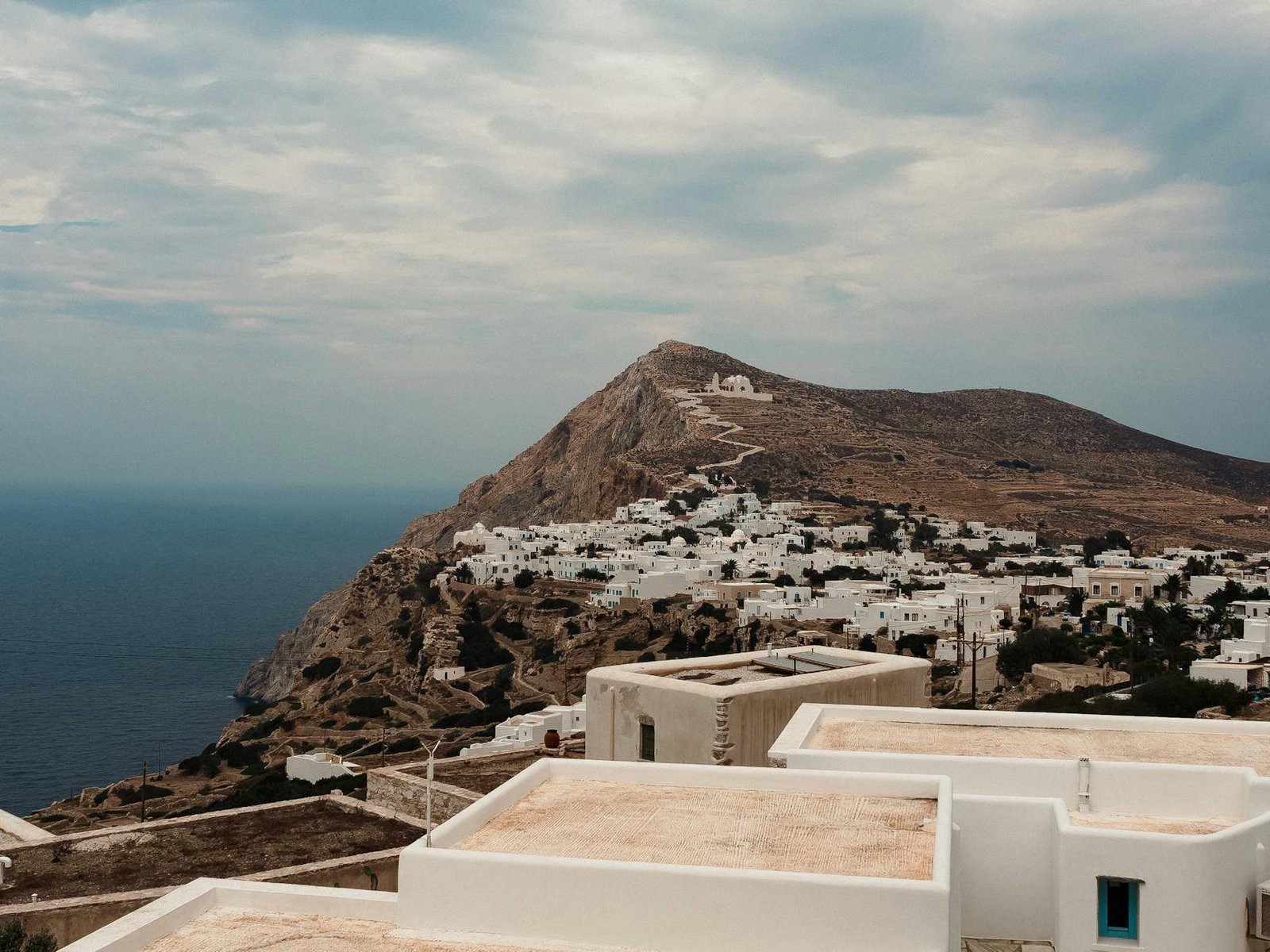
The main town sits on cliffs 300 m above sea level. Narrow, stepped streets with whitewashed houses, small churches, a central square with tavernas, and views across the Aegean. Largely car-free. Feel is authentically Greek, not touristy. Plan to sit at a taverna, order local wine and appetizers, watch locals go about their day.
2
Livadaki Beach
Closest beach to the port. Small, family-friendly cove with sand and pebbles, calm water, and a seasonal taverna (summer only). Very quiet, minimal facilities, no loungers or umbrellas. Suitable for swimming; water is clear and cool.
3
Katergo Beach Hike
A scenic 1-hour walk from Chora to a more dramatic, isolated pebble beach backed by steep cliffs. No facilities, no other visitors most days. Reward is solitude and wild Aegean views. Steep descent and ascent; rocky terrain.
Book with the ship, or on your own?
Booking independently
- Often noticeably cheaper than the ship’s version of the same tour.
- Smaller groups and local operators, with traveler reviews you can read before you pay.
- Free cancellation on most tours, usually up to 24 hours before.
When the ship’s excursion makes sense
- Short port calls or long transfers where the timing is tight.
- Tender-only stops where getting ashore can run late.
- The ship waits for its own delayed excursions — it won’t wait for independent ones, so leave a buffer before all-aboard.
We may earn a commission when you book through our links, at no extra cost to you — it’s how we keep these guides free.
Check The Port Traffic
Cruise Ships in Port
Once you have your shore plan, use the schedule to see how busy the harbour will be on your date, plus the ships, lines, and published call windows.
Sun
Mon
Tue
Wed
Thu
Fri
Sat
1
2
3
4
5
6
7
8
9
10
11
12
13
14
15
16
17
18
19
20
21
22
23
24
25
26
1 ship
27
1 ship
28
29
30
Quiet (1–2)
Busy (3–4)
Packed (5+)
0 scheduled calls
September 21, 2026
No scheduled cruise ship calls were found for this date selection. Pick a highlighted day on the calendar above, widen the range, or search for a different ship or line.
Port Overview
Folegandros is a small, quiet Cycladic island in the southern Aegean. Ships anchor in Karavostasis Bay and tender passengers to the small harbor. The island has no major beaches, restaurants, or shops at the tender dock—everything worthwhile requires a 20–30 minute walk or uphill trek.
The main draw is authenticity: Chora (the main village) sits on cliffs above the port and retains genuine Greek island character—narrow streets, family-run tavernas, no chain stores, minimal English signage. It is not a resort destination. Most cruisers spend 3–5 hours ashore, typically walking, eating, and returning. A few ventures to the modest beaches or hiking trails.
Best suited for small-ship, luxury cruisers (Seabourn, Windstar, Ponant, Silversea) who expect fewer amenities and value solitude. Mass-market cruisers may find it underwhelming. Tender waits can be 15–30 minutes depending on sea state and passenger load; factor this into all plans.
Is It Safe?
Folegandros is very safe. Petty theft is rare; violent crime is nonexistent in tourist areas. The main hazards are self-inflicted: steep, narrow roads with no guardrails (easy to twist an ankle), intense midday heat, and strong sun. Heed warning signs on hiking trails, especially to remote beaches—rocky terrain and no rescue services nearby.
Police presence is minimal. There is a small clinic in Chora; serious emergencies require ferry to another island or helicopter. Medical tourism is not available. Tap water is safe.
Accessibility & Walkability
Folegandros is not wheelchair-accessible. Paths from the harbor to Chora are steep, narrow, and stepped. No ramps, elevators, or accessible facilities outside the port area. Travelers with mobility issues should stay near the harbor (Livadaki Beach is the closest option, 10 min level walk) or not tender ashore. Tender platforms can be unstable in rough seas, making boarding difficult for anyone unsteady.
Outside the Terminal
The tender dock is a simple concrete pier in Karavostasis, a small harbor village with no tourist infrastructure. A handful of weathered buildings, a few tavernas (basic, family-run), and a small general store are visible. There are no restaurants, bars, ATMs, or tourist services at the dock. Expect a quiet, working harbor. The waterfront is pleasant but sparse. From here, all attractions—Chora village, Livadaki Beach, hiking trails—require walking or a taxi.
Beaches Near the Port
Livadaki Beach
Small, calm cove. Sand and pebbles. Shallow water, family-safe. Seasonal taverna. Very quiet, modest facilities.
Katergo Beach
Larger, more dramatic pebble beach below cliffs. Accessible only by hiking. No facilities, very few visitors. Excellent for solitude and photography.
Agkali Beach
North-facing, rocky, small. Quiet, almost no tourists. Requires hiking or taxi to inland village first.
Local Food & Drink
Folegandros dining is simple and family-run. No chains, no fine dining. Tavernas near Chora square serve Greek staples: grilled fish, lamb, village salads, local cheese, and wine. Quality is good; prices are €10–20 USD per main course. Try local Cycladic wine (few exports). A few tavernas sit at the harbor near the tender dock and serve basic lunch (souvlaki, meze, salads) for €8–15 USD. Expect slow service and cash-only payment; no English menus. Vegetarian options exist but are limited.
Shopping
Folegandros has almost no touristy shopping. A single small general store near the harbor sells snacks, drinks, and essentials. Chora has a few family-run shops selling local honey, herbs, and standard Greek goods—no souvenirs, no T-shirts. If you plan to buy gifts, do so before arriving. Port is not worth allocating shopping time.
Money & Currency
- Currency
- Euro (EUR)
- USD Accepted?
- No
- Card Payments
- Major cards accepted at tavernas and shops in Chora; small harbor vendors may be cash-only.
- ATMs
- One ATM in Chora village. Not guaranteed to be operational. Withdraw euros on ship or in advance.
- Tipping
- Tipping not expected but appreciated. 5–10% on restaurant bills if service good. Round up taverna tabs.
- Notes
- Most small vendors at harbor are cash-only. Notify your cruise line if you plan to tender ashore without carrying cash.
Weather & Best Time
- Best months
- May–September (warm, calm seas, reliable sunshine)
- Avoid
- November–March (rough seas, tender cancellations likely, cold wind)
- Temperature
- June–September: 25–29°C (77–84°F). May, October: 20–24°C (68–75°F).
- Notes
- Summer (July–August) can be hot and crowded with other small ships. May and October offer pleasant weather with fewer crowds. Winter seas are unpredictable; tender cancellations are common. Very strong sun year-round; sunscreen essential.
Airport Information
- Airport
- Not applicable; Folegandros has no airport.
- Distance
- N/A
- Getting there
- Nearest airports: Mykonos (90 km, ferry 2–3 hours) or Athens (200 km, ferry 6–7 hours). No direct air links.
- Notes
- Folegandros is typically a port of call only, not an embarkation point. Pre-cruise arrangements require ferry from a major island.
Getting Around from the Port
Walking
Only practical option for most visitors. Karavostasis harbor to Chora village is 1.5 km uphill on narrow, stepped roads. Takes 25–35 min depending on fitness. Beaches require 10–30 min walks from harbor.
Taxi
A handful of taxis wait at the harbor, but unreliable and expensive. Most cruisers walk. Taxi to Chora costs roughly €5–8 USD one-way; to distant beaches €10–15 USD.
Book a transfer 5% off with code TPO5 at checkoutTender (anchor to harbor)
Ships anchor offshore; tenders shuttle passengers. Sea state often rough in winter; summer generally calm. Tender trips typically 10–15 min each way.
Details last checked April 2026
Planning a cruise here?
Windstar, Atlas Ocean Voyages, Silversea Cruises sail to Folegandros.
Practical Tips for Cruise Passengers
- Tender logistics eat 1+ hours of your port time. Realistic ashore time is 3–5 hours, not more. Plan one activity (Chora walk or beach) rather than two.
- Wear good walking shoes and carry plenty of water. Paths are steep, narrow, rocky, and offer no shade. Sunscreen and a hat are essential.
- If the tender is delayed on return, you're stuck ashore—no internet, few facilities, and last tender is usually the final one. Never plan to take the absolute last tender if you're worried about missing the ship.
- Bring cash in euros. Many small vendors and tavernas have no card machines. The single ATM in Chora may not be reliable.
- Start walking early (first tender). Afternoon heat (2–5 p.m.) is intense. Most locals nap during siesta; shops and tavernas may close 2–5 p.m.
Frequently Asked Questions
No. Only small luxury lines (Seabourn, Windstar, Ponant) call here, and no more than 1–2 ships per day. Streets remain quiet. Avoid July–August when multiple ships overlap.
You cannot tender ashore. Folegandros has no sheltered harbor; winter and spring are high-risk for cancellation. Summer (June–September) is safest. There's no compensation; ships simply stay at sea.
Tendering is mandatory. There is no cruise pier. All passengers board tenders. The process is slow; expect 30–60 min waits, especially if multiple ships anchor simultaneously.
Find cruises to Folegandros, Greece
Compare sailings and book with no fees — best price guaranteed.
We may earn a commission when you book through our links, at no extra cost to you — it’s how we keep these guides free.
✉ Sailing to Folegandros? Get your port-day plan
Tell us your sail date and we’ll email you a short Folegandros plan about 60 days out — when the good excursions start selling out — plus a final checklist 2 weeks before. Two emails, then done. We’ll send one note to confirm it’s really you — unsubscribe anytime.
Same itinerary network
View All
Ports Often Paired With Folegandros

Mediterranean

Mediterranean
Mediterranean
