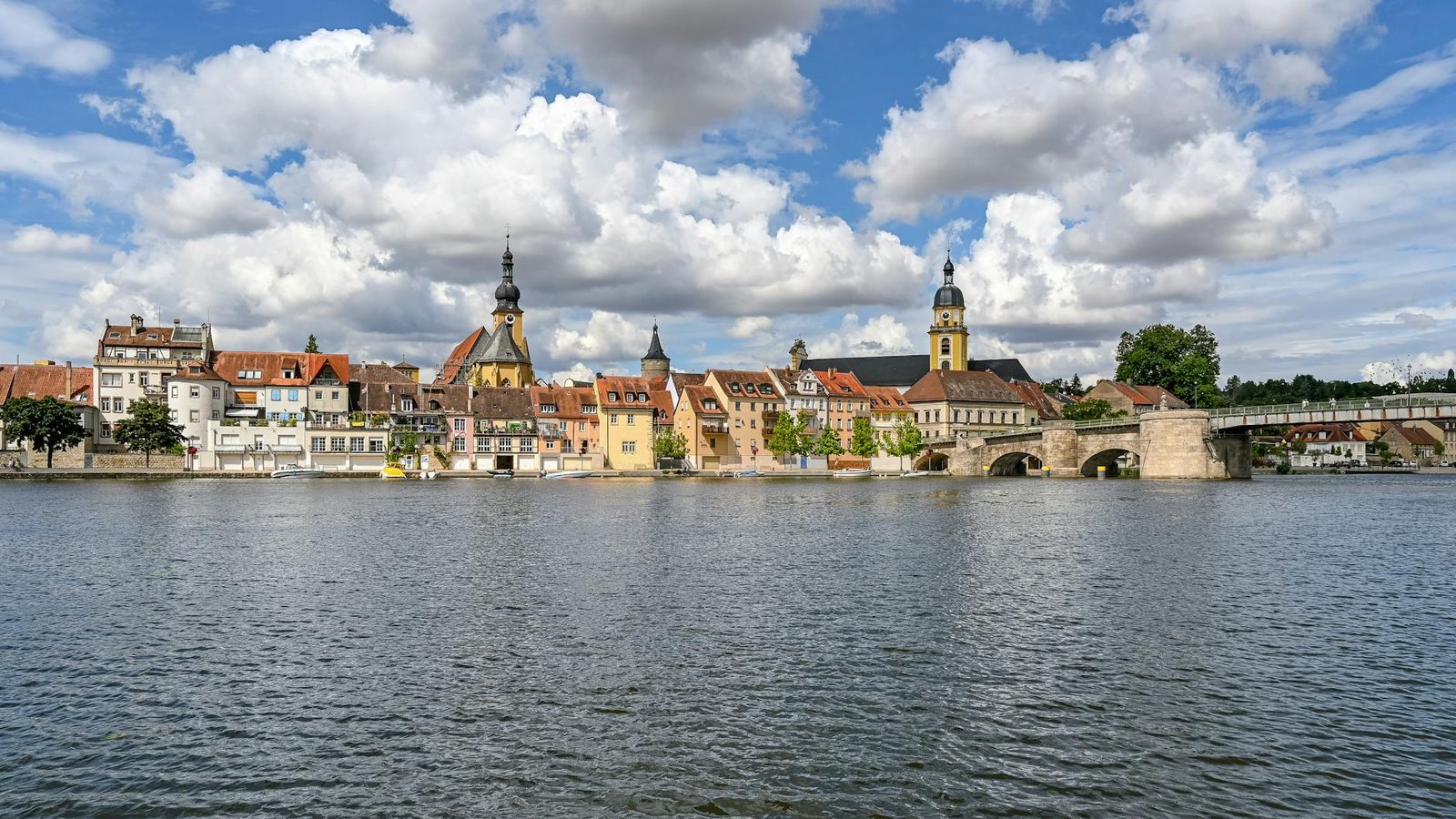
Most cruise passengers sleep through Kitzingen — and they’re making a serious mistake. This compact Franconian town on the Main River packs medieval towers, world-class Riesling, and a mustard museum into a single walkable afternoon. Come hungry, come curious, and come with a wine glass at the ready.
Arriving by Ship
River cruise ships dock directly along the Main riverbank, just a few minutes’ walk from the old town centre — no tenders, no transfers, no fuss. The gangway drops you almost immediately into the heart of things, with the leaning Falterturm tower visible before you’ve even adjusted your daypack.
The port area is unfenced and informal, making arrivals and departures refreshingly stress-free. Most of the town’s highlights sit within a compact 10-minute walking radius, so you genuinely don’t need wheels.
Things to Do

Kitzingen rewards the curious walker — its history runs deeper than the pretty facades suggest, and the surrounding Franconian wine country is some of the most underrated in all of Germany.
History & Culture
- Climb the Falterturm — Kitzingen’s leaning medieval tower tilts like a Bavarian cousin of Pisa; entry costs around €2 and the view from the top over the Main valley is worth every step.
- Explore the Stadtkirche St. Johannes — this late-Gothic church dominates the market square and contains remarkable carved altarpieces; entry is free and it’s open most mornings.
- Visit the Historisches Museum Kitzingen — a compact local history museum inside the old customs tower covering everything from medieval trade to Franconian viticulture; expect to spend 45 minutes and pay around €3.
- Walk the old town walls — significant sections of the 14th-century fortifications survive and you can stroll along them for free, connecting several towers in a satisfying loop.
Wine & Food Experiences
- Tour a Weingut (wine estate) — Kitzingen sits within the Franken wine region, and several small producers near town offer tastings; Weingut Zur Schwane in nearby Volkach is a 20-minute taxi ride and worth it for serious wine lovers.
- Stop at the Mainbrücke wine stand — local vintners often set up informal tastings near the river bridge in summer; grab a glass of Silvaner for around €3–4 and watch the barges pass.
Something Gloriously Weird
- Visit the Deutsches Fastnachtsmuseum — Kitzingen is home to one of Germany’s most beloved carnival (Fasching) museums; it’s small but brilliantly eccentric, with costumes dating back centuries and entry around €4.
- Duck into the Senf Museum (Mustard Museum) — yes, a mustard museum, and it’s oddly fascinating; samples are included and the local Kitzingen mustard makes a genuinely brilliant souvenir.
What to Eat
Franconian cuisine is hearty, unfussy, and built around pork, bread, and wine — this is Bavaria’s honest, working-class table, and Kitzingen does it proud.
- Schäufele (roasted pork shoulder with crackling) — the region’s signature dish, served at most traditional Gasthäuser; try it at Gasthaus Zum Löwen on Marktplatz for around €14–16.
- Bratwurst vom Grill — thick, coarse-ground Franconian sausage, grilled over charcoal; grab one from a market stall for €2.50 and eat it standing up like a local.
- Frankenwein Silvaner — the dry, mineral white wine of the region served in the distinctive flat Bocksbeutel bottle; order a Viertel (250ml) in any wine bar for around €4.
- Zwiebelkuchen — a savoury onion tart best eaten in autumn alongside new wine (Federweißer); found at bakeries and Gasthäuser for around €3–5 a slice.
- Handkäse mit Musik — a pungent cured cheese served with onions and vinegar, very much an acquired taste; order it if you’re brave, it’s typically under €5.
- Schneeball — the sugared pastry ball from nearby Rothenburg that’s made its way across Franconia; buy one from a bakery for around €2 as a sweet snack on the go.
Shopping

The pedestrianised Marktplatz and surrounding streets host a handful of independent shops worth browsing. Local mustard, Frankenwein in its characteristic Bocksbeutel bottle, and hand-painted ceramics are the standout buys — all genuinely regional and easy to carry home.
Skip the generic souvenir racks and head instead to the wine merchants or the mustard shop for things that feel rooted in place. Markets appear regularly in the central square, and a Saturday morning market offers local produce, cheese, and bread that makes a brilliant impromptu lunch.
Practical Tips
- Currency — Germany uses the Euro; card payments are widely accepted but carry €20–30 cash for market stalls and small wine stands.
- Tipping — round up the bill or add 5–10%; leaving coins on the table is perfectly acceptable.
- Getting around — the old town is entirely walkable from the dock; save taxis for wine estate excursions further afield.
- Best time ashore — get off the ship early to catch the morning market and avoid any afternoon heat in summer.
- Opening hours — many smaller shops close between 12–2pm; plan museum visits for the morning.
- Language — basic German phrases go a long way; English is spoken at most tourist sites but less reliably at market stalls.
- Time needed — three to four hours covers the key sights comfortably; half a day lets you linger over lunch and wine.
Pack your appetite, leave the itinerary loose, and let Kitzingen’s unhurried Franconian charm do the rest.
📍 Getting to Kitzingen, Germany Bavaria
Use the interactive map below to explore the port area and plan your route from the terminal.
Leave a Reply