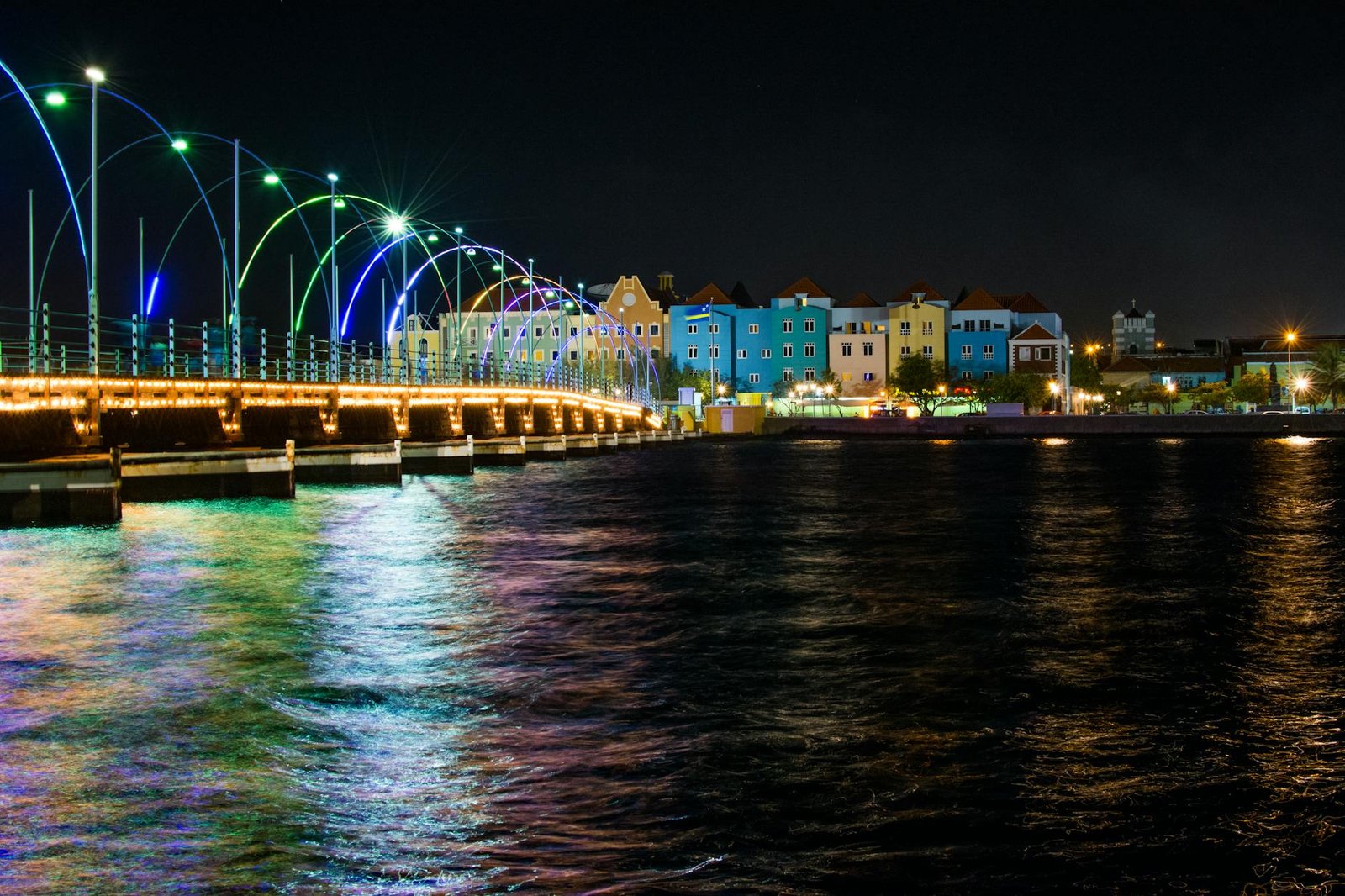
Most Caribbean ports blur together after a while — same rum punch, same souvenir shops. Willemstad stops that pattern cold. Step off the ship and you’re inside a UNESCO World Heritage cityscape that looks like Amsterdam swallowed a sunset.
Arriving by Ship
Willemstad is a dream port for logistics: most cruise ships dock directly at the Mega Pier or the smaller Rif Fort terminal, both within easy walking distance of the city centre. No tender boats, no fuss — you’re strolling the famous Queen Emma Pontoon Bridge within minutes of disembarking.
The Queen Emma Bridge is a floating pedestrian bridge that actually swings open to let boats pass, which means you might wait two minutes while it pivots — consider it your first Curaçao experience, not an inconvenience.
Things to Do

Willemstad splits into two halves — Punda and Otrobanda — connected by that pontoon bridge, and each side rewards a slow wander. Beyond the city, Curaçao’s rugged interior and protected bays open up a full island adventure if you have the time.
History & Culture
- Mikvé Israel-Emanuel Synagogue — the oldest continuously active synagogue in the Americas (1732), its sand-covered floor tells a history most visitors never expected to find here; entry around USD 12.
- Kura Hulanda Museum — a sobering and essential museum built on a former slave trading post, covering African history and the transatlantic trade; entry around USD 10, open daily 10am–5pm.
- Fort Amsterdam — the bright yellow colonial fort doubles as the Governor’s Palace and is free to walk around the exterior; the small church inside has a British cannonball still lodged in its wall.
- Floating Market (Sha Caprileskade) — Venezuelan traders sell fresh fish, fruit, and vegetables directly from their boats every morning; arrive before 10am for the best selection.
Beaches & Nature
- Hato Caves — ancient limestone formations with indigenous cave drawings and a colony of long-nosed bats; guided tours run throughout the day and a combined turtle-spotting and beach excursion makes for an unforgettable full day. 🎟 Book: Hato Caves, Turtles & Beach
- Cas Abao Beach — consistently ranked among the Caribbean’s best, with entry around USD 15 and crystal-clear water ideal for snorkelling directly from the shore.
- Shete Boka National Park — dramatic blow holes and wave-battered coves on the wild north coast, entry around USD 10; completely different energy from the calm southern beaches.
Families
- Curaçao Sea Aquarium — hands-on dolphin and sea lion encounters alongside reef tanks; tickets from USD 20, open daily 8am–5pm.
- City highlights and cave combo tour — a compact 3.5-hour loop hitting the painted facades, pontoon bridge, and Hato Caves makes a smart choice if your port time is limited. 🎟 Book: city highlights & cave
- Private full-island tour — if you want someone else to handle the logistics and reach the hidden spots most cruise passengers miss entirely, a private guided day covers everything from Christoffelberg to secluded coves. 🎟 Book: Ultimate Full-Day Private Tour: Discover all Curacao highlights
What to Eat
Curaçaoan cuisine is a confident creole mix — Dutch, African, Latin, and Portuguese influences all colliding on the same plate. Skip the tourist-facing restaurants along the waterfront and walk one block inland for the real thing.
- Keshi Yena — the island’s signature dish: a whole gouda shell stuffed with spiced chicken or beef and baked; find it at Gouverneur de Rouville restaurant in Otrobanda for around USD 18.
- Funchi — a polenta-style cornmeal side dish served with almost everything; look for it at local lunchrooms called snèks for under USD 5.
- Fresh ceviche at the Floating Market — buy it direct from the Venezuelan fishermen, ridiculously fresh, USD 3–5.
- Stoba — a hearty slow-cooked goat or iguana stew; Jaanchi’s Restaurant near Christoffel Park is the definitive spot, mains around USD 15.
- Blue Curaçao cocktail at Chobolobo Distillery — the liqueur was invented here at this 19th-century mansion; a tasting flight costs under USD 10 and the tour is free.
- Stroopwafels and Dutch cheese — the Dutch colonial thread means proper Dutch imports are widely available; Punda’s delis stock good quality for a few dollars.
Shopping

Punda is the main shopping district, and it’s genuinely pleasant — narrow streets lined with pastel Dutch colonial buildings housing jewellery shops, spice stalls, and local craft stores. The Rif Fort itself has been converted into a stylish shopping and dining complex with local designers and artisan goods.
Buy locally made Curaçao aloe products, handmade ceramics, and bottles of Blue Curaçao liqueur — all travel well and feel genuinely local. Avoid the generic Caribbean souvenir shops near the pier; the quality-to-price ratio drops sharply the closer you get to the gangway.
Practical Tips
- Currency is the Netherlands Antillean Guilder (ANG), but US dollars are accepted almost everywhere; credit cards work fine in shops and restaurants.
- Tipping is customary at around 10–15% in restaurants; it’s not always included automatically, so check your bill.
- Getting around is easy on foot within Willemstad, but rent a car or book a tour for beaches and the national park — taxis are metered but can add up quickly.
- Go ashore early — the Floating Market and Fort Amsterdam are best before 11am when cruise crowds thicken.
- You need at least 4–5 hours to do Willemstad justice; a full day unlocks the beaches and interior.
- Safety is generally good in the main tourist areas; exercise normal city awareness after dark in Otrobanda.
- Sun protection is non-negotiable — Curaçao sits outside the hurricane belt and gets intense equatorial sun year-round.
Willemstad doesn’t just exceed expectations — it quietly embarrasses every other port on your itinerary.
🎟️ Things to Book in Advance
These highly-rated experiences fill up fast — book before you arrive to avoid missing out.


This page contains affiliate links. If you book through them, we may earn a small commission at no extra cost to you.
📍 Getting to Willemstad Curacao, Netherlands Antilles
Use the interactive map below to explore the port area and plan your route from the terminal.
Leave a Reply