
Africa & Middle East
Africa & Middle East
Bom Bom Island Cruise Port Guide: Things to Do & Practical Tips
São Tomé & Príncipe
Ships anchor offshore; tenders required for passenger transfer to beach.
Choose the Right Port Day
Best Overall
Book a half-day guided tour of an active or abandoned cocoa plantation (Roça). It's the most distinctive activity, shows colonial history and working island agriculture, and beats generic beach time. Budget 3–4 hours including transport; cost ~$60–100 USD via Viator or ship.
Best Beach
Praia Abade (south of city, ~3 km) is the easiest; rough sand, warm water, local scene. Organized excursions visit Praia Jalé or Príncipe's beaches, but these require 1+ hours transit each way—only worth it on a full port day.
With Kids
The Botanical Gardens (Jardim Botânico) near the city center are safe, shaded, and show native plants and occasional birds; walking distance or short taxi ride. Water is too rough for casual swimming; stick to wading only.
Only 3-4 Hours
Stay near the port and walk the São Tomé waterfront and central streets (Avenida Marginal, Largo da Independência). Grab lunch at a local patio restaurant and buy cocoa chocolate at a small shop. Skip excursions; they're too time-consuming with tender delays.
Cheapest Option
Walk the city center free (30 min), buy street food or café lunch (~$5–8 USD), return to ship. Avoid organized excursions unless you have 6+ hours; they're $80–150 USD and time-inefficient on short port days.
What To Avoid
Príncipe island excursions unless you have a full day—ferry, tour, and return eat 6+ hours. Unguided hiking is not advisable; paths are unclear and help is distant. Tap water is unreliable; drink bottled only.
Quick Take
- Port Type
- Expedition & nature-focused small-ship port
- Best For
- Naturalists, birdwatchers, those seeking off-the-beaten-path Africa; not package-tour cruisers
- Avoid If
- You need reliable fast food, extensive shopping, or easy independent exploration; infrastructure is minimal
- Walkability
- Port town (São Tomé city) is walkable for 30–45 minutes, but paths are uneven and signage sparse; most activities require organized transport
- Budget Fit
- Mid to high cost; shore excursions dominate; independent exploration is cheaper but risky logistically
- Good For Short Calls?
- Fair. Tender time eats 1–1.5 hours; realistic activities are limited to 2–3 hours ashore
Top Things To Do
1
Cocoa plantation (Roça) tour
Visit an active or semi-abandoned colonial-era cocoa estate. Tour guide shows cacao fermentation, drying, and colonial architecture. Some roças are working farms; others are guesthouses or ruins. This is the most distinctive activity and gives real insight into the island's agricultural history and current life.
2
Birdwatching & forest walk
Guided forest hikes in lowland or montane forest near São Tomé or Príncipe. Endemic species include the Dwarf Ibis, Maroon Pigeon, and numerous sunbirds. Hikes range from easy to moderate; guides are naturalists. Early morning is best for birds.
3
São Tomé city walk & local lunch
Self-guided walk through colonial town: Avenida Marginal (waterfront), Largo da Independência (main square), Igreja de Nossa Senhora (church), Museu Etnográfico (if open; hours are unreliable). Stop for lunch at a local patio café or market stall. Low cost, authentic, and doable in 2–3 hours.
Show 1 more thing to do in Bom Bom Island
4
Snorkeling or beach day
Organized snorkeling trips visit offshore reefs and islands (Bom Bom, Caroço). Beach days usually include Praia Jalé or transfer to Príncipe. Water is clear and warm; marine life includes tropical fish, sea turtles, and rays. Not suitable for beginners; currents can be strong.
Book with the ship, or on your own?
Booking independently
- Often noticeably cheaper than the ship’s version of the same tour.
- Smaller groups and local operators, with traveler reviews you can read before you pay.
- Free cancellation on most tours, usually up to 24 hours before.
When the ship’s excursion makes sense
- Short port calls or long transfers where the timing is tight.
- Tender-only stops where getting ashore can run late.
- The ship waits for its own delayed excursions — it won’t wait for independent ones, so leave a buffer before all-aboard.
We may earn a commission when you book through our links, at no extra cost to you — it’s how we keep these guides free.
Check The Port Traffic
Cruise Ships in Port
Once you have your shore plan, use the schedule to see how busy the harbour will be on your date, plus the ships, lines, and published call windows.
Sun
Mon
Tue
Wed
Thu
Fri
Sat
1
2
3
4
5
6
7
8
9
10
11
12
13
14
15
16
17
18
19
20
21
22
23
24
25
26
27
28
29
30
Quiet (1–2)
Busy (3–4)
Packed (5+)
0 scheduled calls
September 21, 2026
No scheduled cruise ship calls were found for this date selection. Pick a highlighted day on the calendar above, widen the range, or search for a different ship or line.
Port Overview
Ships anchor off São Tomé city; tenders ferry passengers ashore (20–30 min each way depending on swell). This is a genuinely remote equatorial African port: minimal tourism infrastructure, no cruise terminals, and a small colonial town that feels frozen in time. Most passengers are on expedition cruises (Lindblad, Hurtigruten, Ponant, Silversea) and pre-book excursions. Independent exploration is possible but challenging—roads are rough, signage is sparse, and reliable taxis are few. The real draw is nature (endemic birds, forest hikes, offshore snorkeling) and agricultural history (cocoa roças—colonial-era plantations, many now guesthouses or ruins). This is not a shopping or beach-resort port; come for authenticity and wildlife, not convenience.
Is It Safe?
São Tomé & Príncipe has low violent crime but petty theft exists. Stick to central areas during daylight; avoid isolated streets or beaches alone. Street crime and bag-snatching are rare but possible near markets and at night. The main risk is logistical: poor road conditions, limited medical facilities, and slow emergency response. Travel insurance and evacuation coverage are strongly recommended. Tap water is not reliably potable; drink bottled. Malaria is endemic; check with your doctor before cruising. The government is stable; no current political unrest. Use common sense: keep valuables in the ship safe, travel in groups when possible, and return to the tender well before the last call.
Accessibility & Walkability
Terrain is uneven throughout the port. Streets have no curb cuts or ramps; colonial-era buildings have steep stairs. Tenders require mobility to board; rough seas make this difficult or impossible for those with limited balance. Wheelchairs are not practical ashore. Those with mobility issues should stay aboard or book ship-organized excursions that limit walking. No accessible toilets or lifts are available outside the port area. Notify the cruise line in advance if you have accessibility needs.
Outside the Terminal
You'll step onto a small concrete or sandy dock/beach, often crowded with waiting taxis, local vendors, and fellow passengers. The air is warm and humid; the smell is salt, fish, and vegetation. A few simple structures (stalls, unofficial guides, produce sellers) line the beach. The landscape immediately behind is low jungle and scattered colonial buildings. There is no fenced terminal or formal checkpoint—just controlled chaos on port days. Expect informal offers of rides, tours, and trinkets within the first 30 seconds. Stay calm, acknowledge vendors politely but firmly, and move toward your transport or organized group.
Beaches Near the Port
Praia Abade
Sand beach south of São Tomé city, rough sand, warm water, local scene. Safe for wading; waves can be rough. No facilities or vendors. Quieter than tourist beaches.
Praia Jalé
Longer, quieter beach on the west coast. Accessed via ship-organized excursion or private taxi/guide. Sand is coarser; water is clear. Limited or no facilities.
Bom Bom Island
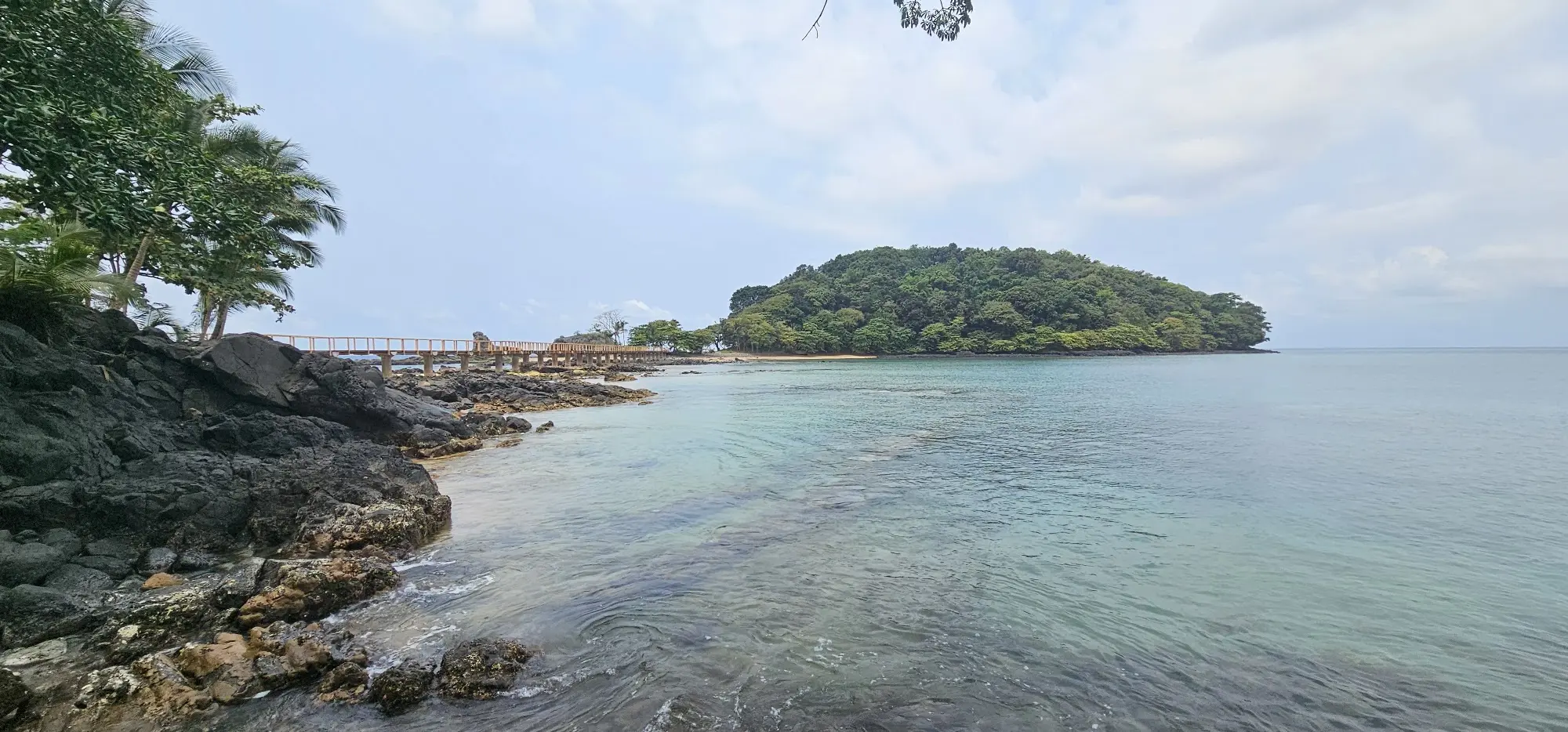
Offshore island, part of some ship excursions. Small, pristine, with snorkeling and shallow beach. Accessed by boat only. Water and sand are excellent.
Local Food & Drink
Local cuisine is simple: grilled fish, rice, beans, cassava, plantains, and fresh tropical fruit. Restaurants in São Tomé are few and modest—expect a small room with plastic chairs and limited menus. Popular spots (ask crew or guides): Patio restaurants along Avenida Marginal, local markets for street food (grilled fish, bread, fresh coconut). Quality is inconsistent; hygiene standards are lower than North American or European norms. Eat what is hot and freshly cooked. Portuguese-influenced dishes (arroz de marisco, caldo verde) appear on better menus. Breakfast is bread, butter, jam, and strong coffee. Imported beer (Sagres, Licor) is available but pricey (~$2–4 USD per bottle locally). Soft drinks and bottled water are safe. Avoid salads, unpeeled fruit, and tap water. A simple meal costs $5–12 USD; fancier guesthouses or tourist restaurants may charge $15–25 USD.
Shopping
Shopping is very limited. The central market (Mercado Central) sells fresh produce, fish, and basic goods; not tourist-focused. Souvenir options are sparse: locally made chocolate (high-quality cacao), woven baskets, carved wood, and printed textiles. The Chocolate Factory Shop or similar small shops near the port sell cocoa products—quality ranges from excellent to mediocre. Most souvenir items are mass-produced; authentic crafts are rare. Prices are lower than in Western countries, but selection is thin. Don't expect boutiques, malls, or duty-free shops. Visit the market in the morning; by afternoon, vendors pack up. Bargaining is not standard but polite haggling may work with informal vendors.
Money & Currency
- Currency
- São Tomé & Príncipe Dobra (STN)
- USD Accepted?
- Yes
- Card Payments
- Minimal. Credit/debit cards are rarely accepted ashore; a few guesthouses and upscale restaurants may accept Visa/Mastercard with heavy fees or delays. ATMs exist in São Tomé city but are unreliable and may not accept foreign cards. Bring USD cash.
- ATMs
- One or two ATMs in central São Tomé; expect them to malfunction or be out of cash during peak cruise days. Not reliable.
- Tipping
- Tipping is not customary but appreciated. For guides, drivers, and restaurant service, 5–10% or $1–2 USD is generous. Guides often expect tips from tour groups.
- Notes
- Exchange rates heavily favor USD; using USD directly is simpler. Avoid exchanging large sums; get local currency only for small purchases. Inform your bank of travel to enable cash withdrawals. Credit cards are nearly useless ashore; plan on cash only.
Weather & Best Time
- Best months
- July to September (dry season, slightly cooler, less rainfall)
- Avoid
- May to June (heavy rain), December to January (rain and heat)
- Temperature
- 75–85°F (24–29°C) year-round; high humidity always
- Notes
- Equatorial climate: warm, humid year-round. Rainy season (Oct–May) brings rough seas and swell, which delays tenders. Dry season is better for activities and tender reliability. Mosquitoes are present year-round (dengue, malaria); bring repellent. No cyclone risk, but squalls are common.
Airport Information
- Airport
- Internacional de São Tomé (TMS)
- Distance
- ~10 km north of city center
- Getting there
- Taxi from airport to port: $10–20 USD; unreliable but available. No shuttle buses. Arrange pickup in advance via hotel or cruise line if doing a pre-cruise stay.
- Notes
- Small airport with limited international flights (Angola, Ghana, Portugal, Cape Verde). Long wait times for check-in and immigration are common. Arrive 3+ hours early for international departures. No lounge or duty-free. Not set up for cruise passenger turnarounds.
Getting Around from the Port
Tender
Ships anchor in deep water; small boats ferry passengers to a basic dock or beach landing. Seas can be rough; expect wet landings in high swell.
Taxi
Informal taxis (usually aging sedans) wait near the landing. Negotiate fare beforehand; no meters. Drivers rarely speak English.
Book a transfer 5% off with code TPO5 at checkoutShip-organized excursion
Guided tours (plantation visits, forest hikes, snorkeling, Príncipe ferry trips) depart directly from the tender dock. These are the safest, most reliable option.
Walking
São Tomé city center is walkable; most sites are within 30–45 min on foot. Roads are uneven; no sidewalks in many areas.
Details last checked April 2026
Planning a cruise here?
Lindblad Expeditions, Hurtigruten, Ponant & more sail to Bom Bom Island.
Practical Tips for Cruise Passengers
- Book ship-organized excursions at least 1–2 days in advance; they fill quickly on small-ship itineraries and are more reliable than DIY exploration.
- Bring small USD bills; ATMs are unreliable, and change is not always available. Carry cash in a hidden pouch and leave valuables aboard.
- Negotiate taxi fares before getting in, or ask the crew to arrange a driver the night before; prices spike during cruise arrivals.
- Wear reef shoes or sandals for beach/tender access; ground is rocky and shoes are essential. Bring a dry bag for electronics during tender rides in rough seas.
- Start early: tenders slow down in afternoon swell, and the last tender often departs 30–60 min earlier than published. Return to ship well before the final call.
Frequently Asked Questions
Most nationalities (US, EU, UK, Canada, Australia) receive a 30-day visa-free or visa-on-arrival. Check your embassy 4–6 weeks before travel. The cruise line typically handles group visa paperwork for passengers; confirm with your cruise documentation.
Daytime in central São Tomé is relatively safe for self-guided walking. Avoid isolated areas, dark streets after sunset, and walking with expensive jewelry or cameras. Petty theft is rare but possible; keep a low profile. Most port days are secure, but groups are always safer.
Rough swell can add 20–30 min per tender cycle or cause brief halts. In severe conditions (rare), tenders may be cancelled entirely. You'll typically know by early morning; ships announce delays at breakfast. Have a backup plan (stay aboard, organize an onboard activity) if tender service is uncertain.
Find cruises to Bom Bom Island, São Tomé & Príncipe
Compare sailings and book with no fees — best price guaranteed.
We may earn a commission when you book through our links, at no extra cost to you — it’s how we keep these guides free.
✉ Sailing to Bom Bom Island? Get your port-day plan
Tell us your sail date and we’ll email you a short Bom Bom Island plan about 60 days out — when the good excursions start selling out — plus a final checklist 2 weeks before. Two emails, then done. We’ll send one note to confirm it’s really you — unsubscribe anytime.
Africa & Middle East
View All
More Africa & Middle East Ports

Africa & Middle East

Africa & Middle East
Africa & Middle East
