
European River Cruises
European River Cruises
Solt Cruise Port Guide: Tender Tips, Things to Do & What to Expect
Hungary
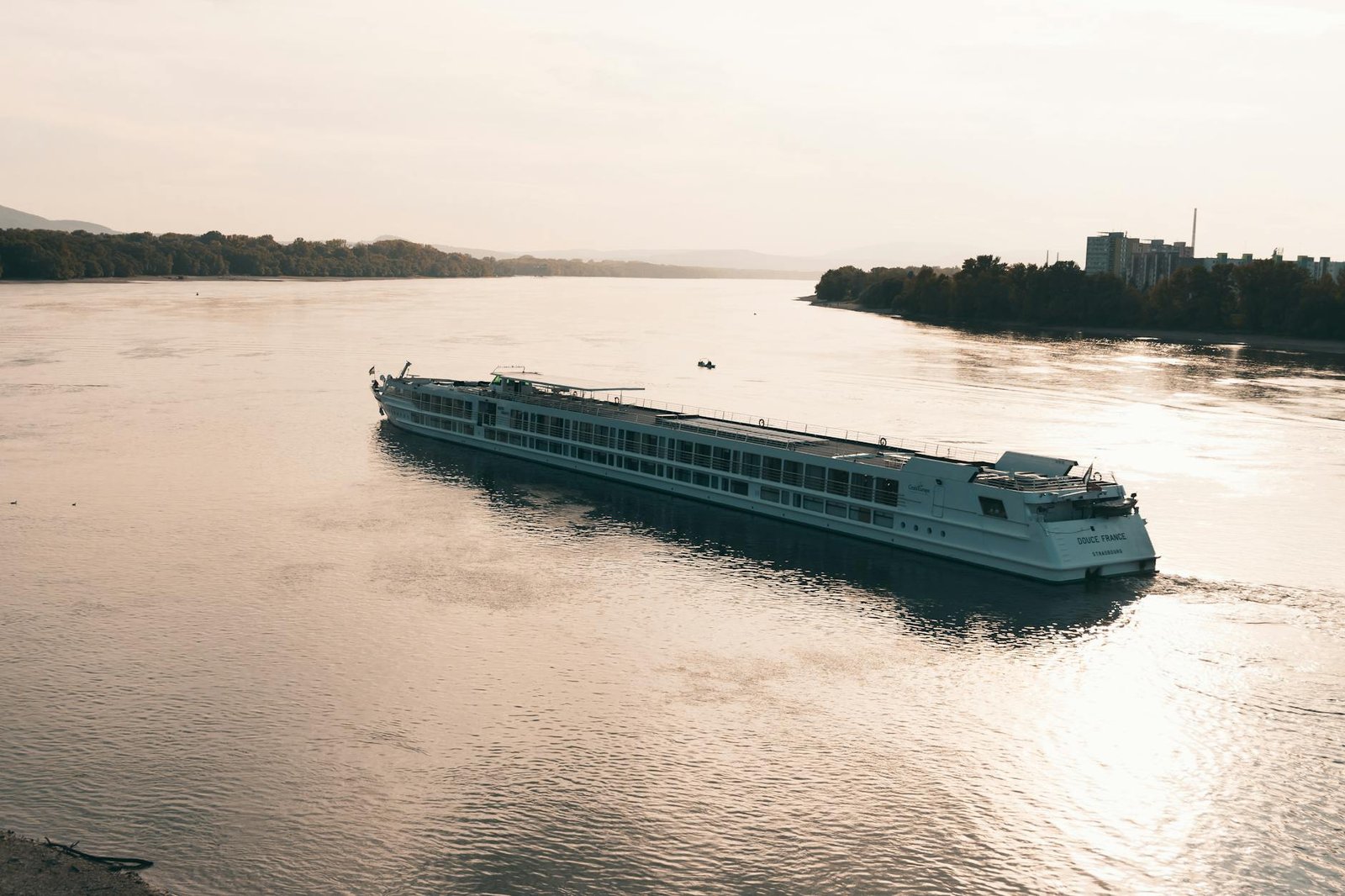
River ships moor alongside at the riverside landing; passengers walk ashore by gangway.
Choose the Right Port Day
Best Overall
Walk to the village, visit the 18th-century Reformed church, pick up a cold drink at a local shop, and spend the remaining time on the riverbank watching the Danube. Simple, honest, and exactly what this stop is.
Best Beach
Not relevant. This is a landlocked river village; there are no beaches.
With Kids
A flat walk along the Danube bank with open fields and river views is the most practical family option. Kids with energy can cycle if your ship offers bike rentals.
Only 3-4 Hours
Walk into the village centre, find the main square and the Reformed church, stroll along the Danube embankment, and return to the tender before the queue builds. That loop takes 2-2.5 hours comfortably.
Cheapest Option
Self-guided village walk costs nothing beyond whatever you spend at a local café, typically under $5 USD for coffee and pastry.
What To Avoid
Do not expect shops, reliable ATMs, or restaurant options — being unprepared for minimal infrastructure is the most common frustration here. Also avoid lingering too long in the village if tender queues back up; factor return time early.
Quick Take
- Port Type
- Scenic Tender Village Stop
- Best For
- Cruisers who want a genuinely unhurried Hungarian village experience, cyclists, and those seeking off-the-beaten-path Danube scenery
- Avoid If
- You need shops, restaurants, major museums, or anything resembling a tourist infrastructure — Solt has almost none
- Walkability
- Moderate within the village; flat terrain but spread out, and the tender landing point may add 10-15 minutes of walking before you reach anything
- Budget Fit
- Very low spend potential — there is little to buy, which keeps it cheap by default
- Good For Short Calls?
- Yes, this is a half-day stop at best; most cruisers will feel they have seen Solt thoroughly within 2-3 hours
Top Things To Do
1
Reformed Church and Village Square
Solt's 18th-century Reformed church is the visual anchor of the village and worth a look inside if open. The square around it gives a feel for small-town Hungarian life that has changed little in decades.
2
Danube Embankment Walk
The riverbank offers wide, uninterrupted views of the Danube and the flat Great Plain stretching to the horizon. It is genuinely scenic in a quiet, understated way. Early morning or late afternoon light is best.
3
Cycling the Danube Cycle Path
The EuroVelo 6 cycling route passes through this stretch of the Danube, and flat terrain makes it accessible to most fitness levels. Ship-organised bike excursions use this path to reach nearby villages or natural areas.
Show 2 more things to do in Solt
4
Local Café Stop
Solt has a small number of village cafés and shops. Finding one, sitting down with an espresso or a Hungarian pastry, and watching local life is a perfectly valid use of 30 minutes and costs almost nothing.
5
Birdwatching in Danube Floodplain Areas
The reed beds and floodplain around Solt are part of a broader natural corridor along the middle Danube. White storks, grey herons, and various wetland birds are commonly spotted, especially in spring and early summer.
Book with the ship, or on your own?
Booking independently
- Often noticeably cheaper than the ship’s version of the same tour.
- Smaller groups and local operators, with traveler reviews you can read before you pay.
- Free cancellation on most tours, usually up to 24 hours before.
When the ship’s excursion makes sense
- Short port calls or long transfers where the timing is tight.
- Tender-only stops where getting ashore can run late.
- The ship waits for its own delayed excursions — it won’t wait for independent ones, so leave a buffer before all-aboard.
We may earn a commission when you book through our links, at no extra cost to you — it’s how we keep these guides free.
Check The Port Traffic
Cruise Ships in Port
Once you have your shore plan, use the schedule to see how busy the harbour will be on your date, plus the ships, lines, and published call windows.
Sun
Mon
Tue
Wed
Thu
Fri
Sat
1
2
3
4
5
6
7
8
9
10
11
12
13
14
15
16
17
18
19
20
21
22
23
24
25
26
27
28
29
30
31
Quiet (1–2)
Busy (3–4)
Packed (5+)
0 scheduled calls
October 12, 2026
No scheduled cruise ship calls were found for this date selection. Pick a highlighted day on the calendar above, widen the range, or search for a different ship or line.
Port Overview
Solt sits on the western bank of the Danube in central Hungary, roughly halfway between Budapest and the Serbian border. It is a small agricultural town of around 6,000 people with no cruise infrastructure to speak of — no terminal, no waiting taxis, no tour operator desk. Ships anchor midstream and run tenders to a basic landing point, which immediately sets the tone: this is a scenic pause, not a port of call with a programme.
The appeal is genuinely rural Hungary. The surrounding landscape is flat Great Plain terrain with the wide Danube cutting through reed beds and agricultural land. The village itself has a historic Reformed church, a quiet main square, and streets that feel untouched by tourism because they are. That is either the draw or the dealbreaker depending on what you want from a port day.
Most river cruise lines that stop here — Viking, AmaWaterways, Emerald, Avalon, and others operating Budapest-to-Belgrade or reverse itineraries — treat Solt as a scenic highlight or cultural detour rather than an activity-heavy stop. Expect a ship-organised bike ride or guided walk rather than independent choices. If your ship offers neither, the honest answer is that a self-guided wander is still perfectly valid but will be short.
Is It Safe?
Solt is a safe, quiet Hungarian village with no notable security concerns for visitors. The main practical risk is simply getting stranded if you misjudge tender return times — the ship will not wait indefinitely. Keep an eye on the time and build in at least 20-30 minutes buffer before the last tender. The riverbank paths can be uneven in places, so watch your footing especially after rain.
Accessibility & Walkability
The village terrain is flat, which is a genuine advantage for those with limited mobility. However, the path from the tender landing point to the village is not paved in all sections and may include grass, gravel, or soft ground near the riverbank. Wheelchair users should speak with the ship's excursion staff before going ashore, as the landing point conditions vary by water level and season. The village streets themselves are generally accessible once reached.
Outside the Terminal
There is no terminal. The tender brings you to a basic landing point — likely a dock or embankment — and you step directly into a quiet Hungarian riverside setting. There will be no welcome committee, no taxis, no information booth, and probably a handful of fellow cruisers figuring out the same thing you are. The village begins a short walk inland. If your ship has organised a meeting point for excursions, follow those instructions first; otherwise, the church spire is a useful navigational landmark.
Local Food & Drink
Do not arrive expecting a restaurant lunch. Solt has local village cafés and small food shops but no tourism-oriented dining scene. If your ship does not provide a meal ashore, eat onboard before tendering or carry a snack. The small cafés that exist are genuine local spots — espresso, soft drinks, perhaps a pastry or sandwich. Hungarian forint cash is essential as card acceptance at this level is unreliable.
Shopping
There is effectively no shopping here in any tourist sense. A village grocery or general store may exist for snacks and cold drinks. Do not expect souvenirs, local crafts markets, or anything resembling a port shopping area. Buy your Hungarian souvenirs in Budapest.
Money & Currency
- Currency
- Hungarian Forint (HUF)
- USD Accepted?
- No
- Card Payments
- Very limited. Assume cash only at village-level establishments.
- ATMs
- Do not rely on finding a working ATM in Solt. Withdraw forints in Budapest or another major stop before arriving.
- Tipping
- Rounding up or leaving 10% is typical in Hungary for sit-down service, though in a village café it is entirely optional.
- Notes
- Euros are occasionally accepted at a poor exchange rate. Bring small forints bills.
Weather & Best Time
- Best months
- May, June, September
- Avoid
- July and August can be very hot and humid on the Great Plain; January and February are cold with limited daylight
- Temperature
- 15-28°C (59-82°F) during spring and summer cruise season
- Notes
- The flat landscape offers no shade, so sun protection is important in summer. Spring brings stork nesting season which is a visual bonus.
Airport Information
- Airport
- Budapest Ferenc Liszt International Airport (BUD)
- Distance
- Approximately 85-100 km north of Solt
- Getting there
- No practical direct transport from Solt. Connect via Budapest by train or taxi first.
- Notes
- Solt is not a practical embarkation or disembarkation point. All flight connections run through Budapest.
Getting Around from the Port
Walking
The village centre is reachable on foot from the tender landing point. The terrain is flat and the distance is manageable, though the route from the river to the main streets is not always clearly marked.
Ship-organised cycling
Several river cruise lines offer guided or self-guided bike excursions from Solt along Danube cycling paths. This is the most popular and practical way to see more of the surrounding area.
Ship-organised guided walk
Some cruise lines offer a short guided village tour taking in the church, main square, and historical context of the middle Danube region.
Taxi
There are no taxis waiting at the landing point. Arranging one independently is not practical for a short port call.
Book a transfer 5% off with code TPO5 at checkoutDetails last checked April 2026
Planning a cruise here?
VIVA Cruises sail to Solt.
Practical Tips for Cruise Passengers
- Check your ship's tender schedule as soon as you arrive and work backward from the last tender time — add 20 minutes buffer minimum.
- Bring Hungarian forints in small denominations before arriving; there is no reliable ATM or currency exchange in Solt.
- If your cruise line offers a bike excursion from Solt, book it in advance — this is genuinely the best use of the stop and spaces fill quickly.
- Wear comfortable, closed shoes; the path from the tender landing to the village is not paved throughout and can be muddy after rain.
- Sun protection is non-negotiable in summer — the riverbank and village streets offer almost no natural shade on a clear day.
- Treat this stop as a peaceful interlude, not an activity hub. The cruisers who enjoy Solt most are the ones who arrive with low expectations and an appreciation for quiet rural Hungary.
Frequently Asked Questions
No. Ships anchor midstream on the Danube and run tenders to a basic landing point ashore. Factor in 10-15 minutes each way for the tender crossing plus any wait time.
It depends entirely on what you want. If you enjoy quiet village atmospheres, cycling, and genuine rural Hungary, yes. If you need restaurants, shopping, or major sights, stay on the ship.
Yes, the village is small and walkable. A self-guided loop to the church, main square, and riverbank is straightforward and takes 2-2.5 hours without a guide.
The village terrain is flat, but the path from the tender landing to the village is not uniformly paved and can be uneven. Speak to ship staff before going ashore to confirm current landing point conditions.
A coffee or cold drink at a village café is realistic; a full restaurant meal is not. Eat onboard before tendering if lunch matters to you.
Find cruises to Solt, Hungary
Compare sailings and book with no fees — best price guaranteed.
We may earn a commission when you book through our links, at no extra cost to you — it’s how we keep these guides free.
✉ Sailing to Solt? Get your port-day plan
Tell us your sail date and we’ll email you a short Solt plan about 60 days out — when the good excursions start selling out — plus a final checklist 2 weeks before. Two emails, then done. We’ll send one note to confirm it’s really you — unsubscribe anytime.
Same itinerary network
View All
Ports Often Paired With Solt

European River Cruises

European River Cruises

European River Cruises
