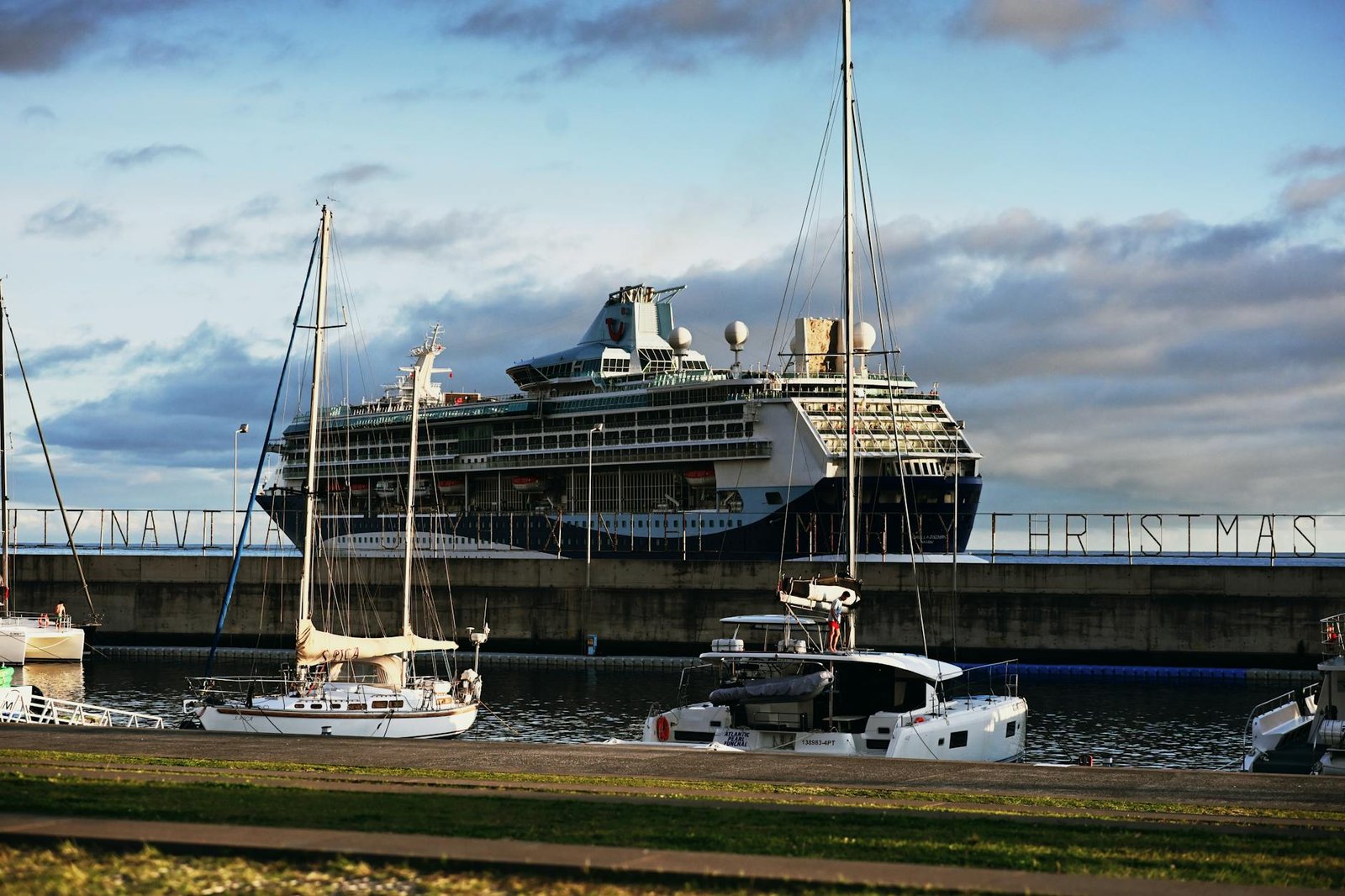
Pocinho sits at the eastern tip of the Douro Valley, where Portugal’s most dramatic river gorge finally flattens out — and it’s one of the most underrated stops on any river cruise itinerary. This small town punches well above its weight, delivering Roman ruins, schist villages, and almond-blossom landscapes that feel untouched by mass tourism. Come prepared to explore, because Pocinho rewards the curious.
Arriving by Ship
Pocinho is a river cruise port, not an ocean cruise terminal, so you’ll arrive by riverboat along the Douro rather than disembarking from a large ocean liner. The town has a small quay where ships dock directly — no tender required — and the centre is just a short walk from the waterfront.
The port itself is modest and functional, but the scenery as you sail in is anything but: sheer schist cliffs, terraced vineyards, and the wide blue ribbon of the Douro make arrival feel genuinely cinematic.
Things to Do

Pocinho is your gateway to the Côa Valley, one of Europe’s most extraordinary archaeological landscapes, but the town itself also has character worth lingering over. A single day here can stretch from prehistoric rock carvings to hilltop castles to a leisurely riverside lunch.
History & Culture
- Foz Côa Archaeological Park is the headline attraction — over 20,000 Palaeolithic rock engravings spread across three sites, dating back 25,000 years; entrance costs around €9 and guided tours depart from the nearby museum.
- Museu do Côa (open Tuesday–Sunday, 9am–12:30pm and 2–6pm) is an award-winning building that rises from the rock like a geological formation, with excellent multilingual exhibits on the engravings.
- Vila Nova de Foz Côa is the nearest town, just 3km away, with a charming old quarter, a Manueline-style pelourinho (pillory), and a relaxed café culture that’s genuinely local.
Castles & Viewpoints
- Castelo de Marialva, about 25km southwest, is a near-perfectly preserved medieval village-within-a-castle where just a handful of residents still live among the ruins — hauntingly beautiful and free to enter.
- Castelo Rodrigo, roughly 20km north, offers sweeping views across Spain and Portugal from its hilltop fortress; the village streets below are lined with Baroque mansions and fig trees.
Wine & Landscape
- Quinta do Crasto and other Douro wine estates near Pocinho offer tastings of the region’s famous Port and red wines; book ahead for a cellar tour (typically €10–€20 per person).
- Miradouro de São Salvador do Mundo, perched above the Douro gorge, gives you one of the valley’s most photographed viewpoints — it’s free and takes about 20 minutes to reach by car.
What to Eat
The food around Pocinho is hearty, honest northeastern Portuguese cooking — lamb, salt cod, and almonds appear everywhere, and the local wine list basically writes itself. Don’t rush lunch; this is a region where meals are taken seriously.
- Cabrito assado (roast kid goat) is the regional showpiece — try it at Restaurante Foz do Côa in Vila Nova de Foz Côa for around €12–€15 per person.
- Bacalhau à Transmontana (salt cod with potatoes and olive oil) is the local take on Portugal’s beloved ingredient; expect to pay €10–€13 at most village restaurants.
- Migas com chouriço — a thick, stodgy bread-and-sausage dish that tastes far better than it sounds; often served as a starter for around €4–€5.
- Almond tart (tarte de amêndoa) is sold in almost every pastelaria in the region, reflecting the valley’s centuries-old almond cultivation; around €1.50 per slice.
- Local Douro Superior wine is what you should be drinking with every meal — ask for a regional red by the glass (€2–€4) at any café or restaurant.
Shopping

Pocinho itself has limited shopping, but Vila Nova de Foz Côa has a handful of artisan shops and a small weekly market selling local honey, almonds, olive oil, and hand-embroidered linens — all excellent gifts that travel well. Ceramics from the Trás-os-Montes region and bottled Douro wines make genuinely useful souvenirs.
Skip the generic tourist trinkets and focus on edible or drinkable produce instead — a bottle of aged Tawny Port from a local quinta will outlast any fridge magnet.
Practical Tips
- Currency is the euro (€); ATMs are available in Vila Nova de Foz Côa but scarce at the port itself, so come with cash.
- Tipping is appreciated but not mandatory — 10% at restaurants is generous and well received.
- Transport from the quay to Vila Nova de Foz Côa is easiest by taxi (around €5–€8 each way); your cruise director can usually arrange transfers.
- Go ashore early — the Côa Archaeological Park books up, and morning light on the Douro valley is exceptional.
- Wear comfortable shoes — the rock engraving sites involve uneven terrain and can be slippery.
- Summer temperatures can exceed 40°C inland; carry water, wear a hat, and protect yourself from the sun.
- Book the Museu do Côa guided tour in advance — group sizes are limited and they sell out on cruise days.
Pack your curiosity alongside your sunscreen, because Pocinho offers the rare thrill of standing in front of art made 25 millennia ago — and that’s not something you’ll forget in a hurry.
🎟️ Things to Book in Advance
These highly-rated experiences fill up fast — book before you arrive to avoid missing out.


This page contains affiliate links. If you book through them, we may earn a small commission at no extra cost to you.
📍 Getting to Pocinho, Portugal
Use the interactive map below to explore the port area and plan your route from the terminal.
Leave a Reply