
Antarctica
Antarctica
Half Moon Island Antarctica Cruise Port Guide: What to Expect, Logistics & Tips
Antarctica
Ships anchor offshore; passengers transferred via Zodiac boats in small groups.
Choose the Right Port Day
Best Overall
Zodiac cruise around the island photographing chinstrap penguin colonies and Antarctic seals, followed by a short landing walk if conditions allow—captures the essence of Half Moon without over-committing to extended terrain.
Best Beach
Not applicable. Half Moon's 'beaches' are rocky shale with ice and penguin colonies—not swimmable or leisurely.
With Kids
Older children (8+) can manage the tender and short hikes in expedition-grade cold gear; younger kids may struggle with extended exposure. Consult expedition staff on individual fitness.
Only 3-4 Hours
Land by Zodiac, hike the gentle ridge trail to viewpoints (45 min), watch chinstrap penguins and seals on shoreline (60 min), return to tender before weather window closes.
Cheapest Option
All shore time is included in cruise fare; no paid activities exist on the island.
What To Avoid
Do not underestimate how cold and windy it gets; many cruisers come unprepared despite warnings and cut visits short. Also avoid expecting a developed port or facilities—there are none.
Quick Take
- Port Type
- Polar Expedition Tender Port
- Best For
- Wildlife enthusiasts, photographers, polar explorers comfortable with cold and uncertainty.
- Avoid If
- You dislike cold water, cannot handle unpredictable weather cancellations, or expect a traditional port experience.
- Walkability
- Not applicable; terrain is rocky, icy, and uneven. Zodiac access only.
- Budget Fit
- Included in expedition cruise; no additional paid excursions typically needed.
- Good For Short Calls?
- Yes, if seas permit. Typically 2–4 hours ashore across multiple tender rotations.
Top Things To Do
1
Zodiac Wildlife Cruise & Penguin Colony Observation
Expedition staff navigate Zodiacs close to chinstrap penguin colonies (2,000–3,000 birds) and haul-out sites for Weddell and fur seals without disturbing wildlife. Photographers capture dramatic polar wildlife behavior.
2
Ridge & Viewpoint Walk (Weather Permitting)
Guided short hike over tussock and shale to elevated viewpoints overlooking Bransfield Strait and nearby islands. Clear views reward the climb; overcast days offer moody polar landscape photography.
3
Seal Behaviour & Observation Expertise
Expedition naturalists provide real-time identification and behaviour commentary on Weddell seals, fur seals, and leopard seals (if present). Learn hunting, pupping, and thermoregulation strategies.
Book with the ship, or on your own?
Booking independently
- Often noticeably cheaper than the ship’s version of the same tour.
- Smaller groups and local operators, with traveler reviews you can read before you pay.
- Free cancellation on most tours, usually up to 24 hours before.
When the ship’s excursion makes sense
- Short port calls or long transfers where the timing is tight.
- Tender-only stops where getting ashore can run late.
- The ship waits for its own delayed excursions — it won’t wait for independent ones, so leave a buffer before all-aboard.
We may earn a commission when you book through our links, at no extra cost to you — it’s how we keep these guides free.
Check The Port Traffic
Cruise Ships in Port
Once you have your shore plan, use the schedule to see how busy the harbour will be on your date, plus the ships, lines, and published call windows.
Sun
Mon
Tue
Wed
Thu
Fri
Sat
1
2
3
4
5
6
7
8
9
10
11
12
13
14
15
16
17
18
19
20
21
22
23
24
25
26
27
28
29
30
Quiet (1–2)
Busy (3–4)
Packed (5+)
0 scheduled calls
September 15, 2026
No scheduled cruise ship calls were found for this date selection. Pick a highlighted day on the calendar above, widen the range, or search for a different ship or line.
Port Overview
Half Moon Island is a small, uninhabited rock in the South Shetland Islands near the Antarctic Peninsula, lying approximately 200 km south of the Antarctic Convergence. Ships anchor offshore and tender passengers to the rocky beach in Zodiacs—tendering may be cancelled or delayed due to wind, swell, or ice. There are no facilities, no permanent structures, and no developed infrastructure ashore. The sole reason to go is wildlife: chinstrap penguin colonies (a few thousand birds), Weddell and fur seals, and the austere polar landscape. For most expedition cruisers, Half Moon is a highlight; for those uncomfortable with cold, unpredictability, or 'nothing to do' in traditional terms, it is a long wait in a Zodiac.
Is It Safe?
Half Moon Island is genuinely remote and unforgiving. Weather can deteriorate rapidly; tendering is called off if swells exceed safe limits or winds are severe. Hypothermia and frostbite are real risks if wet clothing is not changed immediately. Passengers must wear all supplied or approved cold-weather gear (parka, insulated boots, layers) and follow strict expedition protocols. Wildlife—especially seals—can be unpredictable; maintain distances enforced by guides. The island has no rescue infrastructure; medical emergencies require evacuation by ship or nearby vessels. Most voyages occur in Antarctic summer (Nov–Mar), when conditions are less extreme but still hazardous. Do not attempt exploration without expedition staff.
Accessibility & Walkability
Half Moon Island is not wheelchair-accessible. Zodiac boarding requires climbing a gangway and stepping into a moving boat—mobility challenges make this difficult or impossible. Terrain ashore is rocky, icy, and uneven; uneven walking surfaces and steep slopes rule out wheeled devices. Passengers with reduced mobility should consult the cruise line before booking; alternative experiences on board or at more accessible ports may be offered.
Outside the Terminal
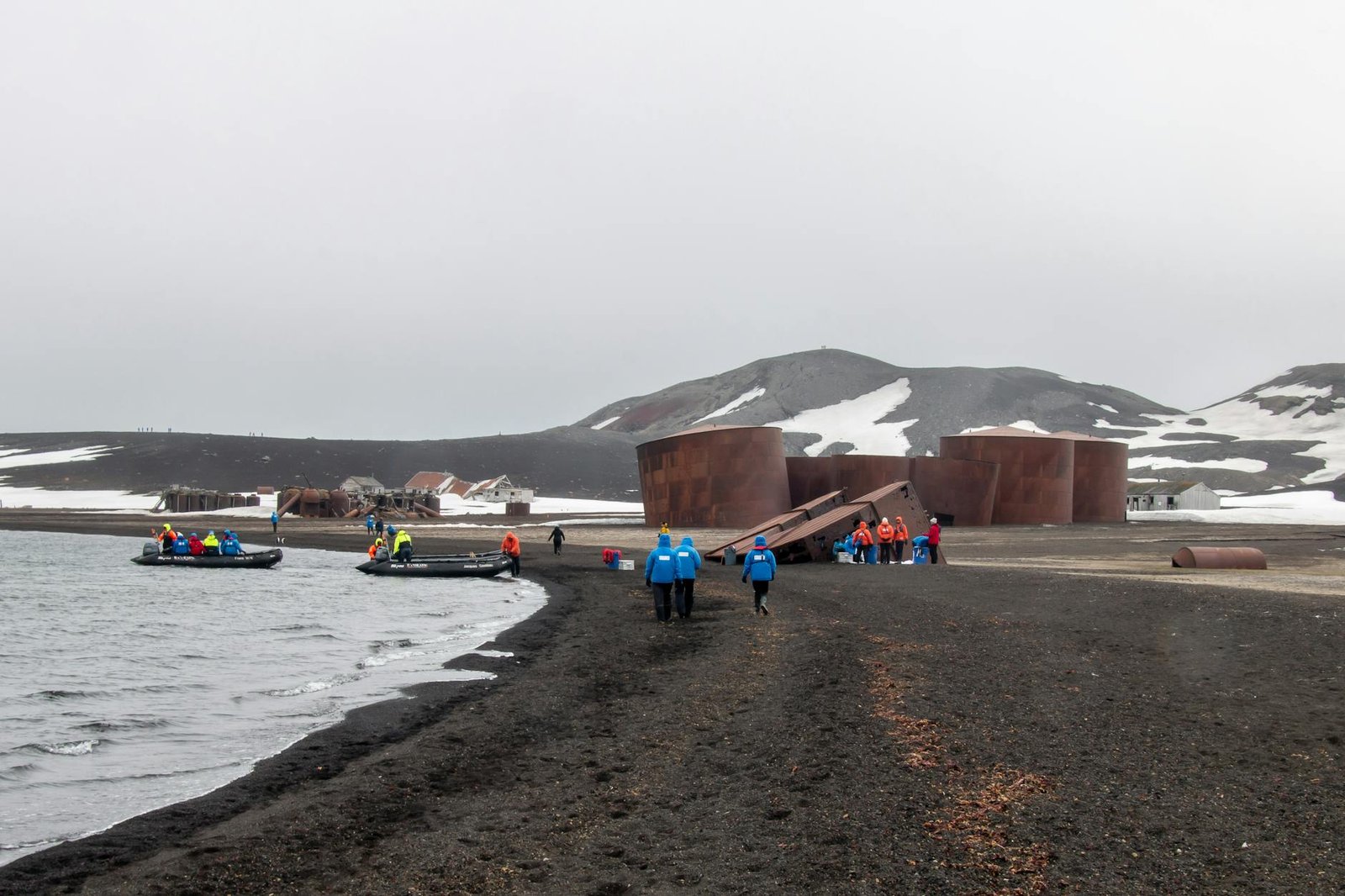
There is no terminal. A Zodiac beach landing deposits you on a rocky, icy shale beach with minimal shelter. Cold wind and spray are immediate. Penguin sounds (braying) and seal barks echo across the shoreline. Expect wet boots, low visibility on overcast days, and a stark landscape dominated by grey rock, black water, and white ice. Expedition staff guide small groups upslope; the experience is controlled and brief.
Local Food & Drink
No food is available on Half Moon Island. All meals are served aboard ship. Many cruisers eat a hearty breakfast before tendering and pack thermos flasks of hot beverages (coffee, tea, soup) to sip while ashore—expedition staff may permit this. Dehydration and hunger are easy to overlook in cold; eating and drinking before and after exposure are essential. Return to the ship to warm up and refuel.
Shopping
No shops, vendors, or commercial activity exist on Half Moon Island. All purchases (expedition gear, books, souvenirs) are made aboard ship. If cold-weather layers or gloves are forgotten or damaged, the ship's gift shop and expedition office may loan or sell replacements.
Money & Currency
- Currency
- Not applicable
- USD Accepted?
- No
- Card Payments
- Not applicable
- ATMs
- Not applicable
- Tipping
- Tips for expedition staff are typically collected by the cruise line and distributed at voyage end. Check your cruise documents.
- Notes
- Half Moon Island has no economy. All expenses (food, shelter, activities) are pre-paid as part of your cruise.
Weather & Best Time
- Best months
- November–March (Antarctic summer); December–February warmest.
- Avoid
- April–October (winter; most voyages do not visit).
- Temperature
- –2 to +5°C (28–41°F), with wind chill to –15°C (5°F). Highly variable.
- Notes
- Conditions can change within hours. Tendering is weather-dependent and may be cancelled abruptly. Overcast days are typical; clear views are bonuses. Sea state, not air temperature, is the primary factor limiting access.
Airport Information
- Airport
- Ushuaia International Airport (Airstrip, Argentina)
- Distance
- Approximately 3,400 km (2,100 mi) north; most Antarctica cruises embark/disembark at Ushuaia, Argentina.
- Getting there
- Ushuaia is the traditional gateway for Antarctic Peninsula voyages. Long-haul flights via Buenos Aires required.
- Notes
- Half Moon Island is not visited as a standalone port; it is part of multi-day Antarctic Peninsula expeditions. Cruise embarkation points (Ushuaia, Punta Arenas) are the relevant planning focus.
Getting Around from the Port
Zodiac tender
Ships cannot dock; all passengers transit via small rigid-hulled inflatable boats (Zodiacs) controlled by expedition staff. Rotation system deployed based on passenger count and sea state.
On-foot hiking
No maintained trails. Short, unmarked walks over rocky shale and tussock grass to ridge viewpoints; terrain is uneven and icy.
Details last checked April 2026
Planning a cruise here?
Hurtigruten, Ponant, Lindblad Expeditions & more sail to Half Moon Island Antarctica.
Practical Tips for Cruise Passengers
- Bring a dedicated waterproof action camera (GoPro) or smartphone case; Zodiac spray will soak you, and no phone repair exists on Half Moon.
- Layer aggressively: thermal base, fleece mid-layer, waterproof parka and trousers. Cold and wind are deceptive; you will feel the difference between adequate and inadequate gear within minutes.
- Listen closely to expedition briefings on wildlife distance rules and ice hazards; breaking rules risks fines, evacuation, or exclusion from future landings.
- Tender rotations can exceed 30 min of waiting; bring a book or audio content, and expect queues on the ship despite efficient staff work.
Frequently Asked Questions
Absolutely not. Water temperature is 0–3°C (32–37°F); hypothermia would set in within minutes. No swimming is permitted anywhere in Antarctica outside specialized polar diving operations (rare and only for trained experts).
You remain aboard ship with no refund or compensation (weather is an act of God in cruise terms). The ship will attempt landings again if conditions improve; some cruises lose Half Moon entirely due to persistent storms. Bring entertainment and accept the possibility.
Typically 60–120 min across one or two Zodiac rotations, depending on sea state and expedition schedule. Staff will announce specific windows; you have no choice in timing.
Find cruises to Half Moon Island Antarctica, Antarctica
Compare sailings and book with no fees — best price guaranteed.
We may earn a commission when you book through our links, at no extra cost to you — it’s how we keep these guides free.
✉ Sailing to Half Moon Island Antarctica? Get your port-day plan
Tell us your sail date and we’ll email you a short Half Moon Island Antarctica plan about 60 days out — when the good excursions start selling out — plus a final checklist 2 weeks before. Two emails, then done. We’ll send one note to confirm it’s really you — unsubscribe anytime.
Antarctica
View All
More Antarctica Ports
Antarctica

Antarctica

Antarctica
