


Mediterranean
Mediterranean
San Sebastián de La Gomera Cruise Port Guide: Things to Do & Practical Tips
Spain
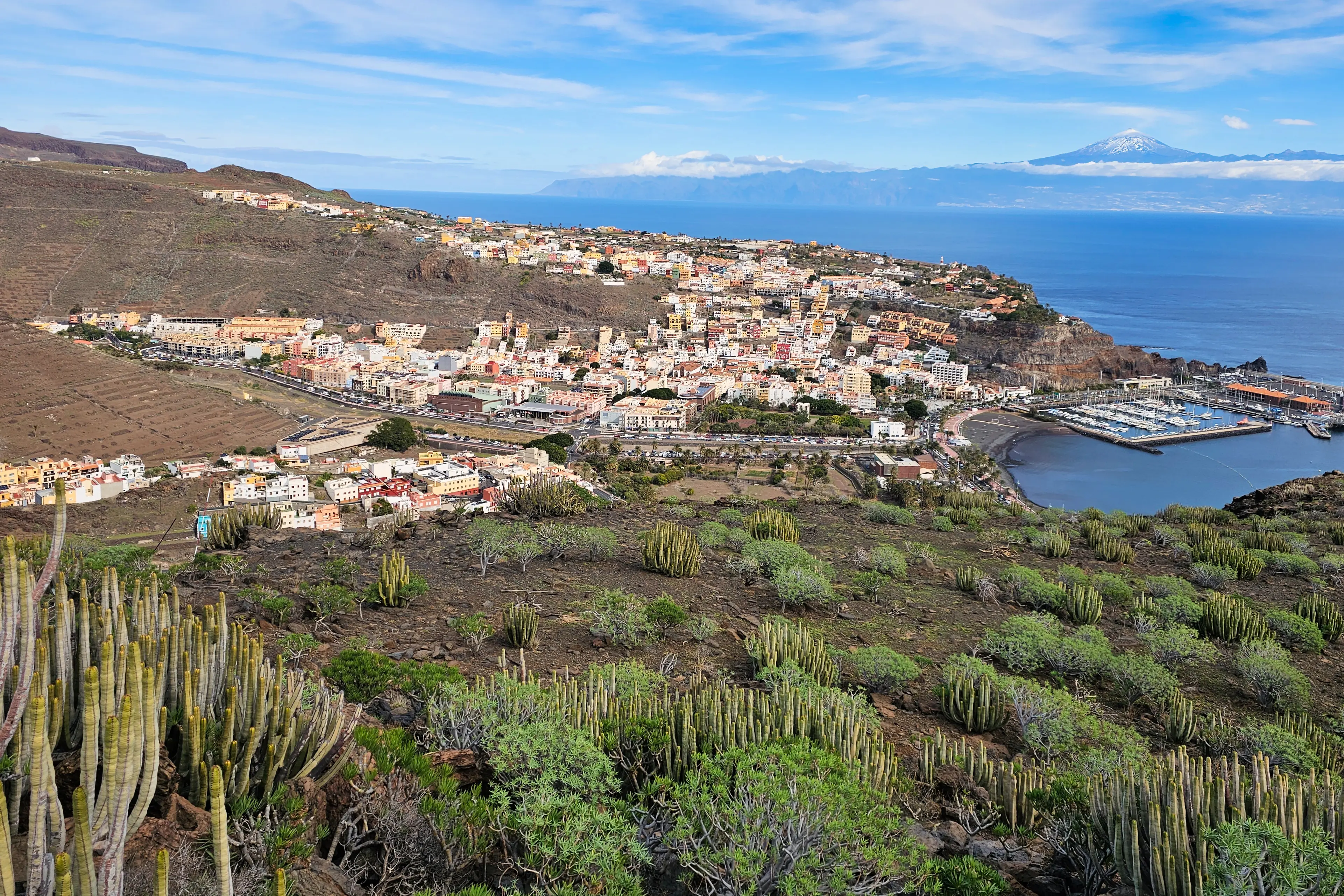
Ships dock at a modern pier in the port of San Sebastián with some vessels using tender boats depending on size and availability.
Choose the Right Port Day
Best Overall
Old town walk covering Calle Real, the church of La Asunción (where Columbus reportedly prayed before sailing), and Torre del Conde, then lunch at a local tapas bar. Captures the real character of La Gomera without rushing.
Best Beach
Playa de la Cueva — dark volcanic sand, close to the port, calm enough for a dip. Not a postcard beach, but honest and pleasant.
With Kids
Walk to the town waterfront and seafront promenade, then let kids explore the beach at Playa de la Cueva. The town is compact and easy to navigate with children.
Only 3-4 Hours
Walk to the Torre del Conde (15 min on foot), stroll the old town streets, stop for tapas at a local bar on Calle Real, then finish at Playa de la Cueva before heading back. Comfortable on foot, no transport needed.
Cheapest Option
Walk the entire town, visit the Torre del Conde (free or minimal entry), grab a coffee and pastry at a local cafe — budget under €10 total for most of the morning.
What To Avoid
Organised shore excursion jeep tours can feel rushed for the price. Also avoid planning to cross to the island interior unless your ship allows 6+ hours — the roads are slow and winding.
Quick Take
- Port Type
- Historic Small Port Town
- Best For
- History lovers, walkers, beach seekers, and anyone wanting a relaxed, uncommercialised Canary Islands experience
- Avoid If
- You need a full-day itinerary or want big resort infrastructure — the town is small and quieter than Tenerife or Gran Canaria
- Walkability
- Excellent — the town centre, historic sites, and the main beach are all reachable on foot from the dock within 10-15 minutes
- Budget Fit
- Good — local cafes and tapas bars are affordable, and most historic sights cost little or nothing
- Good For Short Calls?
- Yes — the town is genuinely well-suited to a 3-4 hour visit; a full day requires heading into the interior or exploring further beaches
Top Things To Do
1
Magical Tenerife / Photo Walk
I capture the vibrant essence of Tenerife with tailored photo shoots and guided tours that blend adventure with portrait photography. This unique opportunity allows you to…
6h
2
Tenerife Scooter Rental Explore with Freedom
Rent a reliable 125cc scooter from Moto Rent West Coast Tenerife and unlock the beauty of the island at your own pace. Experience the freedom of…
24h
Our picks in San Sebastián de La Gomera
3
Torre del Conde
A 15th-century fortified tower that is one of the best-preserved medieval structures in the Canary Islands. Small interior exhibit covers the tower's history and its connection to the Columbus era. Short visit but genuinely worth the stop.
4
Iglesia de la Asunción (Church of the Assumption)
The church where Columbus is said to have heard mass before his 1492 crossing. The interior is modest but well-preserved, and the building itself is one of the oldest churches in the Canaries. Free to enter, genuinely atmospheric.
5
Old Town Walk — Calle Real and the Historic Quarter
The main pedestrian street and surrounding lanes are lined with colonial-era buildings, local shops, and tapas bars. This is where the town feels most authentic. Good for a slow wander and stopping for coffee or a small bite.
Show 3 more things to do in San Sebastián de La Gomera
6
Playa de la Cueva
The main town beach — dark volcanic sand, calm water on most days, and a short walk from the port. Not a dramatic beach but perfectly pleasant for a swim or a sit-down. Has basic facilities nearby.
7
Garajonay National Park Excursion
The UNESCO-listed ancient laurel forest that covers the island's interior is extraordinary — misty, green, and unlike anything else in the Canaries. Requires transport and at least 3-4 hours above town. Only realistic on longer port days of 7+ hours.
8
Silbo Gomero — Whistled Language Demonstration
La Gomera is famous for its UNESCO-recognised whistled language (Silbo Gomero) used to communicate across the island's deep valleys. Some local bars and cultural venues offer demonstrations. Worth looking for if you have extra time — it is genuinely unusual.
Book with the ship, or on your own?
Booking independently
- Often noticeably cheaper than the ship’s version of the same tour.
- Smaller groups and local operators, with traveler reviews you can read before you pay.
- Free cancellation on most tours, usually up to 24 hours before.
When the ship’s excursion makes sense
- Short port calls or long transfers where the timing is tight.
- Tender-only stops where getting ashore can run late.
- The ship waits for its own delayed excursions — it won’t wait for independent ones, so leave a buffer before all-aboard.
Going independent? Compare tours in San Sebastián de La Gomera → — the best-reviewed ones sell out first.
We may earn a commission when you book through our links, at no extra cost to you — it’s how we keep these guides free.
Check The Port Traffic
Cruise Ships in Port
Once you have your shore plan, use the schedule to see how busy the harbour will be on your date, plus the ships, lines, and published call windows.
Sun
Mon
Tue
Wed
Thu
Fri
Sat
1
2
3
4
5
6
7
8
9
10
11
12
13
14
15
16
17
18
19
20
21
22
23
24
25
26
27
28
29
30
Quiet (1–2)
Busy (3–4)
Packed (5+)
0 scheduled calls
September 30, 2026
No scheduled cruise ship calls were found for this date selection. Pick a highlighted day on the calendar above, widen the range, or search for a different ship or line.
Port Overview
San Sebastián de La Gomera is the capital and main port of La Gomera, one of the smaller western Canary Islands. Ships dock at the main ferry and cruise terminal, which sits right at the edge of the town — in most cases you step off and you are effectively already in the centre. There is no lengthy transfer or tender process for the majority of calls, though some vessels do anchor and tender depending on conditions and ship size.
This is one of the least touristy ports in the Canaries. The town is compact and genuinely colonial in character — whitewashed buildings, a well-kept old quarter, and a historic church tied directly to Christopher Columbus, who stopped here in 1492 before crossing the Atlantic. That history gives the town real substance for a short visit.
For most cruisers, San Sebastián is best treated as a pleasant half-day walkable town rather than a major destination. It does not have the resort infrastructure of Tenerife or the nightlife of Las Palmas, but that is exactly the point — this is a quieter, more authentic stop that rewards a relaxed walk and a good lunch.
Is It Safe?
San Sebastián de La Gomera is a safe, low-crime town. Petty theft is not a significant concern here in the way it might be in larger Canary Islands cities, but standard precautions apply — don't leave bags unattended, keep valuables out of sight. The town is walkable without concern during daylight hours. The port area and town centre are both well-managed and relaxed.
Accessibility & Walkability
The waterfront and main town streets are flat and reasonably accessible for wheelchairs and mobility aids. The historic quarter has some uneven cobblestone sections and a few gentle inclines that may be challenging. Playa de la Cueva has limited beach wheelchair access. Overall, the core of the town is more accessible than most historic Canary Islands ports, but the island interior and uphill areas are not suitable for limited mobility visitors.
Outside the Terminal
The exit from the cruise terminal puts you almost directly onto the town's waterfront promenade. Within a few minutes you can see the seafront, the start of the old town, and signs pointing toward the main sights. There is no aggressive taxi hustle or tour-seller gauntlet — the transition from ship to town is calm and easy. A short walk along the promenade heads directly toward Calle Real and the historic centre.
Beaches Near the Port
Playa de la Cueva
The closest beach to the port — dark volcanic sand, sheltered position, and calm enough for swimming on most days. Modest but perfectly usable. Has some basic amenities nearby.
Playa de San Sebastián
The town's second main beach area near the harbour. Darker sand, less sheltered than La Cueva. Convenient but not the most scenic option — good if you are short on time.
Local Food & Drink
San Sebastián has a solid selection of local bars and restaurants along Calle Real and the waterfront. This is not a place for fine dining but the tapas, fresh fish, and Canarian staples like papas arrugadas (wrinkled potatoes with mojo sauce) are genuinely good and good value. Prices are notably lower than in tourist-heavy Tenerife resorts. Avoid the immediate portside cafes closest to the dock if you want better value — walk a few blocks into the town and you will find more authentic options at lower prices. Local wine from La Gomera is worth trying if you are a wine drinker — the island produces small quantities of distinctive white wines.
Shopping
Shopping is modest and local rather than commercial. Calle Real has a handful of craft shops, local honey and liqueur sellers, and souvenir stalls. La Gomera is known for its palm honey (miel de palma) — a dark syrup made from palm sap that is genuinely worth picking up as a local product. Do not expect duty-free chains or big retail here — this port is about small local shops, and that is a good thing.
Money & Currency
- Currency
- Euro (EUR)
- USD Accepted?
- No
- Card Payments
- Cards widely accepted at restaurants and shops; some smaller bars and market stalls are cash only
- ATMs
- ATMs available in the town centre, not inside the port terminal itself
- Tipping
- Not mandatory; rounding up or leaving small change is appreciated at local bars and restaurants
- Notes
- The Canary Islands have lower VAT (IGIC at 7%) than mainland Spain, so prices can be slightly lower than elsewhere in Europe.
Weather & Best Time
- Best months
- October through May — mild, stable, and pleasant. The Canaries are a classic winter sun destination.
- Avoid
- No truly bad months; July and August are warmer and busier but still manageable
- Temperature
- 18-25°C (64-77°F) across the main cruise season — reliably mild
- Notes
- La Gomera's interior can be cloudy and misty even when the coast is sunny due to the island's mountainous terrain. Pack a light layer if visiting Garajonay.
Airport Information
- Airport
- La Gomera Airport (GMZ)
- Distance
- Approximately 30 km from San Sebastián
- Getting there
- Taxi or rental car; bus connections exist but are slow
- Notes
- La Gomera Airport has limited connections, mainly to Tenerife North. Most travellers reach La Gomera via ferry from Tenerife (Los Cristianos). The ferry terminal is adjacent to the cruise dock.
Getting Around from the Port
Walking
The most practical option for nearly everything in the town centre. The historic quarter, Torre del Conde, church, and main beach are all within a 15-minute walk of the dock.
Local Bus (GUAGUA)
GUAGUA buses operated by GuaguaGomera connect San Sebastián to other parts of the island including Valle Gran Rey and Playa de Santiago. Useful if you want to explore beyond town.
Book bus ticketsTaxi
Taxis are available near the port and town centre. Good for reaching beaches or viewpoints that are too far to walk comfortably.
Book a transfer 5% off with code TPO5 at checkoutHire Car / Rental
Car rental is available in town and gives the best access to the island interior and north coast. Only worth it if your port day is 6+ hours.
Details last checked April 2026
Planning a cruise here?
AIDA Cruises, Windstar, Explora Journeys sail to San Sebastián de La Gomera.
Practical Tips for Cruise Passengers
- Walk everything — the town is small enough that a taxi is rarely necessary for the main sights, and walking gives you the best feel for the place.
- Pick up a jar of miel de palma (palm honey) or a bottle of local Gomeran wine from a town shop — genuine local products you will not easily find elsewhere.
- Check your ship's departure time carefully before committing to any transport into the island interior. The roads are winding and buses run infrequently — missing your ship is a real risk if schedules slip.
- The church of La Asunción is free and historically significant — do not skip it even if you are not religious. It is one of the most direct Columbus connections in the entire Atlantic.
- Eat lunch in town rather than back on the ship — a full fish lunch with wine at a local restaurant will cost far less than equivalent food on board.
- Avoid the overpriced tour desks right at the dock exit. If you want a guided jeep tour or island excursion, your cruise line's organised tours are likely better value and safer in terms of return guarantee.
Frequently Asked Questions
Most ships dock directly at the cruise terminal, which is right next to the town centre. Some larger vessels may tender depending on conditions and berth availability — check with your ship's daily newsletter for confirmation.
Yes — it is one of the more genuine and uncommercialised stops in the Canaries. The historic town, Columbus connections, and local food scene make it a pleasant few hours. It is not a big-impact destination, but it rewards a relaxed approach.
Only if your port day is 7 hours or more. The roads are slow, buses infrequent, and the journey takes 30-45 minutes each way. A rushed visit is not worth missing the ship for — only attempt it if you have plenty of time.
Silbo Gomero is La Gomera's UNESCO-recognised whistled language, used historically to communicate across the island's valleys. Some local venues and cultural spaces offer demonstrations — ask at the tourist office in town for current options.
Yes, there is a tourist information office in the town centre a short walk from the dock. Staff can advise on bus schedules, local events, and guided options. Worth a quick stop at the start of your visit.
Find cruises to San Sebastián de La Gomera, Spain
Compare sailings and book with no fees — best price guaranteed.
We may earn a commission when you book through our links, at no extra cost to you — it’s how we keep these guides free.
✉ Sailing to San Sebastián de La Gomera? Get your port-day plan
Tell us your sail date and we’ll email you a short San Sebastián de La Gomera plan about 60 days out — when the good excursions start selling out — plus a final checklist 2 weeks before. Two emails, then done. We’ll send one note to confirm it’s really you — unsubscribe anytime.
Same itinerary network
View All
Ports Often Paired With San Sebastián de La Gomera
Mediterranean
Mediterranean
Mediterranean
