
European River Cruises
European River Cruises
Tver Cruise Port Guide: Things to Do & Practical Tips
Russia
Tver cruise terminal is located on the Volga River with direct pier access to the city center.
Choose the Right Port Day
Best Overall
A self-guided walk from the pier along the Volga embankment to the Imperial Travel Palace and back gives you the best of Tver in two hours with no guiding fees.
Best Beach
Not relevant — Tver is an inland river city with no beach scene.
With Kids
The Tver Regional Art Gallery inside the Imperial Travel Palace has accessible rooms and the riverside walk is easy and safe for children.
Only 3-4 Hours
Walk the Volga embankment, stop at the Transfiguration Cathedral, cut through to the Imperial Travel Palace, then grab lunch at a local stolovaya (cafeteria) on Sovetskaya Street before heading back to the pier.
Cheapest Option
Walk the embankment and historic center independently — costs nothing. Add a stolovaya lunch for roughly $4-7 USD per person.
What To Avoid
Skip overpriced ship-run excursions for a city this walkable. Also avoid wandering far beyond the historic core — the outer districts offer nothing scenic and navigation without Russian is difficult.
Quick Take
- Port Type
- River City Stop
- Best For
- History buffs, walkers, and travelers wanting an unhurried Russian town experience off the main tourist trail
- Avoid If
- You need beaches, luxury shopping, or English-language ease — Tver offers none of those reliably
- Walkability
- Good in the historic center; the embankment, main cathedral, and imperial palace are all reachable on foot from the pier
- Budget Fit
- Very budget-friendly once ashore; meals and local transport are inexpensive by Western standards
- Good For Short Calls?
- Yes — the core sights fit comfortably in 3-4 hours, making Tver a natural half-day stop
Top Things To Do
1
Imperial Travel Palace & Tver Regional Art Gallery
The 18th-century palace built for Catherine the Great's journeys between Moscow and St. Petersburg is Tver's single most impressive sight. Today it houses the regional art gallery — a manageable, well-presented collection of Russian art. Worth an hour inside.
2
Volga Embankment Walk
The riverside promenade runs along the Volga and is the most pleasant way to see the city. Local families, cafes, and open views of the river make it a relaxed way to spend 30-45 minutes without spending anything.
3
Transfiguration Cathedral
Tver's main Orthodox cathedral is a large, active church with a striking interior. It's been reconstructed but the scale is impressive and it gives a clear sense of the city's religious and historical weight.
Show 2 more things to do in Tver
4
Tver Regional History Museum
A solid regional museum covering local history from medieval times through the Soviet era. Exhibits are mostly in Russian, but the artifacts speak for themselves. Good choice if weather turns bad or you want a deeper dive into local history.
5
Central Market (Rynok)
Tver's central market gives an honest look at everyday Russian life — produce, pickles, bread, and local goods at local prices. Not a tourist market; genuinely useful if you want a real slice of the city rather than the sightseeing circuit.
Book with the ship, or on your own?
Booking independently
- Often noticeably cheaper than the ship’s version of the same tour.
- Smaller groups and local operators, with traveler reviews you can read before you pay.
- Free cancellation on most tours, usually up to 24 hours before.
When the ship’s excursion makes sense
- Short port calls or long transfers where the timing is tight.
- Tender-only stops where getting ashore can run late.
- The ship waits for its own delayed excursions — it won’t wait for independent ones, so leave a buffer before all-aboard.
We may earn a commission when you book through our links, at no extra cost to you — it’s how we keep these guides free.
Check The Port Traffic
Cruise Ships in Port
Once you have your shore plan, use the schedule to see how busy the harbour will be on your date, plus the ships, lines, and published call windows.
Sun
Mon
Tue
Wed
Thu
Fri
Sat
1
2
3
4
5
6
7
8
9
10
11
12
13
14
15
16
17
18
19
20
21
22
23
24
25
26
27
28
29
30
31
Quiet (1–2)
Busy (3–4)
Packed (5+)
0 scheduled calls
October 13, 2026
No scheduled cruise ship calls were found for this date selection. Pick a highlighted day on the calendar above, widen the range, or search for a different ship or line.
Port Overview
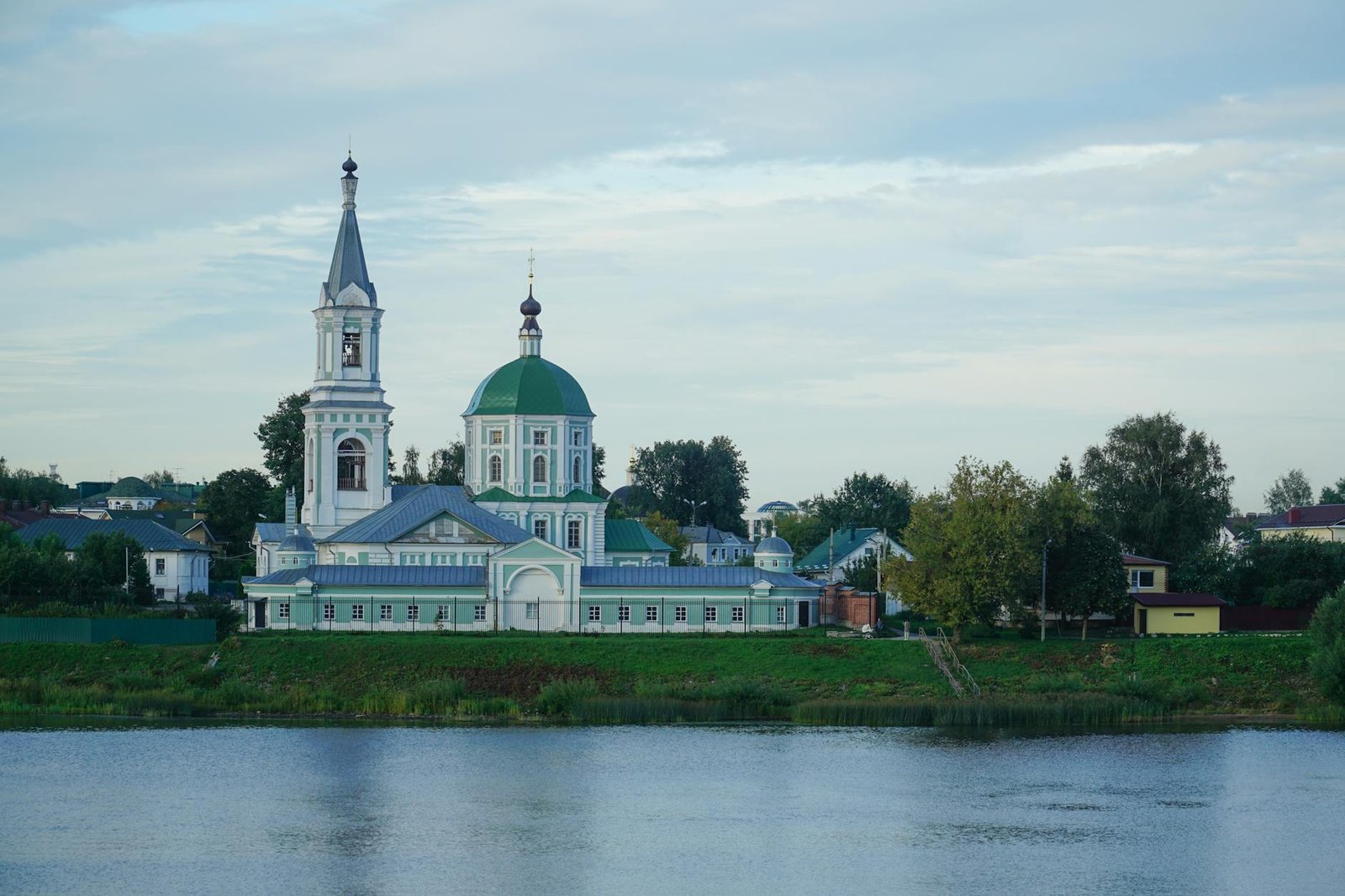
Tver sits on the Volga roughly 160 km northwest of Moscow and is a regular stop on Moscow-St. Petersburg river itineraries operated by Viking, Uniworld, AmaWaterways, and similar lines. Ships dock at a pier on the Volga's bank, typically within a 10-15 minute walk of the historic center — no tendering, no long bus transfer required.
The city has a low-key, lived-in character that distinguishes it from the more polished stops on these itineraries. It was an important medieval principality before Moscow eclipsed it, and a handful of notable landmarks survive: the Transfiguration Cathedral, the 18th-century Imperial Travel Palace (used by tsars en route between the two capitals), and a pleasant riverside promenade. Expect a working Russian city, not a museum town.
For most cruisers, Tver is a half-day stop — genuinely enjoyable, not spectacular. If your ship offers a generous port window, you'll have time to see the main sights, eat well, and return relaxed. If the window is short, prioritize the embankment walk and the Imperial Palace and skip the rest.
Is It Safe?
Tver is a generally safe city for tourists during the day. Petty theft is low by European standards, and the historic center sees enough tourists on cruise days that you won't feel conspicuous. The main practical issue is the language barrier — very little English is spoken outside hotel reception desks, and signs are in Cyrillic only. Carry the ship's name and pier address written in Russian in case you need to direct a taxi back.
Avoid wandering into residential outer districts alone at night. During your port day this is unlikely to be relevant, but it's worth noting if your ship overnights.
Accessibility & Walkability
The Volga embankment and main central streets are reasonably flat and walkable. However, pavements can be uneven in places, and historic buildings including the Imperial Travel Palace may have steps without ramps. Wheelchair users will find independent exploration challenging; a ship excursion with advance accessibility notice is more reliable. The pier itself is a standard river pier — check with your cruise line about gangway arrangements if mobility is a concern.
Outside the Terminal
Step off the gangway and you're immediately at the riverbank, with the Volga in front of you and the city rising gently behind. There's no commercial pier zone, souvenir gauntlet, or taxi hustle of the kind you'd find at a busy sea port. The first few minutes feel calm and genuinely local. Walk toward the embankment promenade and you'll orient quickly — the cathedral dome is visible from most riverside vantage points.
Local Food & Drink
Tver has a range of affordable Russian restaurants and stolovye (Soviet-style self-service cafeterias) in the center. A stolovaya lunch — soup, a main, bread, and tea — runs roughly $4-8 USD and is one of the most authentic food experiences you can have in a Russian river city. Look for places on or near Sovetskaya Street or the main pedestrian area.
Sit-down restaurants serving Russian standards (borscht, pelmeni, blini) are available and rarely expensive by Western standards. English menus are uncommon; pointing at dishes or using a translation app works fine. Avoid dining back on the ship if you have time — eating ashore is one of Tver's genuine pleasures.
Shopping
Shopping in Tver is limited to practical local goods, matryoshka dolls, and standard Russian souvenir fare near the main tourist sites. There's no luxury retail, no craft market of note, and nothing you'd specifically travel for. If you want a small souvenir, the area around the Imperial Palace occasionally has vendors. Don't allocate significant shore time to shopping here — it's not that kind of port.
Money & Currency
- Currency
- Russian Ruble (RUB)
- USD Accepted?
- No
- Card Payments
- Limited and increasingly restricted due to sanctions; Visa and Mastercard are not widely functional in Russia as of 2024. Carry local cash.
- ATMs
- ATMs exist in the city center but foreign cards may be declined. Exchange cash before arrival or use ship-provided currency exchange.
- Tipping
- Not obligatory but 10% is appreciated in sit-down restaurants.
- Notes
- Currency and payment access in Russia remains subject to ongoing geopolitical restrictions. Verify current conditions with your cruise line before departure. This is the single most important practical issue for this port.
Weather & Best Time
- Best months
- June, July, August
- Avoid
- November through March — cold, often below freezing, and daylight is short
- Temperature
- 15-25°C (59-77°F) in summer cruise season
- Notes
- River cruises on this route run predominantly May through September. Summer days are long and pleasant. Bring a light layer even in July as evenings cool quickly.
Airport Information
- Airport
- Tver has no commercial airport. Nearest is Sheremetyevo International Airport (SVO), Moscow
- Distance
- Approximately 180 km south
- Getting there
- Train from Tver railway station to Moscow Leningradsky station (approx. 1.5 hours on fast train), then metro or transfer to Sheremetyevo. Taxis direct to Moscow airports are expensive.
- Notes
- Most cruise itineraries on this route embark or disembark in Moscow or St. Petersburg. Tver is a mid-cruise stop, not typically an embarkation point. Confirm logistics with your cruise line.
Getting Around from the Port
Walking
The pier is close enough to the historic center that most key sights are reachable on foot. The embankment leads naturally toward the cathedral and palace.
Taxi
Local taxis and ride-hail apps like Yandex Go are available. Useful if you want to cover more ground or have limited mobility.
Book a transfer 5% off with code TPO5 at checkoutTram / Bus
Tver has a functioning tram and bus network, but routes and stops are labeled in Russian only. Useful for budget-minded independent travelers willing to navigate.
Routes & timesShip Excursion
All major lines offer organized tours of Tver's highlights with English-speaking guides. Convenient but rarely necessary given the city's walkability.
Details last checked April 2026
Planning a cruise here?
Viking River Cruises, Uniworld, AmaWaterways & more sail to Tver.
Practical Tips for Cruise Passengers
- Download a Cyrillic keyboard and basic Russian phrases on your phone before the cruise — even five words goes a long way in Tver.
- Carry rubles in cash; foreign bank cards have extremely limited functionality in Russia under current sanctions and may not work at ATMs.
- The Imperial Travel Palace is the one sight that genuinely merits a guide — either book a ship excursion or hire a local guide in advance through your cruise line.
- Stolovye (Soviet cafeterias) near the city center offer the cheapest and most authentic meal option; look for a handwritten menu board in the window.
- Confirm your ship's all-aboard time carefully — Tver port windows vary by itinerary and being late back is a real risk if you venture beyond the center.
- Photography of government buildings, military infrastructure, and bridges can be sensitive in Russia; stick to churches, parks, and street scenes to avoid issues.
Frequently Asked Questions
Yes, and for most cruisers it's the better option. The pier is a short walk from the historic center and the main sights are easy to find on foot. A ship excursion adds value mainly if you want a guided narrative of the Imperial Palace or history context.
Very little. Outside the Imperial Palace, where some guides speak English, you'll encounter almost no English in shops, restaurants, or on the street. A translation app is genuinely useful here.
Visa rules for Russia are complex and subject to change; river cruise passengers have historically operated under group visa arrangements organized by the cruise line. Confirm your specific entry status directly with your cruise line before travel.
Most river cruise itineraries allow 3-5 hours in Tver. That's enough for the embankment, the Imperial Palace, and a meal ashore. Check your specific itinerary for the exact window.
The historic center is safe during the day and the cruise pier area is not a concern. The main practical risks are language barrier and navigation, not personal safety. Stay central and you'll be fine.
Find cruises to Tver, Russia
Compare sailings and book with no fees — best price guaranteed.
We may earn a commission when you book through our links, at no extra cost to you — it’s how we keep these guides free.
✉ Sailing to Tver? Get your port-day plan
Tell us your sail date and we’ll email you a short Tver plan about 60 days out — when the good excursions start selling out — plus a final checklist 2 weeks before. Two emails, then done. We’ll send one note to confirm it’s really you — unsubscribe anytime.
European River Cruises
View All
More European River Cruises Ports

European River Cruises

European River Cruises

European River Cruises
