


Asia
Asia
Okayama Cruise Port Guide: Things to Do, Transport & Practical Tips
Japan
Okayama Port features a modern dedicated cruise terminal with direct pier access for most vessels, though occasional tender operations may occur during peak season.
Choose the Right Port Day
Best Overall
Kurashiki Bikan Historic Quarter. It's compact, beautiful, genuinely historic, easy to navigate without Japanese, and delivers the 'classic Japan' look that most cruisers are hoping to find.
Best Beach
Not relevant. There are no practical beach options for a cruise day from this port.
With Kids
Korakuen Garden in Okayama city has open green space, cranes, and is low-stress for children. Combine with a quick look at Okayama Castle nearby — it's visually dramatic and kid-friendly.
Book Korakuen Garden from $1Only 3-4 Hours
Go straight to Kurashiki Bikan Historic Quarter. Take a taxi or pre-arranged transport from port, spend 2 hours walking the canal district, grab lunch at a local soba or demi-katsu spot, and head back. Skip Okayama city center if time is short.
Cheapest Option
Take a taxi or shared transport to central Okayama, walk Korakuen Garden (around $1-2 USD entry), grab a bento from a convenience store or local depachika food hall, and stroll the castle grounds. Budget roughly $10-15 USD for the day excluding transport.
What To Avoid
Don't spend your whole day in the port area — there's nothing there. Also skip squeezing in both Kurashiki and a Kyoto day trip; Kyoto is 50+ minutes by Shinkansen and the logistics eat your shore time.
Quick Take
- Port Type
- Gateway City Port
- Best For
- History lovers, garden enthusiasts, and cruisers who want a genuinely Japanese small-city experience without Tokyo crowds
- Avoid If
- You want beaches or a beach day — this region has none worth the effort
- Walkability
- Moderate. The port area itself isn't walkable to attractions; you need transport to city center or Kurashiki
- Budget Fit
- Very good. Japan is not cheap but Okayama and Kurashiki are well below Tokyo or Kyoto pricing
- Good For Short Calls?
- Yes — Kurashiki alone fills 2-3 hours comfortably if transport is sorted in advance
Top Things To Do
1
[From Okayama] Okayama & Kurashiki Full Day Tour
Embark on an unforgettable day trip to discover the hidden charms of Okayama and Kurashiki, guided by a National Government Licensed English-speaking expert. You'll explore Okayama…
7h 40m
2
Experience Authentic Japanese Home Cooking
As someone who has taught cooking abroad and has been running cooking classes in my home for nearly 20 years, I ensure a relaxed atmosphere where…
3h
Our picks in Okayama
3
Kurashiki Bikan Historic Quarter
The main reason most cruisers come ashore. A compact canal district lined with white-walled Edo-period storehouses, willow trees, and small boats. Genuinely beautiful and walkable in 1.5-2 hours. Dozens of small craft shops, cafes, and the Ohara Museum of Art — Japan's first western-art museum — sit within the quarter. Gets busy midday but doesn't feel overrun like Kyoto's top spots.
4
Korakuen Garden
One of Japan's three officially designated great gardens. Spacious, well-maintained, and genuinely serene — a strolling garden with ponds, tea fields, plum groves, and resident Japanese cranes. Less famous than Kenrokuen in Kanazawa but more peaceful. Pairs well with a quick look at adjacent Okayama Castle.
5
Okayama Castle (Crow Castle)
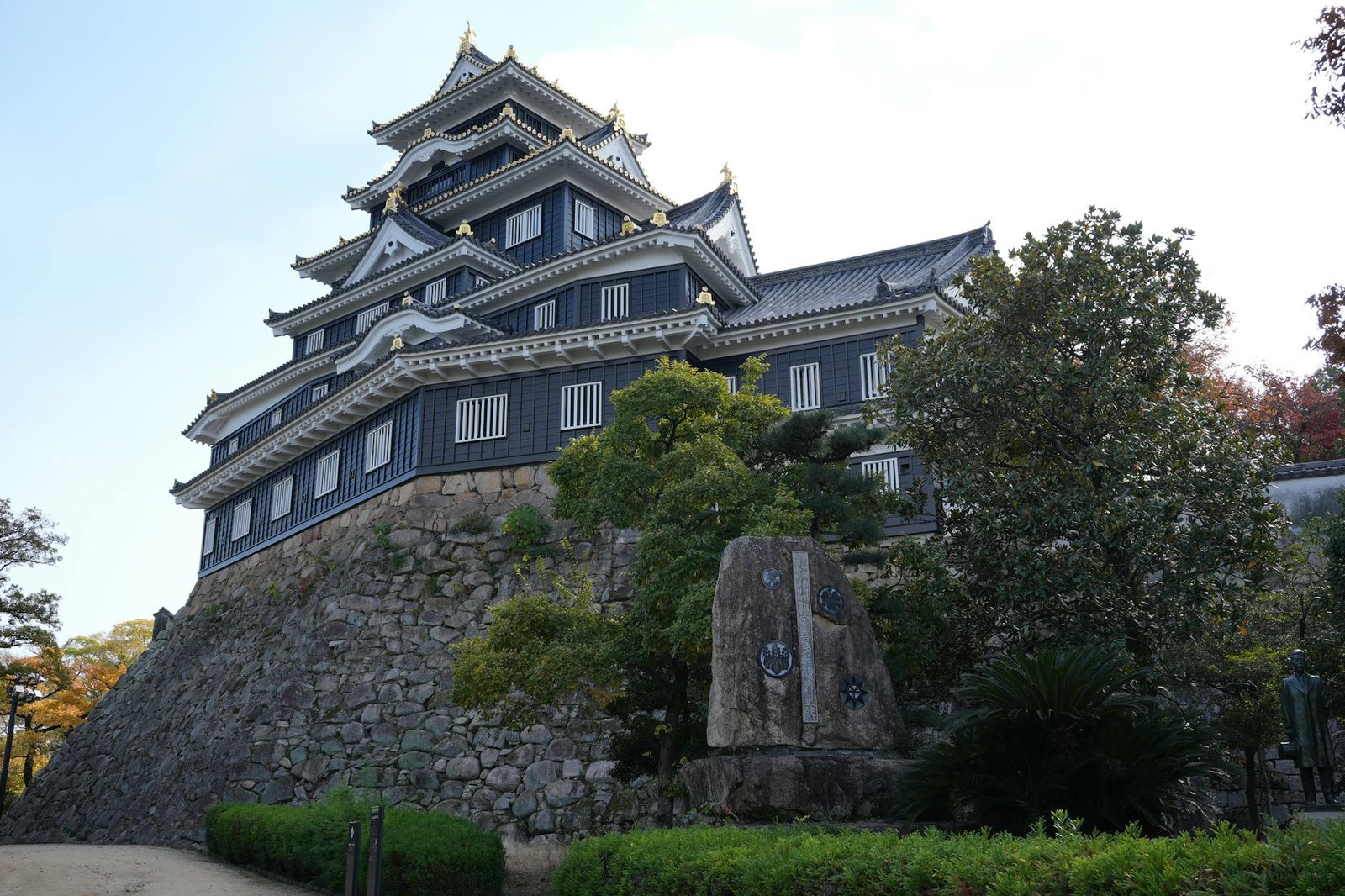
A striking black-lacquered castle rebuilt post-WWII but still dramatic and photogenic. Interior museum covers local feudal history. Not as impressive as Himeji nearby, but if you're already at Korakuen it's a 5-minute walk and worth 30-45 minutes.
Show 2 more things to do in Okayama
6
Ohara Museum of Art, Kurashiki
Japan's first private western-art museum, founded in 1930. Houses an impressive permanent collection including works by El Greco, Monet, Gauguin, and Rodin — genuinely surprising for a small Japanese city. If you enjoy art, don't skip this just because you're in Japan.
7
Okayama Omotecho Shopping Arcade
A long covered shopping arcade in central Okayama. Practical if you want Japanese snacks, local crafts, or Momotaro (peach boy) themed souvenirs — this region is obsessed with the Momotaro legend. Not a tourist trap; locals actually shop here.
Book with the ship, or on your own?
Booking independently
- Often noticeably cheaper than the ship’s version of the same tour.
- Smaller groups and local operators, with traveler reviews you can read before you pay.
- Free cancellation on most tours, usually up to 24 hours before.
When the ship’s excursion makes sense
- Short port calls or long transfers where the timing is tight.
- Tender-only stops where getting ashore can run late.
- The ship waits for its own delayed excursions — it won’t wait for independent ones, so leave a buffer before all-aboard.
Going independent? Compare tours in Okayama → — the best-reviewed ones sell out first.
We may earn a commission when you book through our links, at no extra cost to you — it’s how we keep these guides free.
Check The Port Traffic
Cruise Ships in Port
Once you have your shore plan, use the schedule to see how busy the harbour will be on your date, plus the ships, lines, and published call windows.
Sun
Mon
Tue
Wed
Thu
Fri
Sat
1
2
3
4
5
6
7
8
9
10
11
12
13
14
15
16
17
18
19
20
21
22
23
24
25
26
27
28
29
30
Quiet (1–2)
Busy (3–4)
Packed (5+)
0 scheduled calls
September 21, 2026
No scheduled cruise ship calls were found for this date selection. Pick a highlighted day on the calendar above, widen the range, or search for a different ship or line.
Port Overview
Ships calling at Okayama typically dock at Uno Port or Mizushima Port, both industrial-style piers located outside the city center. Neither pier puts you anywhere near the action — expect a 20-40 minute transfer to get somewhere interesting. This is a port where logistics matter, and cruisers who pre-arrange transport fare significantly better than those who try to figure it out dockside.
Okayama city itself is a mid-size Japanese city of around 700,000 people. It's functional and livable but not a showstopper on its own. The real draw is nearby Kurashiki, a beautifully preserved canal town about 15 minutes west of central Okayama by rail or 30-40 minutes by road from the pier. Kurashiki's Bikan Historic Quarter is genuinely one of western Japan's most photogenic spots.
The region is honest value. It doesn't get the cruise crowds of Kyoto or Nagasaki, which means shorter queues, more authentic interactions, and a less performative version of Japanese culture. If your ship offers a full day here, use it well — the combination of Kurashiki plus Korakuen Garden fills a day without feeling rushed.
Is It Safe?
Okayama is extremely safe by any global standard. Crime against tourists is essentially a non-issue. Traffic moves in orderly Japanese fashion. The main practical risk is missing the ship because transfer times are longer than expected — always build in buffer time for the return leg.
Health-wise, summers are hot and humid; carry water and don't underestimate heat if you're walking Kurashiki in July or August. Tap water is safe to drink throughout Japan.
Accessibility & Walkability
Kurashiki's Bikan district involves cobblestones and uneven canal-side paths that can be challenging for wheelchairs or those with limited mobility, especially on busy days when crowds narrow the walkways. Korakuen Garden has mostly flat gravel paths and is more manageable but still not fully wheelchair-friendly throughout.
JR trains are well-equipped with ramps and priority seating. Taxis can accommodate folding wheelchairs. If mobility is a concern, focus on Korakuen rather than Kurashiki and confirm accessibility details with your ship's shore excursions desk before going independent.
Outside the Terminal
Expect an industrial pier environment — large vessels, forklifts, warehouses. There's no tourist infrastructure immediately outside the terminal. Port agents or ship staff may have shuttle buses or taxi coordination at the gangway; ask before you step off unprepared. Have your destination written in Japanese on your phone before you walk out — it saves time immediately.
Local Food & Drink
Okayama has two local dishes worth seeking out: demi-katsu (pork cutlet with a rich demi-glace sauce, a local signature) and bara-zushi (scattered sushi with vegetables and seafood, originally a commoner's dish). Both are widely available in Kurashiki and central Okayama at reasonable prices — expect $8-15 USD for a full meal at a local restaurant.
Kurashiki's Bikan district has plenty of cafes and small restaurants with English menus or picture menus — don't stress about language. For a quick option, the basement food halls (depachika) in Okayama Station's adjacent department stores have prepared foods, bento boxes, and local sweets at fair prices.
Muscat grapes are the region's premium produce — Okayama markets itself as Japan's fruit kingdom. You'll see them in desserts, pastries, and as gifts. Local white peaches (Okayama hakutou) are exceptional in season (July-August) but pricey.
Shopping
Kurashiki's Bikan district shops lean toward crafts, textiles, denim (Kojima denim from the nearby region is Japan's original denim hub), and Momotaro-themed goods. Quality is genuine and prices are fair — not the tourist-inflated nonsense you find near major Tokyo attractions.
For everyday Japanese shopping and pharmacy runs (skincare, snacks, household items), a convenience store or drugstore chain (Matsumoto Kiyoshi, Sundrug) near central Okayama is your fastest option. The Omotecho arcade in Okayama city has a good mix of local and national brands.
Money & Currency
- Currency
- Japanese Yen (JPY)
- USD Accepted?
- No
- Card Payments
- Improving but still inconsistent. Many smaller restaurants and shops in Kurashiki are cash-only. Larger department stores and convenience stores typically accept major cards.
- ATMs
- 7-Eleven and Japan Post ATMs reliably accept foreign cards. Find them at convenience stores in central Okayama or Kurashiki.
- Tipping
- Do not tip. Tipping is considered rude in Japan. Service is always included and excellent.
- Notes
- Withdraw cash before leaving central areas. The port vicinity will have no ATMs. Carry enough yen for the day before heading out.
Weather & Best Time
- Best months
- April (cherry blossom), May, October, November
- Avoid
- July and August are very hot and humid; June is rainy season
- Temperature
- Spring: 12-20°C (54-68°F); Autumn: 15-22°C (59-72°F); Summer: 28-35°C (82-95°F)
- Notes
- Okayama is one of Japan's sunniest cities — it actually markets this. Autumn foliage in Korakuen (late November) is spectacular.
Airport Information
- Airport
- Okayama Momotaro Airport
- Distance
- Approximately 30-40 min from central Okayama; add transfer time from pier
- Getting there
- Airport limousine bus to/from Okayama Station; taxi available but pricier
- Notes
- If your cruise starts or ends in Okayama, flying in/out via this airport is simpler than routing through Osaka or Hiroshima. Limited international connections — most require a connection via Tokyo or Osaka.
Getting Around from the Port
Taxi from port
Most practical option for reaching Kurashiki or central Okayama directly. Drivers are professional and meters run honestly. Few speak English but showing a map or address on your phone works well.
Book a transfer 5% off with code TPO5 at checkoutShip shore excursion
Premium lines like Silversea, Seabourn, and Regent typically offer organized transfers that handle the logistics for you. Worth considering here given the pier-to-city distance.
Local train (JR)
If you can get to a JR station near the port, the JR Sanyo Line connects Kurashiki and Okayama stations in about 15 minutes. Clean, punctual, and cheap.
Book train ticketsHired car or private guide
For groups or families, a half-day private driver arranged in advance can be cost-competitive with multiple taxis and far more flexible.
Book a transfer 5% off with code TPO5 at checkoutDetails last checked April 2026
Planning a cruise here?
Cunard, Silversea Cruises, Regent Seven Seas & more sail to Okayama.
Practical Tips for Cruise Passengers
- Confirm your ship's exact docking pier (Uno vs. Mizushima) before planning transport — they're in very different locations and your logistics will change accordingly.
- Carry cash in yen from the moment you step ashore — smaller shops and restaurants in Kurashiki frequently don't accept cards.
- Kurashiki is most peaceful early in the morning; aim to arrive before 10am if your ship docks early enough.
- Download Google Maps offline for the Okayama/Kurashiki area before your shore day — internet connectivity in transit can be spotty if you don't have a pocket WiFi or local SIM.
- Allow at least 20-30 minutes more than you think you need for the return transfer to the pier — Japanese taxis are reliable but shore-day demand can cause small delays.
- Okayama Station has coin lockers if you want to store bags while exploring — useful if you have a late ship return or combined train travel.
Frequently Asked Questions
No — ships dock at industrial piers (Uno or Mizushima) that are 20-45 minutes from central Okayama or Kurashiki. You'll need a taxi, shuttle, or organized transport to get anywhere interesting. Factor this into your time planning.
Absolutely — it's the highlight of a shore day here and genuinely one of the most photogenic small towns in western Japan. Give it 2-3 hours and it will feel worth the transfer time.
Hiroshima is reachable by Shinkansen in about 30 minutes from Okayama Station, but adding pier transfer times makes it tight for a full cruise day. Kyoto is around 50-60 minutes by Shinkansen — possible but only if your ship is docked for 8+ hours and you move efficiently.
No — you can manage with maps, photos of destinations, and basic gestures. Kurashiki's tourist district has some English signage and staff at major museums usually speak enough English. Showing an address on your phone works well with taxi drivers.
Yes, if you stay focused. Head straight to Kurashiki Bikan Quarter, spend 2 hours there, grab lunch, and return. Trying to add Korakuen Garden on top of that requires a full day and efficient logistics between the two locations.
Find cruises to Okayama, Japan
Compare sailings and book with no fees — best price guaranteed.
We may earn a commission when you book through our links, at no extra cost to you — it’s how we keep these guides free.
✉ Sailing to Okayama? Get your port-day plan
Tell us your sail date and we’ll email you a short Okayama plan about 60 days out — when the good excursions start selling out — plus a final checklist 2 weeks before. Two emails, then done. We’ll send one note to confirm it’s really you — unsubscribe anytime.
Asia
View All


