Asia
Asia
Danubyu Cruise Port Guide: Things to Do & Practical Tips for River Cruisers
Myanmar
Ships anchor offshore in the Irrawaddy River; passengers are tendered to a basic landing platform in the town center.
Choose the Right Port Day
Best Overall
A guided tour of Maha Bandula Fort combined with a short village walk and a stop at a local tea house gives you the best read of Danubyu's history and everyday life in under three hours.
Best Beach
Not relevant — Danubyu is an inland river town on the Irrawaddy Delta with no beach access.
With Kids
Walk through the village streets and visit the fort ruins — kids find the open grounds easy and the local interactions memorable. Keep water and snacks on hand; facilities are minimal.
Only 3-4 Hours
Head straight to the Maha Bandula Fort ruins, then walk the surrounding streets to soak up village life and visit the local market if timing aligns. That covers the historical and cultural highlights without rushing.
Cheapest Option
Walk from the tender dock to the fort ruins and back, stop at a tea shop for local snacks and tea (under $3 USD total), and explore the market on foot. Essentially free.
What To Avoid
Don't expect any tourist infrastructure — there are no reliable restaurants pitched at Western visitors, no ATMs, and no English signage. Also avoid wandering too far from the river dock on your own without local guidance; roads are unmarked and confusing.
Quick Take
- Port Type
- Small Historic River Town
- Best For
- Travellers interested in colonial history, rural Myanmar village life, and off-the-beaten-path experiences
- Avoid If
- You need air-conditioned comfort, easy shopping, or a fast-paced port day with lots of options
- Walkability
- Limited — the town is compact but unpaved roads, heat, and humidity make walking tiring; guided exploration is more practical
- Budget Fit
- Very low cost once ashore; budget $5–20 USD for a full day including food and local transport
- Good For Short Calls?
- Yes — Danubyu is comfortably covered in 3–4 hours; most river cruise stops here are half-day calls
Top Things To Do
1
Maha Bandula Fort Ruins
The main historical draw in Danubyu. These ruins mark where Burmese general Maha Bandula was killed in 1825 during the First Anglo-Burmese War. The site is atmospheric if modest — crumbling earthwork fortifications in a quiet setting. A local guide adds significant context; without one it's just a grassy ruin.
2
Danubyu Local Market
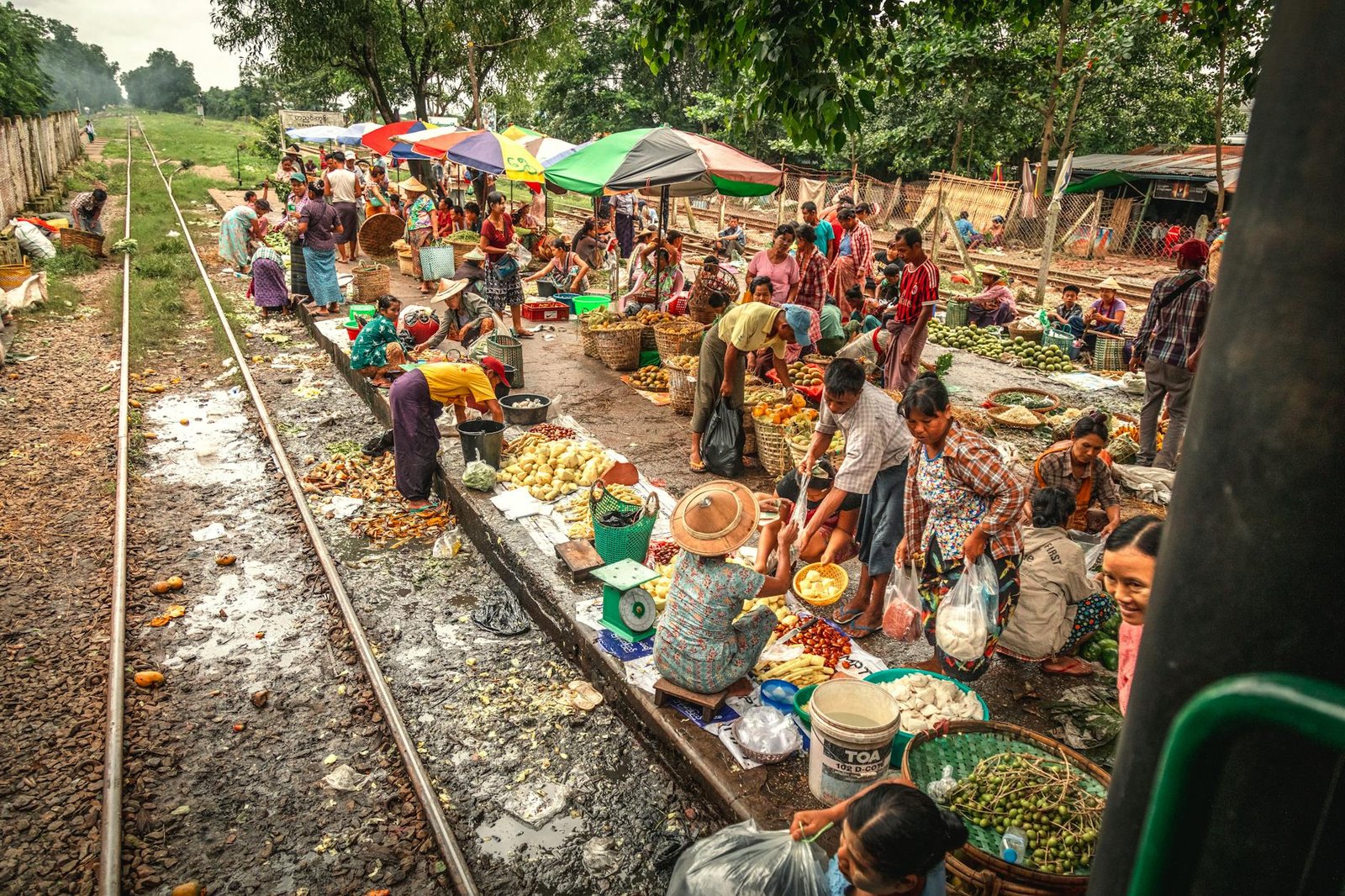
A working daily market selling fresh produce, dried fish, local snacks, and everyday goods. This is not a tourist market — it's where locals shop. Busiest in the morning. Good for photography and people-watching, and a window into delta life that most travellers never see.
3
Village Walk and Tea House Stop
Simply walking the lanes of Danubyu and stopping at a local tea house for Burmese-style milk tea and laphet thoke (tea leaf salad) is one of the most genuine experiences available here. Locals are generally welcoming toward the small number of cruise visitors.
Show 2 more things to do in Danubyu
4
Irrawaddy Delta Scenery and River Views
The riverbank setting itself is worth a few minutes of your time. The broad, slow Irrawaddy with flat delta farmland stretching in every direction is visually distinctive. Early morning light is especially good if your tender timing allows.
5
Local Pagoda Visit
Danubyu has small neighbourhood Buddhist pagodas that are active places of worship. Visiting respectfully (shoes off, modest dress) gives a quiet glimpse into daily religious life in the delta. Your guide can direct you to the most accessible one.
Book with the ship, or on your own?
Booking independently
- Often noticeably cheaper than the ship’s version of the same tour.
- Smaller groups and local operators, with traveler reviews you can read before you pay.
- Free cancellation on most tours, usually up to 24 hours before.
When the ship’s excursion makes sense
- Short port calls or long transfers where the timing is tight.
- Tender-only stops where getting ashore can run late.
- The ship waits for its own delayed excursions — it won’t wait for independent ones, so leave a buffer before all-aboard.
We may earn a commission when you book through our links, at no extra cost to you — it’s how we keep these guides free.
Check The Port Traffic
Cruise Ships in Port
Once you have your shore plan, use the schedule to see how busy the harbour will be on your date, plus the ships, lines, and published call windows.
Sun
Mon
Tue
Wed
Thu
Fri
Sat
1
2
3
4
5
6
7
8
9
10
11
12
13
14
15
16
17
18
19
20
21
22
23
24
25
26
27
28
29
30
31
Quiet (1–2)
Busy (3–4)
Packed (5+)
0 scheduled calls
October 11, 2026
No scheduled cruise ship calls were found for this date selection. Pick a highlighted day on the calendar above, widen the range, or search for a different ship or line.
Port Overview
Danubyu sits on the western bank of the Irrawaddy River in the Irrawaddy Delta region of Myanmar, roughly 100 km southwest of Yangon. Ships anchor midstream and passengers tender ashore, so expect a short but sometimes bumpy boat transfer depending on river conditions and season.
This is not a polished port. Danubyu is a quiet, dusty delta town that sees river cruise passengers mainly because of its historical significance — specifically the ruins of Maha Bandula Fort, where Burmese general Maha Bandula made his last stand against British colonial forces in 1825. The history here is real and interesting, but the infrastructure for tourists is minimal.
For river cruise passengers, Danubyu is a genuine off-the-grid stop that works best as a cultural immersion rather than a sightseeing checklist. If your cruise line includes it, lean into the local experience rather than looking for comfort. If you value authenticity over convenience, this can be one of the more memorable stops on a Myanmar itinerary.
Is It Safe?
Danubyu is a safe town by most measures — petty crime targeting tourists is rare simply because very few tourists come here independently. The main practical risks are environmental: intense heat and humidity, uneven and unpaved roads, and minimal medical facilities if something goes wrong.
Stay with your group or guide, carry cash in small Myanmar kyat denominations, and keep your ship's emergency contact details on you. There are no hospitals in Danubyu — your cruise ship's medical staff are your best resource if you need help ashore.
Accessibility & Walkability
Danubyu is challenging for passengers with limited mobility. The tender transfer from ship to shore involves climbing in and out of a small boat, which requires reasonable agility. Once ashore, roads are unpaved, uneven, and can be muddy during wet season. The fort ruins are on open ground without paved paths or facilities.
Wheelchair or walker use is not practical here. Passengers with mobility concerns should discuss the stop with their cruise director before committing to going ashore.
Outside the Terminal
There is no terminal — you land at a basic river dock or sandy bank via tender. The first thing you'll notice is the small crowd of local trishaw and motorbike drivers waiting nearby, along with your cruise line's local guides if you're on an organised excursion. The town opens up quickly from there, with simple storefronts, tea shops, and unpaved lanes leading toward the market and fort. Expect heat, dust, and a genuinely unfiltered local environment.
Local Food & Drink
Eating options in Danubyu are extremely limited for cruise visitors. There are no restaurants geared toward Western diners and English menus do not exist. Local tea houses serve Burmese milk tea, simple rice dishes, and snacks at very low prices — this is safe and worthwhile if you're adventurous. Most river cruise lines serve meals onboard, so plan to eat on the ship before or after going ashore rather than relying on finding lunch in town.
If you want to try something local, laphet thoke (tea leaf salad) and mohinga (fish noodle soup) are common Myanmar staples you may encounter at market stalls. Keep hand sanitiser with you.
Shopping
Shopping in Danubyu is minimal. There are no souvenir shops or craft markets aimed at cruise passengers. You might find small handicrafts, local produce, or basic goods at the market, but don't arrive expecting to bring home gifts. If your itinerary includes Yangon or Bagan, save your shopping energy for those ports.
Money & Currency
- Currency
- Myanmar Kyat (MMK)
- USD Accepted?
- No
- Card Payments
- Cards not accepted in Danubyu
- ATMs
- No ATMs in Danubyu — bring cash from your ship or a previous port
- Tipping
- Small cash tips in kyat are appropriate for local guides and trishaw drivers
- Notes
- Bring small denomination kyat from onboard currency exchange or your previous port stop. USD is not reliably accepted in this town. Exchange money before arrival.
Weather & Best Time
- Best months
- November to February — cooler, drier, and more comfortable for walking
- Avoid
- June to September — monsoon season brings heavy rain, high humidity, and potential river level issues affecting tender operations
- Temperature
- 25–35°C (77–95°F) during peak cruise season (October–March); humidity is high year-round
- Notes
- The Irrawaddy Delta is consistently hot and humid. Lightweight, breathable clothing and sun protection are essential regardless of season.
Getting Around from the Port
Guided tour via cruise ship
Most river cruise lines (Uniworld, AmaWaterways, Scenic, Viking, etc.) organise guided excursions from the tender dock. This is strongly recommended given the lack of English signage and local tourist infrastructure.
Motorbike taxi (sidecar/trishaw)
Local motorbike taxis and trishaws are available near the tender landing and can take you to the fort ruins or around town.
Book a transfer 5% off with code TPO5 at checkoutWalking
The fort ruins and central market are within 1–2 km of the tender dock, making walking possible but uncomfortable in high heat and humidity.
Details last checked April 2026
Planning a cruise here?
Uniworld, AmaWaterways, Scenic Cruises & more sail to Danubyu.
Practical Tips for Cruise Passengers
- Bring cash in Myanmar kyat before arriving — there are no ATMs and USD is not reliably accepted in Danubyu.
- Take your cruise line's guided excursion seriously here; without a local guide, the fort ruins and historical context are much harder to appreciate.
- Dress modestly — lightweight long trousers and a top that covers your shoulders are appropriate for pagoda visits and respectful in the village generally.
- Start your shore time early if you can; midday heat in the delta is intense and walking becomes uncomfortable by late morning.
- The tender transfer can be bumpy — wear non-slip shoes and leave anything you'd hate to get wet in your cabin.
- Carry a water bottle from the ship; potable water is not readily available ashore in Danubyu.
Frequently Asked Questions
Ships anchor midstream and passengers transfer to shore by tender. The tender ride is short but conditions vary by season and river level, so stable footwear is recommended.
The town is generally safe, but independent exploration is challenging due to the lack of English signage, no tourist infrastructure, and unmarked roads. A guided excursion from your cruise line is the practical choice here.
Most calls are half-day stops of 3–5 hours. That's enough time to see the fort ruins, visit the market, and have a tea house stop without rushing.
No. There are no ATMs and cards are not accepted anywhere in town. Bring Myanmar kyat in small denominations from your ship or a previous port.
Light, breathable clothing that covers shoulders and knees is ideal — it's respectful for pagoda and village visits and practical in the heat. Sturdy, non-slip shoes are important given unpaved roads and the tender boarding process.
Find cruises to Danubyu, Myanmar
Compare sailings and book with no fees — best price guaranteed.
We may earn a commission when you book through our links, at no extra cost to you — it’s how we keep these guides free.
✉ Sailing to Danubyu? Get your port-day plan
Tell us your sail date and we’ll email you a short Danubyu plan about 60 days out — when the good excursions start selling out — plus a final checklist 2 weeks before. Two emails, then done. We’ll send one note to confirm it’s really you — unsubscribe anytime.
Asia
View All