Quick Facts: Port of Namur | Belgium | River quay along the Meuse (no formal cruise terminal building) | Dock (no tendering required) | 10–15 minute walk to the city center | UTC+1 (CET) / UTC+2 (CEST in summer)
Most river cruisers arrive in Namur expecting a quiet transit stop between Liège and Brussels — a place to stretch their legs before the “real” Belgian cities. What they actually find is one of the most genuinely livable, authentically Walloon cities in the country: a medieval citadel perched dramatically above two converging rivers, a compact old town stuffed with artisan chocolatiers and century-old brasseries, and almost none of the tourist crowds that follow you everywhere in Bruges or Brussels. Plan properly, and this is the day you’ll talk about longest.
—
Port & Terminal Information
The Namur River Quay sits along the Meuse River in the heart of the city, roughly between the Pont de Jambes and the old town embankment. There is no dedicated cruise terminal building in the way you’d find at an ocean port — river cruise ships (primarily operated by lines like Viking, Avalon, and Scenic) dock directly along the quayside, mooring bow-to-stern, sometimes two vessels deep. This is common for European river cruising, so don’t be surprised if you cross a gangway over a neighbouring ship.
Because it’s a dock (not a tender operation), disembarkation is fast and straightforward — you simply walk off the gangway and you’re already on the riverfront promenade. There is no dedicated terminal building, which means no onsite ATMs, no luggage storage, no Wi-Fi hub, and no official tourist info desk right at the ship. Your ship’s reception desk is your first stop for maps, local info, and currency questions before you disembark.
The nearest tourist information office (Office du Tourisme de Namur) is at Place de la Station 2, about a 12-minute walk from typical mooring positions. It’s well stocked with free maps, walking route brochures, and English-speaking staff.
Confirm your exact mooring location on [Google Maps](https://www.google.com/maps/search/Namur+cruise+terminal) before you head out — the quayside stretches for several hundred metres and your gangway position determines which direction puts you closest to the old town.
—
Getting to the City

The city center is genuinely close — in many cases, you’ll step off the ship and practically be in it. Here’s how each option breaks down:
- On Foot — The most practical option by far. From the typical mooring area near Rue des Bateliers or the Pont de Jambes, the main shopping street (Rue de l’Ange) is a 10–15 minute walk through the riverside old town. The Citadel’s cable car station is about 20 minutes on foot. Comfortable walking shoes are essential — the old town has cobblestone streets throughout.
- Bus/Metro — Namur has a city bus network operated by TEC. The most useful route for visitors is Bus 3 and Bus 8, which connect the train station area to the old town and the Citadel base. A single fare costs €2.00 onboard (exact change preferred) or €1.60 if you buy a card-loaded ticket in advance from a TEC point. Journey times within the city are typically 5–10 minutes. That said, given the walkability of the core, most cruisers never need the bus at all.
- Taxi — Taxis are available near the main train station (Gare de Namur) about 15 minutes’ walk from the quay, or can be called via the local dispatch Taxis Namurois (+32 81 22 02 00). A taxi from the quay to the Citadel cable car station runs approximately €8–12. There are no widespread ride-hailing apps like Uber operating in Namur, so don’t rely on your phone for this. Stick to metered cabs and confirm the meter is running before you set off.
- Hop-On Hop-Off — There is no HOHO bus service in Namur. The city is small enough that it simply isn’t needed, and none operates to the cruise quay. Save your money.
- Rental Car/Scooter — Not recommended for a day visit. Parking in the old town is restricted, the Citadel area requires walking regardless, and most of Namur’s highlights are concentrated within a comfortable walking radius. If you’re planning a day trip to Dinant or the Meuse Valley (see Day Trips below), a car rental from Hertz Namur near the train station (around €45–70/day for a small car) makes sense — book in advance online.
- Ship Shore Excursion — Your cruise line’s organised excursions to Namur are worth considering only if they cover the Citadel with a guided tour included, or if they run a day trip further afield to Dinant or the Wallonia countryside. For the city itself, you’ll genuinely see more, eat better, and spend less by going independently. The city is small, English-friendly, and easy to navigate solo.
—
Top Things to Do in Namur, Belgium
Namur punches well above its size for things to see and do. The key is knowing what’s worth your limited shore time and what can be skipped. Here are the highlights, honestly ranked.
—
Must-See
1. The Citadel of Namur (Cable car: €6 adult round-trip / Grounds: free on foot) — This is the non-negotiable centrepiece of any visit to Namur. The fortress complex crowns a rocky promontory above the confluence of the Meuse and Sambre rivers, and it’s been fortified in some form since Roman times. The views from the top are genuinely spectacular — on a clear day you can see the Meuse Valley snaking south toward Dinant. You can reach the summit via the cable car (téléphérique) from Place Maurice Servais (operates approximately 10:00–18:00 in summer, check seasonal hours), or walk up via the signed footpath from the old town (allow 25–30 minutes uphill). The grounds themselves are free to wander; the underground tunnel circuit costs €7 adult and is genuinely fascinating — 2km of military tunnels carved into the rock. Book a [guided tour on GetYourGuide](https://www.getyourguide.com/s/?q=Namur¤cy=USD&partner_id=MHU0UHU) if you want the history explained properly. Allow 2–3 hours including cable car and grounds.
2. The Confluence of the Meuse & Sambre (free) — Walk to the Pointe de Grognon, the rocky tip of land where the two rivers meet directly below the Citadel. It’s one of the most dramatic natural focal points of any Belgian city, and it costs nothing. The spot is best appreciated in the morning light before crowds (such as they are) arrive. Allow 15 minutes as a standalone stop, though it’s naturally on the route between the old town and the Citadel.
3. Musée de Groesbeeck de Croix (€5 adult) — Namur’s finest decorative arts museum, housed in an 18th-century aristocratic mansion at Rue Joseph Saintraint 3. Think Flemish tapestries, Chinese lacquerwork, period furniture, and silverware collections that most visitors walk straight past. It’s open Tuesday–Sunday 10:00–18:00. Quiet, uncrowded, and genuinely excellent — a real insider pick. Allow 45–60 minutes.
4. Trésor du Prieuré d’Oignies at the Musée des Arts Anciens du Namurois (€5 adult) — Belgium has three world-class medieval treasure collections and most tourists only know about the one in Brussels. The Namur museum, located in the Hôtel de Groesbeeck (Rue de Fer 24), holds the extraordinary Oignies treasure: 13th-century gold and silver reliquaries crafted by Hugo d’Oignies, considered among the finest examples of medieval goldsmithing in Europe. The detail is astonishing. Open Tuesday–Sunday 10:00–18:00. Allow 45 minutes.
5. Walk Rue de l’Ange & the Old Town Core (free) — The main pedestrian shopping street is pleasant but not the point. The real reward is ducking into the side streets: Rue du Collège, Rue des Brasseurs, and the streets around Place d’Armes form a coherent, walkable old town with beautifully maintained 17th- and 18th-century facades. Get deliberately lost here for an hour and you’ll find the chocolatier, the old abbey brewery, and the café terrace that becomes your favourite spot of the trip. Allow 1–2 hours.
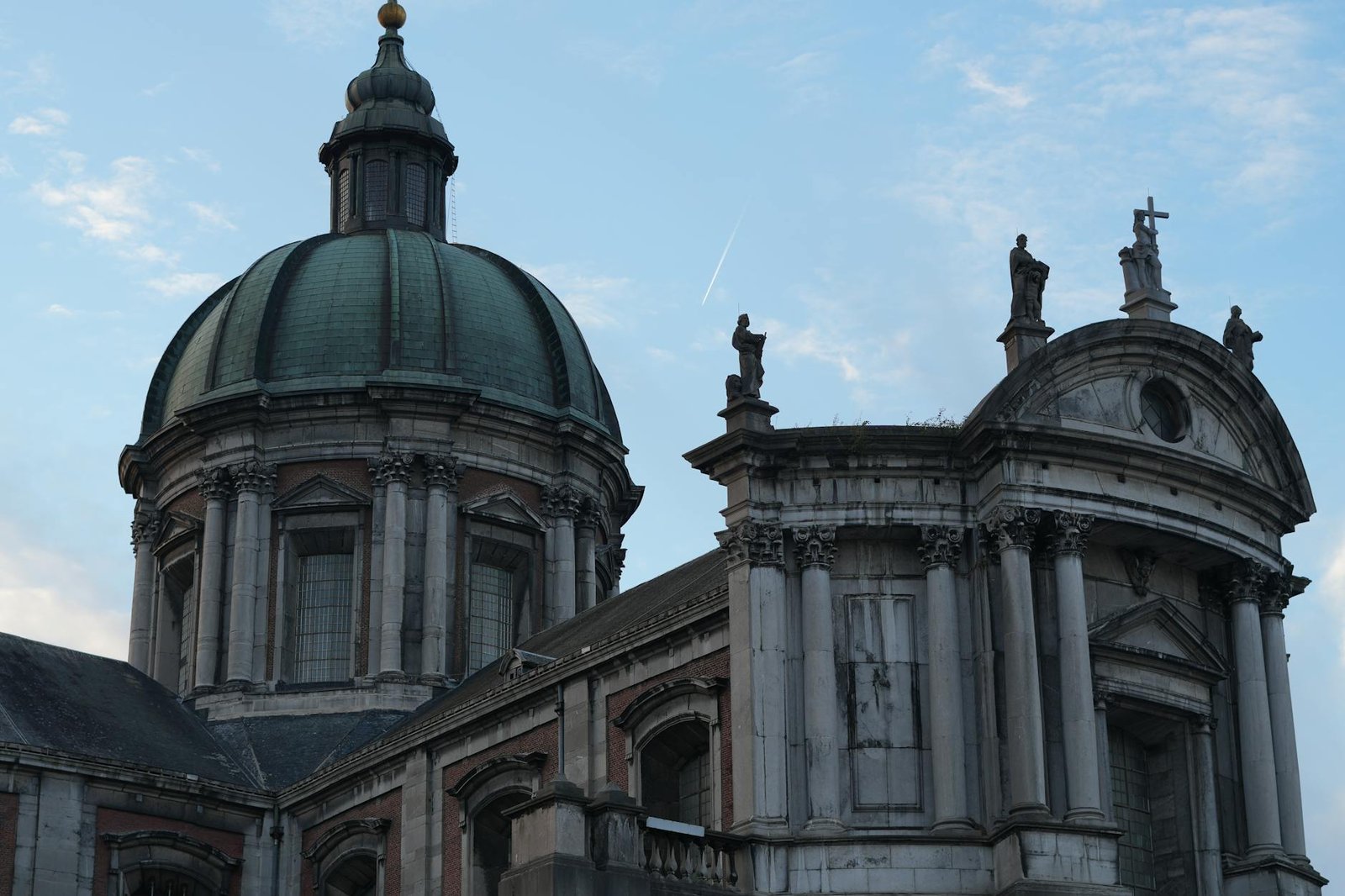
6. St. Aubain Cathedral (free) — The neoclassical cathedral on Place Saint-Aubain dates from the 18th century and is larger and grander than you’d expect for a city this size. The interior is bright, airy, and houses a small diocesan museum (€3) with ecclesiastical art and historic vestments. Open daily from approximately 08:00–18:00. Allow 30 minutes.
—
Beaches & Nature
Namur is an inland river city — there are no beaches. But its surrounding landscape is genuinely beautiful.
7. Parc de la Plante (free) — Namur’s large riverside park stretches along the left bank of the Meuse south of the old town. It’s a favourite of local families on weekends and a perfect place to decompress after the Citadel climb. The botanic garden section includes a rose garden at its peak in June–July. Open daily from dawn to dusk. Allow 30–45 minutes.
8. Kayaking on the Meuse or Sambre (approximately €15–25 for a half-day rental) — Several outfitters near the city rent kayaks and canoes for paddling stretches of the Meuse. It’s a beautiful way to see the Citadel from river level and experience the landscape the way Belgians do on summer weekends. Best suited for full-day visits with 8+ hours ashore. Check locally at the riverfront near Jambes for current operators.
—
Day Trips
9. Dinant (free to visit / transport varies) — If you have a full day and the Citadel alone won’t fill it, Dinant is the single best half-day excursion from Namur. It’s 28km south along the Meuse — a town carved dramatically into a limestone cliff face, birthplace of Adolphe Sax (inventor of the saxophone), and home to its own striking citadel. Train from Gare de Namur runs approximately every 30–60 minutes, journey time 35–40 minutes, fare around €6.30 each way. Or go by rental car (about 30 minutes). [Search Viator for combined Namur-Dinant tours](https://www.viator.com/search/Namur) if you’d prefer a guided half-day. Allow 3–4 hours in Dinant minimum.
10. Brussels (train from Namur: approximately €12–16 each way / 55–65 minutes) — For cruisers with a genuinely full day ashore and who haven’t visited Brussels separately, it’s a reasonable day trip — but honest advice: Brussels deserves its own full day. If you have 8+ hours and have already seen Namur’s highlights, the Brussels Highlights & Hidden Gems Private Tour 🎟 Book: Brussels Highlights & Hidden Gems Private Tour with a Local Guide is a superb way to make the most of the capital with a local guide from USD 94.36. Or if you prefer something more personal, the Brussels Like a Local private experience 🎟 Book: Brussels Like a Local: Private & Personalized Experience 2-4 hrs lets you tailor a 2–4 hour session to your own interests, also from USD 94.36.
—
Family Picks
11. Citadel Adventure Park (€8–14 depending on activity) — The Citadel grounds include an adventure ropes course, mini-golf, and children’s play areas that make the hill worthwhile even for kids who don’t care about military history. Check the Citadel’s website for current seasonal offerings — hours and prices vary between Easter and October.
12. Children’s Escape Game — Marsupilami (from USD 23.69 / 1h 30m) — This is an absolute find for families. A city-wide escape game themed around the beloved Belgian cartoon character Marsupilami turns Namur’s old town into a treasure hunt adventure. It runs outdoors, entirely at your own pace, using a smartphone app. Perfect for keeping kids engaged between the “grown-up” sightseeing stops. [Book the Marsupilami escape game on Viator](https://www.viator.com/search/Namur) 🎟 Book: Children's escape game in the city of Namur Marsupilami — it’s a genuinely clever way to see the city with children in tow.
—
Off the Beaten Track
13. The Escape Game — The Alchemist or The Walter Case (from USD 23.69 per person) — For adult groups, couples, or anyone who loves puzzle-solving, Namur has a surprisingly strong escape game scene set in real outdoor urban environments. The Alchemist (2 hours) and The Walter Case (2.5 hours) are both city-wide games that take you through lesser-visited corners of Namur following narrative clues. They’re bilingual (French/English) and require no prior local knowledge. [Book The Alchemist on Viator](https://www.viator.com/search/Namur) or [find both games on GetYourGuide](https://www.getyourguide.com/s/?q=Namur¤cy=USD&partner_id=MHU0UHU). Allow the full stated duration.
14. Jambes Neighbourhood & the Pont de Jambes (free) — Most cruise visitors stay entirely on the old town side of the Meuse. Cross the elegant Pont de Jambes into the Jambes neighbourhood — quieter, more residential, with excellent views back across the river to the Citadel. There’s a cluster of good local restaurants along Rue de Dave that the tourist crowd never quite reaches. Allow 30–45 minutes to cross, explore briefly, and return.
—
What to Eat & Drink

Namur eats like a proud Walloon city — meaning generously, unhurriedly, and with a firm belief that beer belongs at every meal. You’re in French-speaking Belgium here, so the food culture leans more toward hearty French-inflected cooking than Flemish cuisine, but Belgian staples like mussels, stoemp, and carbonnade flamande appear throughout. The city’s compact size means that almost every restaurant within the old town is serving a local clientele, which is always a good sign.
- Flemish Carbonnade — The slow-braised beef-in-beer stew is a Belgian national dish and it’s magnificent here. Look for it at any brasserie on Place d’Armes; expect to pay €16–22 for a main with frites.
- Les Filles (Rue des Brasseurs area) — A beloved local bistro serving modern Walloon cuisine with excellent seasonal menus. Popular with locals at lunchtime. Mains around €18–24. Reserve ahead for dinner; for lunch, arrive before 12:30.
- Moules-frites — Fresh mussels with Belgian frites are available at virtually every brasserie in the old town. Quality is consistently high. A pot of moules and frites runs €18–22.
- Stoemp — Mashed potato and root vegetable dish, typically served alongside sausages or braised meats. Pure Belgian comfort food. Common on lunch menus at €12–16.
- La Bière Namuroise — Namur has its own local brewing tradition. Look for Bières de Namur on tap or by the bottle at brasseries throughout the old town. A half-pint runs €3–4.50.
- Belgian chocolate from Léonidas or local artisans — The big-name Léonidas is perfectly good, but the real find is Tentation Chocolat on Rue de l’Ange, a small artisan chocolatier making pralines by hand. Expect to pay €8–15 per 100g for high-quality pralines.
- Gaufres (Belgian waffles) — The Liège-style gaufre (dense, sweet, with sugar pearls baked in) is the street food of choice. Available from stands near the Citadel cable car base for €2–3.50. Eat it plain, as locals do.
- Café des Arts (Place du
🎟️ Things to Book in Advance
These highly-rated experiences fill up fast — book before you arrive to avoid missing out.


This page contains affiliate links. If you book through them, we may earn a small commission at no extra cost to you.
📍 Getting to Namur, Belgium
Use the interactive map below to explore the port area and plan your route from the terminal.
Leave a Reply