

Northern Europe
Northern Europe
Kalundborg Cruise Port Guide: Things to Do & Practical Tips
Denmark
Modern cruise terminal with direct pedestrian access to town center.
Choose the Right Port Day
Best Overall
Spend 2–3 hours exploring Kalundborg Church and the medieval town center on foot. It's genuine, uncrowded, and gives you a real feel for small-town Denmark without tourist traps.
Best Beach
Not a beach port. Nearby Tissø lake is scenic but not a swim destination. Skip the beach idea.
With Kids
Kalundborg Church is kid-friendly (no entrance fee); the town is quiet and safe for a stroll. Dock area has a small park. Realistic activity level: 1–2 hours before kids lose interest.
Only 3-4 Hours
Walk straight to Kalundborg Church (10–15 min), spend 45 min inside and around the medieval site, grab a coffee at a café overlooking the harbor, and return to the ship. Total cost under DKK 50.
Cheapest Option
Free walk around Kalundborg Church and the old town. No paid entry required. Grab a Danish pastry or smørrebrød at a local bakery (DKK 40–80 / $5–11 USD).
What To Avoid
Don't expect a full day of activities or major attractions. Avoid booking expensive shore excursions here; the town is small enough to explore solo. Skip the idea of taking a long bus tour—it defeats the purpose of a compact port.
Quick Take
- Port Type
- Historic Small Port
- Best For
- Medieval architecture enthusiasts, Viking history buffs, travelers seeking quiet small-town Denmark.
- Avoid If
- You need nightlife, major shopping, or a full day of activities. Expect a sleepy regional town.
- Walkability
- Town center is walkable (10–15 min from dock). Roads are flat and safe, but almost nothing is within a 5-min stroll.
- Budget Fit
- Budget-friendly. Few paid attractions; main draw is free or low-cost church viewing.
- Good For Short Calls?
- Excellent. See the church and walk the town in 3–4 hours.
Top Things To Do
1
Kalundborg Church (Vor Frue Kirke)
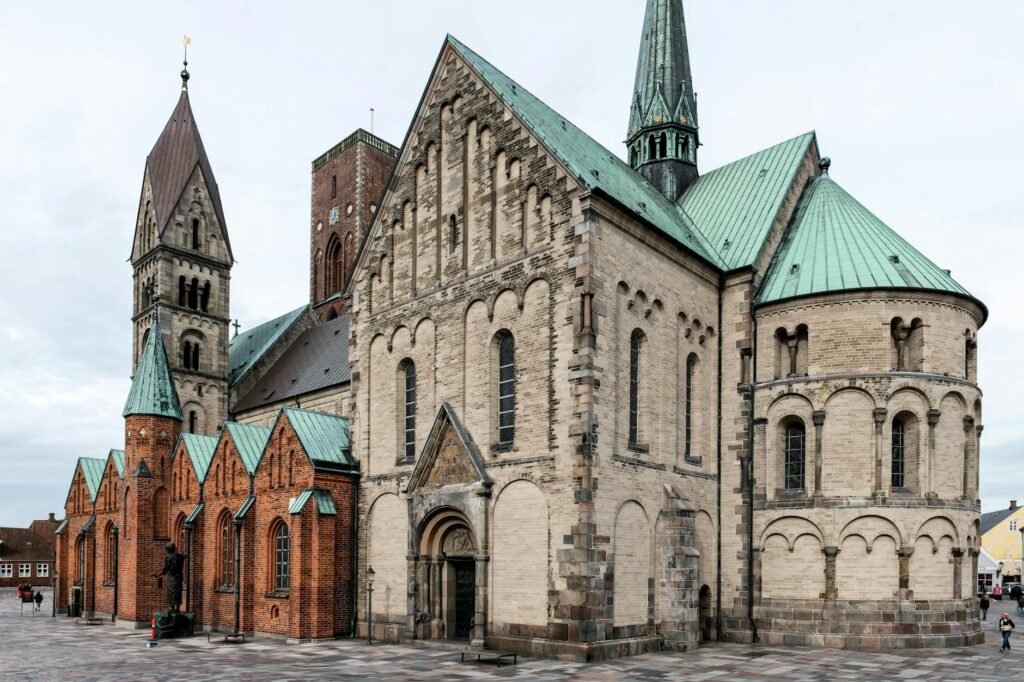
A magnificent 12th-century Romanesque church with six distinctive spires (unique in Scandinavia). The interior features vaulted ceilings, medieval stonework, and a serene atmosphere. No entrance fee; donations welcome. Plan 45–60 min to explore thoroughly.
2
Town walk and medieval quarter
Wander the old town center around the church, browse small antique and crafts shops, visit local bakeries, and soak in the quiet atmosphere. This is genuine provincial Denmark, not a tourist zone.
3
Kalundborg Harbor and waterfront
Walk the harbor area near the terminal, watch ferries, and enjoy views of the waterfront. A park bench or café gives you a peaceful spot to pause. Not picturesque in the postcard sense, but genuinely Danish.
Show 1 more thing to do in Kalundborg
4
Tissø (day trip, if time permits)
Denmark's largest freshwater lake, 10–15 km from Kalundborg. Scenic but requires taxi or rental bike. Only realistic if you have 5+ hours. A local taxi can take you there and back.
Book with the ship, or on your own?
Booking independently
- Often noticeably cheaper than the ship’s version of the same tour.
- Smaller groups and local operators, with traveler reviews you can read before you pay.
- Free cancellation on most tours, usually up to 24 hours before.
When the ship’s excursion makes sense
- Short port calls or long transfers where the timing is tight.
- Tender-only stops where getting ashore can run late.
- The ship waits for its own delayed excursions — it won’t wait for independent ones, so leave a buffer before all-aboard.
We may earn a commission when you book through our links, at no extra cost to you — it’s how we keep these guides free.
Check The Port Traffic
Cruise Ships in Port
Once you have your shore plan, use the schedule to see how busy the harbour will be on your date, plus the ships, lines, and published call windows.
Sun
Mon
Tue
Wed
Thu
Fri
Sat
1
2
3
4
5
6
7
8
9
10
11
12
13
14
15
16
17
18
19
20
21
22
23
24
25
26
27
28
29
30
31
Quiet (1–2)
Busy (3–4)
Packed (5+)
0 scheduled calls
October 9, 2026
No scheduled cruise ship calls were found for this date selection. Pick a highlighted day on the calendar above, widen the range, or search for a different ship or line.
Port Overview
Kalundborg is a small regional port on Zealand's west coast, used mainly by luxury and expedition cruise lines (Seabourn, Silversea, Regent, Viking Ocean, Ponant). Ships dock at a ferry terminal; the town center is a 10–15 min walk away. This is not a commercial cruise hub—it's a quiet medieval town of roughly 6,000 people, best known for the Church of Our Lady (Kalundborg Church), a stunning Romanesque structure with six spires built in the 12th century. The port attracts history-focused, smaller-ship travelers who value authenticity over amenities. If you're expecting shops, beaches, or a bustling waterfront, you'll be disappointed. If you want a genuine, unhurried glimpse of provincial Danish life and medieval heritage, this is worth a few hours ashore.
Is It Safe?
Kalundborg is very safe. Petty theft is rare. The town is quiet, well-lit at night, and policed. There are no dangerous areas for tourists. Walking alone, even at dusk, poses no real risk. Standard precautions (watch bags, avoid isolated areas at very late hours) apply, but this is one of Denmark's safest small towns.
Accessibility & Walkability
The town center is flat and walkable, with paved streets and ramps at most curbs. Kalundborg Church has a ground-floor entrance; stairs lead to upper levels, but the main nave is accessible. Public restrooms are available in the town center. The dock itself is flat and easy to navigate. Taxis are wheelchair-accessible; ask at the terminal. Overall, Kalundborg is one of the more accessible small ports in Denmark.
Outside the Terminal
You exit into a quiet industrial/harbor area with a small ferry building and a few warehouses. No souvenir shops or food stalls immediately visible. A 10–15 min walk inland leads to the medieval town square, where you'll find cafés, small shops, and Kalundborg Church dominating the skyline. The vibe is sleepy and provincial—the opposite of a bustling cruise port.

Beaches Near the Port
Not a beach port
Kalundborg is on an inlet, not a beach destination. The waterfront is industrial/harbor. Nearby Tissø lake is fresh water, not suitable for swimming. If you are seeking a beach experience, this is the wrong port.
Local Food & Drink
Kalundborg is a small town, so expect modest eateries: traditional smørrebrød (open-faced sandwiches), Danish pastries, and simple café fare. The bakery near the town square serves excellent fresh pastries (DKK 40–80 / $5–11 USD). For sit-down meals, a few cafés and restaurants around the town center offer Danish home cooking and seafood at moderate prices (DKK 150–300 / $20–40 USD for a main course). No fine dining or international cuisines. Bring cash or a card; most places accept both. Eating here is authentic, not trendy—expect comfort food and genuine hospitality.
Shopping
Shopping is minimal. A few small antique shops, a pharmacy, and a supermarket serve locals. No duty-free, no mall, no chain stores. If you're seeking souvenirs, pick up Danish chocolates, jam, or knitwear at local shops, but don't expect selection or bargains. Kalundborg is not a shopping port; come for history, not retail.

Money & Currency
- Currency
- Danish Krone (DKK)
- USD Accepted?
- No
- Card Payments
- Visa, Mastercard widely accepted in shops and restaurants; some small vendors prefer cash.
- ATMs
- ATMs near the town square and at the supermarket. Easy to withdraw DKK.
- Tipping
- Not customary in Denmark. Service is included in restaurant bills. Round up or leave 5–10% for exceptional service, but it is not expected.
- Notes
- Prices in Denmark are high by North American standards. A coffee costs DKK 35–50 ($5–7 USD). Budget accordingly.
Weather & Best Time
- Best months
- May–September (mild, longer daylight)
- Avoid
- November–February (short days, cold, grey)
- Temperature
- June–August: 15–20°C (59–68°F). May and September: 10–15°C (50–59°F).
- Notes
- Northern Europe's summer is brief. Even in peak season, bring layers and a windbreaker. Rain is common. Winter cruises are rare here; most ships visit May–September.
Airport Information
- Airport
- Copenhagen Airport (CPH)
- Distance
- Approx. 100 km (60 miles)
- Getting there
- Train from Copenhagen Central to Kalundborg (approx. 1 hour, DKK 80–150 / $11–20 USD); taxi or rental car (approx. 1.5 hours, DKK 1000–1500 / $134–200 USD). No direct bus or shuttle from the airport to Kalundborg.
- Notes
- Kalundborg is not a popular embark port for cruise passengers. Most fly into Copenhagen and take a train or car to the ship. If you are precrusing, base yourself in Copenhagen and travel to Kalundborg on departure day.
Getting Around from the Port
Walking
Town center and Kalundborg Church are walkable from the dock. Flat terrain, safe, quiet streets.
Taxi
Taxis available at dock or by phone. Useful for reaching outlying sites or returning quickly.
Book a transfer 5% off with code TPO5 at checkoutRental bike
Bicycles available in town. Popular in Denmark, flat terrain ideal for cycling.
Organized shore excursion
Cruise lines offer guided walks or bus tours to local Viking sites and smaller attractions.
Details last checked April 2026
Planning a cruise here?
Oceania Cruises sail to Kalundborg.
Practical Tips for Cruise Passengers
- Bring cash in Danish Krone (DKK) even though cards are widely accepted; a few small vendors and cafés prefer it.
- Book a taxi or rental car in advance if you plan to visit Tissø lake or other outlying sites; they are sparse at the dock.
- Wear comfortable walking shoes and layers; the town is compact and flat, but northern European weather is unpredictable.
- Download a map or offline route before you go; mobile coverage is decent, but Kalundborg has no tourist information center at the terminal.
- If you have 3–4 hours, walk the church and town on your own; do not overpay for a guided shore excursion.
- Eat a late lunch or early dinner in town; restaurants close early (around 9–10 PM) and are quiet in the off-season.
Frequently Asked Questions
No. The terminal is minimal, with no official visitor center. Maps and information are best downloaded before arrival. Ask crew if you need taxi phone numbers or directions.
Yes. It's a flat, safe 10–15 min walk. Follow signs toward the town center or ask at the terminal for directions.
No. 3–4 hours is ideal. See the church and town, eat a meal, and return. A full 8-hour port day leaves you with little to do.
Find cruises to Kalundborg, Denmark
Compare sailings and book with no fees — best price guaranteed.
We may earn a commission when you book through our links, at no extra cost to you — it’s how we keep these guides free.
✉ Sailing to Kalundborg? Get your port-day plan
Tell us your sail date and we’ll email you a short Kalundborg plan about 60 days out — when the good excursions start selling out — plus a final checklist 2 weeks before. Two emails, then done. We’ll send one note to confirm it’s really you — unsubscribe anytime.
Same itinerary network
View All
Ports Often Paired With Kalundborg

European River Cruises

Northern Europe

Northern Europe
