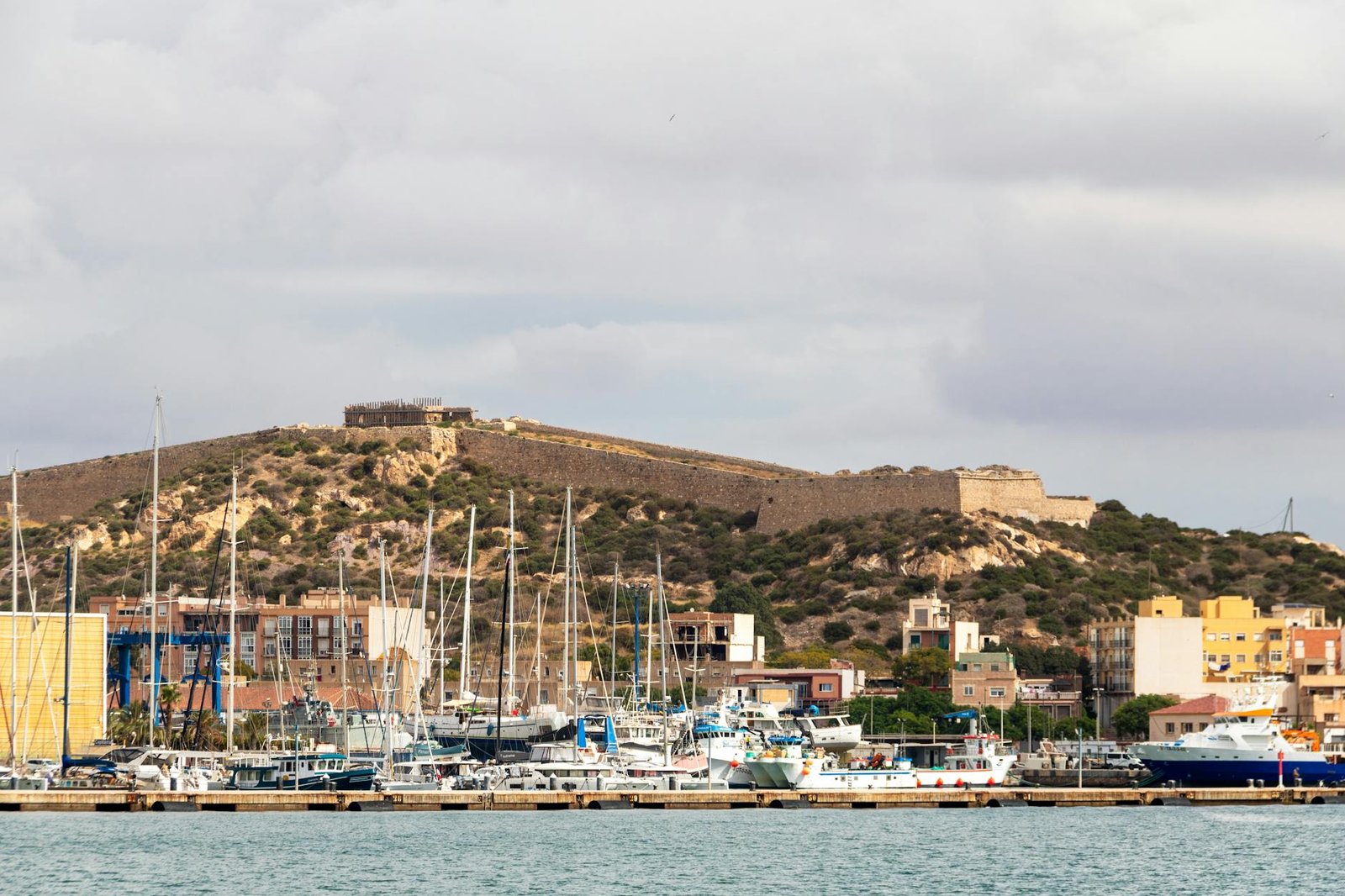
Cartagena is one of those rare Spanish port cities that consistently surprises cruise passengers who weren’t expecting much. Tucked along the southeastern coast of Murcia, this harbour town layers 3,000 years of history — Carthaginian, Roman, Moorish, and beyond — into a compact, walkable centre that rewards the curious traveller. If you’ve got a few hours here, spend them wisely.
Arriving by Ship
Cruise ships dock at the Port of Cartagena, which sits right in the heart of the city. This is genuinely one of the most convenient port arrivals in Spain — you step off the gangway and you’re essentially already in town. The historic centre is flat and easily navigable on foot, so taxis and transfers are rarely necessary unless you’re planning to venture inland to Murcia city. The waterfront promenade, the Paseo Alfonso XII, begins almost immediately as you leave the port gates, setting the tone for what’s ahead.
Things to Do

The Roman heritage here is extraordinary and often overlooked by travellers rushing to Barcelona or Seville. The Roman Theatre of Cartagena, discovered in the 1980s beneath a medieval palace, is one of the best-preserved in Spain and absolutely worth prioritising. If you want to go deeper into what made this city so strategically vital in the ancient world, a guided Roman exploration gives you expert context that signage alone simply can’t provide. 🎟 Book: Roman exploration in Cartagena (Spain) For those who prefer to set their own pace without joining a group, a self-guided mobile tour is a clever, affordable option. 🎟 Book: Visit Cartagena at your own pace and without groups with your mobile
Beyond the theatre, climb up to the Castillo de la Concepción for sweeping panoramic views over the harbour and rooftops — the ascent is easy via a free lift. The National Museum of Underwater Archaeology (ARQUA) is another standout, dedicated to shipwrecks and submerged treasures recovered from Spanish waters. Art lovers should seek out the Modernista architecture scattered through the city centre, a legacy of Cartagena’s prosperous late-19th-century mining boom. If you’d rather let someone else do the curation, a four-hour tour of the city’s highlights covers the key sites efficiently. 🎟 Book: 4-Hour Tour of the Best of Cartagena
Local Food
Cartagena’s food scene draws heavily from the Mediterranean and the produce-rich Murcia region behind it. Zarangollo, a simple scrambled egg dish with courgette and onion, is the kind of humble local recipe that punches well above its weight. Caldero, a saffron-tinged rice cooked in a rich fish broth, is the area’s answer to paella and arguably more interesting. The local salazones — salt-cured fish and roe — are a regional speciality that appear on almost every tapas menu worth its salt.
Speaking of tapas, Cartagena has a strong tradition of generous tapas culture, especially in the bars around the Calle Mayor and the old quarter. 🎟 Book: 3 Tapas Cartagena walking tour A tapas walking tour through the city is a genuinely brilliant way to eat your way through the neighbourhood, sampling vermouth, local wines, and bite-sized dishes across multiple stops in one go.
Shopping

Cartagena isn’t a shopping powerhouse in the way that Málaga or Valencia are, but that’s part of its charm — the retail here feels local rather than tourist-driven. The Calle Mayor is the main pedestrian shopping street, lined with Spanish fashion chains, independent boutiques, and gift shops selling locally-themed ceramics and crafts. Look for products made with Murcia’s famous sweet paprika (pimentón de Murcia) and bottles of regional wine from the Bullas or Jumilla denominations. A small mercado (market) in the old town is ideal for picking up edible souvenirs that aren’t available in any airport duty-free.
Practical Tips
- Currency: Euro. Most places accept cards, but carry small cash for markets and smaller cafés.
- Language: Spanish. English is spoken at tourist sites and restaurants but less so in local shops.
- Weather: Cartagena enjoys one of the warmest, driest climates in Spain year-round. Summer (June–August) is very hot; spring and autumn are ideal for walking.
- Time ashore: Most ships allow 6–8 hours in port, which is enough to cover the main sites comfortably. Avoid rushing — this city rewards lingering.
- Free attractions: The panoramic lift to Castillo de la Concepción is free, and much of the Modernista architecture can be admired from the street.
Cruises That Visit Cartagena Spain
Cartagena has grown steadily in popularity as a cruise destination, particularly among lines seeking alternatives to the more crowded ports of Barcelona and Palma. MSC Cruises regularly features Cartagena on its Western Mediterranean itineraries, often departing from Genoa, Civitavecchia (Rome), or Barcelona on voyages of 7 to 10 nights. Costa Cruises similarly includes Cartagena as part of Spain-focused Mediterranean circuits. Pullmantur has historically used the port heavily, given its Spanish-speaking passenger base and the city’s cultural appeal.
P&O Cruises and Cunard include Cartagena on longer sailings from Southampton that explore the Iberian Peninsula and Western Mediterranean over 10–14 nights. These itineraries tend to pair Cartagena with Alicante, Almería, or Gibraltar. Celebrity Cruises and Royal Caribbean occasionally stop here on repositioning voyages or extended Med itineraries departing from Fort Lauderdale or other transatlantic home ports.
The best time to cruise to Cartagena is between April and June or September and October, when the heat is manageable, crowds are thinner, and the city’s outdoor spaces are at their most enjoyable. July and August bring intense heat and more tourists, though the port remains active throughout summer.
🚢 Cruises That Stop at Cartagena Spain
Ready to book a cruise to Cartagena Spain?
Compare itineraries, prices, and cabin types from all the major cruise lines — with a best price guarantee and no booking fees.
🔍 Search Cruises to Cartagena Spain →
Affiliate link — we may earn a commission if you book, at no extra cost to you.
Cartagena may not have the international fame of Spain’s bigger cities, but for cruise passengers with half a day to spare, it consistently over-delivers. Come curious, come hungry, and don’t be surprised if it becomes one of the highlights of your entire voyage.
🎟️ Things to Book in Advance
These highly-rated experiences fill up fast — book before you arrive to avoid missing out.


This page contains affiliate links. If you book through them, we may earn a small commission at no extra cost to you.
📍 Getting to Cartagena Spain
Use the interactive map below to explore the port area and plan your route from the terminal.
Leave a Reply