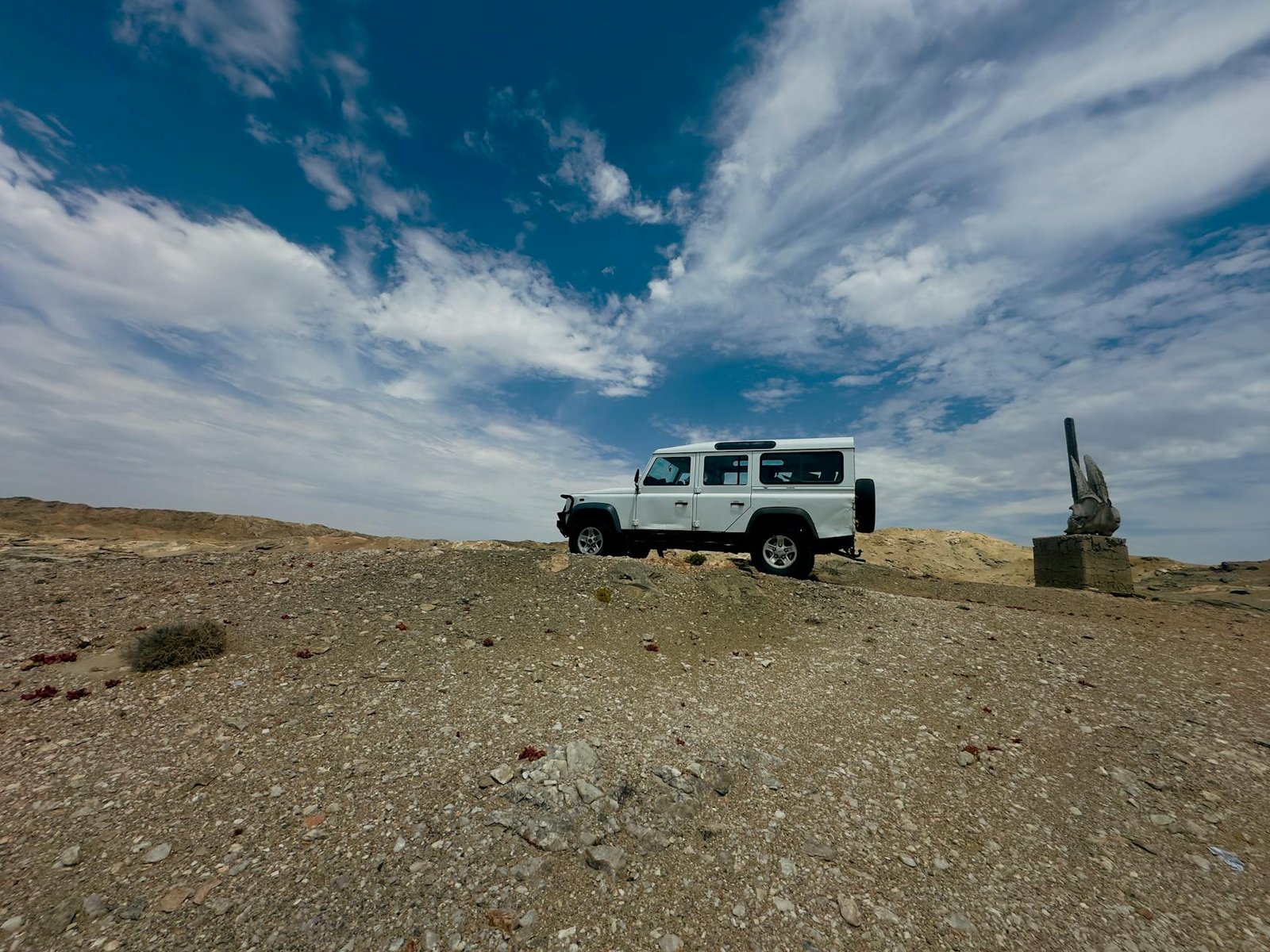
Few ports in southern Africa catch cruise passengers so completely off guard as Lüderitz. You arrive expecting a dusty, forgettable stopover on Africa’s Skeleton Coast, and instead you step into one of the continent’s most hauntingly beautiful and historically layered towns. This is a place where German colonial architecture rises against a backdrop of raw Atlantic ocean and shifting desert dunes — a combination that exists nowhere else on Earth.
Arriving by Ship
Cruise ships dock at the commercial harbour in Lüderitz Bay, a sheltered natural anchorage that has been welcoming seafarers for over five centuries. The approach by sea is dramatic: stark ochre cliffs tumble into cold, steel-blue water, and the town itself appears almost painted onto the hillside, its colourful Jugendstil buildings shimmering in the heat. The port is compact and easily walkable, and unlike larger African ports, you won’t be bombarded by persistent touts when you step ashore. Taxis and local guides are available at the dock, and the town centre is only a short walk away. Clear your schedule for at least six hours — there is far more here than most itineraries suggest.
Things to Do

The single most extraordinary excursion from Lüderitz is a visit to Kolmanskop, an abandoned diamond-mining town swallowed by the Namib Desert. Only 10 kilometres inland, this ghost town was once one of the wealthiest settlements in Africa, and today its grand Germanic mansions stand half-buried in sand, their ballrooms and hospitals reclaimed by dunes. It is one of the most photographed locations on the continent and utterly unlike anything else you’ll see from a cruise ship gangway.
Back in town, the Goerke House offers a glimpse into the extraordinary opulence of the diamond boom era, while the Evangelical Lutheran Church — painted custard yellow on a rocky promontory — is simply one of the most photogenic buildings in Namibia. Flamingos gather in the shallows of the lagoon near Shark Island, and the surrounding coastline rewards anyone who simply walks and looks.
If your ship grants you enough time, the wider Namibian landscape is achingly beautiful. A scenic tour of Sandwich Harbour, the stunning tidal lagoon where dunes meet the Atlantic, is an unforgettable experience you can book in advance. 🎟 Book: Scenic Sandwich Harbour Tour For those who want to understand the living desert up close, the dune ecosystems of the Namib are extraordinary — unique fog-dependent life forms thrive in conditions that look completely inhospitable. 🎟 Book: Living Desert Eco Dune Tour
Local Food
Lüderitz has a modest but surprisingly rewarding food scene, shaped by its German colonial past and its position on a cold, nutrient-rich stretch of ocean. Namibian oysters from Lüderitz are famous across the country — farmed in the chilly, plankton-rich waters of the bay, they are among the finest on the continent and genuinely unmissable. Look for them at the Lüderitz Waterfront or at the small restaurants clustered near the harbour. Alongside oysters, crayfish (rock lobster) is a local speciality, often served simply grilled. German-influenced baked goods and schnitzel still appear on menus here, a quirk that somehow makes perfect sense once you’ve seen the town’s architecture. Don’t leave without trying a glass of local Namibian lager alongside a plate of freshly shucked oysters — this is the definitive Lüderitz lunch.
Shopping

Lüderitz is not a major shopping destination, and that is part of its charm. The town’s handful of shops sell genuine Namibian crafts, semi-precious stones, and locally made jewellery — the diamond mining heritage means gemstone pieces are particularly well-represented. A few galleries sell original artwork inspired by the desert landscape. Skip the generic souvenir stalls and instead look for a piece of polished desert rose crystal or a small karoo stone carving. The Lüderitz Museum also has a small gift shop with quality books and historical prints worth browsing.
Practical Tips
Lüderitz sits on the southern Namibian coast and is subject to persistent, sometimes fierce winds — the locals call it the Suidentwind, the south wind, and it rarely rests. Bring a windproof layer regardless of the air temperature, even in summer. The currency is the Namibian Dollar, which trades at parity with the South African Rand; both are accepted widely. The town’s amenities are limited, so if you require specific medication or equipment, bring it from the ship. English is widely spoken alongside Afrikaans and German. Kolmanskop requires a permit to enter, which your guide or tour operator will arrange, but book ahead if you plan to go independently.
Cruises That Visit Lüderitz, Namibia
Lüderitz is a specialist destination, appearing predominantly on expedition-style and destination-focused itineraries rather than mainstream Caribbean-style cruising. Silversea Cruises, Ponant, and Hapag-Lloyd Cruises are among the lines that most consistently include Lüderitz on their southern Africa and Namibian coastal sailings. These voyages typically form part of longer West Africa or full circumnavigation itineraries, ranging from 14 to 30 days in duration.
Most sailings visiting Lüderitz depart from Cape Town, South Africa, which serves as the primary home port for southern African cruise itineraries. Some voyages position from European ports — particularly Southampton, Hamburg, or Lisbon — before working their way south along the Atlantic coast.
The best time to visit is between April and October, during Namibia’s dry season, when visibility is extraordinary and the desert light at its most photogenic. The austral winter months of June and July are particularly popular for wildlife viewing along the Namibian coast.
🚢 Cruises That Stop at Luderitz Namibia
Ready to book a cruise to Luderitz Namibia?
Compare itineraries, prices, and cabin types from all the major cruise lines — with a best price guarantee and no booking fees.
🔍 Search Cruises to Luderitz Namibia →
Affiliate link — we may earn a commission if you book, at no extra cost to you.
Lüderitz rewards the curious and confounds the indifferent. It is not a port where you sunbathe or shop for branded goods — it is a port where you encounter something genuinely rare: a place that feels untouched by mass tourism, shaped by a bizarre collision of German imperial ambition, diamond wealth, and one of the world’s oldest and most unforgiving deserts. Come with an open mind, and it will almost certainly become one of the most memorable stops of your entire voyage.
🎟️ Things to Book in Advance
These highly-rated experiences fill up fast — book before you arrive to avoid missing out.


This page contains affiliate links. If you book through them, we may earn a small commission at no extra cost to you.
📍 Getting to Luderitz Namibia
Use the interactive map below to explore the port area and plan your route from the terminal.
Leave a Reply