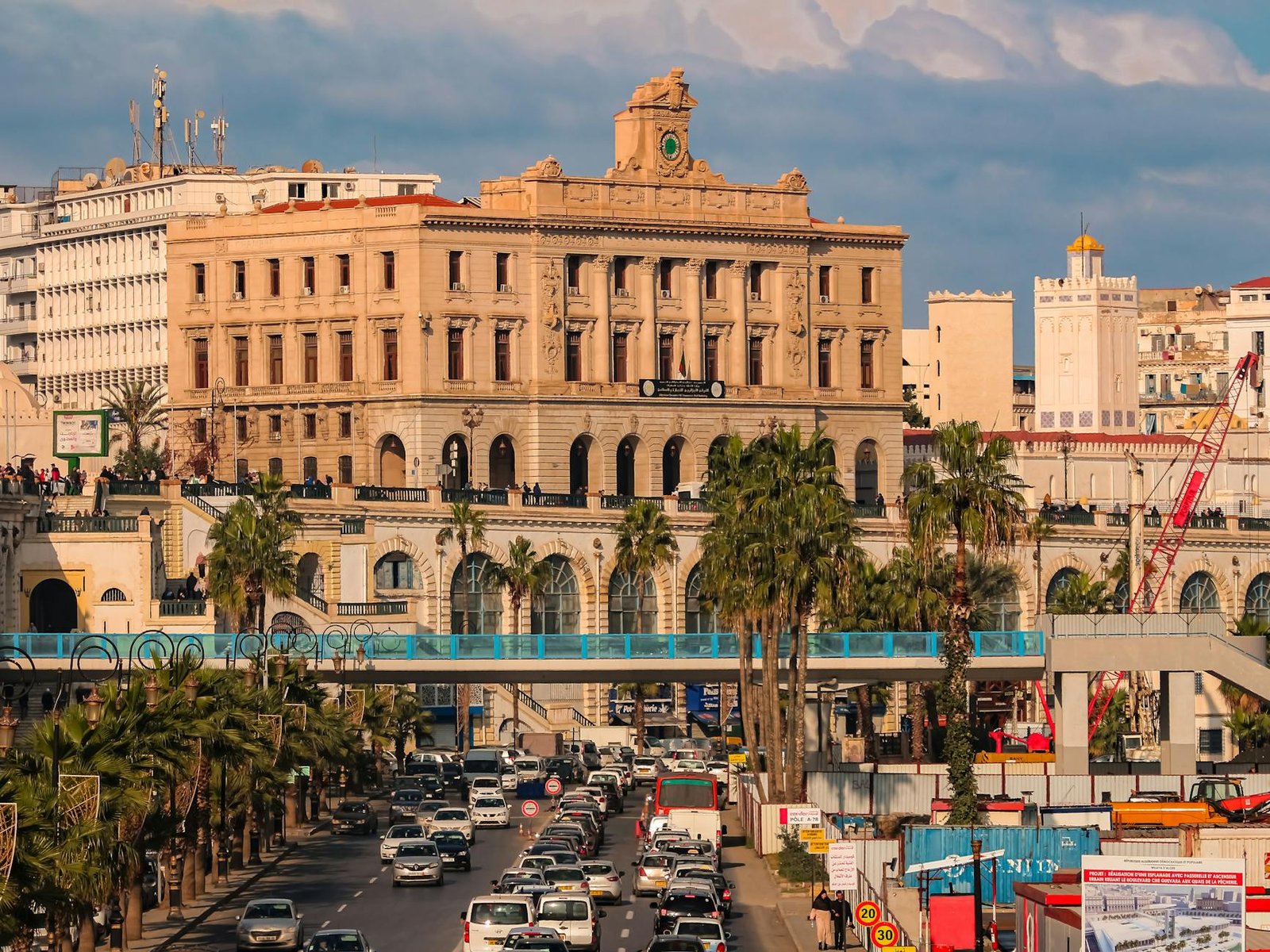
Algiers is one of the Mediterranean’s most underrated cruise stops — a city that cascades dramatically down hillsides to the sea, its whitewashed buildings earning it the lyrical nickname La Blanche, the White City. Few travellers know what to expect here, and that’s precisely what makes it so rewarding. From Ottoman-era labyrinths to French colonial boulevards and some of North Africa’s most extraordinary street food, Algiers has a layered identity unlike anywhere else in the region.
Arriving by Ship
Your cruise ship docks at the Port of Algiers, one of the busiest in North Africa, sitting right at the heart of the city. Disembarkation is relatively straightforward, though formalities can take a little time — Algerian immigration requires patience, so factor that into your plans. Once through, the waterfront promenade stretches out before you, and the famous white terraces of the Casbah climb steeply up the hillside directly ahead. Taxis are plentiful just outside the port gates, and fixed-rate agreements are standard — always agree on a price before you get in. The city centre is walkable from the port if the weather is kind, but given the hilly terrain, a taxi for at least the upward portions makes sense.
Things to Do

The Casbah of Algiers is the city’s crown jewel — a UNESCO World Heritage Site and one of the finest surviving Ottoman medinas in the world. Its narrow, steep alleyways twist past crumbling palaces, Ottoman mosques, and centuries-old fountains, all threaded together in beautiful, bewildering chaos. Getting lost here is part of the experience, but a local guide will unlock stories and hidden corners you’d never find alone. The Algiers Casbah Tour is one of the most popular options for cruise visitors 🎟 Book: Algiers Casbah Tour.
Beyond the Casbah, the Grande Poste building — an extraordinary neo-Moorish post office from 1910 — is one of the city’s most photogenic landmarks. The Martyrs’ Monument, a soaring concrete sculpture honouring Algeria’s war of independence, offers panoramic city views and a window into the nation’s powerful sense of identity. For those interested in exploring further afield, Algeria’s Roman ruins at Tipasa and Djemila are genuinely world-class and often overlooked by travellers who come this way — if your port day allows it, the Algeria’s Roman Empire excursion makes for a truly memorable detour 🎟 Book: Algeria’s Roman Empire . For a broader overview of what the city offers in a limited timeframe, a structured city tour is the smartest way to cover ground efficiently 🎟 Book: "Best of Algiers city" by Fancyellow.
Local Food
Algerian cuisine is a magnificent meeting point of Berber, Arab, Ottoman, and French influences, and Algiers is the best place to encounter it at its most urban and sophisticated. Couscous here is a serious affair — slow-cooked with lamb, chickpeas, and vegetables, served at family tables on Fridays and in hole-in-the-wall restaurants throughout the week. Don’t leave without trying chakhchoukha, a lesser-known dish of torn flatbread pieces simmered in spiced meat and tomato broth — deeply comforting and utterly Algerian. Merguez sandwiches from street vendors near the port are a fast, flavourful option for lunch. Wash everything down with limonada — a homemade Algerian lemonade sold from tiny kiosks — or mint tea served in small, elegant glasses. Pastries are another highlight: makroud, semolina sweets filled with dates and soaked in honey, are sold in every patisserie in the city.
Shopping

The Casbah’s covered market areas and surrounding streets are excellent for traditional handicrafts — hand-woven Berber rugs, copper lanterns, embroidered textiles, and ceramics make for distinctive and portable souvenirs. The Rue Didouche Mourad, a broad French-era shopping street in the modern city, mixes international stores with local boutiques and is worth a stroll. For spices, dried fruits, and a genuine market atmosphere, the covered markets near the port district are your best bet — vendors are generally friendly, and bargaining is expected and enjoyable. Genuine antiques and silverwork can be found in some of the older Casbah shops, though always buy from established sellers.
Practical Tips
Algeria requires a visa for most nationalities, so confirm your requirements well before your cruise departure — this is non-negotiable. The local currency is the Algerian Dinar (DZD), and while international credit cards are increasingly accepted in larger establishments, cash remains king in the Casbah and markets. French is widely spoken alongside Arabic, so a few words in either language go a long way. The city is generally safe for tourists in busy areas, but stay aware of your surroundings in quieter streets of the Casbah. Dress modestly out of cultural respect — covered shoulders and knees are appreciated, particularly near mosques.
Algiers rewards the curious traveller who arrives without fixed expectations. It’s rough around some edges, breathtaking around others, and utterly unlike the cruise destinations that surround it — which is exactly why it lingers in the memory long after you’ve sailed away.
🎟️ Things to Book in Advance
These highly-rated experiences fill up fast — book before you arrive to avoid missing out.


This page contains affiliate links. If you book through them, we may earn a small commission at no extra cost to you.
📍 Getting to Algiers Algeria
Use the interactive map below to explore the port area and plan your route from the terminal.
Leave a Reply