Quick Facts: Port: Naze, Amami Oshima Island | Country: Japan | Terminal: Amami Port (Naze Port) | Docking (alongside berth, no tender required for most cruise calls) | Distance to city center: 10–15 minute walk to central Naze | Time zone: JST (UTC+9)
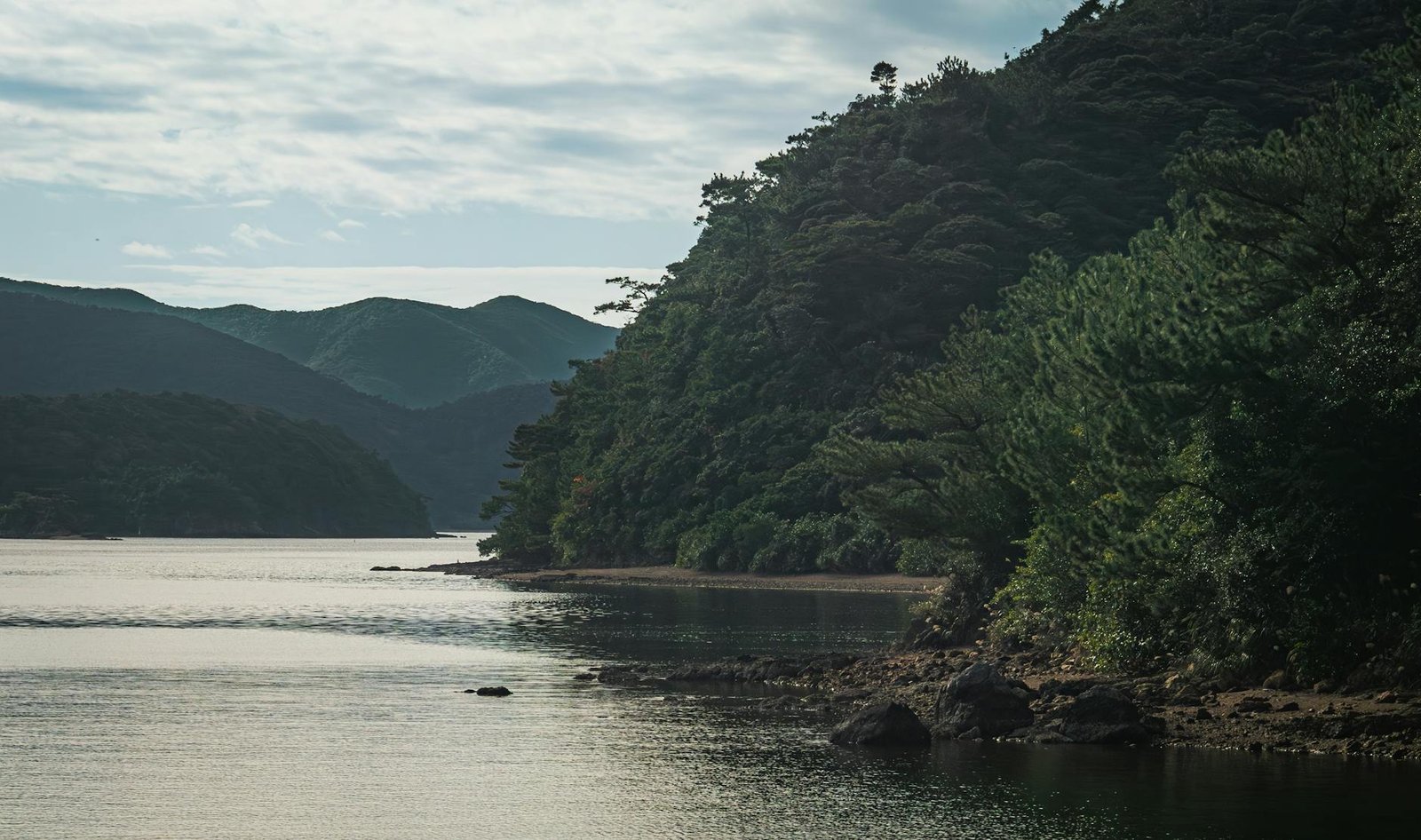
Amami Oshima is Japan’s best-kept island secret — a subtropical UNESCO-nominated World Natural Heritage island sitting halfway between mainland Kyushu and Okinawa, where ancient mangrove forests, the endangered Amami black rabbit, and a textile tradition over 1,000 years old exist almost entirely off the tourist radar. Most cruisers arrive expecting a compact Japanese port town with souvenir shops and ramen bowls; what they actually find is one of the most ecologically rich islands in East Asia, wrapped in turquoise water. Your single most important planning tip: pre-arrange transport the moment you clear the terminal, because rental cars and taxi availability are genuinely limited on this island, especially when a large ship is in port.
—
Port & Terminal Information
Naze Port (Amami Port) is the island’s primary deep-water commercial and cruise terminal, located right on the western edge of Naze city. Most cruise ships dock alongside the main quay — you won’t need a tender, which means a faster start to your day and no weather-related delays. Find the terminal on [Google Maps](https://www.google.com/maps/search/Amami+Oshima+Island+Japan+cruise+terminal) before you sail so you can orient yourself visually.
Terminal facilities are modest by international cruise standards. There is a small passenger building with basic restrooms and limited seating, but there is no dedicated cruise terminal building with retail, ATMs, or luggage storage comparable to what you’d find in Yokohama or Naha. A small tourist information counter sometimes operates when ships are in port, staffed by local volunteers who often have minimal English but are extremely helpful with maps.
Key terminal facts to know:
- ATMs: None at the terminal itself; the nearest reliable international ATMs (7-Eleven and Japan Post) are in Naze city center, approximately a 15-minute walk
- Wi-Fi: Not available at the terminal; limited free Wi-Fi in some Naze shops and the city’s main library
- Luggage storage: Not available at the terminal; your ship is your best storage option
- Tourist information: Occasional pop-up desk run by the Amami City Tourism Division; pick up the free English island map if it’s available — it’s genuinely useful
- Shuttle: No regular port shuttle; see transport options below
- Walking distance to city center: Central Naze (Naze Shotengai covered shopping street) is approximately 1.2 km from the dock — flat, easy walking in good weather
—
Getting to the City

The terminal sits on the edge of Naze city, so most destinations are more accessible than you’d think from a small-island port. That said, the island’s best natural sites — mangroves, beaches, highland roads — require motorised transport.
- On Foot — Central Naze is genuinely walkable from the dock in 10–15 minutes along the harbour road. The covered Naze Shotengai shopping arcade, the Oshima Tsumugi weaving area, and the Naze Asahi shopping district are all within a 20-minute walk. Do not attempt to walk to the mangroves or Ohama Beach — they are 10–30 km away on winding roads.
- Bus — Amami has a local bus network run by Shimanto Bus and Lkly (formerly Nankoku Bus). The main routes from Naze connect to Koniya in the south and Kasari in the north. Fares are distance-based, starting at ¥200 (approx $1.40 USD) and rising to ¥1,500+ for longer trips. Buses are infrequent — often 1 per hour or less on rural routes — so missing one costs you 60 minutes of your shore day. Pick up a bus schedule at the tourist desk or Naze City Hall, a 12-minute walk from the port. English signage exists at major stops.
- Taxi — Taxis wait near the dock when ships are in; if not, have your ship’s crew call one. The fare from Naze Port to central Naze is approximately ¥600–¥800 (under $6 USD). To Mangrove Park it’s around ¥3,000–¥3,500 (approx $20–24 USD) one way. To the east coast beaches, expect ¥5,000–¥7,000 one way. Taxi meters are honest; scams are essentially unheard of in rural Japanese ports. Carry the destination’s address written in Japanese — drivers rarely speak English.
- Hop-On Hop-Off — No HOHO bus service operates on Amami Oshima. This is genuinely one of the most independent-traveller islands in Japan; there is no hop-on infrastructure.
- Rental Car — This is by far the best option for cruisers with 7+ hours ashore. Several local rental companies operate near Naze, including Times Car Rental (approximately 1 km from the port) and Orix Rent-a-Car near the airport. Compact car rates run ¥7,000–¥10,000/day ($50–70 USD), often with English GPS available. Book in advance online, especially if your ship carries 1,000+ passengers. Driving is on the left; roads are well-signed but narrow in places. A rental car unlocks the entire island — mangrove kayak spots, highland scenic roads, distant beaches.
- Rental Scooter/E-Bike — A handful of shops in Naze rent scooters (125cc, around ¥3,000–¥4,000/day, ~$21–28 USD) and e-bikes (around ¥2,000–¥3,000/day). You’ll need an International Driving Permit for scooters. E-bikes are suitable for the flat coastal road and city exploration but won’t get you to the highlands.
- Ship Shore Excursion — Worth booking for: mangrove kayaking (specialist equipment and guides make this much smoother than arranging independently), Amami black rabbit night tours (requires specialist local knowledge), and any tour involving deep island access where getting lost or being late is a genuine risk. For Naze city walking and beach visits, go independently and save the money.
—
Top Things to Do in Amami Oshima Island Japan, Naze, Kagoshima
Amami packs extraordinary natural and cultural density into a single shore day — the key is choosing your focus: mangroves and wildlife, beaches and sea, or textile culture and local life. Here are 12 essential experiences across every traveller type, along with [Viator tour options](https://www.viator.com/search/Amami+Oshima+Island+Japan) and [GetYourGuide experiences](https://www.getyourguide.com/s/?q=Amami+Oshima+Island+Japan¤cy=USD&partner_id=MHU0UHU) to help you book the ones that benefit most from a guide.
—
Must-See
1. Amami Mangrove Park — Mangrove Kayaking (¥2,000–¥3,500 for guided kayak) — The largest mangrove forest in Japan outside Okinawa stretches along the Yakugachi River estuary roughly 25 km northeast of Naze, and paddling through it by canoe or kayak is one of the genuinely unmissable experiences in all of Japan’s island ports. The forest canopy closes over the water, kingfishers dart between the pneumatophore roots, and the silence is extraordinary. You can do a self-guided paddle if you rent equipment, but a guided kayak — [find guided mangrove kayak tours on Viator](https://www.viator.com/search/Amami+Oshima+Island+Japan) — adds wildlife interpretation that transforms the experience. Allow 2.5–3 hours including transport from port.
2. Oshima Tsumugi Weaving Experience (¥500–¥2,000 depending on activity) — Amami Oshima is the birthplace of Oshima Tsumugi, one of Japan’s most prized silk textiles, woven using a hand-dyeing technique with fermented mud that is utterly unique to this island. The Oshima Tsumugi Village (奄美大島紬村) near Naze offers workshops where you can try the dyeing and weaving yourself — it’s accessible by taxi in 10 minutes from the port. This is not a tourist-fabricated experience; Tsumugi weavers have been working here for over 1,400 years, and the finished fabric is extraordinarily beautiful. Allow 1.5–2 hours.
3. Naze Shotengai & Asahi Market (free entry) — The covered shopping arcade running through central Naze is the beating heart of daily island life — not for tourists, but for locals. Fishmongers sell fresh catches from the surrounding ocean, tofu shops make fresh product daily, and small izakaya bars open early for breakfast. Walking this street at 9 AM gives you a completely authentic slice of rural Japanese island life that you won’t find in larger ports. It’s a 15-minute walk from the terminal and takes about 45 minutes to explore properly.
4. Amami City Museum (奄美市立奄美博物館) (¥200 adults, approx $1.40 USD) — A small but surprisingly comprehensive museum covering Amami’s natural history, the unique dialect (Amami-go, distinct from standard Japanese), the Tsumugi textile tradition, and the island’s rich folk culture including Shima Uta — the haunting traditional island song form. The museum is in central Naze, about a 20-minute walk from the port. Limited but functional English signage. Allow 45–60 minutes.
—
Beaches & Nature
5. Ohama Beach (大浜海浜公園) (free) — Just 4 km from Naze city center, Ohama is the most accessible quality beach on the island for cruisers — a long curve of pale sand and clear water that gets surprisingly uncrowded even in summer. The water colour here, that particular shade of green-blue peculiar to the Amami archipelago, is legitimately startling the first time you see it. Facilities include basic changing rooms and occasional food vendors. Taxi from port: approximately ¥1,000–¥1,200 one way. Allow 1.5–2 hours. [Check swimming and snorkelling tours from Naze on GetYourGuide](https://www.getyourguide.com/s/?q=Amami+Oshima+Island+Japan¤cy=USD&partner_id=MHU0UHU).
6. Tomori Beach & the East Coast Scenic Drive (free) — If you have a rental car, the road from Naze across the mountain spine to the east coast beaches — particularly around Tomori and Asagigawa — is one of the most beautiful drives in Japan. You drop from subtropical highland jungle down to small fishing villages with white sand beaches, almost completely empty of tourists. The drive from Naze takes 35–45 minutes. The beaches have no facilities — bring water and snacks from town.
7. Uke Bay Kayaking & Sea Caves (tours from approx ¥5,000–¥8,000) — Uke Inland Sea (請島方面) and the northern Kasari Bay area offer some of the best sea kayaking in the Kagoshima archipelago — protected calm water, limestone formations, and sea caves. [Guided sea kayaking tours on Viator](https://www.viator.com/search/Amami+Oshima+Island+Japan) typically depart from points around Naze and are excellent for cruisers because they handle all transport logistics. Allow a full half-day minimum.
8. Amami Highland Road (金作原原生林) (free for self-drive; guided hiking tours from ¥3,000) — The Kinsakubaru Primary Forest, about 12 km from Naze, is a protected subtropical forest trail where Amami’s endemic wildlife — Ryukyu scops owls, rare ferns, Lidth’s jay — can actually be observed. Guided night walks are the gold standard for wildlife, but a morning walk here is still atmospheric and beautiful. Wear covered shoes and bug spray. [Find guided Kinsakubaru forest tours on GetYourGuide](https://www.getyourguide.com/s/?q=Amami+Oshima+Island+Japan¤cy=USD&partner_id=MHU0UHU). Allow 2–3 hours.
—
Day Trips
9. Koniya / Setouchi Area and Kakeroma Island Ferry (ferry approx ¥400 round trip) — If you have a full 8+ hour day, the southern town of Koniya (roughly 50 km from Naze, 1 hour by rental car) offers access to Kakeroma Island via a short local ferry — a tiny island of crystalline beaches and deep fishing village life that almost no foreign tourist ever reaches. This is Amami at its most raw and beautiful. Only realistic with a rental car and full-day schedule; not suitable for 4–6 hour calls.
10. Amami Airport Area — Coral Sea View Point (free) — The northeast coastal road near the airport passes a series of elevated viewpoints overlooking the island-studded sea towards Tokunoshima and Okinawa. On a clear day the view from the Kasari Promontory is extraordinary — a hundred shades of blue layered to the horizon. 30 km from Naze, accessible by car in 40 minutes.
—
Family Picks
11. Amami Marine Exhibition Hall (奄美海洋展示館) (¥600 adults / ¥300 children) — A small but well-loved marine aquarium near Naze displaying the extraordinary marine biodiversity of the Amami sea — coral reef fish, sea turtles, and local species in well-maintained tanks. It’s not an international-scale aquarium, but the quality of the coral reef display is genuinely excellent, and children respond brilliantly to it. About 20 minutes from the port by taxi. Allow 1–1.5 hours.
12. Amami Oshima Nature Observation Center (¥500 adults) — This facility near Naze provides an excellent introduction to the island’s UNESCO World Heritage ecology through interactive displays, scale models of the mangrove system, and live wildlife exhibits including endemic species. It functions as an orientation centre before heading into nature. 15 minutes by taxi from the port; allow 45–60 minutes.
—
Off the Beaten Track
13. Naze Market Breakfast & Shima Uta Listening (free / snacks ¥200–¥600) — Arrive in central Naze early — before 8:30 AM — and you may catch the island’s unique Shima Uta folk singing tradition playing from someone’s shop radio or at the covered market. This style of music, with its raw, haunting vocal quality, is distinct from any other Japanese musical form and was popularized internationally by singer Chitose Hajime, who is from Amami. It’s an entirely ambient, spontaneous experience — you can’t book it, you just have to be there.
14. Amami Oshima Hometown Museum of Folklore (民俗資料館) (¥200) — A tiny, almost overlooked folk museum in the Naze area preserving everyday objects from 19th- and early 20th-century island life — fishing tools, weaving equipment, ceremonial items, and old photographs of the community. The staff is elderly and passionate, and the experience of being shown around by a local who has lived through many of these traditions is something that simply doesn’t exist at larger ports. Allow 45 minutes.
—
What to Eat & Drink

Amami’s food culture is distinct from mainland Japanese cuisine and bears the influence of both Kagoshima’s strong flavours and Okinawa’s subtropical ingredients — expect dishes built around fresh-caught fish, tofu, sweet potato, and pork, all touched with the island’s singular kokuto (black sugar), which is produced here and is genuinely unlike anything on the mainland. The local spirit, Amami Kokuto Shochu, is made exclusively from this black sugar and is one of Japan’s geographically protected spirits — drinking it here, in its place of origin, is a genuinely special thing.
- Keihan (鶏飯) — Amami’s most celebrated dish: a bowl of white rice scattered with hand-shredded chicken, pickled papaya, egg ribbons, shitake mushrooms, and seaweed, over which you pour
📍 Getting to Amami Oshima Island Japan, Naze, Kagoshima
Use the interactive map below to explore the port area and plan your route from the terminal.
Leave a Reply