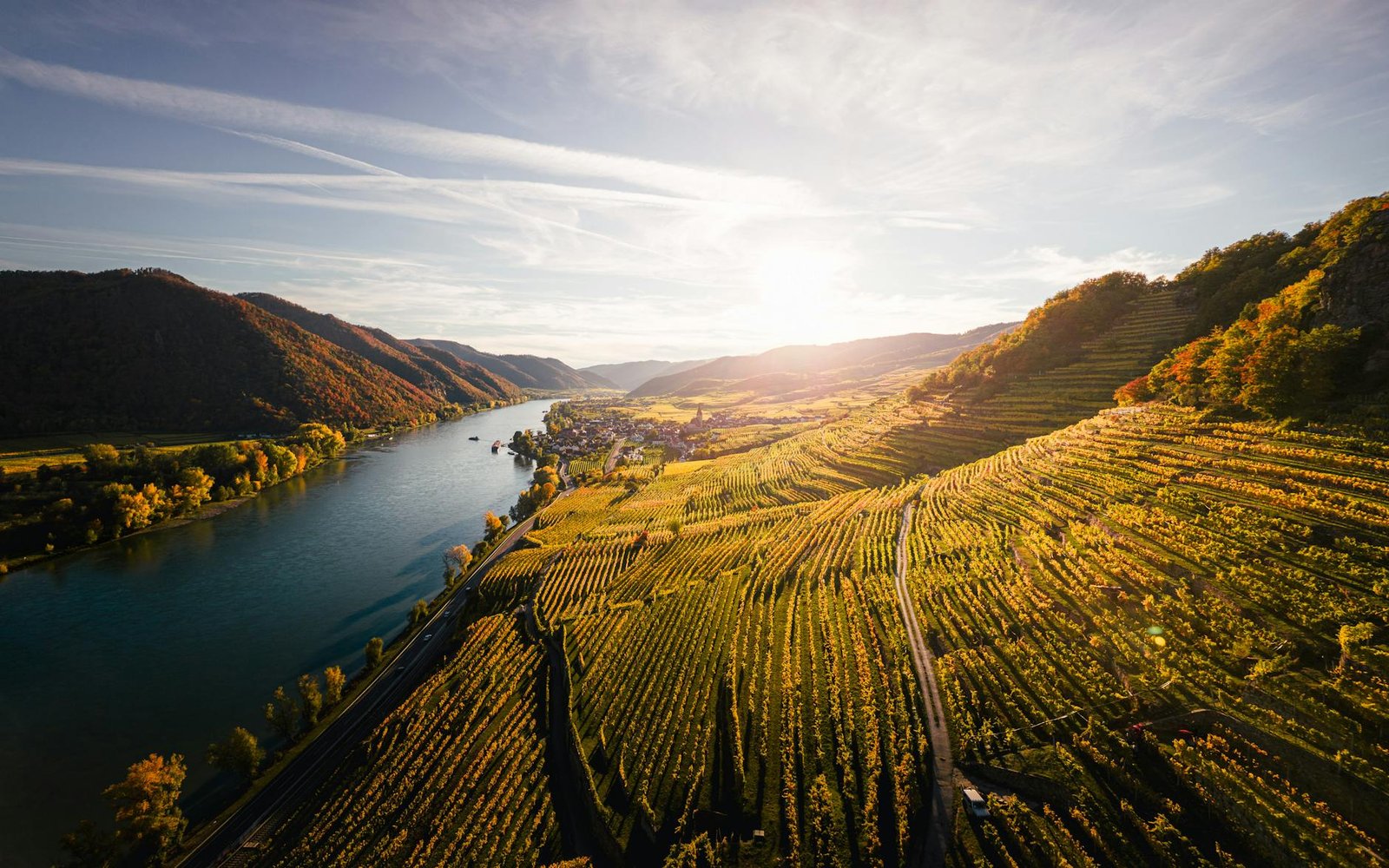
The Wachau Valley is one of Europe’s most cinematically beautiful stretches of river — 36 kilometres of vine-draped hillsides, medieval ruins, and pastel-coloured villages reflected in the Danube. River cruisers who sail through this UNESCO World Heritage corridor often call it the highlight of their entire journey. And once you step ashore, it’s easy to understand why.
Arriving by Ship
The Wachau Valley isn’t a single port but a series of small riverside towns, with Melk, Dürnstein, and Krems being the most common stops for river cruise ships. Most vessels dock directly at purpose-built pontoons right in the town centres, so there’s no tender required — you simply walk off the gangway and you’re already standing on cobblestones. Distances to the main sights are almost always walkable, though cyclists will find dedicated paths hugging both banks of the Danube.
If your ship docks at Melk, the famous abbey is a ten-minute uphill walk. Dürnstein is tiny enough to explore entirely on foot in a morning.
Things to Do

The Wachau packs a remarkable amount of history, scenery, and culinary culture into a compact area. Whether you have four hours or a full day, there’s no shortage of ways to fill it well.
History & Landmarks
- Melk Abbey (Stift Melk) is the valley’s crown jewel — a Baroque monastery perched dramatically above the Danube, with gilded interiors that will stop you in your tracks. Entry costs around €15 and includes the library and terraced gardens.
- Dürnstein Castle ruins are where Richard the Lionheart was famously imprisoned in 1192 — a steep 30-minute hike rewards you with panoramic views over the entire valley. Entry is free; wear proper shoes.
- Göttweig Abbey, less visited than Melk, offers equally stunning architecture with far smaller crowds. It’s open daily and charges around €10 for entry.
- Aggstein Castle ruins cling to a cliff 300 metres above the river and are best reached by a forest hiking trail. 🎟 Book: 3 Castles & Wine Private Tour in Wachau Valley with Melk Church A private tour covering three Wachau castles including Melk Church is a smart way to cover the highlights without the logistics — from USD 416.50.
Wine & Nature
- Grüner Veltliner vineyard walks are free and self-guided along the terraced slopes between Weißenkirchen and Spitz — pick up a trail map from any local tourist office.
- Cycling the Danube Bike Path between Melk and Krems (around 36 km) is one of Austria’s most scenic rides, almost entirely flat and well-signposted. 🎟 Book: Wachau Valley Wine Tasting Bike Tour from Vienna A guided wine-tasting bike tour from Vienna covers the valley in a single day, from USD 159.73.
- Wine tasting at a Heuriger (local wine tavern) is practically obligatory — look for a pine branch hung above the door, which means the wine is freshly poured and the welcome is warm.
- Boat tours on the Danube between villages run regularly in summer and cost around €15–20 for a one-way hop.
What to Eat
Wachau cuisine is firmly rooted in Austrian tradition, but the valley’s famous apricots — the Wachauer Marille — elevate everything from pastries to spirits. Grab a seat at any riverside Gasthaus and you’re already in good hands.
- Wachauer Marillenknödel (apricot dumplings) — sweet potato dough wrapped around a whole apricot, rolled in breadcrumbs; try them at Café-Restaurant Zum Weißen Engel in Weißenkirchen, around €8.
- Marillenschnaps (apricot schnapps) — the valley’s most iconic product; buy a small bottle direct from any local distillery for €10–15 and sip it slowly.
- Waldviertler Mohnstrudel (poppy seed strudel) — a regional specialty best found at bakeries in Melk or Krems, around €3–4 per slice.
- Grüner Veltliner wine — crisp, peppery, and wildly food-friendly; order a glass at any Heuriger for €3–5.
- Tafelspitz (boiled beef with horseradish and root vegetables) — a proper Austrian lunch; expect to pay €15–20 at a sit-down restaurant.
- Fresh river fish — pike-perch (Zander) from the Danube appears on most local menus, pan-fried simply with butter and herbs; around €18–22.
Shopping

The Wachau’s best souvenirs are edible or drinkable. Stock up on locally produced apricot jam, dried apricots, and Marillenschnaps at farm shops (Hofladen) or the small market stalls near the Melk and Krems waterfronts. Prices are honest and quality is exceptional — this fruit is genuinely world-class, protected by EU geographical designation.
For wine, buy directly from a winery rather than a tourist shop to get better value and provenance. Avoid generic “Wachau” branded souvenirs from port-side kiosks — they rarely reflect the quality the region actually deserves.
Practical Tips
- Currency is the Euro — most restaurants and shops accept cards, but carry some cash for small stalls and Heurigen.
- Tipping is customary — rounding up the bill or leaving 5–10% is standard in Austrian restaurants.
- Go ashore early — Dürnstein in particular gets crowded by midday in summer; the castle hike is far more pleasant before 10am.
- You need at least half a day — but a full day lets you combine a landmark, a vineyard walk, and a proper lunch.
- The valley is best in May–October — harvest season (September–October) brings grape-picking festivals and the freshest wines.
- Wear comfortable walking shoes — cobblestones and hillside trails are the norm here, not the exception.
- Book guided tours in advance in peak season. 🎟 Book: Wachau Valley Small-Group Tour and Wine Tasting from Vienna A small-group Wachau wine tasting tour from Vienna (from USD 235.46) is worth reserving weeks ahead.
Pack your appetite, charge your camera, and let the Wachau Valley quietly ruin every other river destination for you.
🎟️ Things to Book in Advance
These highly-rated experiences fill up fast — book before you arrive to avoid missing out.


This page contains affiliate links. If you book through them, we may earn a small commission at no extra cost to you.
Leave a Reply