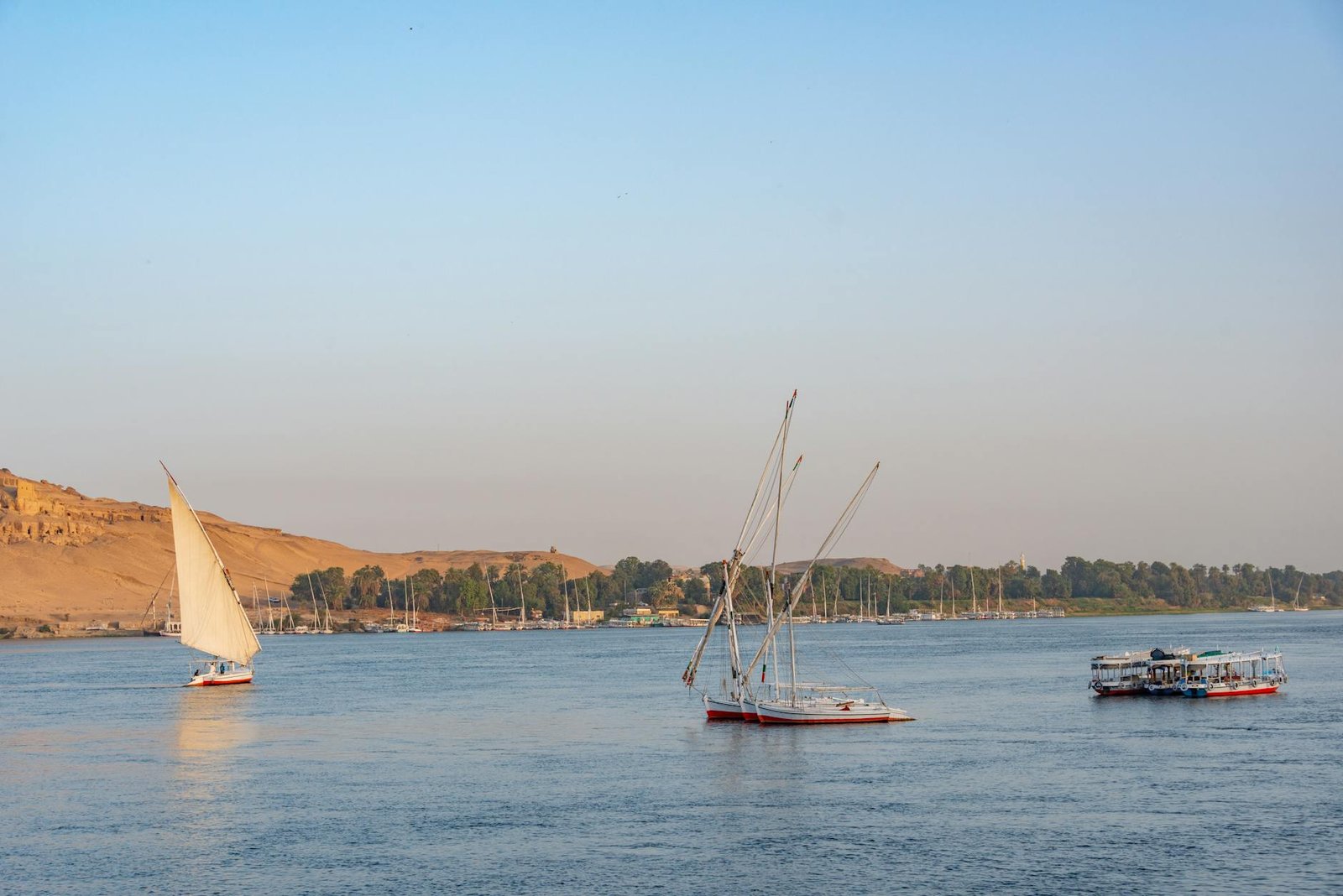
Aswan doesn’t do ordinary. This sun-scorched city at Egypt’s southern edge sits where the Sahara meets the Nile, where pink granite boulders tumble into turquoise water, and where Nubian culture — vivid, musical, and fiercely proud — has survived every empire that tried to erase it.
Arriving by Ship
Aswan is a key stop on Nile river cruises rather than a deep-sea cruise port, so you’ll almost certainly arrive by riverboat docking directly along the Corniche — Aswan’s sweeping riverside promenade. There are no tenders here; you step off the gangway straight into one of the most beautiful waterfronts in Africa.
The town centre is immediately walkable from the dock, with the famous souk, restaurants, and the Corniche gardens all within 10–15 minutes on foot. If you’re heading further afield — to Abu Simbel or Philae Temple — transport is easy to arrange dockside.
Things to Do

Aswan punches well above its size. Whether you’re a history obsessive, a slow-travel wanderer, or someone who just wants to drift down the Nile on a wooden sailboat, this city delivers.
History & Temples
- Philae Temple is one of Egypt’s most romantic ancient sites — a goddess-dedicated island temple dedicated to Isis, accessible only by short motorboat (entry around EGP 450, open daily 7am–5pm). The reflection of its columns in the surrounding water is genuinely breathtaking.
- Abu Simbel — the twin rock-cut temples of Ramesses II — is a 3-hour drive south but utterly unmissable; the engineering feat of relocating them stone-by-stone in the 1960s is as impressive as the temples themselves. 🎟 Book: Abu simbel Day from Aswan Egypt
- The Unfinished Obelisk lies abandoned in a granite quarry and gives you a rare, raw glimpse into how ancient Egypt actually built its monuments (entry EGP 180).
- Nubian Museum is a world-class collection tracing 5,000 years of Nubian civilisation, housed in a stunning modern building — budget at least 90 minutes (entry EGP 300, closed Tuesdays).
On the Water
- Felucca ride at sunset — hire a traditional wooden sailboat to drift between the islands as the sky turns copper; an hour costs around USD 30 and is the most peaceful hour you’ll spend in Egypt. 🎟 Book: Felucca Ride on The Nile in Aswan in Egypt
- Elephantine Island is reachable by local ferry for just a few Egyptian pounds and rewards you with ancient ruins, a Nilometer, and a genuinely lived-in village atmosphere.
- Nubian Village visit — the brightly painted, crocodile-keeping villages on the west bank offer an authentic cultural window that most Egypt itineraries miss entirely. 🎟 Book: Nubian village Day from Aswan Egypt
Relaxation
- The Aswan Botanical Garden on Kitchener’s Island is a hushed, leafy escape packed with tropical plants — arrive by rowing boat and you’ll likely have whole sections to yourself (entry EGP 100).
What to Eat
Aswan’s food scene is rooted in Nubian cooking — think slow-stewed lentils, river fish, and spices that feel more East African than Middle Eastern. Portions are generous and prices are low, especially away from the hotel restaurants.
- Ful medames — slow-cooked fava beans with cumin, olive oil, and lemon, eaten for breakfast everywhere; find it at local fuul carts near the souk for under EGP 30.
- Grilled Nile perch — firm, white fish cooked over charcoal, best ordered at Panorama Restaurant on the Corniche (mains around EGP 180–250).
- Kushari — Egypt’s national comfort food of rice, lentils, pasta, and spiced tomato sauce; grab a heaped bowl at any local kushari shop for EGP 40–60.
- Nubian okra stew — a rich, slow-cooked stew with lamb or chicken, served with flatbread at family-run Nubian village restaurants for around EGP 120–160.
- Fresh sugarcane juice — pressed to order at street stalls along the Corniche, cold and sweet, for EGP 20–30 a glass.
Shopping

The Aswan souk stretching back from the Corniche is one of Egypt’s most enjoyable markets — less aggressive than Cairo’s Khan el-Khalili and genuinely stocked with Nubian crafts. Look for hand-painted pottery, woven baskets, silver jewellery with Nubian geometric designs, and colourful cotton scarves called gallabiyyas.
Avoid mass-produced “ancient” papyrus and alabaster figures unless you’re certain of quality — haggling is expected everywhere, and starting at 40–50% of the asking price is perfectly normal. Spices (hibiscus, cumin, black seed) make excellent, lightweight souvenirs.
Practical Tips
- Currency — pay in Egyptian pounds (EGP); carry cash as many small shops and market stalls don’t accept cards.
- Tipping (baksheesh) is expected for most services — EGP 20–50 per person for guides, drivers, and temple attendants is appropriate.
- Dress modestly — cover shoulders and knees at temples and in the souk out of cultural respect; it also protects you from the fierce sun.
- Best time ashore — go early (by 7am) to beat both the heat and the crowds at major sites; Aswan temperatures regularly exceed 40°C by midday.
- Transport — tuk-tuks are cheap and fun for short hops (EGP 20–40); negotiate the price before you get in.
- Sun protection is non-negotiable — factor 50, a hat, and a refillable water bottle are essentials, not luxuries.
- You need at least 6–8 hours to scratch the surface; a full day is better if Abu Simbel is on your list.
Aswan is the kind of place that quietly rearranges your understanding of Africa, Egypt, and time itself — leave extra room in your itinerary, because you will not want to leave.
🎟️ Things to Book in Advance
These highly-rated experiences fill up fast — book before you arrive to avoid missing out.


This page contains affiliate links. If you book through them, we may earn a small commission at no extra cost to you.
📍 Getting to Aswan, Egypt
Use the interactive map below to explore the port area and plan your route from the terminal.
Leave a Reply