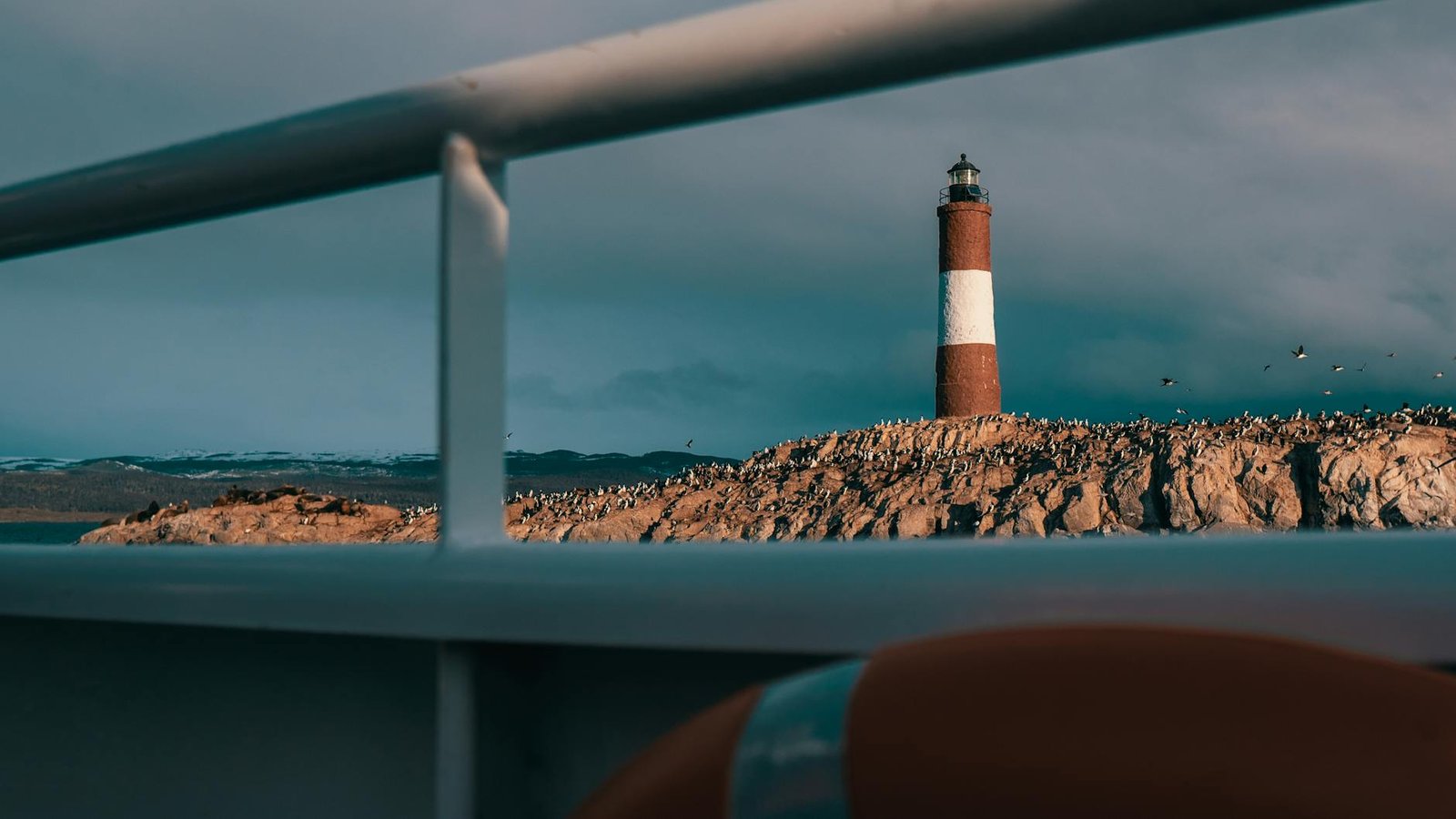
The Beagle Channel doesn’t ease you in gently — it grabs you by the collar the moment the first glacier face slides into view. This narrow, wind-scoured waterway threading between Argentina and Chile is one of the most dramatic stretches of ocean on Earth. Pack your warmest layer and your widest lens.
Arriving by Ship
Most expedition and small cruise ships navigate the Beagle Channel as part of a Cape Horn or Patagonia itinerary, typically anchoring off or docking near Ushuaia, Argentina — the world’s southernmost city and the gateway to Glacier Alley. Some ships use Ushuaia’s port pier directly, while others tender passengers ashore depending on conditions and vessel size.
The channel itself is the destination here. Glacier Alley — the western stretch running through Chilean waters — is experienced from the ship’s deck as you drift past a jaw-dropping procession of tidewater glaciers, each one named after a European country: Italia, Francia, Alemania, Holanda. No shore excursion required; just stand at the rail and let it happen.
Things to Do

Once in Ushuaia or during zodiac landings along the Chilean fjords, you have far more options than simply staring at ice — though nobody would blame you for doing exactly that.
Nature & Adventure
- Hike Tierra del Fuego National Park — Argentina’s only coastal national park sits 11 km west of Ushuaia; park entry costs around USD 20 and trails range from a flat 30-minute lakeside stroll to a full-day ridge scramble.
- Zodiac cruise past the Glacier Alley glaciers — Many expedition ships launch inflatable boats for close-up approaches to calving ice faces like the Garibaldi Glacier; check your ship’s excursion desk for pricing, typically USD 80–150.
- Spot Magellanic penguins at Isla Martillo — A short catamaran ride from Ushuaia lands you steps from an active penguin colony; tours run approximately USD 60–90 from the Ushuaia pier.
- Canoe or kayak on Lapataia Bay — Guided sea kayak tours operate inside Tierra del Fuego National Park; half-day sessions start around USD 75 per person.
- Spot Andean condors from the chair lift — The Glaciar Martial aerosilla (chairlift) above Ushuaia costs roughly USD 12 return and delivers condor-level views of the channel.
History & Culture
- Visit the Maritime Museum and Prison — Ushuaia’s old penal colony is now a rich maritime and Antarctic history museum; entry costs around USD 15 and easily fills two hours.
- Walk the End of the World Train — The Tren del Fin del Mundo is a narrow-gauge heritage railway inside Tierra del Fuego National Park; tickets start at USD 35 and the ride takes about an hour round trip.
- Book a multi-day Patagonia tour — If your itinerary allows extra time before or after your cruise, a structured tour adds Torres del Paine and Los Glaciares to your experience. 🎟 Book: 13-Day Best of Patagonia Tour from El Calafate to Ushuaia: Los Glaciares, Torres del Paine and Tierra del Fuego National Parks For a shorter taste, the 5-day Patagonia Discovery package covering Ushuaia and El Calafate is an excellent introduction. 🎟 Book: 5-Day Premium Patagonia Discovery: El Calafate & Ushuaia
What to Eat
Ushuaia’s restaurant scene punches well above its remote weight, built around the absurdly fresh cold-water seafood pulled from the Beagle Channel itself. Eat close to the water and order whatever the waiter calls fresco de hoy.
- King crab (centolla) — The southern king crab is Ushuaia’s signature dish; order it steamed or in a bisque at Chez Manu (Luis Martial 2135) for around USD 25–35.
- Lamb asado — Slow-roasted Patagonian lamb over open fire; La Rueda on San Martín serves generous portions for around USD 18–22.
- Smoked trout — Local rainbow trout, cold-smoked and served on bread; found in most delis and supermarkets for USD 5–8.
- Empanadas de mariscos — Seafood-stuffed pastries sold by street vendors and bakeries along Avenida San Martín for USD 2–3 each.
- Calafate berry desserts — The electric-purple calafate berry grows wild in Patagonia; try the ice cream or mousse at La Chocolatería del Fin del Mundo for around USD 6.
Shopping

Ushuaia’s main shopping strip runs along Avenida San Martín, where you’ll find wool goods, leather crafts, and Antarctic-expedition souvenirs that you won’t find anywhere else on Earth. Look for hand-knitted items from local cooperatives — merino gloves, scarves, and beanies made from Patagonian wool are both practical and genuinely regional.
Avoid cheap penguin figurines and mass-produced “End of the World” magnets that are almost certainly manufactured elsewhere. Instead, seek out mate gourds, locally carved guanaco leather goods, and artisan chocolate packed with calafate berry — all of which pack flat and travel well.
Practical Tips
- Currency — Ushuaia uses Argentine pesos, but USD is widely accepted; bring small denomination bills as change can be scarce.
- Tipping — 10% is standard in restaurants; not expected on ship excursions unless outstanding.
- Dress in layers — Weather can swing from bright sunshine to sleet within an hour; a windproof outer shell is non-negotiable.
- Go ashore early — Mornings are typically calmer and clearer; afternoon Patagonian winds can be fierce and disruptive.
- Allow at least 6 hours ashore — You need a minimum half-day to cover the museum, waterfront, and a short park walk.
- Mobile data — Argentine SIM cards work in Ushuaia; Chilean waters in Glacier Alley have no coverage.
- Seasonality — Cruise season runs November to March; January and February offer the longest daylight and most stable conditions.
Step off the gangway knowing that very few people in the world ever stand where you’re standing — and then go find a condor, a king crab, and a glacier before lunch.
🎟️ Things to Book in Advance
These highly-rated experiences fill up fast — book before you arrive to avoid missing out.


This page contains affiliate links. If you book through them, we may earn a small commission at no extra cost to you.
📍 Getting to Beagle Channel, Glacier Alley, Chile Patagonia
Use the interactive map below to explore the port area and plan your route from the terminal.
Leave a Reply