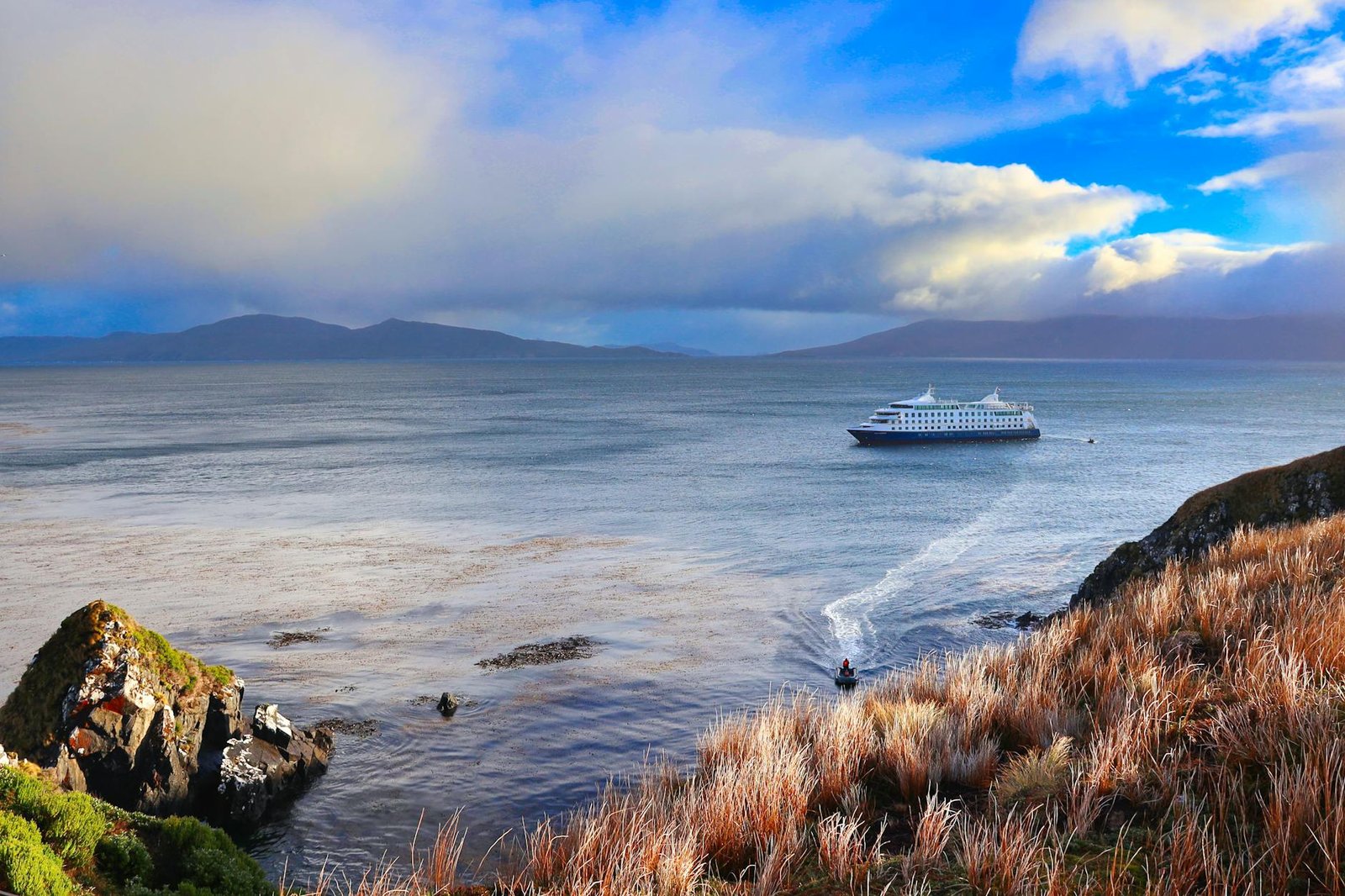
Few places on earth carry more legend per square mile than Cape Horn — and almost none of it prepares you for what standing there actually feels like. This is not a postcard destination. It’s a raw, windswept, emotionally overwhelming edge-of-the-world experience that gets under your skin in ways you won’t fully understand until you’re back on the ship.
Arriving by Ship
Cape Horn is not a port in any conventional sense — there’s no dock, no terminal, no café selling overpriced lattes. Ships anchor offshore and passengers reach the island by Zodiac tender, weather and sea conditions permitting (and that caveat is everything here).
The landing site is a small wooden staircase bolted into a rocky cliff face, and even stepping ashore feels like an achievement. Landings are frequently cancelled due to the notoriously savage seas of the Drake Passage, so if you do set foot on the island, count yourself among the lucky ones.
Things to Do

Don’t expect a town, a museum district, or a schedule. Cape Horn Island is essentially a lighthouse, a monument, a chapel, and the Southern Ocean — and that’s more than enough.
- Walk to the Albatross Monument — The iconic steel silhouette of an albatross cut into a cliff edge is both a navigational landmark and a memorial to sailors lost rounding the Horn; it’s the defining photograph of any visit.
- Visit the Lighthouse and meet the keeper’s family — A Chilean Navy officer and their family live here year-round; they often welcome visitors into the small lighthouse building, which feels surreal given the isolation.
- Stand at the geographic marker — A simple plaque and post mark one of the most symbolically powerful coordinates on the planet — 55°58′S, 67°16′W — and yes, you should absolutely take the photo.
- Explore the tiny wooden chapel — The Chapel of Our Lady of Mercy is a remarkably intimate, moving space that seats perhaps 10 people and is decorated with offerings left by sailors and travellers over generations.
- Walk the short trail across the island — The circular path takes around 30–40 minutes and delivers views of sheer cliffs plunging into boiling white surf; the wind alone makes it an experience.
- Wildlife watching along the clifftops — Magellanic penguins, rockhopper penguins, and southern giant petrels are commonly spotted; bring binoculars and patience.
- Day trip to Torres del Paine from Punta Arenas — Many itineraries include a stop in Punta Arenas before or after Cape Horn; a full-day Torres del Paine excursion is extraordinary. 🎟 Book: Torres del Paine Tour from Punta Arenas For a longer experience, consider the 11-hour full-day Torres del Paine tour from Puerto Natales. 🎟 Book: Full Day Torres del Paine
What to Eat
There is no food or drink available on Cape Horn Island itself — not a single vendor. Stock up before you go ashore, or enjoy a meal on board before tendering.
- Centolla (King Crab) — The culinary crown jewel of southern Patagonia, best eaten in Punta Arenas or Puerto Natales; expect to pay USD 25–40 for a main course at a mid-range restaurant.
- Cordero al palo (spit-roasted lamb) — A Patagonian ritual, whole lambs slow-roasted over an open fire; found at estancias and traditional restaurants for around USD 18–25.
- Cazuela de mariscos (seafood stew) — A hearty, warming bowl of shellfish, potato, and broth that’s exactly what your body craves after a cold morning on the Drake; widely available for USD 10–15.
- Merluza austral (southern hake) — Delicate, white, locally caught fish served simply grilled; a staple at port-side restaurants in Punta Arenas for USD 12–18.
- Mate — Not food, but the bitter, herbal tea drunk everywhere in Patagonia; accepting a shared gourd from a local is a genuine cultural connection.
Shopping

Cape Horn Island itself sells nothing beyond a coveted official stamp for your passport, available from the lighthouse keeper — that ink mark is arguably the most meaningful “souvenir” you’ll take home. Keep a blank passport page free.
In Punta Arenas (the nearest real town), look for hand-spun wool products, Selknam indigenous-inspired artwork, and locally produced Patagonian olive oil. Avoid cheap mass-produced “end of the world” trinkets; the meaningful stuff is in artisan shops on the main square.
Practical Tips
- Currency — Chilean pesos are the local currency, but USD is widely accepted in Punta Arenas tourist areas; carry small denominations.
- Tipping — 10% is standard in Chilean restaurants; rounding up in cash is always appreciated.
- Landing is never guaranteed — Check sea conditions updates from the ship’s bridge daily and manage your expectations accordingly.
- Dress in layers — Wind chill at Cape Horn can drop temperatures dramatically even on a calm day; waterproof outer layers are non-negotiable.
- Photography — Bring a weather-sealed camera or a sturdy case; salt spray and horizontal rain are the norm.
- Go ashore early — If tendering is operating, earlier departures typically face calmer conditions before afternoon winds pick up.
- For serious hikers — If your itinerary allows extra days in the region, the 7-day Dientes de Navarino hiking circuit offers one of the world’s most remote trekking experiences. 🎟 Book: 7Days and 6Nights Hiking Dientes de Navarino Southern Patagonia
Cape Horn doesn’t just tick a box on your travel list — it rewires something in you, and you’ll be telling the story of that blustery, magnificent morning for the rest of your life.
🎟️ Things to Book in Advance
These highly-rated experiences fill up fast — book before you arrive to avoid missing out.


This page contains affiliate links. If you book through them, we may earn a small commission at no extra cost to you.
📍 Getting to Cape Horn, Chile Antarctica
Use the interactive map below to explore the port area and plan your route from the terminal.
Leave a Reply