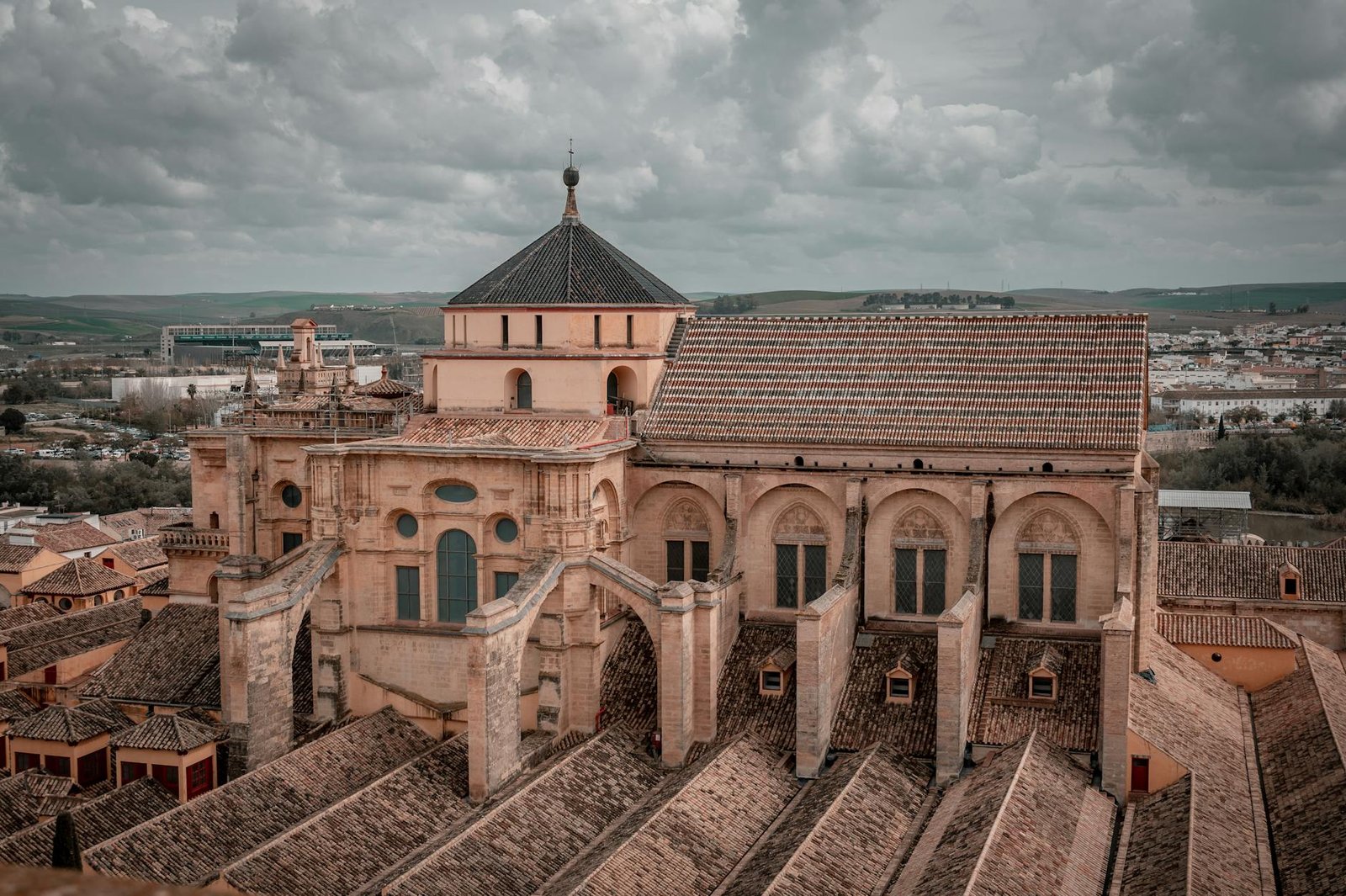
Most people come to Cordoba for one building. They leave having fallen in love with an entire city that somehow feels like a secret nobody thought to mention.
Arriving by Ship
Cordoba is an inland city, so you won’t be docking anywhere near it — cruise ships typically call at Cadiz or Seville, both around 140–170 kilometres away. Transfers are available by coach or private car, and the journey takes roughly two hours each way, so plan your day carefully.
Once you arrive, Cordoba’s historic centre is compact and almost entirely walkable. The taxi rank near the train station drops you within a short stroll of virtually every major sight.
Things to Do

Cordoba packs a staggering density of history into a small area — Roman, Moorish, Jewish, and Christian layers all stacked on top of each other like the most extraordinary archaeological sandwich you’ve ever stumbled into.
History & Architecture
- La Mezquita-Catedral is the unmissable centrepiece — a 10th-century mosque with nearly 900 striped arches, inside which a full Catholic cathedral was later built. Entry costs €13, and doors open at 10am (Sundays are free before 9am for worshippers). 🎟 Book: Best of Cordoba Guided Tour
- The Alcázar de los Reyes Cristianos is a medieval fortress with immaculate terraced gardens and Roman mosaics discovered beneath the courtyard floors. Entry is €5, open Tuesday–Sunday.
- The Roman Bridge stretches 230 metres across the Guadalquivir River and is free to walk — particularly spectacular at dusk when it glows golden.
- Medina Azahara, a ruined 10th-century palace-city on the city’s outskirts, is one of Spain’s most underrated archaeological sites. Entry is €1.50 for EU citizens, free for non-EU visitors on Sunday afternoons.
Culture & Neighbourhoods
- The Jewish Quarter (Judería) is a labyrinth of whitewashed lanes, flower-filled patios, and the tiny 14th-century Sinagoga de Córdoba — one of only three surviving medieval synagogues in Spain, entry just €0.30. 🎟 Book: Cordoba & Carmona with Mezquita, Synagoge & Patios from Seville
- The Festival of the Patios (Concurso de Patios) takes place every May, when private courtyards explode into competition-level floral displays — but even outside festival season, many patios welcome visitors year-round.
- Tuk tuk tour of the old city is a surprisingly fun way to cover ground quickly if your time is short. 🎟 Book: Tuk tuk route through Córdoba
- Bike Tour of Córdoba lets you cover the Roman bridge, the Mezquita exterior, and the riverside park in a relaxed two hours. 🎟 Book: Bike Tour Córdoba
- Olive Oil Tasting Experience — Cordoba sits in Andalusia’s olive-growing heartland, and a private tasting session will permanently change how you buy olive oil at home. 🎟 Book: Private Tasting of Olive Oil in Córdoba
What to Eat
Cordoban food is earthy, proud, and deeply tied to its agricultural surroundings — expect dishes built on olive oil, almonds, and slow-cooked meat rather than the seafood-heavy plates you’d find on the coast.
- Salmorejo — Cordoba’s thicker, richer answer to gazpacho, topped with jamón and hard-boiled egg. Try it at Taberna Luque on Calle Blanco Belmonte for around €4.
- Rabo de toro (oxtail stew) is a slow-braised Cordoban classic, rich and deeply savoury. Taberna Casa Pepe de la Judería serves a superb version for around €18.
- Berenjenas con miel de caña — fried aubergine drizzled with sugar cane molasses, a sweet-savoury tapa found at almost any traditional bar for €3–5.
- Flamenquín is a pork loin wrapped in jamón, breadcrumbed and fried — deeply local and delicious. Available at most traditional tapas bars from €4.
- Montilla-Moriles wine — produced in the hills south of Cordoba, this sherry-style wine is served cold at city bars and is often cheaper than water. A glass runs €1.50–3.
- Pastel cordobés is a flaky pastry filled with sweet candied pumpkin and dusted with sugar and cinnamon — pick one up at any local bakery for around €2.
Shopping

The Judería and streets surrounding the Mezquita are lined with shops selling leather goods, ceramics, and silverwork — all genuinely local crafts with centuries of tradition behind them. Cordoba has been famous for its cordobán leather since Roman times, and the intricate embossed work (called guadamecí) makes for a truly unique souvenir.
Avoid the mass-produced plastic magnets and cheaply printed fans clustered near the main tourist entrances — they’re made nowhere near Andalusia. Instead, look for Zoco Municipal, a small artisan market in the Judería where local craftspeople maintain proper workshops you can watch in action.
Practical Tips
- Currency: Spain uses the euro — cash is handy for small tapas bars, though cards are widely accepted.
- Tipping: Not obligatory, but rounding up or leaving €0.50–1 per person is appreciated at sit-down restaurants.
- Timing: Go ashore as early as your ship allows — Cordoba gets genuinely hot by midday, especially May through September.
- Dress code: Cover your shoulders and knees for the Mezquita and synagogue, or you’ll be turned away.
- Heat: Summer temperatures regularly hit 40°C — carry water, wear a hat, and take the midday siesta seriously.
- Time needed: You need at least five to six hours to do Cordoba justice; a full day is ideal.
- Getting around: The old city is best explored on foot — the historic centre is roughly one square kilometre.
Go with low expectations and an empty stomach, and Cordoba will quietly become one of the most extraordinary days of your entire trip.
🎟️ Things to Book in Advance
These highly-rated experiences fill up fast — book before you arrive to avoid missing out.


This page contains affiliate links. If you book through them, we may earn a small commission at no extra cost to you.
📍 Getting to Cordoba, Spain Andalusia
Use the interactive map below to explore the port area and plan your route from the terminal.
Leave a Reply