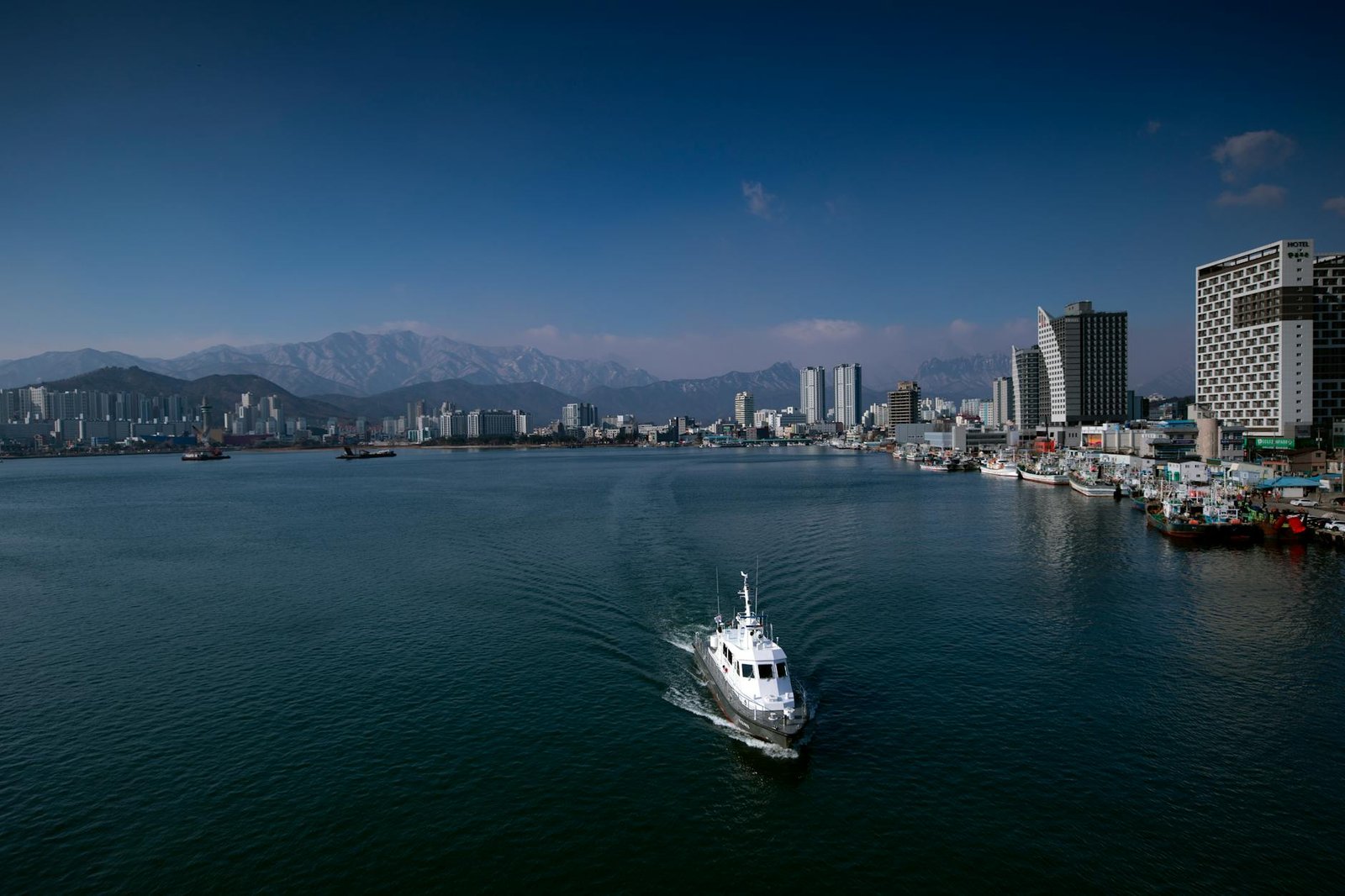
Quick Facts: Port: Daesan | Country: South Korea | Terminal: Daesan International Cruise Terminal | Dock (pier, no tendering) | Distance to Seosan city center: ~25 km | Time Zone: KST (UTC+9)
Daesan sits on the western coast of South Korea’s Chungcheongnam-do (South Chungnam) Province, serving as a rare industrial-meets-rural port that drops you within striking distance of stunning tidal flats, ancient Buddhist temples, and some of the most underrated seafood in the country. Most cruisers arrive here with zero expectations — and leave wishing they had more time. The single most important planning tip: this is not a walk-off-the-ship-and-wander port. Have your transport and itinerary locked before you sail in.
—
Port & Terminal Information
The Daesan International Cruise Terminal is a purpose-built facility located in the Daesan Port area of Seosan City, Chungcheongnam-do. You can orient yourself before arrival via [Google Maps](https://www.google.com/maps/search/Daesan+cruise+terminal). The terminal handles relatively modest cruise traffic compared to Busan or Incheon, which means lines are short and you’ll clear immigration quickly — a real advantage on a shore day.
Docking vs. Tendering: Ships dock directly at the pier here. No tender required, which means you’re off the gangway and on your way without the 20–45 minute tender delay you’d experience at softer ports. Factor that in favorably when planning your day.
Terminal Facilities:
- ATMs: There are ATMs inside and just outside the terminal building. South Korean won (KRW) is essential — carry some cash before venturing into smaller towns.
- Tourist Information: A staffed tourist info desk operates on embarkation days, usually with English-language maps of Seosan, Taean, and the surrounding county. Quality varies by season; don’t rely on it exclusively.
- Wi-Fi: Basic free Wi-Fi is available within the terminal building. Signal drops off quickly once you leave.
- Luggage Storage: Limited facilities inside the terminal. Confirm with your ship’s port agent before planning around it.
- Shuttle Bus: A port-organized shuttle sometimes runs between the terminal and Seosan city center on cruise days — check with your cruise line’s shore excursion desk 24 hours before arrival, as this service is not guaranteed year-round.
- No Hop-On Hop-Off service operates from this terminal.
The terminal is approximately 25 km from Seosan city center and about 50 km from Taean Peninsula, the coastal nature area that’s arguably the best reason to be here. Plan for road time — it’s worth it.
—
Getting to the City

Daesan port sits in a relatively isolated industrial zone, so your transport choice genuinely shapes your entire day. Book or arrange before you arrive.
- On Foot — The immediate port vicinity has very little of tourist interest within walking distance. The surrounding area is dominated by petrochemical facilities and light industry. Walking into town is not a realistic option given the 25 km distance and lack of pedestrian infrastructure on the approach roads.
- Bus — Local buses do serve the Daesan area, but schedules are infrequent (often once an hour or less) and stops are not always convenient from the cruise pier. If you’re budget-conscious and flexible, ask the tourist info desk about the nearest bus stop and the route toward Seosan Bus Terminal. Expect to pay roughly 1,500–2,000 KRW (about USD $1.50) per leg, with journey times of 40–60 minutes to Seosan center depending on the service.
- Taxi — This is the most reliable independent option. Taxis queue near the terminal on cruise days. The fare to Seosan city center runs approximately 25,000–35,000 KRW (about USD $19–26) each way, and to Taean roughly 50,000–65,000 KRW. Confirm the fare before you get in — meters are standard but not always activated for cruise day runs. Download the Kakao T app (Korea’s dominant ride-hailing service) before you arrive; it works with international cards and eliminates negotiation entirely.
- Hop-On Hop-Off — No HOHO service operates in Daesan or Seosan. Skip this option entirely.
- Rental Car — If you’re comfortable driving in Korea (left-hand traffic is NOT used — Korea drives on the right, same as the US), renting from a Seosan-area location is actually a smart move for a full-day visit. It unlocks the Taean National Park coastal roads and the scattered temple sites that are nearly impossible without wheels. International driving permits are required. Arrange pickup via a Seosan-area agency in advance — car rental desks are not at the terminal itself.
- Ship Shore Excursion — Given the transport complexity here, ship-organized excursions have genuine value at Daesan, especially for first-time visitors. They handle the logistics, include English-speaking guides, and ensure you’re back at the ship on time. They’re particularly worth it for temple visits and the Haemi Martyrs’ Site, where context and commentary add real depth. Compare against [independent tour options on Viator](https://www.viator.com/search/Daesan) and [GetYourGuide](https://www.getyourguide.com/s/?q=Daesan¤cy=USD&partner_id=MHU0UHU) before deciding — private tours can often beat ship prices for groups of 2–4 people.
—
Top Things to Do in Daesan, Korea
The region surrounding Daesan is rich in Korean history, coastal nature, and religious heritage — with almost zero tourist crowds. Here’s where to spend your hours ashore.
—
Must-See
1. Haemi Eupseong Fortress (Free to enter the grounds; small fee ~3,000 KRW for some inner sections) — This remarkably intact Joseon Dynasty fortress in Haemi town (~35 km from the port) is one of Korea’s best-preserved walled towns, dating to 1417. The thick earthen ramparts enclose a small village atmosphere with a central tree said to be 600 years old. What makes it unmissable is the adjacent Haemi Catholic Martyrs’ Memorial Hall, where thousands of Korean Catholics were executed in the 19th century — a deeply moving site that illuminates a chapter of Korean history most Western visitors know nothing about. Check for [guided cultural tours on GetYourGuide](https://www.getyourguide.com/s/?q=Daesan¤cy=USD&partner_id=MHU0UHU). Allow 2–2.5 hours including the memorial hall.
2. Gaesimsa Temple, Seosan (Free) — Tucked into the forested hills of Seorimsan Mountain about 25 km from the terminal, Gaesimsa is one of the oldest Buddhist temples in Korea, with its main hall (Daeungjeon) designated a National Treasure. The approach through a canopy of ancient trees is itself worth the drive — it feels genuinely removed from the modern world. Allow 1.5 hours and wear comfortable shoes for the forest path.
3. Seosan Maae Samjonbul (Rock-Carved Buddha Triad) (Free / parking 1,000 KRW) — Known as the “Baekje Smile” and designated National Treasure No. 84, this 6th–7th century relief carving cut directly into a cliff face is one of Korea’s most serene and undervisited sacred images. The three figures — a standing Buddha flanked by a Bodhisattva and a half-lotus figure — are carved with a warmth that feels almost modern. It’s an easy 10-minute walk from a small parking area. Allow 45 minutes. Combine with Gaesimsa for an efficient heritage morning.
4. Seosan City Nammun Traditional Market (Free to browse) — If you want to see Korean daily life unfiltered, this is where to go. Vendors sell fresh local produce, dried seafood, homemade doenjang (fermented soybean paste), and handmade goods. Prices are lower than any tourist market you’ll find elsewhere, and the ajummas (older Korean women) running the stalls are uniformly friendly. Located in central Seosan, about a 5-minute walk from the bus terminal. Allow 45–60 minutes.
—
Beaches & Nature
5. Taean Haean National Park (Entry free; parking 2,000–5,000 KRW) — Korea’s only coastal national park encompasses 330 km of shoreline, tidal flats, pine forests, and beaches between Daesan and the Taean Peninsula. The beaches — particularly Mallipo, Mongsanpo, and Kkotji — are wide, clean, and lined with pine windbreaks rather than resort hotels. It’s a striking contrast to the industrial port you arrived at. The park is about 45–60 km from Daesan terminal; arrange a taxi or rental car. [Browse multi-day Korean coastal hiking tours on Viator](https://www.viator.com/search/Daesan) if you want a deeper experience than a single shore day allows. Allow 2–3 hours for a beach visit plus a short trail.
6. Kkotji Beach & Haemaji Observatory (Free) — Of all Taean’s beaches, Kkotji is the one photographers and sunset chasers seek out. The Haemaji Observatory sits at the peninsula tip where the sun sets directly into the Yellow Sea — the name Haemaji literally means “the end where the sun sets.” The tidal flat at low tide mirrors the sky. Check tide tables before going; low tide transforms the landscape dramatically. Allow 1.5 hours.
7. Chunsu Bay Tidal Flats (Garolim Bay area) (Free) — The tidal flats south of Daesan along Garolim Bay are part of the Yellow Sea ecosystem, one of the world’s most important intertidal zones for migratory birds. On a clear morning, the mudflats exposed at low tide stretch for kilometers and host enormous flocks of shorebirds. This is not a manicured attraction — it’s raw coastal Korea at its most elemental. Best appreciated from the road pullouts near the bay. Allow 30–45 minutes as part of a driving day.
—
Day Trips
8. Buyeo (Baekje Cultural Land) (Baekje Cultural Land admission: 6,000 KRW adults) — About 70 km southeast of Daesan, Buyeo was the final capital of the Baekje Kingdom (one of Korea’s Three Kingdoms, 18 BC–660 AD). The reconstructed Baekje Cultural Land is a sprawling open-air complex of palace buildings, temples, and artisan demonstrations. The Gungnamji Pond, Korea’s oldest man-made garden, is quietly beautiful. A full visit requires 3–4 hours, so this works best on a full-day ashore with your own transport or a hired driver. If you want context-rich exploration across multiple Korean heritage sites, the [8-day Conquering the Korean Peninsula & Jirisan National Park Hiking tour on Viator](https://www.viator.com/search/Daesan) (from USD $3,380) is worth considering as a pre- or post-cruise extension — it covers regions like this in depth.
9. Cheonan Independence Hall of Korea (Adults 3,000 KRW, under 7 free) — About 65 km east of Daesan, this is Korea’s most important museum of the independence movement against Japanese colonial rule. It’s large, well-curated, and emotionally resonant — with seven exhibition halls and a dramatic central atrium. If Korean modern history interests you at all, this is one of the best museums in the country. Allow 2.5–3 hours and plan this as your primary stop on a full-day visit.
—
Family Picks
10. Taean Aquarium (Taean Marine Natural History Museum) (Adults ~10,000 KRW, children ~8,000 KRW) — Located near Mallipo Beach in the Taean area, this small marine natural history museum combines aquarium displays with exhibits on Yellow Sea ecology. It’s modest by international aquarium standards but genuinely engaging for kids and a good rainy-day fallback. Allow 1–1.5 hours.
11. Haemi Fortress Hands-On Experiences (Included with fortress entry) — On weekends and during peak season, Haemi Fortress runs traditional Korean craft and games demonstrations inside the walls — archery (gukgung), pottery, and costume dress-up (hanbok). Kids typically love the archery. Check with the tourist office for current schedules on your sailing date. Allow 1 hour for activities on top of the fortress visit itself.
—
Off the Beaten Track
12. Yeonpori Mud Flat Village (Free) — A tiny fishing village near the Daesan waterfront where the real business of the Yellow Sea coast carries on without tourists. Elderly fishermen sort blue crab and cockles at low tide; small boats list on the mud between tides. Nobody here is performing for visitors. Go early morning for the most activity, and bring your best camera — the light off the mudflats in the morning is extraordinary. Allow 30–45 minutes.
13. Ganwoldo & Bunam Lake (Free) — This small island connected by a causeway just south of Daesan offers a quiet loop drive through rice paddies, fishing hamlets, and a stunning reservoir reflecting Chungnam’s rolling hills. Almost entirely absent from tourist literature in English. Rent a bicycle if you can arrange one locally, or drive the loop in about 30 minutes. Allow 1–1.5 hours for a leisurely explore.
14. Seosan Agricultural Museum (Seosan Nongeo Museum) (Adults 2,000 KRW) — A small, charming local museum dedicated to traditional Korean farming tools, rice cultivation history, and rural Chungnam life. Sounds niche — and it is — but it’s genuinely fascinating for anyone curious about how coastal Korean communities sustained themselves before industrialization. Located in Seosan city. Allow 45 minutes.
—
What to Eat & Drink

The Chungnam coast is the kingdom of ganjang gejang — raw blue crab marinated in soy sauce, served cold over rice, and so intensely savory that Koreans call it bap doduk (the “rice thief”) because it makes you eat bowl after bowl. This is not a dish you’ll find at the same quality level in Seoul; the freshness of the Yellow Sea crab makes the regional version genuinely superior.
Beyond gejang, the area is known for its extraordinary shellfish, dried fish markets, and hearty doenjang jjigae (fermented soybean paste stew) made with local produce. Don’t chase Korean fried chicken or bibimbap here — eat what the coast produces.
- Ganjang Gejang (Raw Soy-Marinated Crab) — The definitive local dish. Find it at seafood restaurants near Seosan’s Nammun Market or along the Daesan waterfront. A full set meal with banchan (side dishes) runs roughly 15,000–25,000 KRW ($11–19) per person.
- Haemul Pajeon (Seafood Scallion Pancake) — Thick, crispy, loaded with fresh shellfish from the tidal flats. Available at market stalls and casual restaurants throughout Seosan. Expect to pay 8,000–12,000 KRW for a large portion to share.
- Gul (Oysters) — Chungnam Province is one of Korea’s top oyster-producing regions. Raw oysters served with a dipping sauce of cho gochujang (vinegared chili paste) cost around 10,000–15,000 KRW for a generous plate.
- Doenjang Jjigae (Fermented Soybean Paste Stew) — Seosan is known for producing excellent doenjang, and the local version of this stew — thick, funky, loaded with vegetables and tofu — tastes noticeably richer than the urban restaurant versions. A set lunch with rice runs 8,000–10,000 KRW.
- Jogae Gui (Grilled Shellfish) — At small coastal grills near Mallipo and Mongsanpo beaches, clams, scallops, and ark shells are grilled over charcoal tableside. 12,000–20,000 KRW for a mixed plate.
- Makgeolli (Traditional Rice Wine) — The clou
🎟️ Things to Book in Advance
These highly-rated experiences fill up fast — book before you arrive to avoid missing out.
![[8-days] Conquering the Korean Peninsula & Jirisan National Park Hiking](https://i0.wp.com/media-cdn.tripadvisor.com/media/attractions-splice-spp-720x480/07/c0/f6/ca.jpg?ssl=1)
This page contains affiliate links. If you book through them, we may earn a small commission at no extra cost to you.
📍 Getting to Daesan, Korea
Use the interactive map below to explore the port area and plan your route from the terminal.
Leave a Reply