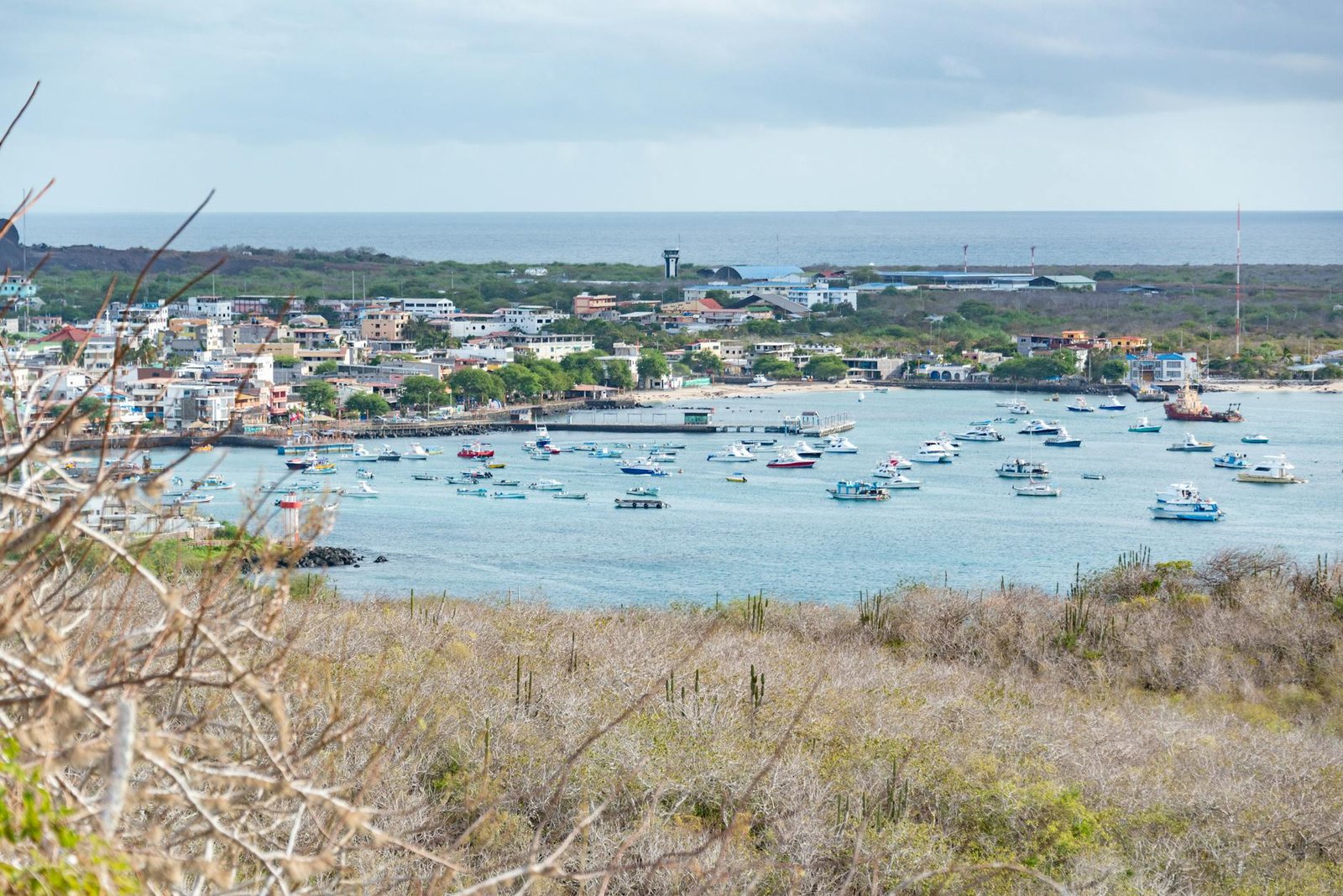
Española Island is one of the most extraordinary places you will ever set foot on — a remote, ancient outcrop at the southern tip of the Galapagos where wildlife has never learned to fear you. Blue-footed boobies strut within arm’s reach, marine iguanas pile on sun-warmed lava, and the world’s entire population of waved albatrosses nests here and nowhere else on Earth. Come prepared to have your breath stolen repeatedly.
Arriving by Ship
Española has no dock, no town, and no permanent human population — this is pure wilderness, and your ship will anchor offshore. You’ll reach the island by Zodiac or panga (small motorized tender) landing at one of two sites: Punta Suarez on the western tip, known for wildlife, or Gardner Bay on the northeast, famous for its beach.
Getting ashore takes roughly 10–15 minutes from the anchorage. All visits are guided and permitted through the Galapagos National Park, so you’ll be part of a small, strictly managed group — typically no more than 16 people per guide.
Things to Do

Española rewards slow, wide-eyed exploration. Every step of the marked trail reveals something astonishing, and the island’s two landing sites offer completely different experiences worth your full attention.
Wildlife Encounters
- Watch waved albatross courtship rituals at Punta Suarez — between April and December, hundreds of these magnificent birds clack bills, sky-point, and waddle in elaborate mating dances just meters from the path.
- Spot blue-footed boobies nesting directly on the trail at Punta Suarez, where chicks sit unbothered in the middle of the path and parents perform their iconic high-step dance to attract mates.
- Photograph Española marine iguanas in vivid red and green — this subspecies is unique to the island and turns especially colorful during breeding season (December–April).
- Look for Nazca boobies, the world’s largest booby species, which nest in open rocky areas near Punta Suarez alongside hawk-eyed Galapagos hawks, the island’s top predator.
- Book a dedicated wildlife tour to make the most of these encounters and understand the ecological context behind what you’re seeing. 🎟 Book: Española Island Tour: Waved Albatross and Wildlife Adventure
Beaches and Snorkeling
- Swim at Gardner Bay, consistently rated one of the most beautiful beaches in the Galapagos — a sweeping arc of powder-white sand where sea lions lounge shamelessly and don’t budge for anyone.
- Snorkel Gardner Bay’s reef where sea turtles, reef sharks, rays, and tropical fish congregate in startling numbers — your guide or ship crew will provide equipment, or check if your cruise includes it.
- Kayak or paddleboard around Gardner Islet (a small satellite rock offshore) to spot marine life from above while the water glitters beneath you.
The Blowhole
- Stand at the Punta Suarez blowhole, a dramatic lava channel where waves compress and shoot seawater 20+ metres into the air — arrive when the swell is running for maximum spectacle.
What to Eat
There are no restaurants, cafés, or food stalls on Española — all meals happen aboard your cruise ship. This is a protected national park island, and no commercial activity takes place here. Stock up on snacks and water before going ashore, and plan for a serious appetite by the time you return.
- Fresh ceviche — a staple served onboard most Galapagos cruises, made with locally caught fish, lime, and cilantro; expect it as a lunch starter after morning landings.
- Grilled dorado (mahi-mahi) — caught in Galapagos waters and served simply with rice and plantain; a recurring highlight on cruise dinner menus.
- Lobster season dishes (July–January) — if your cruise falls within the permitted season, expect Galapagos spiny lobster prepared grilled or in butter sauce aboard ship.
- Tropical fruit plates — papaya, pineapple, and passion fruit are served fresh daily onboard; a perfect post-hike refreshment in the heat.
- Local Galapagos coffee — grown on Santa Cruz and San Cristobal, this dark, earthy brew is served at breakfast on most vessels and makes an excellent souvenir too.
Shopping

There is absolutely nothing to buy on Española itself — no stalls, no souvenirs, no vendors of any kind. Any shopping happens at ports like Puerto Ayora (Santa Cruz) or Puerto Baquerizo Moreno (San Cristobal) on other days of your itinerary.
Look for hand-painted sea turtle ceramics, locally carved wood, and conservation-focused merchandise from the Charles Darwin Foundation gift shop in Puerto Ayora. Avoid any products made from shells, coral, or animal parts — these are illegal to export and ecologically damaging.
Practical Tips
- Currency is USD — the Galapagos runs entirely on US dollars, and Española itself requires no spending whatsoever.
- Tip your naturalist guide at the end of the trip: USD 10–15 per day per person is the standard and genuinely appreciated.
- Arrive ashore early — morning light is best for photography and wildlife is most active before 10am.
- You need roughly 3–4 hours to comfortably cover Punta Suarez, including the blowhole, albatross colony, and beach areas.
- Wear sturdy, closed-toe shoes — lava rock trails are uneven and sharp, and sandals won’t protect you adequately.
- No food, water bottles (single-use), or sunscreen may be left on the island — pack everything in and pack everything out.
- Consider a multi-island itinerary to give Española the time it deserves alongside the wider archipelago. 🎟 Book: 8-Day Galapagos Island Hopping Tour – 5 Islands Adventure
Española will reset your sense of what’s possible in the natural world — leave the schedule behind, walk slowly, and let the island do the rest.
🎟️ Things to Book in Advance
These highly-rated experiences fill up fast — book before you arrive to avoid missing out.


This page contains affiliate links. If you book through them, we may earn a small commission at no extra cost to you.
📍 Getting to Espanola Island, Galapagos
Use the interactive map below to explore the port area and plan your route from the terminal.
Leave a Reply