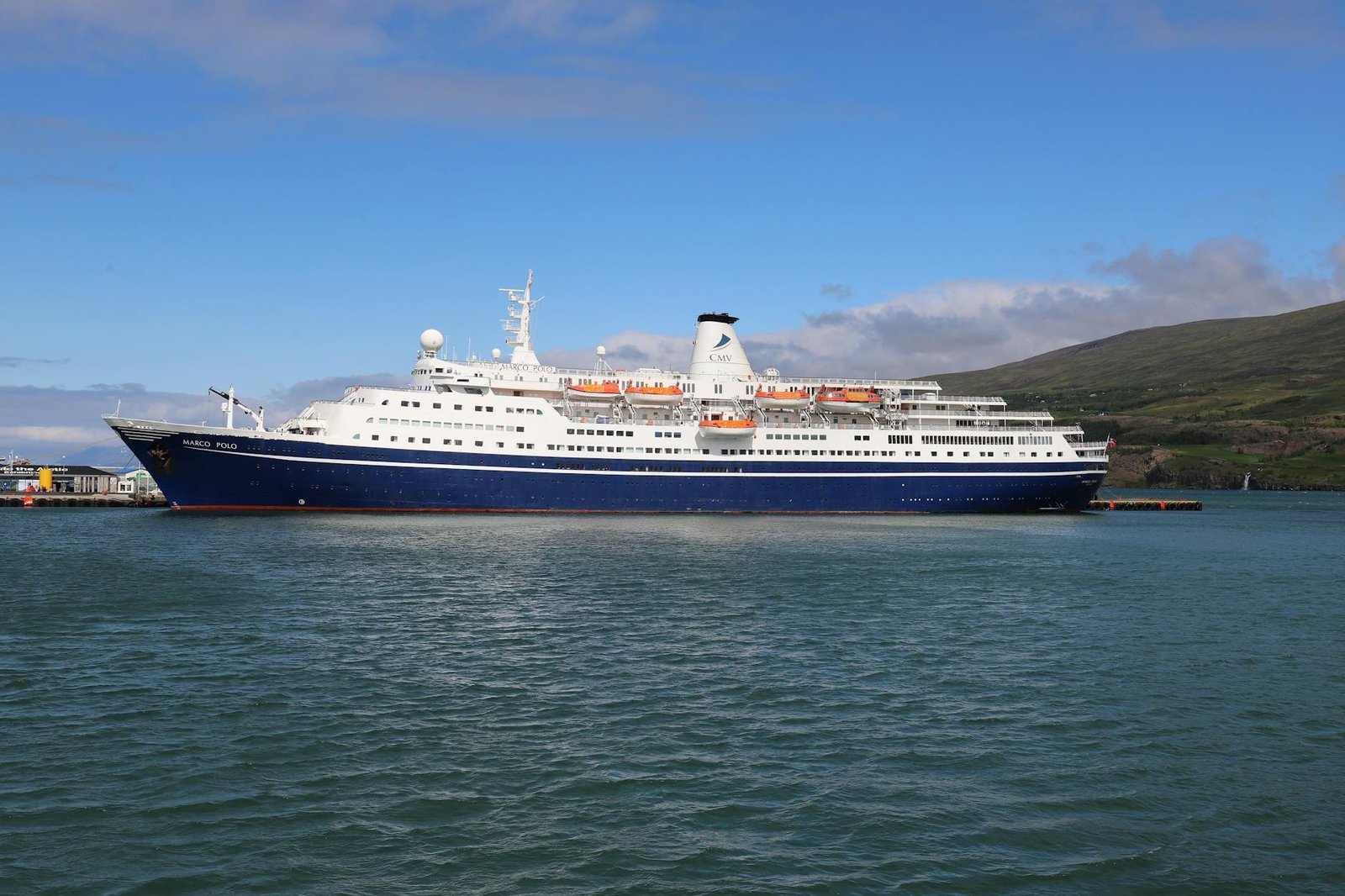
Tucked into one of Iceland’s northernmost fjords like a secret the mountains decided to keep, Siglufjörður is the kind of port that stops you mid-sentence. Small, startlingly beautiful, and carrying the proud weight of a remarkable industrial past, this remote Icelandic town rewards curious travellers who venture beyond the obvious stops on any Arctic itinerary.
Arriving by Ship
Your first glimpse of Siglufjörður arrives slowly, which is precisely how it should. The fjord narrows as your vessel pushes inland, steep mountainsides rising almost vertically from the dark water, their peaks frequently dusted with snow even in summer. The town reveals itself gradually — a neat cluster of colourful houses pressed between the hillside and the harbour, looking almost impossibly tidy against the raw wilderness surrounding it.
Because Siglufjörður’s harbour is compact, most ships tender passengers ashore rather than docking directly. That short boat ride across the still water gives you a moment to absorb the scale of the landscape before your feet touch the quay. The town centre is genuinely walkable, with the main attractions concentrated within easy reach of the waterfront. Locals are warm and quietly proud of their home, and you’ll find the atmosphere unhurried in the best possible way — a genuine relief after busier Icelandic ports.
Things to Do

The undisputed highlight of any visit is the Herring Era Museum (Síldarminjasafnið), one of Iceland’s finest folk museums and winner of the European Museum of the Year Award. Spread across three interconnected buildings right on the harbour, it tells the fascinating, sometimes heartbreaking story of the herring boom that turned Siglufjörður into Iceland’s most prosperous town during the mid-twentieth century. Former herring girls demonstrate traditional salting techniques, and the reconstructed processing facilities are extraordinarily vivid — you’ll leave genuinely moved.
Beyond the museum, the surrounding landscape beckons. The mountains above town offer hiking trails with dramatic views down the fjord, and in winter the slopes draw skiers to one of Iceland’s oldest ski areas. In summer, the almost perpetual daylight creates an otherworldly luminescence across the valley. Birdwatchers should keep their binoculars handy — Arctic terns, puffins, and various seabirds frequent the fjord and cliffs throughout the warmer months.
Local Food
Siglufjörður takes its herring heritage seriously on the plate as well as in the museum. Look for pickled herring in various preparations — sweet, mustard-cured, or with onion — at local restaurants and the small supermarket. The Kaffi Rauðka, a cosy café-bar in a heritage building near the harbour, is the town’s social hub and a reliable spot for hearty Icelandic soup, fresh fish, and locally baked bread. Lamb, a staple of Icelandic cuisine, appears in warming stews perfectly suited to the cool fjord air. If you’re visiting in summer, locally sourced Arctic char is worth seeking out — its flavour is clean, delicate, and entirely unlike farmed alternatives.
Shopping

Siglufjörður won’t overwhelm you with retail options, and that restraint is part of its charm. The town has a handful of small shops worth browsing, including spots selling Icelandic wool products — lopapeysa sweaters, mittens, and hats that are both practical souvenirs and genuinely useful if the wind picks up. Look for locally produced artwork and photography capturing the fjord’s dramatic moods; several artists are drawn to the extraordinary light conditions here. The museum itself has a well-curated gift shop with books, prints, and herring-era memorabilia that make for genuinely thoughtful keepsakes.
Practical Tips
- Currency: Iceland uses the Icelandic króna (ISK). Card payments are accepted almost everywhere, but carrying a small amount of cash is sensible in smaller establishments.
- Weather: Even in July and August, temperatures hover between 8°C and 14°C. Bring a windproof, waterproof layer regardless of what the forecast says — fjord weather changes its mind frequently.
- Time ashore: Most cruise calls last four to six hours. Prioritise the Herring Era Museum (allow at least two hours) and build in time for a meal or coffee at Kaffi Rauðka.
- Connectivity: Mobile coverage exists but can be patchy on the hillsides above town. Download offline maps before you arrive.
- Respect the quiet: Siglufjörður is a living community of roughly 1,200 people. Noise levels and general consideration matter here more than at purpose-built tourist destinations.
Cruises That Visit Siglufjörður, Iceland
Siglufjörður sits on specialist small-ship itineraries rather than mainstream mega-ship routes, simply because its harbour suits vessels of a more intimate scale. Hurtigruten Expeditions and Quark Expeditions have both included Siglufjörður on Icelandic coastal voyages, typically combining the port with other northern highlights such as Akureyri, Húsavík, and the Westfjords. Viking Ocean Cruises occasionally features Siglufjörður on its Iceland and Greenland roundings, departing from Reykjavík or Bergen, Norway, on voyages typically lasting between 12 and 21 days.
Silversea Cruises and Ponant have also routed expedition-leaning vessels through the northern fjords, with Siglufjörður appearing as an off-the-beaten-path inclusion on Arctic summer sailings. These voyages often depart from Reykjavík, Copenhagen, or Edinburgh, making them accessible from major European hubs.
The optimal time to visit Siglufjörður by sea is June through August, when daylight is nearly continuous, wildlife is active, and the mountain snow has softened enough for hiking. July represents the sweet spot between peak light and the best weather stability.
🚢 Cruises That Stop at Siglufjorour Iceland
Ready to book a cruise to Siglufjorour Iceland?
Compare itineraries, prices, and cabin types from all the major cruise lines — with a best price guarantee and no booking fees.
🔍 Search Cruises to Siglufjorour Iceland →
Affiliate link — we may earn a commission if you book, at no extra cost to you.
Siglufjörður may not appear on every Iceland wish list, but those who arrive by ship and step ashore into its quiet streets tend to remember it long after the famous landmarks have blurred together. It’s a place where Iceland’s history and landscape speak at the same time — and where the mountains seem to lean in just close enough to listen.
Leave a Reply