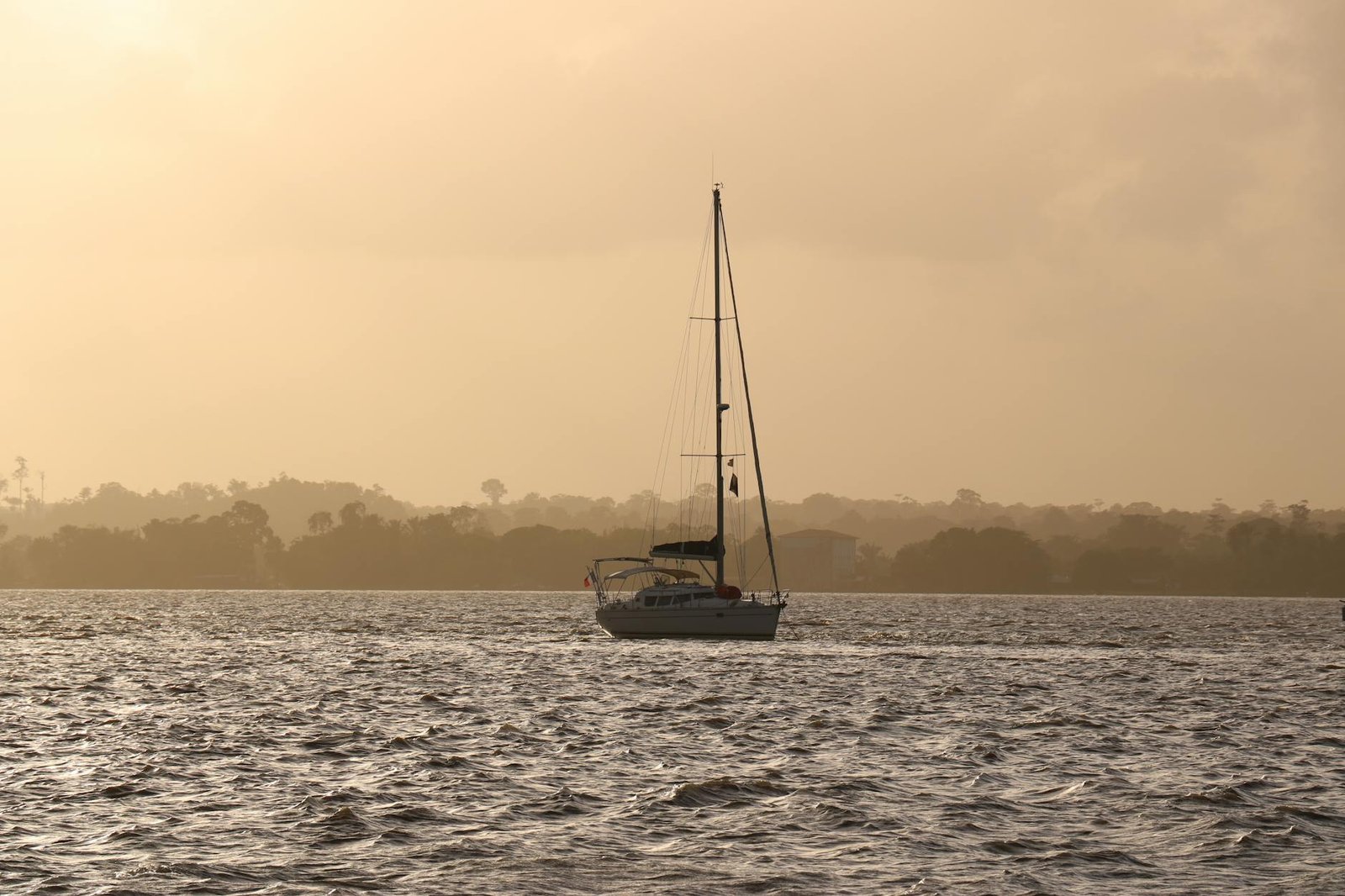
Quick Facts: Îles du Salut (Salvation Islands) | French Overseas Territory, French Guiana | No dedicated cruise terminal — tender landing at Île Royale’s small concrete jetty | Tender only | You never leave the islands — Kourou is 15 km away on the mainland; Cayenne is 80 km | UTC-3 (no daylight saving)
Îles du Salut is unlike any port you’ll call on in the Caribbean or South America — a trio of jungle-covered islands that served as France’s most notorious penal colony from 1852 to 1953, and now feel like time stood still the moment the last prisoner left. Your single most important planning tip: this is an island-only port, meaning you cannot get to the mainland and back in a typical shore-day window, so everything you’ll do is right here on Île Royale (and possibly Île Saint-Joseph, a short boat ride away).
—
Port & Terminal Information
There is no dedicated cruise terminal at Îles du Salut. Ships anchor offshore and tender passengers to a small concrete jetty on Île Royale, the largest of the three islands. The jetty is basic — no ATM, no luggage storage, no Wi-Fi, no tourist information office, and no shuttle buses, because frankly there is nowhere a shuttle needs to go. The island is small enough to walk entirely.
The tender process can take 20–45 minutes depending on sea conditions and the number of passengers ahead of you. Swells can occasionally delay or cancel tender operations entirely — this is a real risk at this port, and it happens more often than the ship’s daily programme implies. Get on the first tender of the day if you want maximum time ashore.
Once ashore, a small kiosk near the jetty sometimes sells entrance tickets to the penal colony site; if it’s unstaffed, tickets are sold at the main building complex further up the path. Check [Google Maps](https://www.google.com/maps/search/Iles+du+Salut+cruise+terminal) to orient yourself on Île Royale’s layout before you arrive, because the island’s interior paths are more tangled than they look on a ship’s map handout.
—
Getting to the City

There is no “city” to reach at this port — Îles du Salut is the destination. The islands are the port. That said, here’s how movement works once you’re on the tender dock at Île Royale:
- On Foot — Everything on Île Royale is walkable. The island is roughly 1.5 km long and 500 m wide. The main penal colony buildings, the chapel, the warden’s house, the cemetery, the coastline paths, and the single restaurant are all reachable on foot from the jetty within 5–20 minutes. Paths range from flat stone-paved walks to muddy jungle tracks. Wear closed shoes, not sandals.
- Île Saint-Joseph (Boat Transfer) — A small wooden pirogue (flat-bottomed local boat) ferries passengers between Île Royale and Île Saint-Joseph for approximately €5–8 each way, operated by local boatmen near the jetty. Crossings take about 10 minutes. Île Saint-Joseph holds the solitary confinement cells and a flooded ruin of haunting beauty — many cruisers consider it the most atmospheric spot in the entire port. Departures are irregular; negotiate directly with the boatmen and agree a return time before you cross.
- Bus/Metro — Does not exist. There are no roads, cars, or buses on the island.
- Taxi — Not available on the islands. There are no vehicles of any kind on Île Royale.
- Hop-On Hop-Off — Not available.
- Rental Car/Scooter — Not practical or available. The island has footpaths only.
- Ship Shore Excursion — When it’s worth it: if your cruise line offers a guided historian-led walking tour of the penal colony, it’s genuinely worth considering, because the colonial-era buildings are dense with history that isn’t labelled in English. Most independent visitors walk past structures without understanding what they were. That said, independent walkers can cover the same ground — search [Viator for Îles du Salut tours](https://www.viator.com/search/Iles+du+Salut) or check [GetYourGuide](https://www.getyourguide.com/s/?q=Iles+du+Salut¤cy=USD&partner_id=MHU0UHU) for any locally-operated guided options that may embark directly on the island.
—
Top Things to Do at Îles du Salut, French Guiana
The islands pack a remarkable amount of atmosphere, history, wildlife, and natural beauty into a small footprint — here’s how to spend every minute well.
Must-See
1. Pénitencier de l’Île Royale — The Penal Colony Complex (€5–8 admission, sometimes bundled with island access fee) — This is the entire reason Îles du Salut exists on any cruise itinerary. The collection of stone buildings spread across Île Royale’s forested plateau includes the guards’ quarters (now a small hotel and restaurant), the prisoners’ barracks, the hospital, the bakery, the laundry block, and the coconut oil pressing house — all crumbling back into the jungle in the most beautiful, melancholy way imaginable. The sheer scale of what France constructed here, and then abandoned, is staggering. Henri Charrière’s memoir Papillon brought these islands to global attention, though scholars debate how much of it was embellished. Find a [guided tour on Viator](https://www.viator.com/search/Iles+du+Salut) or [on GetYourGuide](https://www.getyourguide.com/s/?q=Iles+du+Salut¤cy=USD&partner_id=MHU0UHU) if you want the story told properly as you walk. Allow 1.5–2 hours.
2. Île Saint-Joseph’s Solitary Confinement Block (included in general site admission, plus €5–8 boat transfer) — Take the pirogue across and walk directly to the reclusion building, where prisoners judged most dangerous — or most inconvenient — were kept in individual stone cells open to the sky. Vines grow through the roof now, light filters through broken walls, and the silence is absolute. It is genuinely one of the most moving historical sites in the entire Western Hemisphere. Give yourself 1.5 hours on the island. Book a [guided experience on GetYourGuide](https://www.getyourguide.com/s/?q=Iles+du+Salut¤cy=USD&partner_id=MHU0UHU) if you want expert context.
3. Camp de la Transportation Chapel (free with site admission) — The small whitewashed Catholic chapel on Île Royale was built by convict labour and is still standing in remarkably good condition. The interior murals were painted by prisoners and are the most quietly affecting thing on the island — devotional images made by men with nowhere to go and nothing left to lose. 20–30 minutes.
Beaches & Nature
4. Île Royale Coastline Paths & Agoutis (free) — The dirt paths that ring Île Royale’s coastline bring you face-to-face with the island’s most unexpected residents: large, completely fearless agoutis (a South American rodent about the size of a rabbit) that wander the grounds in numbers. Capuchin monkeys inhabit the trees overhead. Scarlet macaws and parakeets are common. The water views back to the anchored ship, and toward the dense green of Île du Diable, are worth the walk alone. Allow 45–60 minutes for a partial coastal loop.
5. Île du Diable — Devil’s Island Itself (view from water only, landing not permitted) — The most famous of the three islands is the one you cannot step foot on. Devil’s Island proper, where political prisoners — most famously Alfred Dreyfus — were held in isolated individual confinement, is now a nature reserve closed to all visitors. You can see it clearly from Île Royale’s western shore and from the pirogue crossing to Saint-Joseph — a low, flat, jungle-covered rock with ruined stone walls just visible through the trees. The inaccessibility makes it more haunting, not less. 15 minutes to appreciate properly.
6. Swimming at Île Royale’s Small Beach (free) — There is a small, protected sandy cove near the jetty area where swimming is possible. The water is warm, clear-ish, and genuinely pleasant. However, be aware that currents between the islands are powerful and the open ocean here is not gentle. Swim only in the designated area, never between islands, and watch the tide. If you’re bringing snorkel gear, the rocky edges of the cove have decent fish life. 30–60 minutes.
7. Île Saint-Joseph’s Flooded Cemetery & Ruins (free with boat transfer) — Beyond the solitary block, Île Saint-Joseph has stretches of partially flooded ruins where the sea has reclaimed the lower prison buildings. You can walk carefully along the edges and peer into root-tangled cells that are now tidal pools. A small, overgrown cemetery for prisoners who died on the island is nearby — simple iron crosses, some with names, most without. Allow 30 minutes to walk this section.
Day Trips
8. Kourou — Space Launch Centre (Ariane Space / CNES) (mainland, ~45-minute boat + transfer) — This is technically possible on a long port day but extremely difficult to execute independently. Kourou on the mainland hosts the Guiana Space Centre, from which Ariane 5 and Soyuz rockets launch. The visitor centre ([Centre Spatial Guyanais](https://www.cnes-csg.fr)) offers tours when launches aren’t scheduled. The problem: getting there from the islands requires arranging private boat transport to the mainland, then a taxi or transfer to Kourou. It is genuinely a half-day logistical exercise and only realistic for ships that offer it as a dedicated excursion. Check [Viator for Kourou/Space Centre tours](https://www.viator.com/search/Iles+du+Salut) departing from the islands or cruise terminal. Do not attempt this independently unless you have 8+ hours ashore and have pre-arranged transport.
Family Picks
9. Wildlife Spotting Walk for Kids (free) — Children who might find penal history harrowing will be completely captivated by the agoutis, which approach within arm’s length and will eat from your hand (though feeding them is officially discouraged). The capuchin monkeys are theatrical and acrobatic. There are enough animals roaming freely that a 45-minute walk becomes a wildlife safari by default. Bring binoculars. Allow 1 hour.
10. The Island’s Small Museum/Exhibition (free or included with site admission) — Near the main building complex, a small exhibition space displays photographs, maps, and artefacts from the penal colony period. Panels are primarily in French, but the photographs are self-explanatory and deeply affecting — convict portraits, labour photographs, execution records. Older children (10+) will engage with it meaningfully. 30 minutes.
Off the Beaten Track
11. The Warden’s House (Villa du Gouverneur) (free with site admission) — Most visitors beeline for the main prison blocks and skip this building, which is a shame. The warden’s residence is a graceful colonial-era villa set slightly apart from the main complex, half-reclaimed by vegetation and offering a strange counterpoint to the cells nearby — the modest luxury afforded to those in charge, against the brutality of what they administered. 20 minutes.
12. Île Saint-Joseph’s Northern Tip Path (free with boat transfer) — Very few pirogue passengers walk all the way to Saint-Joseph’s northern tip, where the vegetation thins, the ocean views open up completely, and you can see the Guiana coastline as a dark green line on the horizon. It takes about 20 minutes from the landing point. The solitude here is complete. 40 minutes for the full walk out and back.
13. Dawn / Early Morning Tender (first group ashore) (free) — This is an experience, not an attraction. If you can get on the very first tender of the morning before most passengers are awake, you will have 45–60 minutes on the island before the crowds arrive. The light through the jungle ruins at 7–8 AM is extraordinary, the animals are most active, and the atmosphere of the island — something genuinely eerie and beautiful — is undiluted. Set your alarm.
—
What to Eat & Drink

Food options on the islands are extremely limited — this is not a culinary port. There is essentially one proper restaurant on Île Royale and a couple of basic snack options near the jetty; Île Saint-Joseph has no food service at all. Eat a substantial breakfast on the ship before you tender.
- Restaurant de l’Île Royale — The single full-service restaurant on the island, housed inside one of the former guards’ quarters. Serves Creole-inflected French dishes: grilled fish, chicken colombo (a curry-influenced stew), rice, and local vegetables. It’s atmospheric, slow-paced, and entirely fitting for the setting. Lunch mains run approximately €12–18. The cold beer here after a hot morning walk is genuinely one of the better pleasures the port offers.
- Grilled Lobster/Fish at the Jetty Snack Stand — A small outdoor snack stand near the landing jetty sometimes grills whole fish or lobster to order, served with lime and bread. Not always operating, and not always available when cruise ships are in, but worth checking. Approximately €8–15 depending on what’s available.
- Ti Punch — The rum-based cocktail standard across French Overseas Territories: white cane rum, cane syrup, and fresh lime. Served at the restaurant. €3–5. Drink one slowly because the heat here is not forgiving.
- Coconut Water — Occasionally sold from a cooler near the jetty area. €2–3. Completely appropriate hydration for a hot, humid island day.
- Boulangerie Bread/Pastries (from the ship) — Not a joke recommendation: because food options ashore are so thin, experienced cruisers on this itinerary grab pastries and sandwiches from the ship’s buffet before tendering and carry them in a bag. This is 100% the practical move.
- Water — Bring at least 1.5 litres per person from the ship. There is no reliable water purchase point on Île Saint-Joseph, and walking in humid 30°C heat through jungle ruins dehydrates you faster than you’ll expect.
—
Shopping
Shopping at Îles du Salut is minimal by design and should not be a significant part of your day plan. A small souvenir stall near the main building complex sells postcards, printed t-shirts with penal colony imagery, and small carved wooden items — some of which are genuinely made locally, some of which are clearly imported. The postcards are actually worth buying; the stamps and postal service to get them sent from French Guiana make for a memorable souvenir-by-mail for friends at home.
Don’t expect jewellery markets, craft villages, or boutiques. What you can and should buy are any books available on-site about the penal colony’s history — French-language histories and illustrated guides occasionally appear for sale at the museum kiosk. If you read French even passably, a physical copy of the official Pénitencier guide is a better keepsake than any t-shirt. Save your serious shopping budget for Martinique, Guadeloupe, or wherever else your itinerary takes you.
—
How to Plan Your Day
- 4 hours ashore: Get on the first tender. Walk directly up from the jetty to the penal colony complex and spend 1 hour walking the main buildings — guards’ quarters, barracks, hospital, bakery. Visit the chapel (20 minutes). Walk the western coastal path to see Île du Diable across the water (20 minutes). Have lunch or a cold drink at the restaurant (45 minutes). Browse the small museum (20 minutes). Head back to the jetty for the tender return. This is the minimum to feel like you’ve genuinely experienced the port.
- 6–7 hours ashore: Start as above with the main complex (1.5 hours). Take the pirogue to Île Saint-Joseph (10-minute crossing). Walk to the solitary confinement block first, then the flooded ruins and cemetery, then the northern tip path (allow 2 hours total on Saint-Joseph). Return by pirogue. Lunch at Restaurant de l’Île Royale (1 hour). Afternoon: wildlife walk on Île Royale’s jungle paths — agoutis, monkeys, coastal views (45 minutes). Visit the warden’s villa. Return to the jetty with time to spare. This is the ideal day.
- Full day (8+ hours): Do everything in the 6–7 hour itinerary
📍 Getting to Iles du Salut, French Guiana
Use the interactive map below to explore the port area and plan your route from the terminal.
Leave a Reply