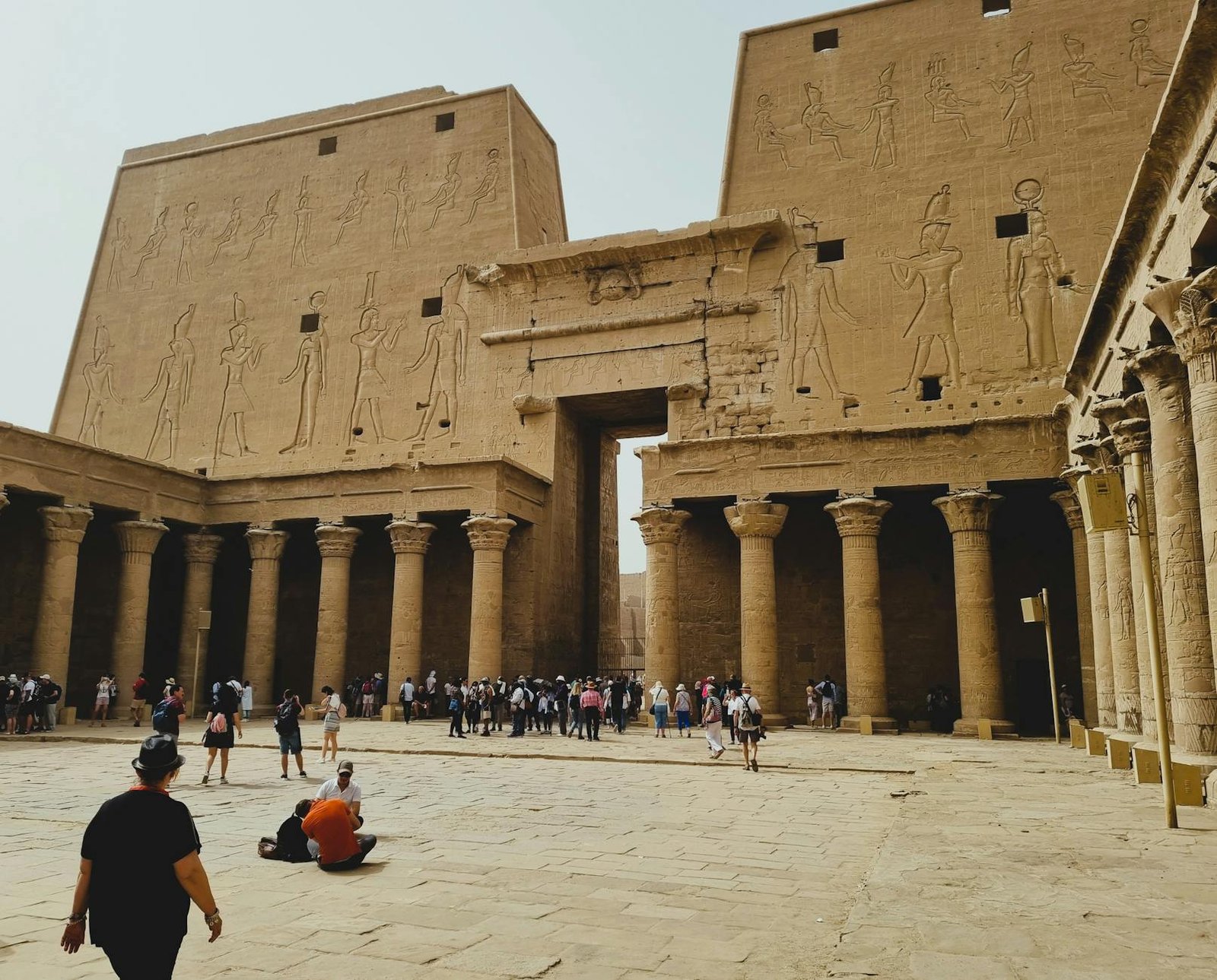
Few Nile ports punch above their weight like Edfu. Home to one of the best-preserved ancient temples on the planet, this quiet Upper Egyptian town delivers a genuinely jaw-dropping encounter with pharaonic history — no crowds, no chaos, just 2,000-year-old stone and silence.
Arriving by Ship
Nile cruise ships dock directly alongside Edfu’s riverbank, so there’s no tendering involved — you simply step off and you’re in Egypt. The town centre and the Temple of Horus are roughly two kilometres from the dock, and horse-drawn carriages line up immediately outside waiting to whisk you there.
The carriage ride itself is part of the experience, rattling through dusty streets past market stalls and schoolchildren. Negotiate the price before you climb aboard — expect to pay around 50–80 EGP for the round trip per carriage, not per person.
Things to Do

Edfu is compact, which works in your favour when you’re on a tight port schedule. The temple dominates, but there’s enough texture in the town itself to reward a gentle wander if time allows.
History & Culture
- Temple of Horus is the headline act and rightly so — built between 237 and 57 BC, it’s the most completely preserved ancient Egyptian temple in existence, with towering pylons reaching 36 metres high. Entrance costs around 360 EGP (approximately USD 12) and it opens daily from 7am to 5pm (summer) or 6pm (winter).
- The Sanctuary of Horus inside the temple houses a black granite statue of the falcon god that makes for a genuinely atmospheric photo stop. Arrive early in the morning to catch the light streaming through the outer hypostyle hall.
- The Nilometer near the riverbank is a lesser-known ancient measuring device used to gauge the Nile’s flood levels — easy to visit on your walk back to the ship and completely free to view from outside.
- Edfu’s covered market (souk) runs along the streets between the dock and the temple, and a slow walk through it reveals spice vendors, fabric sellers, and local life at its most unfiltered. No entrance fee — just keep your wits about you.
Combine with Nearby Sites
- Kom Ombo Temple day tour pairs beautifully with Edfu if your itinerary allows — it’s about 65km south and dedicated to both Sobek and Horus. You can book a combined Luxor–Edfu–Kom Ombo transfer from around USD 85 🎟 Book: Luxor to Edfu & Kom Ombo Temples with Aswan Transfer , making it effortless to tick off both in one go.
- Train journey from Luxor to Edfu is a wonderfully local way to arrive if you’re not on a cruise ship — a seven-hour round-trip adventure through the Egyptian countryside for around USD 38 🎟 Book: Trip from luxor to Edfu by train.
- Guided temple tours from Luxor are worth considering if you want deep historical context; an eight-hour guided excursion covering both Edfu and Kom Ombo runs from around USD 125 🎟 Book: Edfu & Kom Ombo Temples Tour from Luxor.
What to Eat
Edfu isn’t a culinary destination in the way Luxor or Aswan is, but you’ll find honest, filling Egyptian food if you step away from the tourist trail near the temple gates. Street food here is cheap, fresh, and genuinely delicious.
- Ful medames — slow-cooked fava beans with cumin and olive oil, sold at roadside stalls near the souk for around 10–15 EGP a portion — is the classic Egyptian breakfast you shouldn’t skip.
- Ta’ameya (Egyptian falafel) — made with fava beans rather than chickpeas, crispier and greener than the Middle Eastern version, found at the same street stalls for 5–10 EGP each.
- Koshary — a hearty pile of rice, lentils, pasta, and crispy onions doused in spiced tomato sauce — costs 25–40 EGP at local canteen-style restaurants near the market.
- Fresh sugarcane juice — pressed on the spot at roadside carts throughout the town for around 10 EGP a glass — is ice-cold and completely addictive in the Egyptian heat.
- Aish baladi (flatbread) — baked in street ovens and sold warm for just 5 EGP — pairs with anything and is a genuine staple of daily Edfu life.
Shopping

The strip between the dock and the temple is lined with vendors selling alabaster figurines, papyrus paintings, and miniature Horus statues — most of it aimed squarely at cruise passengers. Bargain hard: the opening price is typically three to four times what sellers will accept, so don’t be shy about negotiating down.
Better buys are found deeper in the covered souk — dried hibiscus (karkadeh), cumin, and saffron make excellent lightweight souvenirs that won’t break your luggage allowance. Avoid the mass-produced “antiques” that claim historical significance; they’re not genuine, and exporting real antiquities is illegal.
Practical Tips
- Currency — pay in Egyptian pounds (EGP); USD is sometimes accepted at the temple but you’ll lose on the exchange rate.
- Tipping — a 10–20 EGP tip is appreciated by carriage drivers and temple guardians who offer unofficial information.
- Transport — horse-drawn carriages are the standard way to reach the temple; agree the price firmly before departure.
- Dress code — cover your shoulders and knees out of respect; it’s also more comfortable in the sun.
- Best time ashore — go as early as your ship allows; the temple is far cooler and quieter before 10am.
- Safety — Edfu is very safe for tourists; persistent vendors can feel overwhelming, but a calm “la shukran” (no thank you) works wonders.
- Time needed — two to three hours covers the temple thoroughly, with time for a carriage ride and a quick souk wander.
Step through those 36-metre pylons, look up at the falcon-headed god staring back across two millennia, and you’ll understand exactly why Edfu earns its place on every serious Nile itinerary.
🎟️ Things to Book in Advance
These highly-rated experiences fill up fast — book before you arrive to avoid missing out.


This page contains affiliate links. If you book through them, we may earn a small commission at no extra cost to you.
📍 Getting to Edfu, Egypt
Use the interactive map below to explore the port area and plan your route from the terminal.
Leave a Reply