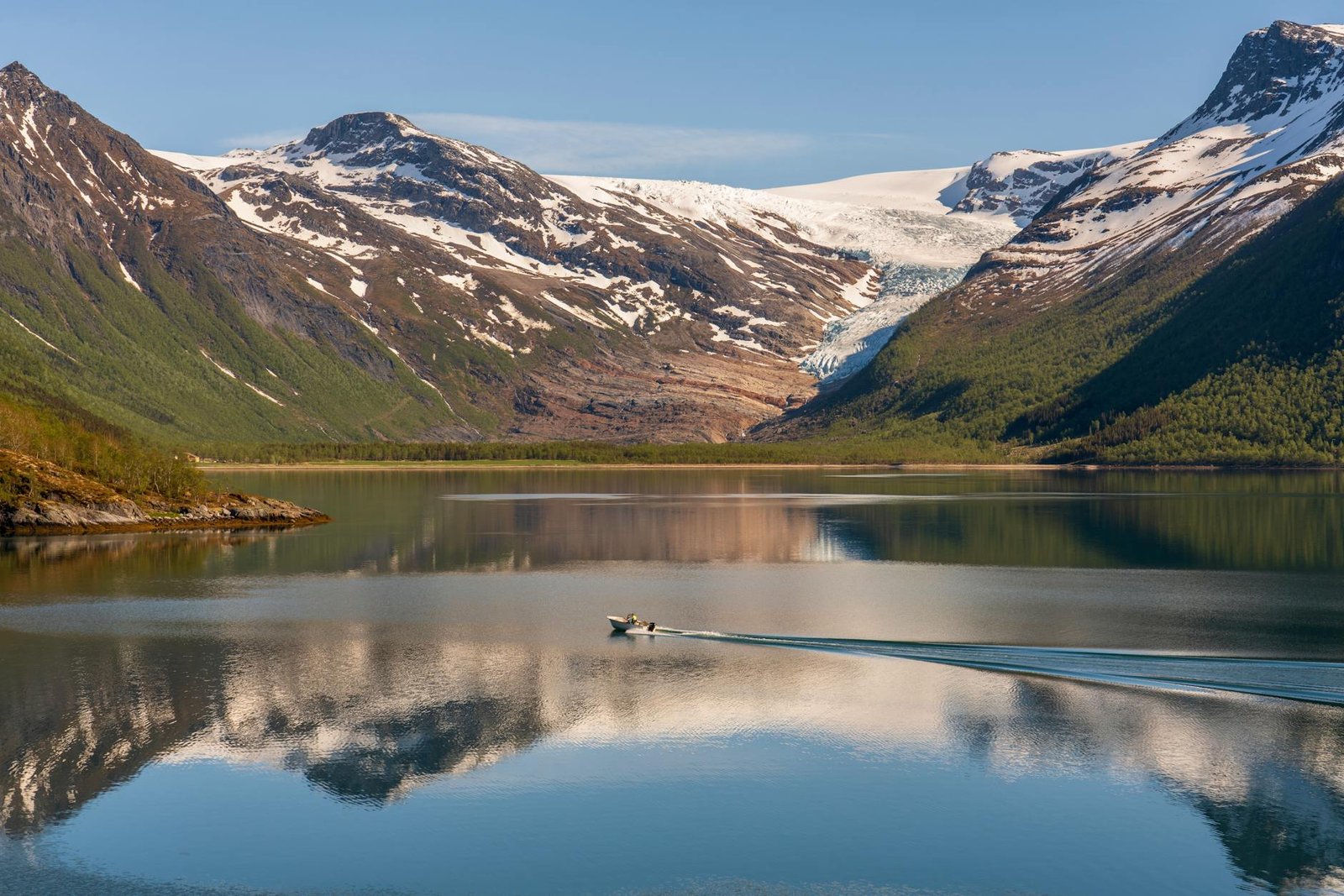
Few cruise stops in Norway deliver the kind of raw, elemental drama you’ll find at Svartisen. This remote stretch of the Helgeland coast puts you face to face with Norway’s second-largest glacier, a landscape of dark fjords, cascading rivers, and mountain silence that genuinely earns the word “spectacular.” One day here is enough to change how you think about the natural world.
Arriving by Ship
Your ship will anchor offshore and tender you into the small landing area near Holandsfjord, the narrow fjord arm that leads toward the glacier itself. The approach alone is worth every second on deck — sheer rock walls rise on either side, dusted with birch forest, and the water reflects everything with mirror-like clarity on calm days. This is not a purpose-built cruise port with a marina full of souvenir stands. It’s wild Norway, and arrivals here feel genuinely adventurous. Tendering can occasionally be weather-dependent, so keep an eye on announcements from your ship’s crew and dress for the possibility of a breezy boat ride.
Things to Do

The main draw, understandably, is the Svartisen Glacier itself. The most accessible arm is Engabreen, which at its closest point descends almost to sea level — an extraordinary rarity in Europe. From the landing area, you can take a short ferry ride across the fjord lake, then follow a well-marked path of roughly two to three kilometres to reach the glacier’s icy blue toe. The walk is moderate but uneven in places, so good footwear matters. Standing in front of a glacier this vast, listening to it creak and drip, is a quietly overwhelming experience.
If you’d rather spend your time on the water, several operators offer guided kayak tours through Holandsfjord, paddling beneath cliff faces and into the hush of the inner fjord. It’s one of the most peaceful ways to experience Norway, and you don’t need prior kayaking experience for the beginner-friendly routes.
For something more leisurely, the surrounding landscape rewards slow exploration. Birdwatchers will find plenty to observe, from white-tailed eagles circling overhead to dippers darting along river stones. Photographers — amateur or otherwise — will want to give themselves far more time than they think they need.
Local Food
Svartisen is not a culinary destination in the conventional sense, but that doesn’t mean you’ll go hungry or unimpressed. The region sits within Nordland county, where the cold, clean waters produce some of Norway’s finest seafood. If your shore excursion includes a visit to a local farm or visitor centre, look out for freshly prepared fish soup — a thick, creamy bowl built around cod, salmon, or whatever came off the boats that morning. It’s the kind of dish that makes Norwegian winters make sense.
In the small communities near the fjord, you may encounter stockfish (dried and cured cod) sold at local shops or farms. It’s an acquired taste but a genuinely Norwegian one. Some excursion providers include a simple lunch or snacks featuring local rye bread, cured meats, and brown goat’s cheese — a sweet, caramel-like spread called brunost that Norwegians eat with almost everything and that you’ll either love immediately or need a second try to appreciate.
Shopping

Don’t come to Svartisen expecting boutiques or market stalls — this is one of Norway’s most remote cruise calls, and that’s entirely the point. What you will find, at the glacier visitor centre and the occasional farmstead shop, are genuinely local products worth taking home. Handmade woollen goods, including mittens, hats, and scarves in traditional Nordic patterns, are practical souvenirs that actually connect you to the place rather than a factory somewhere else.
Local jams and preserves made from cloudberries, lingonberries, and Arctic raspberries make excellent gifts that pack easily. If you spot locally produced reindeer products — dried meat, leather goods, or small carvings — these come from the Sami herding traditions that have shaped this part of Norway for centuries. A purchase here carries genuine cultural weight.
Practical Tips
Layers are non-negotiable. Even in summer, the air near the glacier is noticeably cold, and conditions change quickly on the Norwegian coast. Bring a waterproof jacket, wear walking shoes you trust on wet rock, and don’t leave the ship in sandals and a light cardigan no matter how blue the sky looks on your way in. Pack sun cream too — the Nordic sun reflects fiercely off ice and water.
The tender schedule will shape your day more than anything else, so check the final return time early and plan conservatively. The walk to the glacier and back takes longer than most people expect, especially if you stop to photograph (and you will stop to photograph). Norwegian tap water is exceptional throughout the country, so a refillable bottle will serve you well at any visitor facilities ashore.
Cash in Norwegian Krone is useful for small purchases at local farms or stands, as card readers aren’t always available in remote locations. Finally, if you’re prone to motion sickness, the tender crossing can be choppy — take any precautions you normally would before boarding.
Svartisen rewards the traveller who arrives curious and unhurried. It asks nothing of you except attention, and in return it offers some of the most dramatic, undiluted scenery anywhere in the Norwegian Arctic. Leave the ship, walk toward the ice, and let the landscape do the rest.
Leave a Reply