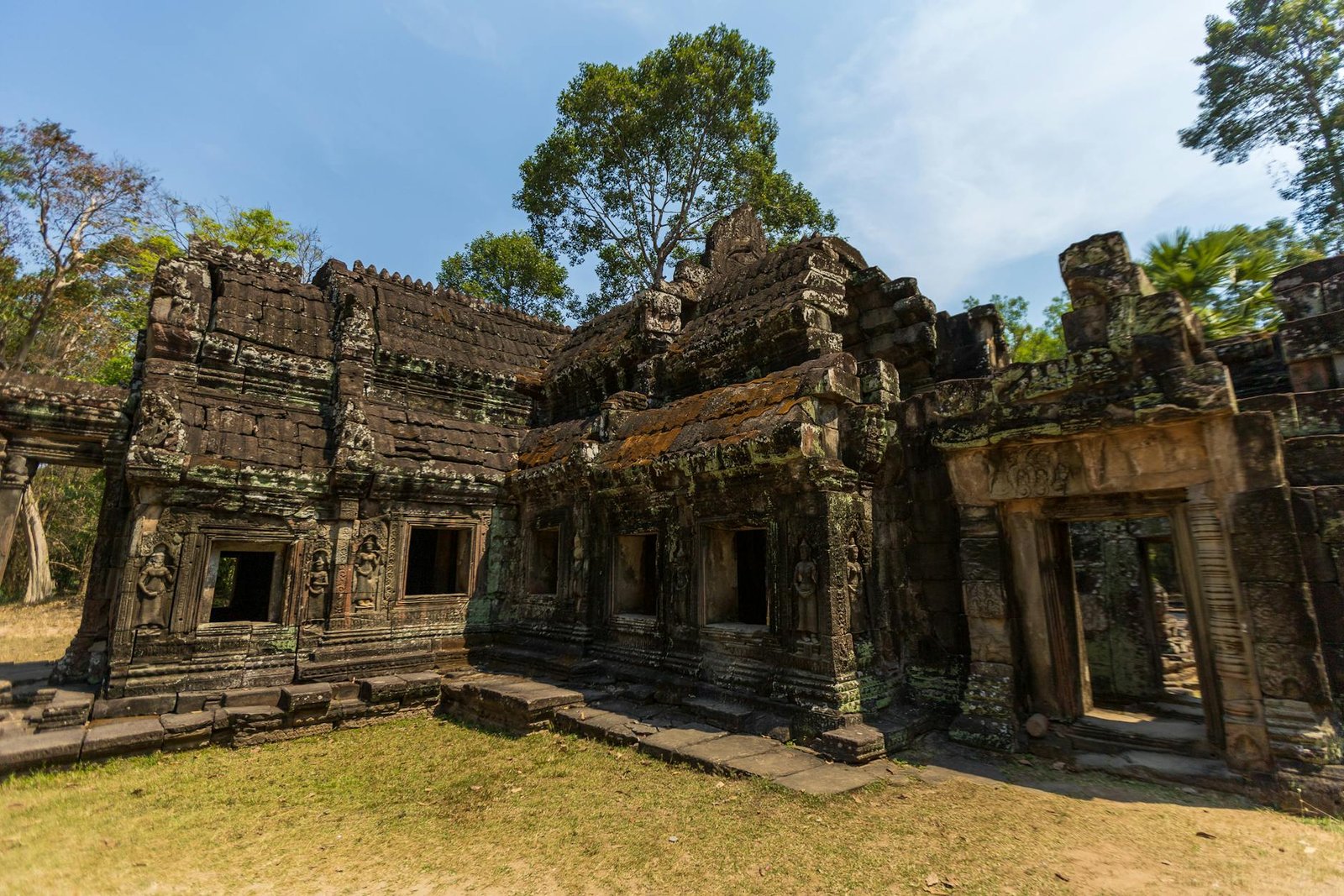
Quick Facts: Port: Angkor Ban | Country: Cambodia | Terminal: Angkor Ban Village Riverbank Dock | Docking: River dock (no tendering required in most seasons; shallow draft vessels tie up directly at the wooden jetty) | Distance to nearest town center: ~2 km to the village heart, ~180 km to Phnom Penh, ~220 km to Siem Reap | Time Zone: UTC+7 (Indochina Time, ICT)
Angkor Ban is a hidden-gem river stop on the Mekong, visited almost exclusively by small expedition-style cruise ships and river cruise vessels traveling between Vietnam and Cambodia. It is one of the most authentically preserved Khmer villages in the country — which means no souvenir stalls blocking your view of 200-year-old wooden houses, and no crowds. The single most important planning tip: Angkor Ban has almost no independent tourist infrastructure, so either book activities through your ship or research tours departing from nearby towns in advance — the [Viator tours search for Angkor Ban](https://www.viator.com/search/Angkor+Ban) is your best starting point before departure.
—
Port & Terminal Information
- Terminal Name: Angkor Ban Village Riverbank Dock — a basic wooden jetty on the western bank of the Mekong River. There is no formal cruise terminal building as you would find in a large port city.
- Dock vs. Tender: Most small river cruise vessels (Viking, Aqua Expeditions, Heritage Line, Mekong Kingdoms, etc.) dock directly alongside the jetty. Gangplanks are used. No tendering is required under normal water-level conditions, though very low-season water levels in the dry season (January–March) can occasionally require a small skiff transfer for the final meters. Check with your cruise director the evening before.
- Terminal Facilities: There are essentially no formal terminal facilities here — that is part of Angkor Ban’s charm. Expect no ATMs, no luggage storage, no Wi-Fi at the dock, and no official tourist information desk. Your ship’s reception desk is your best resource. Some ships deploy a welcome committee of village children and local guides at the gangway.
- What your ship provides: Most river cruise lines operating this stop provide bicycles, village maps, and an English-speaking local guide as part of the port call — confirm this with your cruise director before you disembark.
- Distance to village center: The core of Angkor Ban village is roughly a 10–15 minute walk (about 1.5–2 km) from the dock along a dirt-and-laterite path. [Check the location on Google Maps](https://www.google.com/maps/search/Angkor+Ban+cruise+terminal) to orientate yourself before you arrive.
—
Getting to the City

Angkor Ban is a village, not a city, and transport options reflect that reality. There is no public transit and no taxi rank. Plan accordingly.
- On Foot — The entire Angkor Ban village is best explored on foot. The main temple, traditional wooden houses, and riverside paths are all within a 2–3 km radius of the dock. Flat terrain, shaded paths, and minimal traffic make walking easy even in moderate heat. Allow 30–45 minutes to reach the farthest houses. Wear sturdy sandals or closed shoes — paths are unpaved.
- Bicycle — Most river cruise lines provide complimentary bicycles from the ship. This is genuinely the best way to explore. You can cover the village, temple, and nearby rice paddies in 2–3 hours on two wheels. If your ship doesn’t offer bikes, ask at the dock — occasionally village community members rent simple bicycles for approximately $2–5 USD for the day, though availability is not guaranteed.
- Tuk-Tuk — A small number of tuk-tuks may be waiting near the dock, organized through the ship or the local village chief. Expect to pay $10–20 USD per vehicle for a 2–3 hour village circuit. Negotiate price before you get in. Your ship’s guide can help arrange this.
- Private Car/Van — If your ship does not include a guided excursion and you want to reach Phnom Penh (~3.5–4 hours by road) or Siem Reap (~4–5 hours by road), a private car can be arranged through your cruise line or pre-booked. Expect $80–150 USD one-way for a private driver. [Search GetYourGuide](https://www.getyourguide.com/s/?q=Angkor+Ban¤cy=USD&partner_id=MHU0UHU) for overland transfer options from nearby departure points.
- Hop-On Hop-Off — There is no HOHO bus service at Angkor Ban. Do not plan around one.
- Rental Car/Scooter — Not available directly at Angkor Ban. Driving independently from this village to Siem Reap or Phnom Penh is technically possible but not recommended unless you have prior Cambodia road experience. Roads between river villages can be poorly marked.
- Ship Shore Excursion — For Angkor Ban specifically, the ship excursion is often the right choice. River cruise operators who include this stop have spent years building relationships with village elders, arranging home visits, temple access, and artisan demonstrations that you simply cannot replicate by wandering alone. Compare this with ports like Phnom Penh where going independently makes perfect sense — Angkor Ban rewards the curated experience.
—
Top Things to Do in Angkor Ban, Cambodia
Angkor Ban punches far above its size. This small Mekong village holds architectural treasures, living Khmer traditions, and a pace of life that feels genuinely untouched. Here are the experiences worth your time, organized by category.
—
Must-See
1. Wat Angkor Ban Temple (Free) — This is the anchor attraction of the entire port call, and rightly so. The temple dates back over 300 years and houses extraordinarily well-preserved Khmer Buddhist murals inside its main sanctuary — vivid illustrations of the Ramayana epic painted on wooden panels that somehow survived the Khmer Rouge era largely intact. Locals believe the village’s geographic isolation (accessible primarily by river) is what protected it. Arrive early in your shore day, before the midday heat, and take time with the murals. Your ship’s guide will explain iconography that looks abstract without context. You can also find [guided tours on GetYourGuide](https://www.getyourguide.com/s/?q=Angkor+Ban¤cy=USD&partner_id=MHU0UHU) that incorporate temple visits in wider Mekong itineraries. Allow 45–60 minutes.
2. Traditional Khmer Wooden Stilt Houses (Free) — Angkor Ban is one of the last places in Cambodia where you can walk an entire street of 100–200-year-old Khmer wooden stilt houses, many still occupied by the same families who have lived there for generations. The architecture is extraordinary — intricate carvings, hand-painted shutters, elevated living floors designed to cope with Mekong flood cycles. Several families open their homes to cruise visitors, and your guide can arrange introductions. This isn’t a staged cultural performance; these are real homes. Allow 30–45 minutes walking the main village lane.
3. Village Monastery & Monks’ Quarters (Free, small donation appropriate) — Adjacent to the main temple, the active monastery is home to resident monks who welcome respectful visitors. Arrive in the morning when monks are present. Photography requires permission — ask your guide to facilitate. The peaceful courtyard and the everyday rhythm of monastic life here are deeply moving. Allow 20–30 minutes.
—
Beaches & Nature
4. Mekong Riverbank Walk (Free) — The stretch of riverbank north and south of the dock is genuinely beautiful, especially in early morning light when fishing boats are still working and mist hangs over the water. Low wooden boats, traditional fish traps, and the wide brown sweep of the Mekong make this one of the best unstructured walks of any Mekong port call. Bring a camera. Allow 30–45 minutes.
5. Rice Paddy & Agricultural Hinterland by Bicycle (Free with ship bikes / ~$2–5 USD bike rental) — Pedal 3–5 km inland from the village and you enter a landscape of flooded rice paddies, palm sugar trees, and small family farms that feel centuries removed from modern Cambodia. The flat terrain is beginner-friendly. Best between October and February when paddies are green or being harvested — stunning photography. Allow 1–1.5 hours for a comfortable loop.
6. Mekong Sunset from the Riverbank (Free) — If your ship overnights at Angkor Ban or has a late departure, the Mekong sunset from the village bank is spectacular. Find a spot near the temple steps, which face west toward the river. Best between November and February when skies are clearest. Allow 30 minutes — and take the drink your ship steward packs for you.
—
Day Trips
7. Phnom Penh — Royal Palace, Killing Fields & National Museum (~$80–150 USD private car one-way, ~3.5–4 hours) — Angkor Ban sits roughly between Phnom Penh and the Vietnamese border on many itineraries. If your ship docks early and you have 8+ hours, a private car to Phnom Penh for a half-day is possible but grueling. Most cruisers will visit Phnom Penh as a dedicated port call. If you’re combining ports, [check Viator for Phnom Penh tours](https://www.viator.com/search/Angkor+Ban) from regional departure points. Allow full day if attempting.
8. Angkor Wat & Siem Reap Overland (~$118–350 USD, 4–5 hours each way) — Siem Reap and the Angkor temples are technically reachable from Angkor Ban by private vehicle, but the distance (220 km) makes this practical only as a pre- or post-cruise extension, never a shore-day trip. For a 2-day Angkor experience, the [2-Day Angkor Wat Tour from Bangkok on Viator](https://www.viator.com/search/Angkor+Ban) (from USD 350) is worth considering as a stand-alone trip combined with your cruise dates. 🎟 Book: 2-Day Angkor Wat Tour from Bangkok For a focused sunset temple experience, the [Private Angkor Wat Sunset 4 Hidden Temples Tour on Viator](https://www.viator.com/search/Angkor+Ban) (from USD 64.11) covers the lesser-visited temples beautifully. 🎟 Book: Private Angkor Wat Sunset 4 Best hidden temples Tour
—
Family Picks
9. Village School Visit (Free, arranged through ship) — Many river cruise operators have longstanding relationships with Angkor Ban’s small primary school, and visits are arranged as part of the shore excursion program. Children love interacting with visiting students, and basic English lessons or shared drawing sessions are common. Bring pens, notebooks, or small school supplies as gifts — check with your cruise director on what is most needed. Deeply memorable for families traveling with kids. Allow 30–45 minutes.
10. Traditional Silk Weaving Demonstration (Free to watch; silk items for purchase $5–40 USD) — Several village women maintain hand-operated looms and produce traditional Khmer silk cloth using techniques passed down through generations. Watch the shuttle fly, try a few strokes on the loom yourself, and consider purchasing a small piece of silk as a genuine local souvenir. This is not a factory or a staged show — it is someone’s livelihood and craft. Allow 20–30 minutes.
11. Mekong Fishing Demonstration (Free / small tip appropriate) — Local fishermen occasionally demonstrate traditional net-casting and fish-trap techniques for cruise visitors, especially when ships coordinate visits in advance. Children are fascinated. The massive cast nets used on the Mekong require real skill, and watching an experienced fisher land a throw from a narrow wooden boat is memorable. Allow 20 minutes.
—
Off the Beaten Track
12. Authentic Cambodian Food Tour in a nearby village (from USD 60 / 3 hours) — If your cruise line has arranged a local food experience or you’ve pre-booked through a regional operator, a cooking and tasting walk through Angkor Ban and nearby villages is a highlight that most cruisers don’t know to seek out. The [Authentic Cambodian Food Tour on Viator](https://www.viator.com/search/Angkor+Ban) (from USD 60, 3 hours) gives you exactly this experience. 🎟 Book: Authentic Cambodian food tour Expect fresh spring rolls, palm sugar candy-making, and fish amok prepared by village cooks.
13. Village Elder Home Visit & Oral History (Arranged through ship, Free) — Your guide can often arrange a formal sit-down with one of the village elders — men and women in their 70s–80s who lived through the Khmer Rouge period and chose to return to rebuild Angkor Ban afterward. These conversations, interpreted by your guide, are among the most powerful and humanizing experiences available in any Cambodian port. Not on any booking platform. Ask your cruise director specifically.
14. Sunrise at Wat Angkor Ban Temple (Free) — If your ship overnights or arrives before 6:30 AM, an early-morning walk to the temple in golden light, before any other visitors, is transcendent. Monks begin their chants around 5:30–6:00 AM. The sound carries across the still village. This is the version of Cambodia that stays with you long after the trip ends. Allow 45–60 minutes.
—
What to Eat & Drink

Cambodian cuisine on the Mekong is defined by freshwater fish, fermented flavors, and rice — eaten simply, communally, and with enormous pride. Angkor Ban itself has no restaurants in the Western sense, but food experiences are woven into the shore excursion fabric, and your ship will provide meals onboard.
- Fish Amok — Cambodia’s national dish; a delicately spiced fish curry steamed in banana leaf with coconut milk and kroeung (lemongrass paste). If your ship serves this onboard while docked, eat it here — it tastes different on the Mekong. Look for it on shore excursion food tours. Price range: $3–8 USD per serve at village level.
- Nom Banh Chok (Khmer Noodles) — Rice noodles served cold with a green fish-based curry sauce, fresh herbs, and banana flowers. The classic Cambodian breakfast dish, sold from roadside baskets in villages along the Mekong. Try it fresh from a village vendor if your guide can locate one. Around $1–2 USD per bowl.
- Palm Sugar Candy — Made from the sap of sugar palm trees that line the village paths. Often demonstrated during village visits. Intensely sweet, slightly smoky, sold in hard rounds or sticky pastes. Buy a bag as a snack — roughly $1–3 USD.
- Freshwater Fish, Grilled — If you’re lucky enough to join a village cooking experience or extended food tour, whole freshwater fish grilled over charcoal with salt and lemongrass is one of the simplest and most satisfying meals Cambodia offers. Fish from the Mekong, eaten on the Mekong bank. Price in village context: $2–5 USD.
- Lort Cha (Stir-Fried Rice Pin Noodles) — Short fat rice noodles stir-fried with egg, bean sprouts, and soy. Common street food in Cambodian market towns near the Mekong. If your ship visits a nearby market, look for this. Under $2 USD.
- Angkor Beer or Cambodian Palm Wine — Angkor Beer is the national beer, available on your ship and occasionally in village shops. More interesting is locally produced palm wine (tuk tnaot) — mildly alcoholic, slightly sweet, served fresh. Accept a cup if offered during a home visit. It’s a gesture of welcome.
- Your Ship’s Kitchen — Be honest with yourself: the best fresh fruit platters, fish dishes, and Cambodian-inspired meals you’ll eat today are probably prepared by your ship’s kitchen, using fresh market ingredients bought that morning. Don’t feel guilty eating well onboard.
—
Shopping
Angkor Ban is not a shopping destination — and that is precisely what makes it special. There are no souvenir stalls, no postcards, no refrigerator magnets. What you can buy here is real: handwoven silk cloth from village looms ($5–40 USD depending on size and complexity), palm sugar sweets ($1–3 USD), and occasionally hand-carved wooden objects sold informally by artisans your guide introduces you to. These are the purchases worth making. Carry small USD bills.
If you want wider Cambodian shopping — lacquerware, silk scarves, Apsara dancer figurines, Angkor replica carvings — save your budget for Phnom Penh’s Russian Market (Psah
🎟️ Things to Book in Advance
These highly-rated experiences fill up fast — book before you arrive to avoid missing out.


This page contains affiliate links. If you book through them, we may earn a small commission at no extra cost to you.
📍 Getting to Angkor Ban, Cambodia
Use the interactive map below to explore the port area and plan your route from the terminal.
Leave a Reply