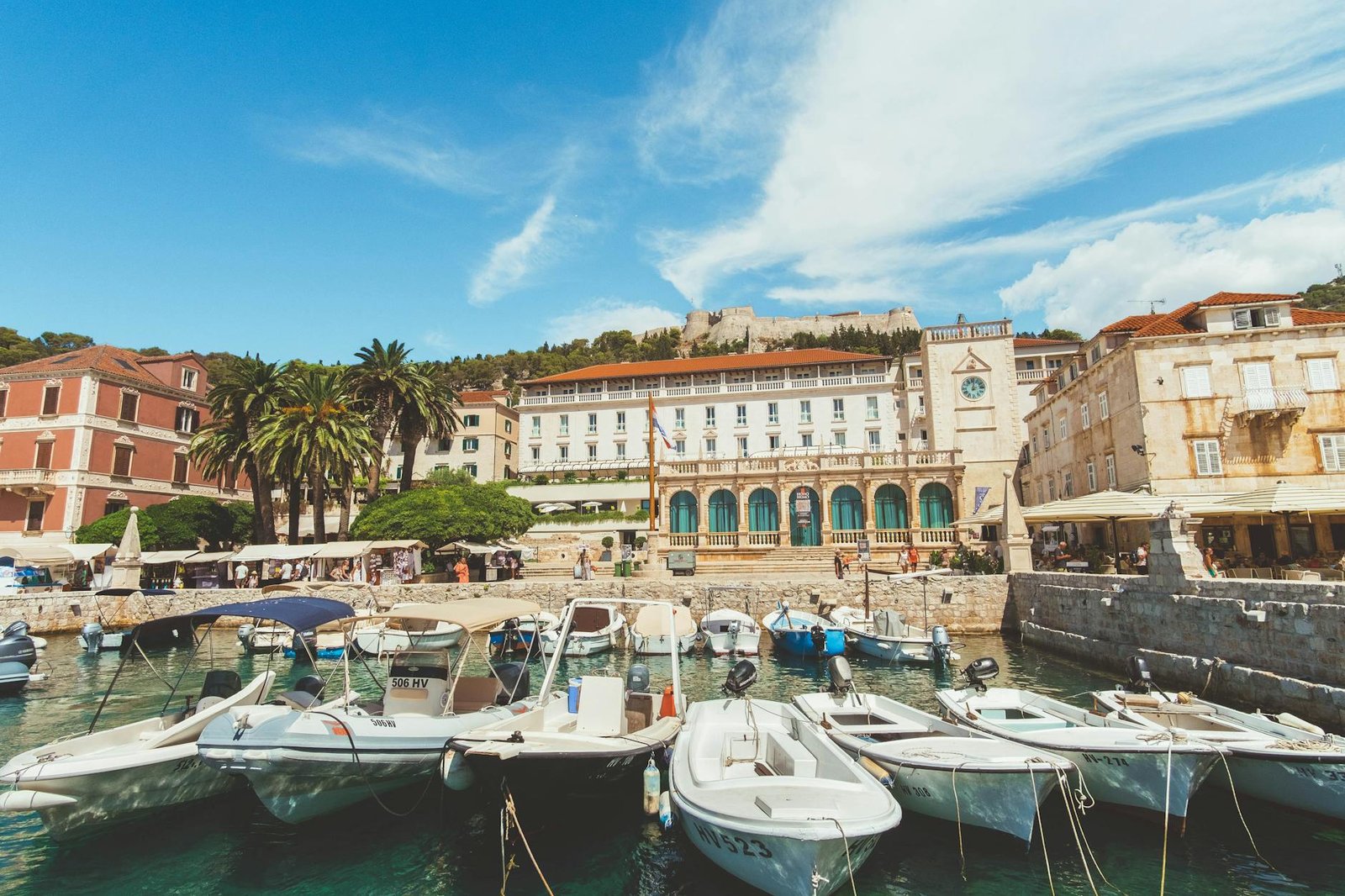
Hvar regularly tops lists of Croatia’s most beautiful destinations, yet most cruise passengers spend their few hours here barely scratching the surface. With a fortress-crowned hilltop, lavender-scented countryside, and some of the Adriatic’s most inviting offshore islands, this is a port that rewards the curious. Here’s how to make every minute count.
Arriving by Ship
Hvar Town doesn’t have a large industrial cruise terminal — and that’s exactly part of its charm. Most ships tender passengers directly into the heart of the old town, landing you steps from the main Trg Sv. Stjepana (St. Stephen’s Square), one of the largest piazzas on the Dalmatian coast. Tender operations are generally smooth, though popular port days in summer mean queues can build; aim to be among the first tenders ashore to maximise your time. The waterfront promenade stretches in both directions from the landing point, and the town is almost entirely walkable from there. Taxis and water taxis are available if you want to venture further along the island.
Things to Do

Start by climbing to the Fortica fortress above the old town — it takes about 20 minutes on foot and rewards you with panoramic views across the rooftops and out to the Pakleni Islands. The entrance fee is modest and absolutely worth it.
If you have a little more time and energy, renting a bike to explore Hvar’s interior is a memorable way to experience the island’s dramatic landscape. A guided cycling tour takes you through vineyards, villages, and coastal panoramas that most visitors simply never see. 🎟 Book: Cycle Hvar Tour
For something more leisurely, a boat tour is the definitive Hvar experience. The Pakleni Islands — a scattered archipelago just offshore — are fringed with clear turquoise water and hidden coves. A private boat tour gives you the freedom to explore the red rock formations, secluded bays, and quieter beaches at your own pace. 🎟 Book: Red Rocks, Hvar Bays & Pakleni – Private Boat Tour from Hvar If you prefer a shorter, more social outing on the water, a shared boat tour from the harbour is a great alternative. 🎟 Book: Boat Tour at Delfina Hvar
Don’t miss the Benedictine convent on the edge of town, where nuns have woven intricate lacework from agave fibres for over 300 years — it’s a UNESCO-listed tradition and a genuinely moving thing to witness.
Local Food
Hvar’s cuisine is firmly rooted in the Dalmatian tradition: fresh seafood, olive oil, locally grown vegetables, and bold flavours. Head to one of the smaller konobas (traditional taverns) tucked into the stone lanes behind the main square for the most authentic meals. Look for grilled octopus dressed simply in olive oil and herbs, peka (meat or seafood slow-cooked under an ash-covered dome), and black risotto made with cuttlefish ink.
Hvar is also serious wine country. The island’s Plavac Mali grape produces robust, full-bodied reds that rival anything you’d find in more famous wine regions. A dedicated wine tasting with a local expert gives you the full story — the volcanic soil, the centuries of tradition, and the small producers doing exceptional work. 🎟 Book: Hvar Wine tasting small group experience Pair your glass with local sheep’s cheese and pršut (air-dried ham) and you have everything you need.
Shopping

The old town has a good mix of artisan shops and local produce stalls without having tipped entirely into souvenir-factory territory — yet. Lavender is Hvar’s signature product, and you’ll find it everywhere from essential oils and sachets to soaps and honey. It’s one of the more genuinely useful souvenirs you can bring home. If you want to understand where it all comes from, a guided lavender tour into the island’s interior shows you the fields in bloom and the traditional distillation process up close — a beautiful experience during the summer harvesting season. 🎟 Book: Hvar Lavender Tour
Look out for locally produced olive oil, herb-infused spirits, and handmade jewellery. Prices in the main square shops run higher than elsewhere on the island, so wander a few streets back for better value.
Practical Tips
- Cash and cards: Most places accept cards, but carry some Croatian euros for smaller stalls and water taxis.
- Sun protection: Hvar earns its reputation as one of Europe’s sunniest spots — UV intensity is serious in summer, so sunscreen and a hat are non-negotiable.
- Crowds: The main square and waterfront get very busy between 10am and 4pm; early mornings and late afternoons are calmer and cooler.
- Water taxis: These run to the Pakleni Islands throughout the day and are cheap, reliable, and a highlight in themselves.
Hvar rewards those who move beyond the harbour cafés and climb a little higher, sail a little further, and linger a little longer. Even a single cruise day, used well, can leave you with memories that last far longer than the suntan.
🎟️ Things to Book in Advance
These highly-rated experiences fill up fast — book before you arrive to avoid missing out.


This page contains affiliate links. If you book through them, we may earn a small commission at no extra cost to you.
📍 Getting to Hvar Croatia
Use the interactive map below to explore the port area and plan your route from the terminal.
Leave a Reply