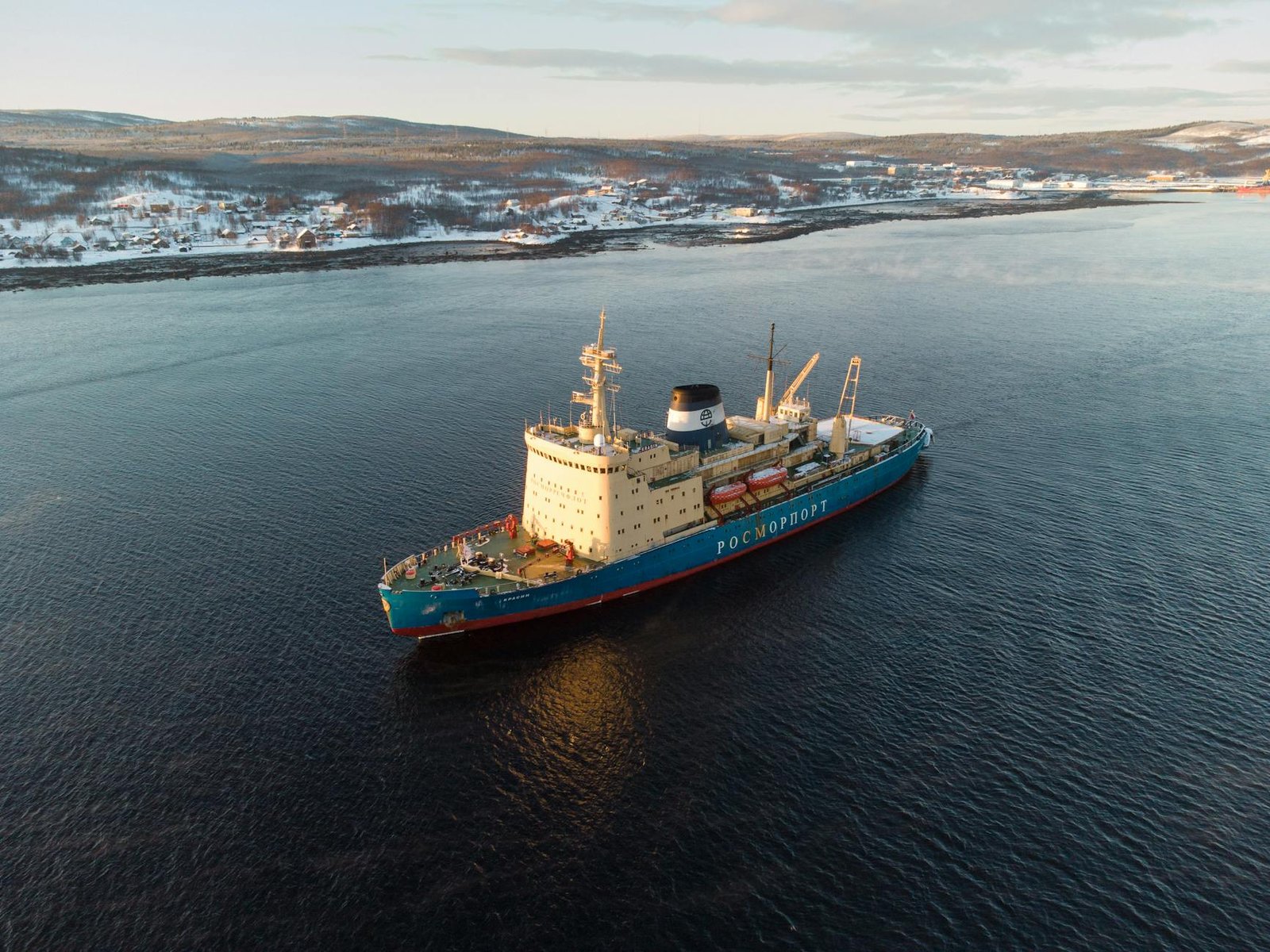
Quick Facts: Port of Murmansk | Russia | Murmansk Sea Trade Port (Морской торговый порт) | Dockside (no tender) | ~3–5 km to city center | UTC+3 (Moscow Time, year-round)
Murmansk is the world’s largest city above the Arctic Circle, a raw, Soviet-era port city that rewards curious cruisers with nuclear icebreakers, reindeer encounters, and the kind of end-of-the-earth atmosphere you simply cannot manufacture. It sits on the Kola Bay, ice-free year-round thanks to the Gulf Stream — which is the reason this improbable metropolis of 300,000 people exists at all. Your single most important planning tip: confirm well in advance whether your cruise line has obtained the necessary Russian port permissions and whether you need a visa, as regulations for cruise passengers can differ significantly from standard tourist visas — and as of 2024, geopolitical conditions mean itinerary changes are always possible, so verify your sailing dates are confirmed before booking independent excursions.
—
Port & Terminal Information
The cruise facility is operated under the umbrella of the Murmansk Sea Trade Port (Мурманский морской торговый порт), a sprawling commercial and passenger port on the western shore of Kola Bay. There is no single glamorous cruise terminal building — this is a working industrial port, and arriving here feels suitably dramatic: grey cranes, rusting hulls, and the enormous white flank of Lenin, the world’s first nuclear-powered surface vessel, permanently moored just minutes away.
Ships dock directly alongside the quay — no tender required — which means you step off the gangway and you’re already on Russian soil. That said, port clearance by border security and customs can take 1–2 hours depending on the size of your ship, so don’t expect to be ashore the moment the gangway drops. Factor this into any independent plans.
Terminal facilities:
- The passenger terminal building is basic by European standards — you’ll find a small waiting area and basic restrooms, but don’t expect a polished cruise hub
- ATMs: There is typically at least one ATM within or immediately adjacent to the port building; withdraw rubles here before heading into the city, as card acceptance was patchy even before sanctions-related disruptions
- Currency exchange: Available at the port but rates are variable — compare with exchange offices in the city center
- Wi-Fi: Not reliably available at the terminal; purchase a local SIM card in the city if connectivity is essential
- Tourist information: No dedicated info desk; your ship’s Shore Excursion desk is your best pre-departure resource
- Luggage storage: Not available at the passenger terminal
- Shuttle to city: Ships sometimes arrange a complimentary or low-cost shuttle bus to the city center — confirm with your cruise director the night before; if none is offered, taxis queue near the gate
Find the terminal’s location on [Google Maps here](https://www.google.com/maps/search/Murmansk+cruise+terminal) to orient yourself before you arrive — the port sits on the bay’s western edge, with the city climbing steeply up the hills behind it.
—
Getting to the City

The city center is 3–5 km from the port gates depending on where exactly your ship berths, and the terrain between the waterfront and the main streets involves a steep uphill climb. Here’s every realistic option:
- On Foot — Technically walkable in 35–50 minutes, but be aware the route involves navigating an industrial port zone and then a fairly punishing uphill stretch once you reach the city streets. In summer this is manageable; in any cold or wet weather, it’s genuinely unpleasant. Walk only if you are fit, have time, and want the immersive industrial Arctic atmosphere.
- Bus — City buses run from stops near the port gate. Routes 1, 18, and 24 are most commonly useful for reaching the central Lenin Avenue (Проспект Ленина) area. Fare is approximately 50–70 rubles (under $1 USD), paid to the driver or conductor with cash. Frequency is roughly every 15–20 minutes. Journey time to the center is 15–20 minutes. This is a very local experience — no English signage, so have your destination written in Cyrillic if possible.
- Taxi — The most practical independent option. A taxi from the port to the city center costs approximately 300–500 rubles ($3–6 USD at pre-sanction rates; prices vary, so confirm before getting in). Yandex Taxi (Russia’s equivalent of Uber) was the most reliable app-based option and far preferable to hailing unknown cabs at the gate, where overcharging of tourists is well-documented. Agree the fare before departure if taking an unmetered cab, and never accept the first price from someone who approaches you at the gate — it will be 3–4 times the fair fare.
- Hop-On Hop-Off — Murmansk does not have a traditional HOHO bus service. Don’t plan your day around one.
- Rental Car/Scooter — Not practical for cruise day-trippers. International rental agreements are complicated, road signage is in Cyrillic, and a single day is barely enough time to navigate the city on foot let alone explore by car. Skip this.
- Ship Shore Excursion — Genuinely worth considering here, more than at most ports, for two reasons: first, some of the best experiences (especially the nuclear icebreaker boarding and Sami village visits) are logistically complex to arrange independently; second, in a destination with a language barrier this significant, having a Russian-speaking guide is transformative. That said, combining a ship excursion for morning highlights and then going independent in the afternoon is a smart hybrid approach. Browse [Viator tours in Murmansk](https://www.viator.com/search/Murmansk) or [GetYourGuide options](https://www.getyourguide.com/s/?q=Murmansk¤cy=USD&partner_id=MHU0UHU) for pre-bookable independent guides and small group tours.
—
Top Things to Do in Murmansk, Arctic Russia
Murmansk punches well above its weight for a city that most cruisers have only vaguely heard of — the combination of Cold War history, Arctic wilderness, indigenous Sami culture, and sheer geographical drama makes for one of the most memorable port days anywhere in Northern Europe. Here are the experiences worth your time, roughly ranked by impact.
Must-See
1. Lenin Nuclear Icebreaker Museum (Adult: ~1,200 rubles / ~$13 USD) — This is the single most extraordinary thing you can do in Murmansk, and it’s unlike anything else on Earth. The Lenin was the world’s first nuclear-powered surface ship, launched in 1959, and she’s now permanently moored on the Kola Bay waterfront just minutes from where your ship docks. You walk her decks, peer into the reactor compartment, explore the engine rooms, and see the officers’ quarters exactly as they were during the Cold War. It is genuinely hair-raising. Look for [guided tours on GetYourGuide](https://www.getyourguide.com/s/?q=Murmansk¤cy=USD&partner_id=MHU0UHU) that include skip-the-line access and an English-speaking guide — highly recommended because the onboard signage is almost entirely in Russian. Allow 2–3 hours minimum.
2. Alyosha Monument (Defenders of the Soviet Arctic Memorial) (Free) — Standing 35.5 meters tall on a hill overlooking the entire city and Kola Bay, this enormous concrete soldier — known affectionately as “Alyosha” — is one of Russia’s most powerful war memorials. It commemorates the Soviet soldiers who defended Murmansk during World War II, when the city was one of the most heavily bombed in the entire war (only Leningrad and Stalingrad suffered more destruction). The view from the base of the statue is breathtaking — you can see your ship, the bay, and the vast taiga stretching to the horizon. Bring a wide-angle lens. Allow 45 minutes including the walk up.
3. Murmansk Regional Local History Museum (Краеведческий музей) (Adult: ~300 rubles) — The best single building for understanding what this city actually is and how it came to exist. The permanent collection covers everything from Sami indigenous culture to Arctic exploration, WWII, and the Cold War naval arms race. The natural history section has impressive taxidermy of Arctic wildlife you are extremely unlikely to see in the wild on a port day. Located centrally on Lenin Avenue. Check [Viator](https://www.viator.com/search/Murmansk) for tours that combine this with other city highlights. Allow 1.5–2 hours.
4. Murmansk Memorial (The North Star Eternal Flame) (Free) — Adjacent to the Alyosha monument complex, this flame burns year-round in memory of the fallen. On a grey Arctic morning with the bay spread below you and the eternal flame flickering in the wind, it is quietly one of the most moving places in northern Russia. 10–15 minutes to pay your respects properly.
5. Lenin Avenue (Проспект Ленина) (Free) — The city’s main pedestrian and commercial spine is a living museum of Soviet urban planning: massive Stalinist-era apartment blocks, public art, local cafes, supermarkets where you can buy Arctic-caught crab paste and black bread, and pharmacies if you need anything. This is where you get the real texture of everyday Arctic Russian life. Walk its full length from the central square to the main market. Allow 1 hour of browsing time.
—
Beaches & Nature
6. Kola Bay Waterfront Walk (Free) — There are no beaches in any tropical sense — this is the Arctic — but the waterfront promenade along Kola Bay is genuinely atmospheric. You’ll pass fishing vessels, the Lenin icebreaker, memorials, and local families on summer evenings when the midnight sun refuses to set. In June and July, you may be walking here at what feels like 2pm light at actual midnight. That disorientation is itself worth experiencing. Allow 1–1.5 hours for a leisurely stroll.
7. Murmansk Botanical Garden (Полярно-Альпийский Ботанический Сад) (Small admission fee, ~100–200 rubles) — The world’s northernmost botanical garden, located about 20 km from the city center near Kirovsk (better as a day trip), but the Murmansk city branch is more accessible. A peculiarly charming place — watching determined plant life survive at 69° North gives you a new respect for Arctic resilience. 1 hour is enough for most visitors.
8. Arctic Tundra Hiking (Variable — guide-dependent) — The hills and tundra immediately surrounding Murmansk are accessible and strikingly beautiful in summer: low scrub, cloudberries, mosses, the occasional reindeer track. Book a [guided nature walk on Viator](https://www.viator.com/search/Murmansk) or [GetYourGuide](https://www.getyourguide.com/s/?q=Murmansk¤cy=USD&partner_id=MHU0UHU) rather than heading out unguided — the terrain can be disorienting and local knowledge about wildlife and conditions is invaluable. Half-day tours typically run 3–4 hours.
—
Day Trips
9. Teriberka Village & Barents Sea Coast (~150 km each way; full day only) — If you have 8+ hours ashore, Teriberka is the extraordinary choice. This remote fishing village on the Barents Sea was the filming location for Andrey Zvyagintsev’s Oscar-nominated film Leviathan, and the landscape — rocky coastline, whale-watching opportunities in season, a graveyard of rusting Soviet fishing boats half-swallowed by tundra — is unlike anywhere else in Europe. It requires a private car and driver or an organized tour. Book well in advance through [Viator](https://www.viator.com/search/Murmansk) as independent transport is unreliable. Allow a full 8+ hour day and confirm your ship’s departure time carefully.
10. Sami Indigenous Village Experience (Tour-dependent, typically ~$60–120 USD) — The indigenous Sami people have lived across the Kola Peninsula for thousands of years, and several operators now offer cultural visits to traditional camps where you can meet reindeer herders, learn about Sami spiritual practices, eat traditional food, and in winter months experience reindeer sledding. In summer, the focus shifts to storytelling and nature walks. These experiences are best booked through [GetYourGuide](https://www.getyourguide.com/s/?q=Murmansk¤cy=USD&partner_id=MHU0UHU) or your ship’s excursion desk for guaranteed English interpretation. Allow 4–5 hours including transport.
—
Family Picks
11. Murmansk Oceanarium (Adult: ~500 rubles; Child: ~300 rubles) — Small by international standards but genuinely delightful: performing seals and dolphins, Arctic fish species, and enthusiastic Russian trainers who make the shows fun even without a word of English. Kids are universally charmed. Located about 5 km from the city center; take a taxi. Shows run at set times — check the schedule on arrival. Allow 1.5–2 hours.
12. Arctic and Antarctic Research Institute Murmansk Branch (Free or small fee) — More interesting than it sounds, especially for older children. Models of polar exploration vessels, maps of expedition routes, and the story of Soviet polar science make for a genuinely compelling hour. The staff are often passionate and will attempt halting English with enthusiastic visitors. Allow 1 hour.
—
Off the Beaten Track
13. Murmansk Fish Market (Рыбный рынок) (Free entry; prices vary by stall) — Head here before you buy anything labeled “Arctic seafood” in a restaurant. This is where locals actually buy their fish — whole Arctic cod, smoked halibut, tubs of red caviar, dried capelin by the bag, and king crab legs of a size that will make your eyes water. Even if you don’t buy, the atmosphere is purely local and wonderfully unglamorous. Located near the central market area. Allow 30–45 minutes.
14. Soviet-Era Submarine Memorial, Kola Bay (Free to view externally) — Several decommissioned Soviet submarines are visible along the bay, and one is accessible as a monument. Standing next to a nuclear submarine in the Arctic, contemplating the Cold War from this end of the planet, is a genuinely surreal experience. Ask your local guide or hotel concierge for current public access status as it varies. Allow 30 minutes.
—
What to Eat & Drink

Murmansk’s cuisine is rooted in two things: the sea and the cold. The Arctic waters of the Barents Sea produce some of the world’s finest cod, halibut, and most famously, king crab — and locals have been eating them through brutal winters for generations, which means the preparations are hearty, unfussy, and deeply satisfying. Vodka is ubiquitous and the local toast is za zdorovye (to health), but craft beer has made a quiet inroad in the city’s better bars.
- King Crab (Камчатский краб) — The star of the Murmansk table. Order it boiled and simply, split at the table, with butter. Expect to pay 1,500–3,000 rubles per portion depending on the restaurant; tourist-facing spots charge at the higher end. Don’t leave without trying it.
- Ukha (Уха) — Traditional Russian fish soup, made fresh daily in most local restaurants. Made with Arctic cod or halibut, potatoes, onion, and fresh dill. Warming, restorative, and costs around 200–400 rubles for a generous bowl. The perfect lunch on a cold day.
- Smoked Arctic Halibut — Available at the fish market and many cafes; eat it on black bread (чёрный хлеб) with mustard as the locals do. 50–150 rubles per portion at market stalls.
- Kola Bay Shrimp (Северная креветка) — Smaller and sweeter than their southern cousins, served cold by the bag at the fish market or warm in cream sauce at restaurants. 400–800 rubles at a sit-down restaurant.
- Pirogi — Baked pastries filled with fish, potato, cabbage, or mushroom. The ultimate Arctic fast food. Available from bakeries and market stalls for 50–100 rubles each.
- Restaurant Tundra (Тундра) — One of the most consistently recommended restaurants for first-timers in Murmansk; locally-focused menu, English menus available, and the king crab here is reliably excellent. Located near the city center. Expect
📍 Getting to Murmansk, Arctic Russia
Use the interactive map below to explore the port area and plan your route from the terminal.
Leave a Reply