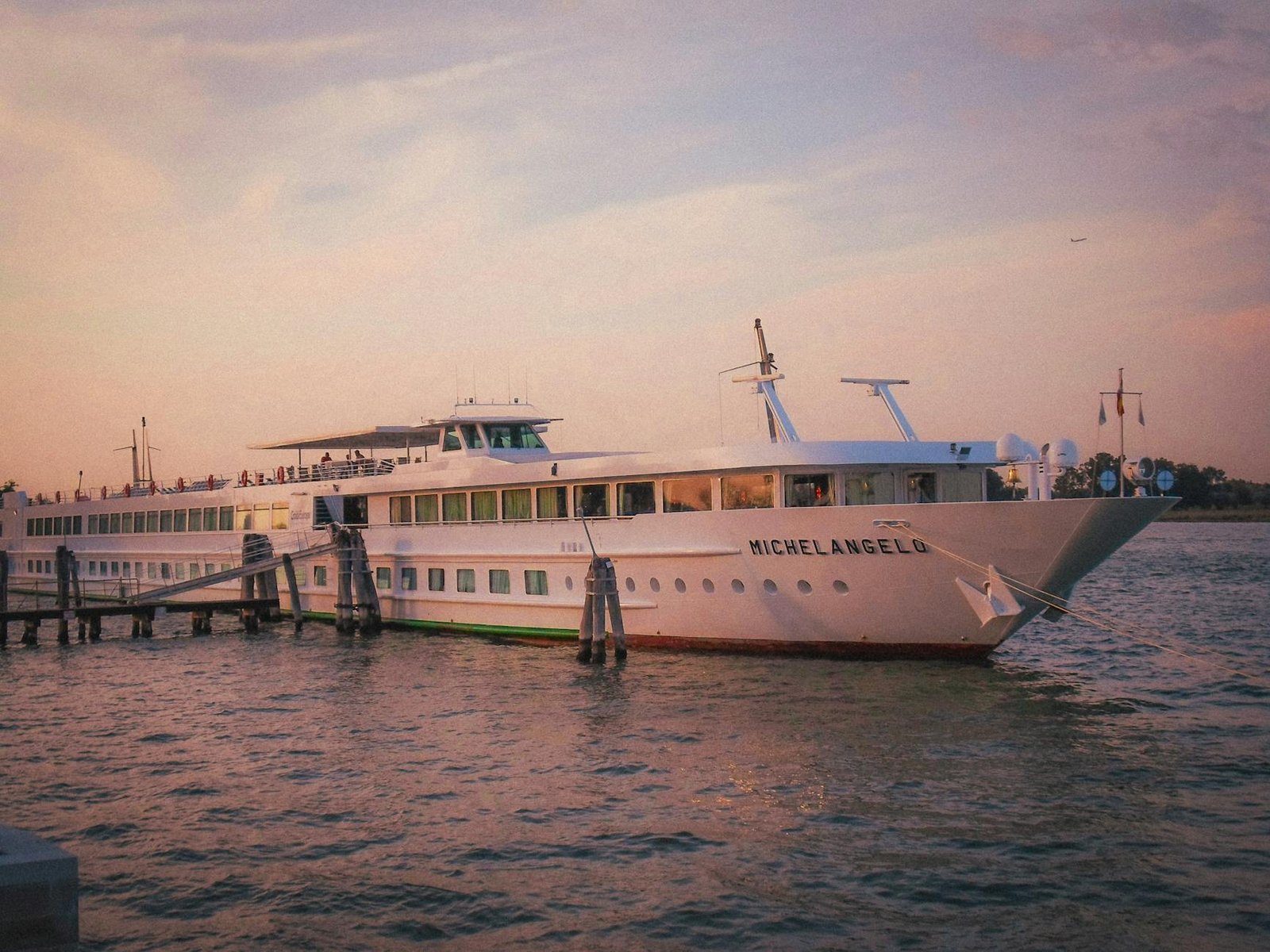
Venice is one of those cities that sounds almost too good to be true — canals instead of streets, palaces rising straight from the water, a skyline that belongs in a painting. It is every bit as extraordinary as you’ve heard, and yes, one day is enough to fall completely in love with it. Here’s how to spend it wisely.
Arriving by Ship
Your ship docks at the Venezia Terminal Passeggeri, one of Europe’s busiest cruise ports, located at the western edge of Venice in the Marittima district. There are no tender operations here — you walk straight off the ship onto solid ground, which makes getting started refreshingly easy.
From the terminal, Venice’s historic centre is just a short walk or waterbus (vaporetto) ride away. The Piazzale Roma is roughly a 10–15 minute walk, and from there you’re straight into the action — no shuttles, no fuss.
Things to Do

Venice rewards wandering, but having a shortlist of must-sees stops you losing an entire morning getting deliberately lost (tempting as that sounds). The city is compact, walkable — sort of — and absolutely packed with world-class experiences.
History & Culture
- St Mark’s Basilica — the jewel of the city, with dazzling gold mosaics covering every inch of the interior; entry to the basilica itself is free, but skip-the-line tickets (around €3–5) are essential.
- Doge’s Palace (Palazzo Ducale) — the former seat of Venetian power, packed with Tintoretto masterpieces and a jaw-dropping Bridge of Sighs; tickets cost around €14 and it opens at 9am.
- Rialto Bridge — Venice’s most iconic bridge, best visited early morning before the tour groups arrive; it’s free to walk across and the views up the Grand Canal are spectacular.
- Gallerie dell’Accademia — Italy’s finest collection of Venetian art, including Titian and Bellini; entry is around €12 and it opens at 8:15am on weekdays.
On the Water
- Electric boat tour of the Grand Canal — ditch the crowded vaporetto and explore Venice’s famous waterways on a quiet electric boat with a knowledgeable guide 🎟 Book: Venice: Explore Venice on Electric Boat.
- Private lagoon boat tour — venture beyond the Grand Canal to discover hidden corners of the Venetian Lagoon, including views of Murano and San Giorgio Maggiore 🎟 Book: Venice : Private Boat Tour of the Venice Lagoon.
- Gondola ride — touristy, yes, but genuinely magical; official rates start at €80 for 30 minutes and gondoliers are legally bound to charge set prices.
Craft & Experience
- Venetian mask-making class — learn the centuries-old tradition of Carnevale mask-making with hands-on instruction in a proper studio 🎟 Book: Venetian Carnival Mask Making Class in Venice, Italy.
- Murano island — hop the vaporetto (Line 4.1 from Fondamente Nove) to watch master glassblowers at work; entry to demonstrations is usually free, though the shops are hard to leave empty-handed.
What to Eat
Venetian food is distinct from the rest of Italy — shaped by the sea, the lagoon, and centuries of spice trade. Skip the tourist traps around St Mark’s Square and head into the quieter sestieri (neighbourhoods) for the real stuff.
- Cicchetti — Venice’s answer to tapas: small bites of cured fish, polenta, or marinated vegetables served at bacari (wine bars); aim for around €1.50–3 per piece at spots like All’Arco near the Rialto Market.
- Sarde in saor — sweet-and-sour sardines with onions and raisins, a Venetian classic; try it at Osteria Alla Botte for around €8.
- Risotto al nero di seppia — creamy black squid-ink risotto, rich and briny and completely unlike anything you’ve tasted before; expect to pay €14–18 at a proper trattoria.
- Fritto misto — a heaped plate of lightly fried seafood straight from the Adriatic; found at almost any seafood restaurant for €15–20.
- Spritz Veneziano — the original aperitivo: Aperol or Campari with prosecco and a splash of soda; order one at a canal-side bar for around €3–5.
Shopping

Venice’s best shopping isn’t souvenirs — it’s craftsmanship. Murano glass, hand-painted Carnevale masks, and Burano lace are the three things worth spending money on, and all three have genuine artisan producers you can buy directly from. If you want a hands-on souvenir, painting your own mask in a proper workshop is a brilliant alternative to buying a mass-produced one from a market stall 🎟 Book: Mask Workshop – Paint Your Own Venetian Mask in Venice, Italy.
Avoid anything labeled “Made in China” near St Mark’s — and there’s a lot of it. The Rialto Market is the best place for local food products like dried pasta, jars of bigoli sauce, and bottles of local prosecco to take home.
Practical Tips
- Currency — Italy uses the euro; contactless card payments are widely accepted, but carry some cash for bacari and smaller stalls.
- Vaporetto tickets — a single journey costs €9.50 unless you buy a 24-hour pass (€20), which pays off quickly if you’re island-hopping.
- Go ashore early — Venice gets extremely crowded by 10am; be off the ship by 8am to see St Mark’s Square in peace.
- Dress code — cover shoulders and knees to enter any church, including St Mark’s Basilica; scarves work perfectly.
- Tipping — not obligatory but rounding up the bill or leaving €1–2 at a bar is appreciated.
- Wear comfortable shoes — Venice involves hundreds of bridges with steps; cobblestones are uneven and heels are a bad idea.
- You need at least 6–8 hours — a half-day barely scratches the surface; a full port day lets you explore properly and still enjoy a long lunch.
Venice doesn’t just live up to the hype — it quietly, stubbornly surpasses it, and you’ll be plotting your return before your ship has even left the lagoon.
🎟️ Things to Book in Advance
These highly-rated experiences fill up fast — book before you arrive to avoid missing out.


This page contains affiliate links. If you book through them, we may earn a small commission at no extra cost to you.
📍 Getting to Venice, Italy
Use the interactive map below to explore the port area and plan your route from the terminal.
Leave a Reply