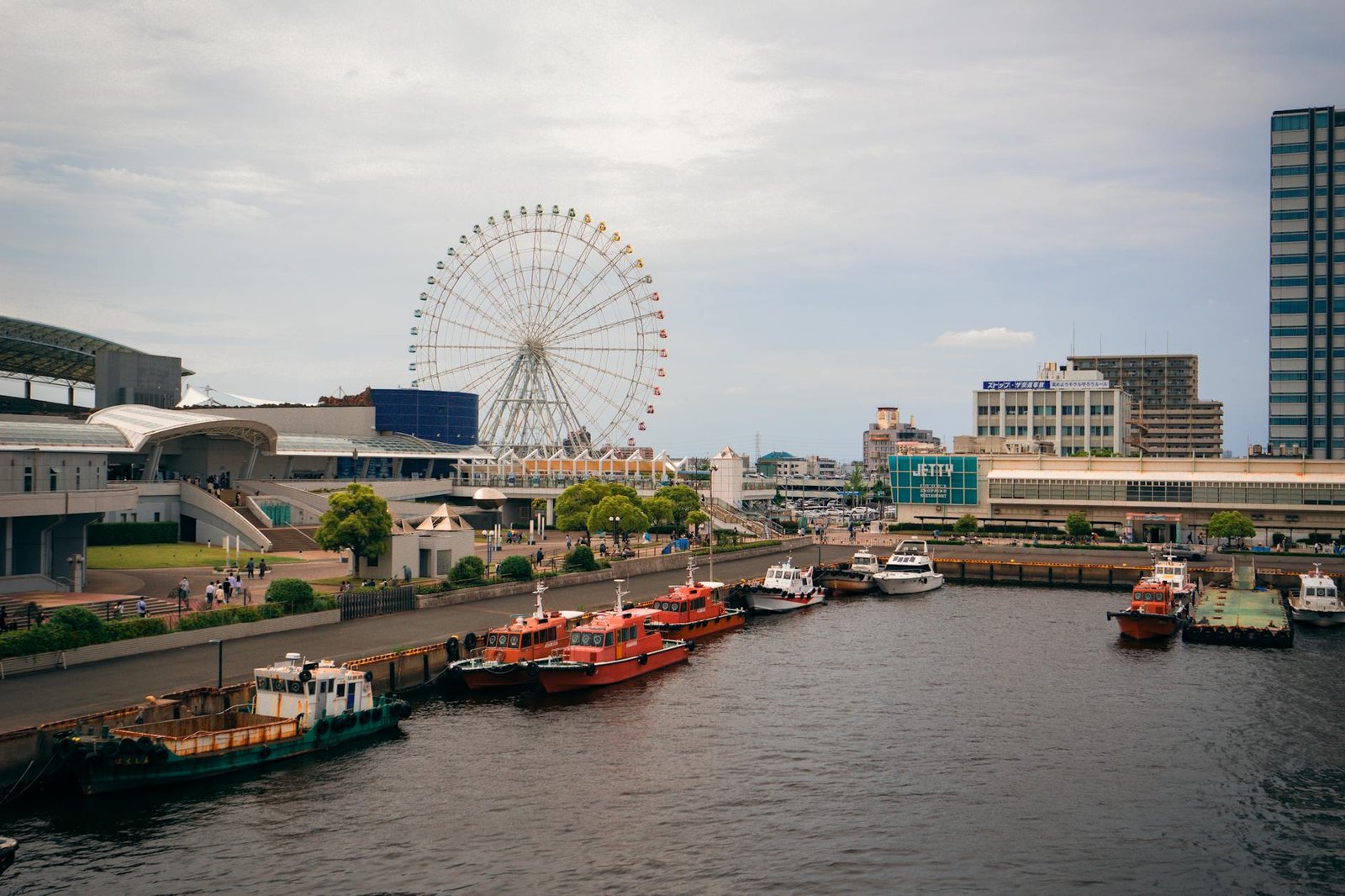
Nagoya doesn’t make it onto many travellers’ bucket lists — and that’s exactly why you should be paying attention. This sprawling city in Aichi Prefecture is Japan’s fourth largest, home to a samurai castle, a thriving food culture, and more personality than its industrial reputation suggests. Arriving by cruise ship here means stepping into an authentic, unhurried Japan that hasn’t been polished smooth for tourists.
Arriving by Ship
Cruise ships dock at Nagoya Port (Nagoya-ko), located in the Minato ward in the southern part of the city. The port is well-organised and modern, with a terminal building that includes luggage storage, tourist information, and basic amenities. From the pier, you can reach central Nagoya in about 20–30 minutes using the subway — the Meiko Line runs directly from Nagoya-ko Station into the heart of the city, making independent exploration genuinely easy. Taxis and private transfers are also available if you prefer a stress-free start. 🎟 Book: Nagoya Airport (NGO/NKM) to/from Nagoya City Private Transfer The port area itself is pleasant for a brief wander, with the Port of Nagoya Public Aquarium and a cluster of museum ships nearby if you want to fill time before boarding again.
Things to Do

Nagoya Castle is the obvious starting point, and it earns its reputation. The original fortress, built in 1612, is famous for the pair of golden shachihoko (mythical fish-tigers) perched on its roof — they’ve become the symbol of the city. The grounds are expansive and beautiful, especially during cherry blossom season. Inside, the recently restored Honmaru Palace features staggeringly intricate painted screens and gilded corridors that rival Kyoto’s finest.
Beyond the castle, the Atsuta Shrine is one of the most sacred Shinto sites in Japan, second only to Ise in spiritual significance. It houses the Kusanagi sword, one of the three Imperial Treasures of Japan, and the forested grounds have a genuinely ancient, hushed quality that feels miles from the city bustle.
If you’re travelling with children — or simply refuse to act your age — LEGOLAND Japan sits right in the port area, making it an incredibly convenient excursion from the ship. 🎟 Book: Nagoya LEGOLAND JAPAN Admission Ticket For something calmer and equally family-friendly, SEA LIFE Nagoya offers impressive marine displays in a slickly designed aquarium. 🎟 Book: SEA LIFE Nagoya Ticket
For those who want to see the city efficiently with local insight, a guided car tour is worth considering, particularly if your time in port is limited. 🎟 Book: Guided Tour of Nagoya by Car
Local Food
Nagoya has one of the most distinct regional food cultures in Japan — locals call it Nagoya-meshi, and they’re fiercely proud of it. You’ll encounter flavours that are bolder and more robust than the delicate cuisine of Tokyo or Kyoto, built around a thick, sweet-salty red miso paste called hatcho miso.
Miso katsu is the dish you absolutely must try: a breaded pork cutlet smothered in a rich, deeply savoury red miso sauce. It sounds heavy, but it’s utterly addictive. Hitsumabushi is another Nagoya icon — grilled eel over rice, served in a wooden tub and eaten three different ways, the last of which involves pouring dashi broth over the top like a tea ceremony for carnivores.
Don’t overlook miso nikomi udon, thick wheat noodles simmered directly in a red miso broth until gloriously dense and hearty. And if you want to try making something with your own hands, a ramen-making class gives you a genuinely hands-on window into Japanese noodle culture. 🎟 Book: Ramen Making Experience in Nagoya Nagoya also has a peculiar passion for morning culture — coffee shops that serve surprisingly elaborate free breakfast sets with your morning coffee, a tradition locals treat as sacred.
Shopping

The main shopping hub is around Sakae, Nagoya’s central entertainment and retail district, where department stores like Matsuzakaya and Mitsukoshi sit alongside independent boutiques and covered shopping arcades. The underground shopping network beneath the city centre is enormous — on a rainy day, you can walk for kilometres without seeing the sky.
For souvenirs, look for fried shrimp crackers (ebi senbei), uiro (a subtly sweet rice cake in various flavours), and ceramics from nearby Seto, which gave the world the word “china” via its centuries-old pottery tradition. The Banshoji shopping street near the temple of the same name has a more traditional, old-town atmosphere if you want to browse without department store fluorescence.
Practical Tips
The Japanese yen is the currency, and cash is still king in many traditional restaurants and smaller shops — bring some from the ship or withdraw from a 7-Eleven ATM, which reliably accepts foreign cards. Nagoya’s subway system is colour-coded, bilingual, and easy to navigate even without Japanese. Google Maps works flawlessly here. The city is generally safe, walkable, and impeccably clean. Most restaurants display plastic food models or picture menus, so ordering is rarely stressful. Comfortable shoes are essential — Nagoya rewards those willing to walk.
Nagoya rewards curiosity. It’s a city where the bullet train whips past castle towers, where ancient shrines sit in the shadows of expressways, and where a plate of miso katsu will make you question every pork dish you’ve eaten before. Give it a full day off the ship — you’ll be glad you didn’t just stay onboard.
🎟️ Things to Book in Advance
These highly-rated experiences fill up fast — book before you arrive to avoid missing out.


This page contains affiliate links. If you book through them, we may earn a small commission at no extra cost to you.
Leave a Reply