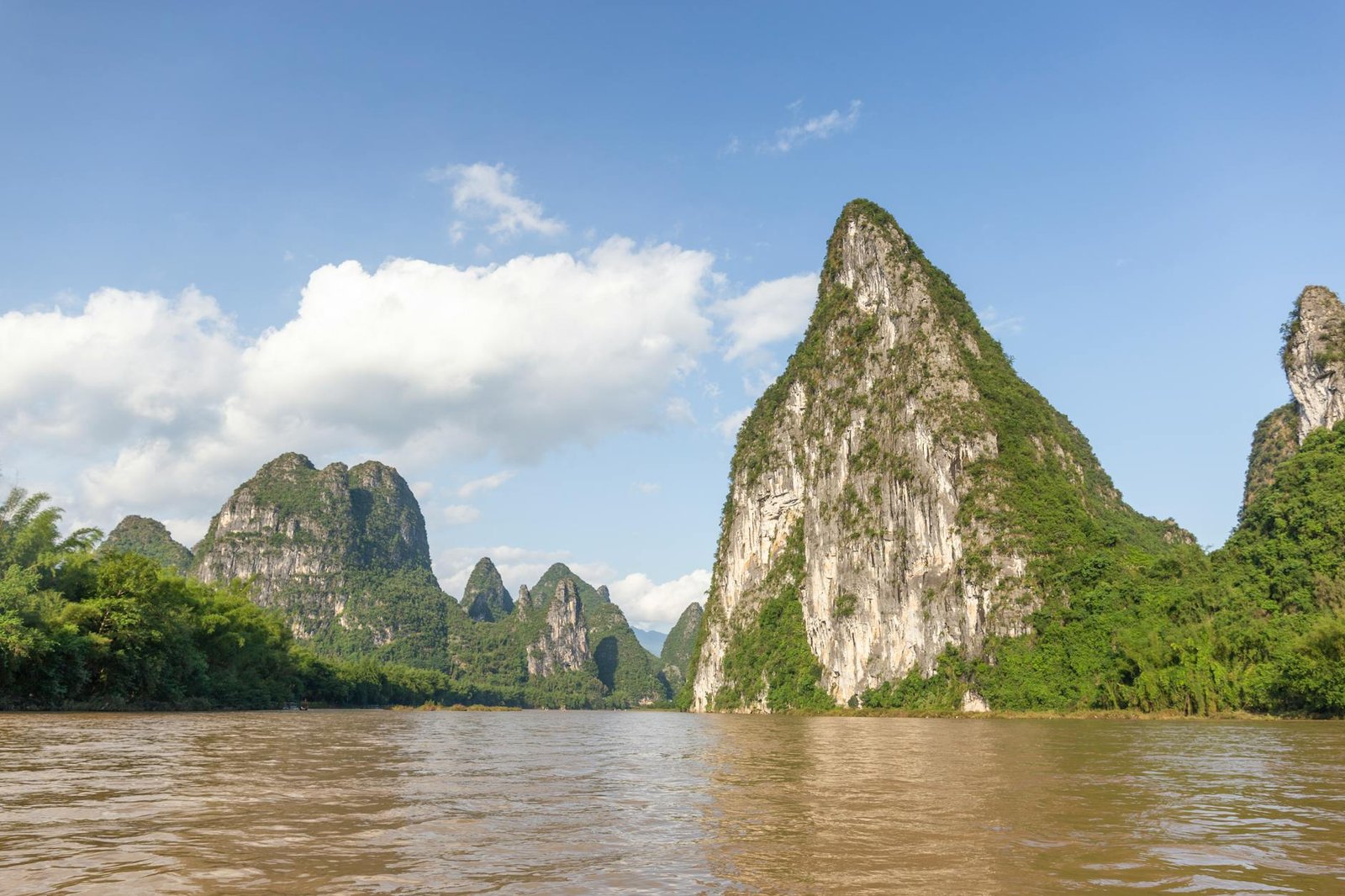
Few landscapes on earth stop you dead in your tracks the way Guilin’s does. Jagged limestone karst towers erupt from flat green valleys like something from a fever dream, and the Li River threads silently between them. This is one of China’s most iconic destinations — and arriving by cruise makes it even more magical.
Arriving by Ship
Guilin itself sits roughly 80 kilometres from the coast, so ocean-going cruise ships don’t sail directly into town. Most river cruise lines operate dedicated vessels purpose-built for the Li River, departing from Guilin’s Zhujiang Pier and sailing downstream to Yangshuo — a journey that is, in itself, the main event. If you’re arriving as part of a broader China itinerary, you’ll typically transfer overland or by air from a coastal port like Guangzhou before boarding your river vessel. Shore excursions from larger ships often involve organised coach transfers into the region, so confirm logistics with your cruise line well in advance.
Things to Do

Guilin rewards slow exploration — wander without a rigid plan and you’ll stumble into something extraordinary. That said, a few highlights are non-negotiable.
The River & Countryside
- Li River Cruise to Yangshuo — the four-to-five-hour drift past 83 kilometres of karst scenery is the centrepiece of any Guilin visit; state-run tickets start around ¥210 (USD 29), but guided packages are far smoother. 🎟 Book: Li River Cruise ticket from Guilin to Yangshuo with pickup
- Xianggong Hill Sunrise — hike 30–40 minutes before dawn to reach the summit viewpoint and watch mist roll between the peaks at first light; it’s among the most photographed views in China. 🎟 Book: Guilin Highlights Tour Li River to Yangshuo and Xianggong Hill
- Yulong River Bamboo Rafting — quieter and more intimate than the Li River, with traditional bamboo rafts punting you past ancient stone bridges; rafts cost roughly ¥120–180 per person depending on the season. 🎟 Book: Best of Guilin Li River Xianggong Hill and Yulong River
- Reed Flute Cave (芦笛岩) — a 240-million-year-old cavern lit with coloured lights, with stalactites shaped like lions, waterfalls, and pagodas; entry costs ¥80 and the cave is open daily 8am–6pm.
- Yangshuo West Street (西街) — the most atmospheric street in Yangshuo, buzzing with cafés, bars, and souvenir stalls; best explored in the evening when the lanterns come on.
- Elephant Trunk Hill (象鼻山) — Guilin’s most recognisable landmark, a rock formation that genuinely looks like an elephant drinking from the river; entry is ¥75 and it’s a 20-minute stroll from the city centre.
- Seven Star Park (七星公园) — Guilin’s largest park, home to limestone caves, a panda sanctuary, and traditional pavilions; entry ¥75, open 6am–9pm.
- Longji Rice Terraces — a two-hour drive from Guilin, these stepped terraces carved into the mountainside by the Zhuang people are most dramatic in May and October.
What to Eat
Guilin cuisine is lighter and more herb-forward than many other Chinese regional styles, with rice noodles, river fish, and fermented flavours taking centre stage. Street food here is genuinely extraordinary — don’t eat every meal at your ship’s restaurant.
- Guilin Rice Noodles (桂林米粉) — the city’s soul food: thin rice noodles in a rich bone broth, topped with pickled vegetables and peanuts; find them for ¥8–15 at any hole-in-the-wall noodle shop on Zhongshan Road.
- Beer Fish (啤酒鱼) — a Yangshuo speciality of fresh river fish braised in local beer and chillies; order it at Meiyou Café on West Street for around ¥60–80 per portion.
- Stuffed Li River Snails (田螺) — snails filled with pork, garlic, and pickled bamboo shoots, served piping hot from street stalls; typically ¥10–20 per skewer.
- Osmanthus Cake (桂花糕) — a delicate sweet made with Guilin’s signature osmanthus flower; sold at most bakeries citywide for around ¥5–10 per piece.
- Horseshoe Cake (马蹄糕) — a wobbly, translucent water chestnut jelly cake, lightly sweet and perfect for the humid heat; ¥5–8 at local markets.
Shopping

Guilin’s best shopping is rooted in its natural landscape — look for osmanthus wine, locally carved chilli sauce sets, and hand-painted karst landscape scrolls. The Zhengyang Pedestrian Street in central Guilin is packed with souvenir stalls, while Yangshuo’s West Street is better for quality craft items and minority ethnic textiles. Avoid mass-produced jade and “antique” items unless you can verify their origin — bargaining is expected, but start at 40–50% of the asking price.
Practical Tips
- Currency is cash-heavy — carry Chinese Yuan (RMB); WeChat Pay is widely used locally but requires a Chinese bank account to set up.
- Go ashore early — Xianggong Hill sunrise requires a 4–5am departure, so plan accordingly.
- Book the Li River cruise in advance — during peak season (April–October) tickets sell out fast; a guided day tour saves headaches. 🎟 Book: Guilin to Yangshuo Day Tour Li River Cruise and Reed Flute Cave
- Dress in layers — mornings in the karst valleys are surprisingly cool even in summer, and river breezes add to the chill.
- Tipping is not customary in China — a warm thank-you is appreciated far more.
- Air quality varies — a light mask is useful in the city; the countryside air is clean and fresh.
- Allow at least a full day — ideally two nights; the Li River cruise alone takes five hours one-way.
Pack light, wake up early, and let those limestone giants do the rest — Guilin will earn its place as the highlight of your entire China journey.
🎟️ Things to Book in Advance
These highly-rated experiences fill up fast — book before you arrive to avoid missing out.


This page contains affiliate links. If you book through them, we may earn a small commission at no extra cost to you.
📍 Getting to Guilin, Li River, China
Use the interactive map below to explore the port area and plan your route from the terminal.
Leave a Reply