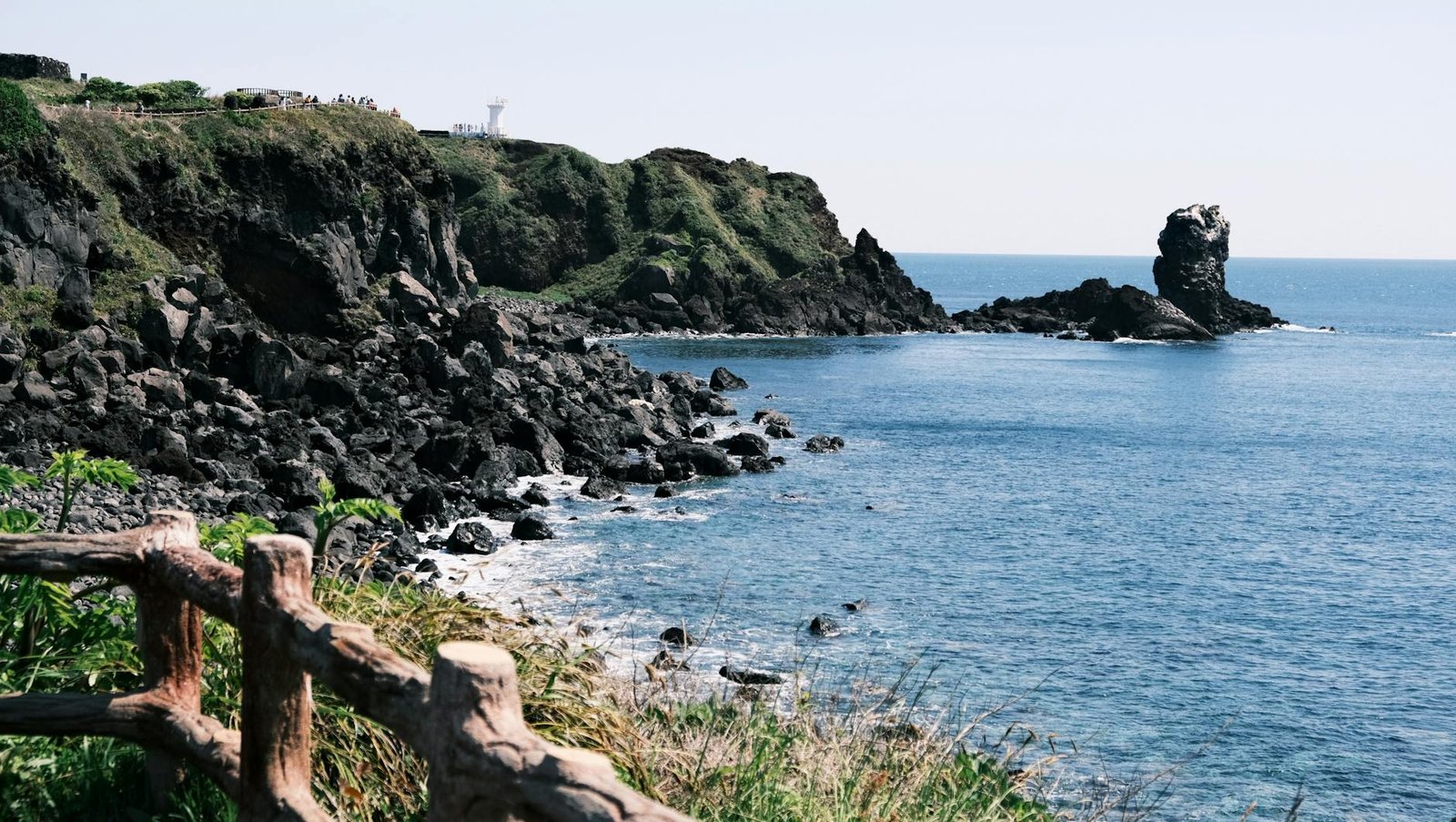
Jeju Island is South Korea’s most dramatic escape — a UNESCO-listed volcanic landscape of black lava coasts, emerald waterfalls, and tangerine orchards that feels nothing like the mainland. Cruise passengers stopping here get two ports in one: the buzzing northern hub of Jeju City and the quieter, wilder south at Seogwipo. One day is barely enough, but with the right plan, it’ll leave you breathless.
Arriving by Ship
Most cruise ships dock at Jeju Cruise Terminal in Jeju City or the newer Gangjeong Cruise Terminal in Seogwipo — both are deep-water berths, so you’ll walk straight off the gangway rather than tendering. Gangjeong sits about 12 km from Seogwipo’s town centre, while Jeju City terminal is within easy walking distance of the waterfront and its shops.
Taxis are plentiful at both terminals, and organised bus tours are the most time-efficient way to cover the island’s spread-out highlights. Jeju is large — roughly the size of Mauritius — so don’t underestimate distances between attractions.
Things to Do

Jeju packs in volcanic craters, dramatic coastlines, ancient lava tubes, and world-famous diving grandmothers, all within a single island. Prioritise based on which terminal your ship uses.
Nature & Adventure
- Hallasan National Park — Hike South Korea’s highest peak (1,950 m) through otherworldly cloud forests; the Eorimok trail takes about 5 hours return and entry is free.
- Seongsan Ilchulbong (Sunrise Peak) — This UNESCO-listed tuff cone rises from the sea and rewards the 20-minute climb with panoramic crater views; admission is ₩2,000 (about USD 1.50), open daily from 7 am.
- Manjanggul Lava Tube — Walk through one of the world’s longest lava tube systems, stretching 13 km underground; the open section is 1 km and entry costs ₩4,000.
- Cheonjeyeon & Cheonjiyeon Waterfalls — Two separate waterfall systems near Seogwipo with lush subtropical greenery; Cheonjiyeon (admission ₩2,000) is the more dramatic of the two.
- Jeju Olle Trails — A network of 26 scenic coastal walking routes; Trail 7 along the Seogwipo coast is stunning and completely free.
Culture & History
- Jeju Folk Village Museum — A living museum of 100 traditional thatched stone houses in their original settings; admission ₩11,000, open 9 am–6 pm.
- Haenyeo Diving Performance — Watch Jeju’s legendary free-diving grandmothers (haenyeo) harvest seafood straight from the ocean at Seogwipo Submarine or Hwasun Beach; a genuinely unforgettable sight. 🎟 Book: Jeju island Private Tour – UNESCO Day Tour & Haenyeo Performance
- Jeju UNESCO Southern Day Tour — If you want to tick off the island’s top UNESCO highlights without hiring your own transport, a guided tour from Gangjeong terminal covers everything efficiently. 🎟 Book: [fusion_builder_container hundred_percent=”yes” overflow=”visible”][fusion_builder_row][fusion_builder_column type=”1_1″ background_position=”left top” background_color=”” border_size=”” border_color=”” border_style=”solid” spacing=”yes” background_image=”” background_repeat=”no-repeat” padding=”” margin_top=”0px” margin_bottom=”0px” class=”” id=”” animation_type=”” animation_speed=”0.3″ animation_direction=”left” hide_on_mobile=”no” center_content=”no” min_height=”none”][For Cruise Guest]Jeju UNESCO Tour from Gangjeong Cruise Terminal
- East or West Island Bus Tours — For a fuller island sweep, half-day and full-day bus tours from Seogwipo link the most photogenic sites without the stress of navigating rural roads yourself. 🎟 Book: East of Jeju island Bus Tour from Seogwipo city, Jeju island
What to Eat
Jeju’s food scene is rooted in the sea and the soil — black pork from Jeju’s native breed, haenyeo-caught abalone, and tangerines that show up in everything from jam to makgeolli. Seogwipo’s Lee Jung Seop Street and the Dongmun Traditional Market in Jeju City are the best places to graze.
- Heuk Dwaeji (Black Pork BBQ) — Jeju’s signature dish; richly flavoured pork belly from the island’s native black pig, costing around ₩18,000–25,000 per portion at restaurants on Black Pork Street in Jeju City.
- Galchi Jorim (Braised Hairtail Fish) — A Jeju staple of spicy braised scabbardfish; try it at local sikdang (family restaurants) in Seogwipo for around ₩12,000.
- Abalone Porridge (Jeonbokjuk) — Silky, green-tinged rice porridge studded with fresh abalone; around ₩20,000 at haenyeo restaurants near Seongsan.
- Tangerine Soft Serve — Bright, citrusy, and unmistakably Jeju; sold from street stalls across the island for around ₩2,000–3,000.
- Soju Makgeolli — Jeju’s local rice wine brewed with hallasan spring water; a bottle costs under ₩5,000 at any convenience store.
Shopping

Dongmun Traditional Market in Jeju City is your go-to for local produce, dried seafood, tangerine products, and handmade goods — arrive early for the best selection. Look for genuine haenyeo crafts, volcanic stone (dol hareubang) carvings, and locally pressed tangerine oil cosmetics, which make compact, lightweight souvenirs.
Avoid mass-produced “haenyeo dolls” and generic K-pop merchandise near the cruise terminals — they’re overpriced and widely available across Korea. Spend your budget on edible souvenirs: Jeju tangerine chocolate and hallabong tea are packaged beautifully and genuinely unique to the island.
Practical Tips
- Currency — Korean Won (KRW) is essential; card payments are accepted in most shops but smaller stalls and markets are cash only.
- Tipping — Not expected or practised in Korea; tipping can cause awkwardness.
- Transport — Taxis are metered and affordable (₩3,000 flag fall), but agree on a price for longer island trips to avoid surprises.
- Best time ashore — Head out immediately after dgangway opens; popular spots like Seongsan get crowded by mid-morning.
- How long you need — A full day is the minimum; choose north or south and go deep rather than trying to cross the entire island.
- Language — English signage is limited outside major tourist sites; download Google Translate with Korean before you dock.
- Weather — Jeju is subtropical and can be rainy year-round; pack a compact waterproof layer whatever the season.
Jeju rewards curious travellers who step beyond the terminal — and one day here will have you googling return flights before your ship has even left the harbour.
🎟️ Things to Book in Advance
These highly-rated experiences fill up fast — book before you arrive to avoid missing out.


![[For Cruise Guest]Jeju UNESCO Tour from Gangjeong Cruise Terminal](https://i0.wp.com/media-cdn.tripadvisor.com/media/attractions-splice-spp-720x480/17/10/b1/fd.jpg?ssl=1)

This page contains affiliate links. If you book through them, we may earn a small commission at no extra cost to you.
[/fusion_builder_column][/fusion_builder_row][/fusion_builder_container]
📍 Getting to Jeju Island, Seogwipo-Jeju City, Korea
Use the interactive map below to explore the port area and plan your route from the terminal.
Leave a Reply