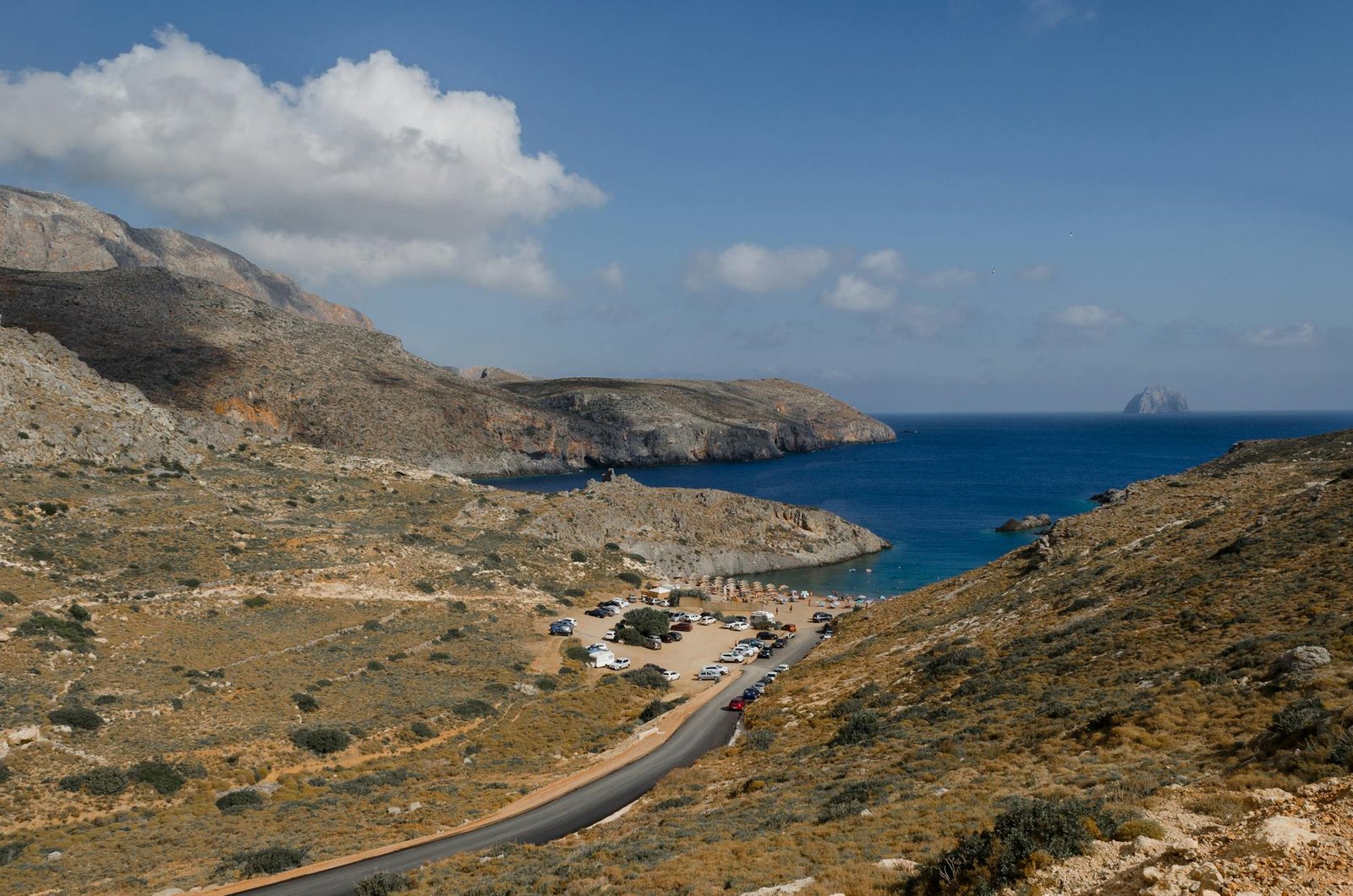
Quick Facts: Port: Diakofti | Country: Greece | Terminal: Diakofti Port (no formal cruise terminal building) | Dock: Ships dock directly at the pier (no tendering required for most vessels, though smaller anchorages may require a short tender) | Distance to main town (Chora/Kythira Town): approximately 26 km | Time zone: EET/EEST (UTC+2 in winter, UTC+3 in summer)
—
Diakofti is Kythira’s primary port of entry, sitting on the island’s eastern coast and serving as the arrival point for both ferries and the occasional cruise ship that ventures off the beaten Aegean path. Kythira sits at the junction of the Ionian and Aegean Seas, geographically isolated — and that isolation is precisely what has kept it authentically Greek in a way that Santorini and Mykonos can no longer claim. The single most important planning tip: rent a car at the port. This island rewards those who explore freely, and it cannot be properly seen on foot or by taxi alone.
—
Port & Terminal Information
Diakofti does not have a purpose-built cruise terminal in the traditional sense — think a working Greek fishing and ferry port, clean and functional, with a concrete pier extending into a sheltered bay. You’ll find [the port on Google Maps here](https://www.google.com/maps/search/Kythira+Island+cruise+terminal), and it’s worth loading it before you arrive since mobile data can be patchy in the bay itself.
Docking situation: Most small-to-mid-sized cruise ships dock directly alongside the pier, which means no tendering delays and a quick walkoff. Larger vessels or unusual sea conditions may require a short tender; your ship will announce this the evening before. Factor an extra 20–30 minutes into your morning plans if tendering is required.
Terminal facilities — be honest, be prepared:
- No ATMs at the pier itself — the nearest reliable ATM is in the village of Agia Pelagia (20 km north) or in Chora (26 km southwest)
- No dedicated luggage storage at the dock — leave bags on the ship
- No official tourist information office at Diakofti port, though local car rental operators who set up near the pier are usually happy to give informal recommendations
- Basic toilet facilities near the dock; no air-conditioned lounge or café at the terminal itself
- Mobile Wi-Fi signal is weak at the pier; connect to your ship’s Wi-Fi for last-minute research before disembarking
- Car and scooter rental agents frequently park near the pier on days when ships call — confirming ahead with a Kythira-based agency (Kythira Car Rental or Panayiotis Rent a Car in Diakofti) is strongly recommended
Distance to Chora (Kythira Town): approximately 26 km southwest — roughly 30–35 minutes by car on winding but well-signposted roads. See [Google Maps](https://www.google.com/maps/search/Kythira+Island+cruise+terminal) for the exact route from the pier.
—
Getting to the City

There is no single “city” on Kythira — the island has multiple worthwhile villages and attractions spread across its 279 sq km. The main town is Chora (also called Kythira Town), perched dramatically above Kapsali Bay. Plan your transport based on how much of the island you want to cover, not just the town.
- On Foot — The village of Diakofti itself is within a 5–10 minute walk of the pier and has a small beach, a couple of tavernas, and the atmospheric sight of the Venetian wreck, Nordland, visible just offshore. Beyond the immediate village, walking to other sights is not realistic — distances are too great and the summer heat too fierce.
- Bus/KTEL — Kythira does have a KTEL bus service, but it is extremely limited: typically 1–2 runs per day connecting the port to Chora, timed around ferry arrivals rather than cruise schedules. Do not rely on the bus for a cruise day. Journey time if you do catch it: approximately 45–50 minutes to Chora; cost around €3–4. The schedule changes seasonally and is posted (in Greek) at the port notice board.
- Taxi — A small number of taxis operate on Kythira, and a couple will typically meet the ship. Expect to pay approximately €35–45 one-way from Diakofti to Chora. For a multi-stop day with a driver, negotiate a fixed price for the full day: expect €120–160 for 6–8 hours. Always confirm the price before getting in, and get the driver’s mobile number so they can collect you at a specified time. Taxi availability is genuinely limited — don’t count on flagging one down mid-island.
- Hop-On Hop-Off — There is no hop-on hop-off bus service on Kythira. The island is too small and too low-volume for it to be viable. Skip this option entirely.
- Rental Car — This is the definitive recommendation. Renting a small car at the pier (pre-book ahead with local agencies; expect €40–60/day in high season including basic insurance) gives you complete freedom to reach the island’s best beaches, villages, and viewpoints on your own schedule. Roads are paved but sometimes narrow and steep — a small automatic is ideal. Scooters are available for approximately €20–30/day and are practical for fit, experienced riders in dry weather; the roads are hilly enough that mopeds are not recommended. Petrol stations are found in Potamos and near Chora — fill up before heading to remote beaches.
- Ship Shore Excursion — Most ships calling at Kythira offer a limited excursion menu, typically a guided village tour of Chora and the castle, sometimes combined with a beach stop. These are worth considering if your ship offers an island-wide driving tour or a food-focused experience, as the guide knowledge can be genuinely enriching. For independent travellers comfortable with a car, however, going alone gives you more flexibility and usually a lower cost. If your ship offers a boat trip around the sea caves or the island’s dramatic coastline, that is one excursion worth booking — it’s hard to replicate independently. Check [Viator for Kythira Island tours](https://www.viator.com/search/Kythira+Island) and [GetYourGuide](https://www.getyourguide.com/s/?q=Kythira+Island¤cy=USD&partner_id=MHU0UHU) before departure to see what’s available to pre-book.
—
Top Things to Do in Kythira Island, Diakofti, Greece
Kythira’s charm is cumulative — it’s the island where the Byzantine monasteries, the Minoan shipwrecks, the cinnamon-scented air, and the almost laughably photogenic villages hit you all at once. Here are 13 experiences worth building your day around.
—
Must-See
1. Chora (Kythira Town) and the Venetian Kastro (free to walk; castle interior free–€3 depending on access) — Chora is one of the most beautiful neoclassical-meets-Cycladic villages in Greece, and the Venetian castle crowning it dates to the 13th century with commanding views over Kapsali Bay and, on clear days, to the Peloponnese. Don’t miss the narrow whitewashed alleys just below the castle walls — they’re genuinely untouristy and packed with bougainvillea. Allow 1.5–2 hours to explore Chora properly, including the castle.
2. Kapsali Bay and the Twin Harbour (free) — Directly below Chora, Kapsali is a double-bay harbour of extraordinary beauty: two near-perfect semicircular bays divided by a narrow spit, with fishing boats, a pebbly beach, and tavernas with front-row views up to the castle. It’s a 10-minute drive from Chora or a steep 20-minute walk down. The image of the castle reflected in the water at the golden hour is the island’s most iconic sight. Allow 30–60 minutes here, more if you swim.
3. Agia Sofia Cave (€5; open June–September, typically 10:00–15:00, but hours are irregular — call ahead: +30 27360 31222) — A stunning stalactite cave set into a clifftop above the sea on the western coast, with a tiny Byzantine chapel built right into the cave mouth dating to the 12th century. Guided tours run approximately every 30–45 minutes and last about 40 minutes. The approach involves a short, somewhat steep path — wear proper shoes. Allow 1.5 hours including the drive. Finding a [guided island tour on GetYourGuide](https://www.getyourguide.com/s/?q=Kythira+Island¤cy=USD&partner_id=MHU0UHU) that includes the cave is worthwhile if you want context.
4. Mylopotamos and the Hidden Waterfall (free) — One of the most achingly beautiful villages in Greece, full of Venetian stone bridges, rose gardens, and the sound of running water. A short walk from the main square leads to a small but gorgeous waterfall hidden in a green gorge — one of the island’s genuine surprises. The ghost village of Kato Hora, a ruined Venetian settlement above Mylopotamos, takes another 15 minutes on foot and is hauntingly atmospheric. Allow 1.5–2 hours total.
—
Beaches & Nature
5. Kaladi Beach (free; no facilities) — A crescent of pale pebbles and turquoise water on the southeast coast, accessible via a steep path (10–15 minute walk from the car park). It’s one of Greece’s genuinely spectacular small beaches — the kind that appears in photography books. Bring everything you need: water, food, sun protection. No umbrellas for hire, no taverna, no Wi-Fi. That’s the point. Allow 1.5–2.5 hours.
6. Firi Ammos (Red Sand Beach) (free; limited facilities) — Named for the distinctive russet-coloured sand, this beach is off a dirt track south of Chora and feels like a discovery even in high season. The red-orange cliffs behind it make it visually unique in the Greek islands. A small seasonal canteen may operate. Allow 1–2 hours.
7. Limni Beach, Diakofti (free; a few seasonal tavernas nearby) — Since you’re starting at the port, Diakofti’s own beach is calm, shallow, and pleasant — excellent for families with young children and perfect if you only have a short time ashore or want a swim close to the ship. The water here is exceptionally calm because of the sheltering headland. Allow 30–60 minutes.
8. The Nordland Shipwreck Snorkel (free) — The rusty hull of the Nordland, a Norwegian freighter that ran aground in 1967, sits partially submerged just offshore from Diakofti beach, highly visible from land and easily explored by snorkellers. Bring your own mask and fins (or hire from Diakofti Beach) — the wreck starts at about 1–2 metres depth and is safe for confident swimmers. Allow 30–45 minutes.
—
Day Trips
9. Potamos Village and Sunday Market (free to browse; market operates Sunday mornings) — Potamos is the island’s largest and most lived-in village, 20 km north of Diakofti, with a genuine Sunday morning market that draws Kytherians from all over the island. It’s not a tourist market — it’s locals buying vegetables, cheese, honey, and gossiping in cafés. If your ship calls on a Sunday, this is unmissable. Allow 1–1.5 hours.
10. Avlemonas Village and Venetian Fort (free) — A tiny fishing village on the northeast coast with a perfectly preserved circular Venetian sea fort rising directly from the water’s edge, a handful of ouzeris, and the relaxed atmosphere of a place that has not yet noticed that it’s beautiful. It’s 10 km from Diakofti and makes a natural first or last stop on a driving loop. Allow 45 minutes.
—
Family Picks
11. Kythira Archaeological Museum, Chora (€3; open Tuesday–Sunday 8:30–15:00) — A compact, well-curated museum housing finds from the island’s Minoan trading post at Kastri (one of the earliest Minoan settlements found outside Crete), Mycenaean artefacts, and Venetian-period material. It’s manageable with curious children aged 10+ and gives the island real historical depth. Allow 45–60 minutes.
12. Boat Trip Along the Sea Caves (approximately €25–40/person on local boat tours; ask at Kapsali harbour) — Local boat operators in Kapsali run trips along the island’s dramatic western sea caves, accessible only by water. The caves are an extraordinary deep blue-green, and the boat passes several sea arches and rock formations. This is genuinely one of the best ways to see Kythira. Check [Viator for available tours](https://www.viator.com/search/Kythira+Island) before you arrive, as pre-booking prevents disappointment in high season.
—
Off the Beaten Track
13. Monastery of Moni Myrtidiotissa (free; dress modestly — shoulders and knees covered) — A working Orthodox monastery on the island’s western coast, dating to the Byzantine era and dramatically positioned above the sea. The monastery church contains a highly venerated icon of the Virgin Mary said to have been found on the cliff face. The approach road winds through wild thyme and sage scrubland. Arrive in the morning, as the monastery closes for the midday rest hours (approximately 13:00–17:00). Allow 45–60 minutes.
14. Kastri — The Minoan Site (free; open site, no facilities) — Above Avlemonas, the excavated remains of Kythira’s Bronze Age Minoan settlement offer extraordinary context for those who know what they’re looking at — and even for those who don’t, the site commands spectacular sea views. Bring water and a hat; there’s no shade. Allow 30–45 minutes.
—
What to Eat & Drink

Kythira’s food is proudly local: honey from the island’s thyme-fed bees is internationally regarded (it won awards before Greek honey was fashionable), cheese from small family dairies is found everywhere, and fresh seafood is the backbone of every harbour taverna. The island has a subtle Venetian influence in some of its pastries and savoury pies that you won’t easily find on other Greek islands.
- Grilled octopus at a harbour taverna, Kapsali or Avlemonas — Dried on the line outside, then grilled over charcoal; order with a glass of ouzo or local wine. Expect €10–16 per portion.
- Kythiran honey — Used in everything from pastries to savoury marinades; try it drizzled over thick Greek yoghurt. A jar costs €8–15 at village shops and makes the best possible souvenir.
- Ladenia — A Kythiran variant of a thin olive oil flatbread topped with onions and tomatoes, closer to a focaccia than a pizza. Found in bakeries and kafeneions in Potamos and Chora; approximately €3–5.
- Fresh grilled fish, Diakofti taverna — Eat lunch near the port at one of the 2–3 small tavernas in Diakofti before re-boarding; the fish is caught that morning. Expect €14–20 for a main course.
- Raki/Tsipouro — The local digestif, usually offered complimentary at the end of a meal in family-run tavernas. Accept graciously.
- Almond sweets (amygdalota) — Soft, moist, rose-water-scented almond paste sweets found in Chora’s pastry shops; €6–8 per 250g bag.
- Afternoon coffee, Potamos main square — Sitting in the shade of the plane trees in Potamos’s plateia with a Greek coffee and a piece of baklava is one of the simple pleasures of a Kythira day. Budget €3–5 total.
—
Shopping
The single best shopping street is the main pedestrian lane through Chora (Kythira Town), where a handful of independent shops sell local honey, thyme-infused olive oil, handmade ceramics, and Byzantine-inspired jewellery. Nothing here feels mass-produced — most items come from the island’s own small producers, and the shopkeepers know their products personally. Don’t expect a souvenir market or rows of fridge magnets; Kythira’s shopping is low-key and genuine.
What to buy: Kythiran thyme honey (especially from
🎟️ Things to Book in Advance
These highly-rated experiences fill up fast — book before you arrive to avoid missing out.


This page contains affiliate links. If you book through them, we may earn a small commission at no extra cost to you.
📍 Getting to Kythira Island, Diakofti, Greece
Use the interactive map below to explore the port area and plan your route from the terminal.
Leave a Reply