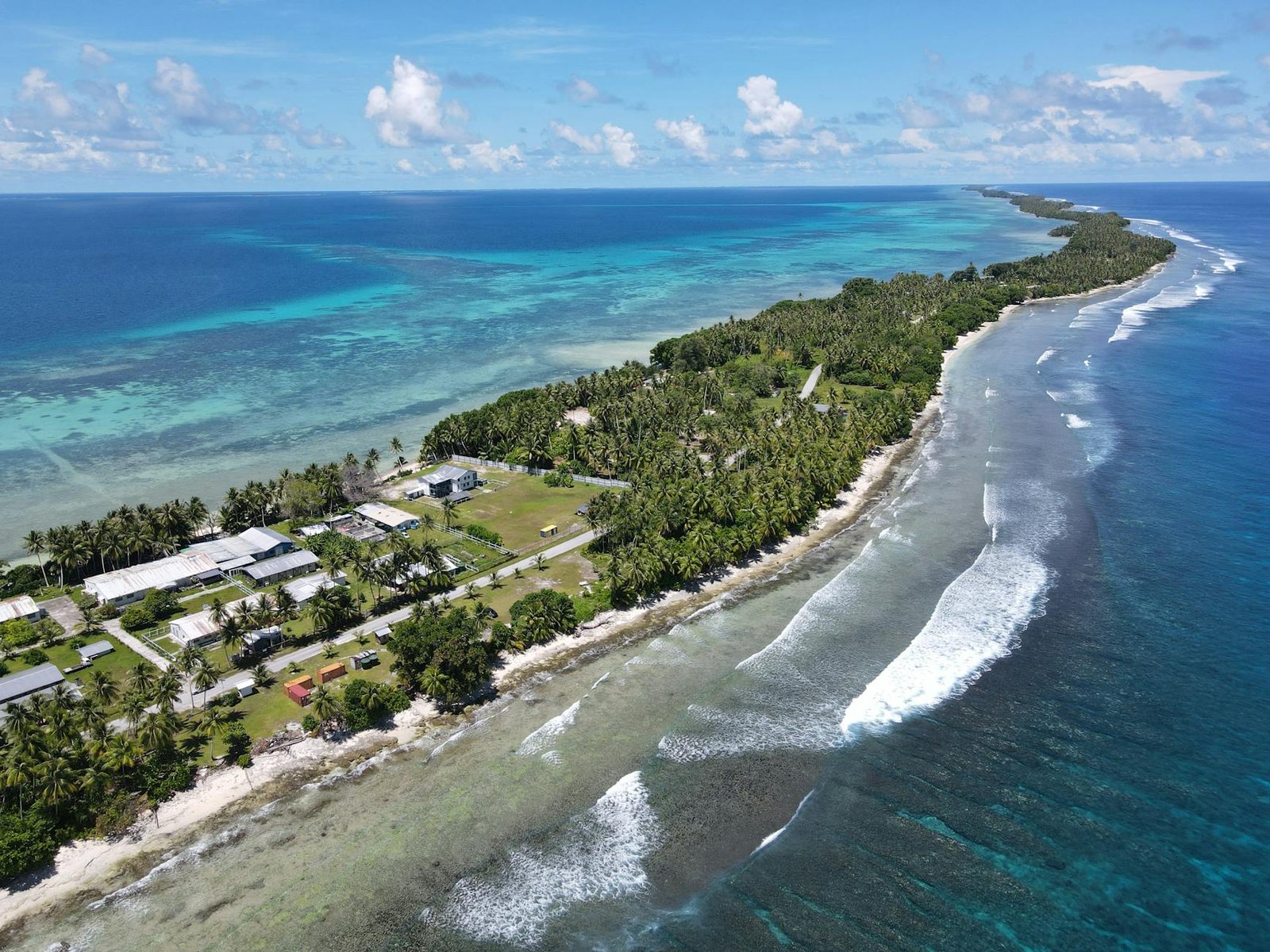
Quick Facts: Port of Majuro | Republic of the Marshall Islands | Majuro Lagoon Port / Uliga Dock | Dock (pier, no tendering required in most calls) | ~1 mile from downtown Delap-Uliga-Darrit (D-U-D) | UTC+12
Majuro is the capital and commercial hub of the Marshall Islands, a remote Pacific nation sitting roughly halfway between Hawaii and Australia — and one of the least-visited cruise destinations on any itinerary. The single most important planning tip: bring cash in US dollars, because ATMs are scarce and many local businesses run cash-only. This is a port where independent exploration genuinely rewards the curious traveler, but you need to arrive prepared.
—
Port & Terminal Information
The port is formally known as Majuro Lagoon Port, with the main cruise berth at the Uliga Dock on the narrow strip of land that forms the D-U-D municipality. You can find it on Google Maps here. It’s a working commercial and inter-island shipping port, not a purpose-built cruise terminal, so manage expectations: you’re stepping off into a real Pacific port town, not a polished welcome facility.
Ships dock directly at the pier — no tendering required for most cruise calls, though some smaller vessels and changing tide conditions can occasionally shift that. Confirm with your ship before disembarking, as tendering adds 20–30 minutes each way to your planning.
Terminal facilities are minimal. There is no dedicated cruise terminal building with air-conditioned waiting areas or a shopping village. You’ll find a small port authority office, occasional informal taxis waiting dockside, and very limited wi-fi (your ship’s crew can confirm the latest situation). There is no luggage storage at the port, no tourist information desk in the formal sense, and no ATM within the port compound itself — the nearest reliable ATM is at the Bank of Marshall Islands (BOMI) on Uliga, about a 10-minute walk.
—
Getting to the City

The entire urban core of Majuro — Delap, Uliga, and Darrit — sits on a single narrow strip of land, and most attractions are within a few miles of the dock. Here’s how to move around:
- On Foot — The Uliga commercial area begins within a 5–10 minute walk of the dock, making the post office, small markets, and BOMI bank easily walkable. The Marshall Islands Resort and the Alele Museum are both reachable on foot in under 20 minutes. Note: the strip is narrow with no formal sidewalks in sections, and tropical heat can make longer walks tiring — plan to walk early in the morning.
- Bus / Minibus — Majuro has an informal shared-ride minibus system; privately operated vans cruise the main road (the only road, really) along the atoll strip. Hail one anywhere along the roadside. Fares are typically $1–2 USD for most stops and journey times range from 5–15 minutes for central destinations. There are no fixed route numbers or schedules — they run frequently (roughly every 10–20 minutes) during daytime hours.
- Taxi — A handful of taxis operate on the island. Port to Delap (the government end of the strip) costs roughly $5–8 USD; to the Laura area at the far end of the atoll it’s $15–20 USD each way. Negotiate the fare before you get in — meters are not used. Taxis waiting at the dock at ship arrival may quote inflated prices; counter-offer confidently or wait for a shared minivan.
- Hop-On Hop-Off — There is no hop-on hop-off bus service in Majuro. Don’t plan around this option.
- Rental Car / Scooter — Car rental is available through a couple of local agencies (ask your ship’s guest services for current operators, as availability changes seasonally). Expect to pay $60–80 USD/day for a basic vehicle. Driving on Majuro is straightforward — there is essentially one main road running the length of the atoll — but traffic can be slow through the commercial zone. For a full-day exploration including Laura Beach, renting a car is genuinely worthwhile.
- Ship Shore Excursion — Because Majuro is a genuinely unfamiliar port for many cruise lines, ship-offered shore excursions here tend to be good value for first-timers who want context and logistics handled. Snorkeling trips, lagoon boat tours, and cultural village visits are the most common offerings. If you’ve never been to the Marshall Islands, consider booking at least a half-day ship excursion for orientation. You can also explore independently bookable options through Viator or GetYourGuide.
—
Top Things to Do in Majuro, Marshall Islands
Majuro rewards the genuinely curious — this is not a port for luxury beach clubs or duty-free shopping, but it is extraordinary for WWII history, Marshallese culture, marine life, and the sheer, rare novelty of being somewhere almost no cruise passenger has explored properly. Here are the best ways to spend your time ashore.
Must-See
1. Alele Museum and Public Library (Free / small donation appreciated) — This is the cultural heart of the Marshall Islands, and honestly, it’s essential context for everything else you’ll see ashore. The Alele houses traditional Marshallese stick charts (rebbelib and mattang) — the navigation tools Marshallese voyagers used to read ocean swells and find islands — as well as canoe models, woven crafts, and archival photographs of pre-war and colonial-era Majuro. It’s small but extraordinarily well-curated given its resources. Located in Uliga, a 10-minute walk from the dock, open Monday–Friday roughly 9am–4pm and Saturday mornings. Allow 1–1.5 hours.
2. Marshall Islands Capitol Building & Government Quarter (Free) — The low-slung, tropical modernist government campus in Delap is worth a short walk through — the grounds are open, the architecture is a fascinating blend of Pacific vernacular and post-independence civic ambition, and the area gives you a sense of how a capital functions on a tiny strip of land barely above sea level. The nearby Ministry of Foreign Affairs plaza sometimes has small art displays. Allow 30–45 minutes.
3. Majuro Lagoon (Free to see; boat tours vary) — Majuro Lagoon is one of the largest lagoons in the Pacific — 114 miles around the atoll, with water so still and turquoise it looks digitally enhanced. The view alone from any point along the lagoon-side road is worth stopping for, but getting out onto the water by local boat or kayak is transformative. Check available options through GetYourGuide. Allow 2–4 hours if you take a boat trip.
4. WWII Wreck Snorkeling & Diving (Guided snorkel ~$50–80 USD; dive ~$100–150 USD) — The Marshall Islands are one of the great WWII underwater heritage destinations in the Pacific. The lagoon and surrounding ocean floor are scattered with Japanese aircraft, ships, and military equipment from the 1944 American assault on Kwajalein and related campaigns. Even around Majuro, there are accessible shallow snorkeling sites with WWII artifacts. This is genuinely unmissable for history buffs and underwater enthusiasts alike. Search for available guided excursions through Viator for the best current operators.
Beaches & Nature
5. Laura Beach (Free) — At the far western end of the main atoll strip, roughly 35 miles from the port by road (about 45–60 minutes by car), Laura Beach is the closest thing to a classic Pacific paradise beach in Majuro. The sand is white and powdery, the water is calm and clear, and on a weekday you may have it almost entirely to yourself. It’s a stark contrast to the busy commercial eastern end of the atoll. You need a rental car or a negotiated taxi (round trip from port ~$40–50 USD; ask the driver to wait). Allow 2–3 hours at the beach itself.
6. Kalalin Pass & Outer Reef Snorkeling (Guided trip ~$60–100 USD) — The pass between Majuro’s lagoon and the open ocean is a superb snorkeling and diving site, with a dramatic wall dropping into deep Pacific blue on one side and the shallow lagoon on the other. Current can run strong, so go with a guide. Local dive operators can arrange trips — ask at the Marshall Islands Resort or search GetYourGuide for current options. Allow 3–4 hours for a guided excursion.
7. Rita Village & Fishing Community (Free) — The community of Rita at the eastern end of the D-U-D strip offers a glimpse of everyday Marshallese life away from the commercial center. Local fishing outriggers (waa) are often beached along the shore, men repair nets, and you can watch traditional weaving being done outside homes. Always ask before photographing people. Allow 45 minutes–1 hour.
8. Long Island / Enemanit (Accessible by local boat; ~$20–40 USD for a water taxi) — A short boat ride from the main strip, some of the smaller islets dotting the lagoon feel genuinely remote and untouched. Long Island in particular has been used for local picnics and day trips. Arrange through local operators or ask your ship’s shore excursion desk. Allow 3–4 hours for a half-day trip.
Day Trips
9. Arno Atoll (Day trip by charter boat or light aircraft; $150–300+ USD) — For the truly adventurous cruiser with a full day ashore, Arno Atoll — the nearest neighboring atoll, about 30 miles southeast of Majuro — has pristine beaches, local villages, and almost zero tourist infrastructure. Getting there requires arranging private boat charter in advance. This is not a spontaneous option; contact local operators through your ship well before arrival day.
Family Picks
10. Majuro Co-op / Local Market Browse (Free to browse) — The Majuro Co-op and surrounding small shops and produce vendors in Uliga are colorful, lively, and easy for families to enjoy. Kids love the tropical produce, imported goods from all over the Pacific, and the general organized-chaos of a small Pacific market. Budget 30–45 minutes and pick up cold drinks while you’re there.
11. Outrigger Canoe Watching & Demonstration (Free; tips welcome) — The traditional Marshallese sailing canoe (waa) is one of the most sophisticated indigenous watercraft ever designed, capable of sailing faster than the wind. Around the Laura and Rita communities, and occasionally organized through the Alele Museum, you can sometimes watch (or arrange to participate in) a canoe demonstration. The Alele Museum can help connect you with local canoe builders and sailors. Allow 1–2 hours.
Off the Beaten Track
12. College of the Marshall Islands (CMI) Campus (Free to walk around) — The CMI campus in Uliga is a peaceful, shaded spot and an interesting window into Pacific island higher education. The campus occasionally hosts small cultural events; the gardens and grounds are pleasant for a walk. Most cruise visitors never set foot here. Allow 30 minutes.
13. Majuro Protestant Church (Calvary Church) (Free) — One of the largest and most architecturally distinctive buildings in Majuro, the big white church near the center of the D-U-D strip is a legacy of the intense American Protestant missionary presence in the Marshall Islands beginning in the 1850s. Christianity is deeply woven into Marshallese identity and the church remains a focal point of community life. Visitors are generally welcome outside of service times. Allow 20–30 minutes.
14. Climate Change Memorial Sites & Sea Wall Walks (Free) — Majuro sits barely 6 feet above sea level at its highest point, making the Marshall Islands one of the nations most immediately threatened by rising seas. Walking the ocean-side sea walls — built largely with international aid funding — and seeing the encroachment of the ocean on the eastern islets is a sobering and important experience, and one that gives you a very different perspective on Pacific tourism. Allow 1 hour.
—
What to Eat & Drink

Marshallese cuisine is a mix of traditional Pacific staples — breadfruit, taro, coconut, fresh fish — and the heavy influence of American military and commercial supply chains that have shaped the food culture here since WWII. You’ll find an interesting collision of home-cooked Pacific food, simple local restaurants, and American-style fast food.
- Fresh yellowfin tuna — Majuro is an important tuna processing hub; fresh, simply grilled or raw tuna is the standout local eat. Find it at local restaurants along the main strip; expect to pay $8–15 USD for a plate.
- Breadfruit (maduros cooked in coconut) — A traditional staple, sometimes available at local food stalls or community events; free–$3 USD at informal vendors.
- Marshall Islands Resort Restaurant — The most reliable mid-range dining option in Majuro, with a mix of Pacific and Western dishes; a solid meal runs $15–25 USD. Located on the lagoon side in Delap — the sunset view over the lagoon is genuinely lovely if your ship departs in the evening.
- RRE (Restaurant & Bar near Uliga) — One of the more popular local spots with Marshallese and Filipino-influenced dishes; lunch mains around $8–14 USD.
- Filipino food stalls — There is a significant Filipino community in Majuro (many work in the tuna processing industry), and several informal spots serve excellent, cheap Filipino food — rice plates, adobo, sinigang — for $5–8 USD.
- Cold coconut — Available from informal vendors along the road; $1–2 USD and absolutely essential on a hot Pacific day.
- Imported beer & local drinks — Budweiser and other American imports dominate; locally brewed options are limited. A cold beer at the Marshall Islands Resort bar runs about $4–6 USD.
- Chinese restaurants — Several Chinese-run restaurants operate in the D-U-D commercial zone, serving inexpensive, filling meals for $6–10 USD; reliable and popular with locals.
—
Shopping
Majuro is not a shopping port in the conventional cruise sense — there are no duty-free arcades, no jewelry shops, no luxury boutiques. What it does offer is genuinely rare: authentic Marshallese handicrafts made by local artisans, which you will find almost nowhere else in the world. The best place to look is the Alele Museum gift area and the Women United Together in the Marshall Islands (WUTMI) cooperative, which sells traditional woven pandanus baskets, mats, fans, and jewelry made from shells and natural materials. These make for extraordinary souvenirs precisely because they’re not mass-produced. Expect to pay $10–60 USD for quality handwoven items depending on size and complexity.
The Majuro Co-op and small shops along the main strip stock imported goods, packaged foods, t-shirts, and basic sundries. A “Marshall Islands” t-shirt runs about $15–20 USD and is about as souvenir-y as commercial shopping gets here. Skip the mass-produced shell jewelry sold at some roadside stalls — it’s largely imported from the Philippines. Instead, invest in the WUTMI cooperative’s work if you want something that genuinely came from the hands of a Marshallese woman.
—
How to Plan Your Day
- 4 hours ashore: Walk from the dock to the Alele Museum (1–1.5 hrs), then browse the nearby Majuro Co-op and Uliga commercial strip (30 mins), grab lunch at a local Filipino stall or the RRE restaurant ($5–12 USD), and walk the lagoon-side sea wall back toward the port for 20–30 minutes of incredible water views. Simple, rewarding, entirely walkable.
- 6–7 hours ashore: Do the 4-hour itinerary above, then hire a taxi or shared van to Rita Village to watch the fishing outriggers and local community life (45 mins), before heading back through the government quarter in Delap for a look at the Capitol grounds and Calvary Church. If the timing works, arrange a 2-hour lagoon snorkeling or boat excursion through a local operator or [GetYourGuide](https://
🎟️ Things to Book in Advance
These highly-rated experiences fill up fast — book before you arrive to avoid missing out.


This page contains affiliate links. If you book through them, we may earn a small commission at no extra cost to you.
📍 Getting to Majuro, Marshall Islands
Use the interactive map below to explore the port area and plan your route from the terminal.
Leave a Reply