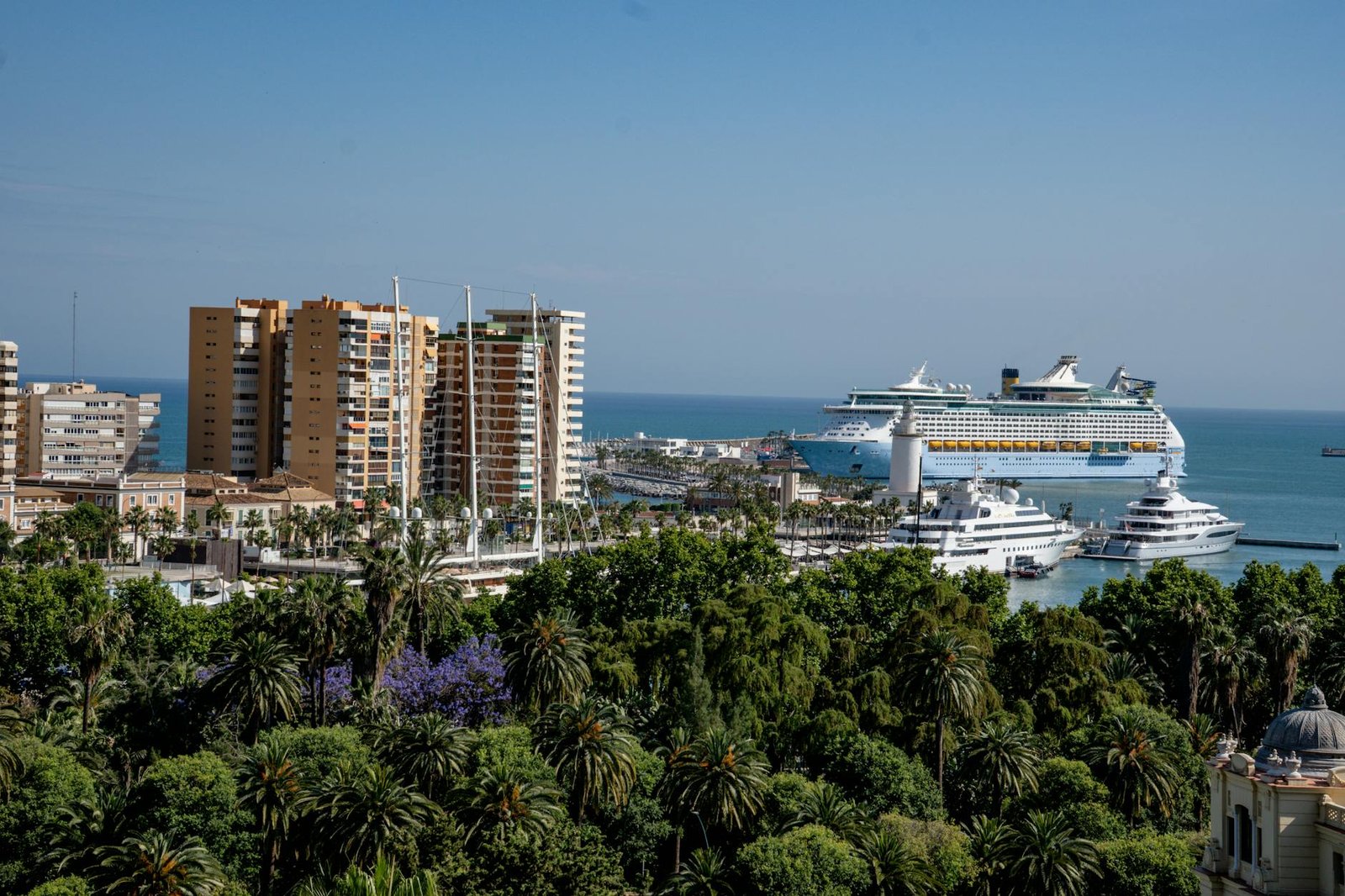
Malaga is one of those rare ports that rewards passengers who look beyond the obvious. Sun-soaked, vibrant, and bursting with culture, this Andalusian city punches well above its weight — yet many cruise visitors spend their time at the beach rather than discovering its remarkable artistic and culinary soul. That’s great news for you, because a little curiosity goes a long way here.
Arriving by Ship
Malaga’s cruise terminal sits conveniently close to the city centre — you’re looking at roughly a 15-minute walk or a short taxi ride to the historic heart of the city. The port itself is modern and well-organised, with tourist information kiosks, local SIM card vendors, and taxis readily available dockside. Larger ships typically dock at the Muelle Uno or Muelle Dos terminals, both of which open directly onto a pleasant harbourside promenade lined with restaurants and shops. If your ship arrives early, you’re in luck — Malaga is genuinely walkable, and getting oriented quickly is easy. The city’s main sights are clustered within a compact area, so even passengers with just six or seven hours ashore can cover serious ground.
Things to Do

Start with the Picasso Museum, located in the elegant Buenavilla Palace in the old town. Pablo Picasso was born just a short walk away, and the Casa Natal — his actual birthplace on Plaza de la Merced — is free to enter. Most cruise passengers skip it entirely, which means you’ll likely have the intimate rooms almost to yourself. From there, head uphill to the Alcazaba, a remarkably well-preserved Moorish fortress with sweeping views over the port and city rooftops. If you have energy left, the Castillo de Gibralfaro crowns the hilltop above and connects to the Alcazaba via a scenic pathway.
For something more structured, a guided walking tour of the historical centre is a smart investment, covering the cathedral, Roman theatre ruins, and the Moorish quarter in a focused two hours. 🎟 Book: Historical Centre and Cathedral of Málaga If you prefer to cover more ground at your own pace, renting a bike is surprisingly practical — the city has dedicated cycling lanes and flat stretches along the seafront. 🎟 Book: Bike Rental in Malaga Those looking for authentic Andalusian culture shouldn’t miss a flamenco show, which in Malaga feels considerably less touristy than in Seville or Granada. 🎟 Book: Horse and Flamenco Show in Malaga
Local Food
Malaga has a food scene that deserves far more international attention than it receives. The city sits at the meeting point of mountain and sea, which means you get exceptional seafood alongside hearty inland dishes. Your must-try is espetos — whole sardines skewered on bamboo rods and grilled over open fire pits right on the beach. The beachside neighbourhood of El Palo and Pedregalejo are the authentic spots for this experience if you have time to venture slightly further afield.
In the centre, order ajoblanco — a chilled almond and garlic soup that’s the lesser-known, arguably superior cousin of gazpacho. Wash it down with sweet Malaga wine, a local fortified wine made from Muscatel grapes that you genuinely won’t find elsewhere in quite the same style. For hands-on food culture, a paella cooking class makes for a memorable way to spend a morning or afternoon, giving you skills that travel home with you long after the tan fades. 🎟 Book: Paella and Sangria Workshop in Malaga
Shopping

The main shopping street, Calle Marqués de Larios, is a grand pedestrianised boulevard perfect for window shopping and people-watching. Here you’ll find Spanish high-street brands alongside independent boutiques selling ceramics, leather goods, and local olive oil products. For more characterful shopping, duck into the historic Mercado Central de Atarazanas — a 19th-century iron market hall built on the site of a Moorish shipyard. Inside you’ll find vendors selling fresh produce, jamón, local cheeses, and bottles of Malaga wine at very reasonable prices. The market closes around 3pm, so time your visit accordingly.
Practical Tips
The euro is the currency, and ATMs are widely available near the port. Most central restaurants and shops accept cards, but small market stalls often prefer cash. Malaga gets genuinely hot between June and September, so carry water and sunscreen even if you’re not planning beach time. The city operates on a late schedule — don’t expect lunch service before 2pm or dinner before 9pm at authentic local spots. Spanish is spoken throughout, though English is widely understood in tourist areas. If you’re returning to the ship via taxi, agree the fare before you get in, or ensure the driver uses the meter.
Malaga has a way of surprising even seasoned Mediterranean cruisers. Give it more than a cursory stroll along the harbour and it will give you considerably more in return — a city confident enough in its own identity that it never feels the need to shout for your attention.
🚢 Cruises That Stop at Malaga Spain
Ready to experience Malaga Spain for yourself? Search live sailings below — filter by departure port, cruise line, and travel dates to find the itinerary that works for you.
Widget not showing? Search all cruises to Malaga Spain on CruiseDirect ↗
Affiliate link — we may earn a commission if you book through it.
🎟️ Things to Book in Advance
These highly-rated experiences fill up fast — book before you arrive to avoid missing out.


This page contains affiliate links. If you book through them, we may earn a small commission at no extra cost to you.
📍 Getting to Malaga Spain
Use the interactive map below to explore the port area and plan your route from the terminal.
Leave a Reply